No Time Like the Future — Interactive Mindmaps

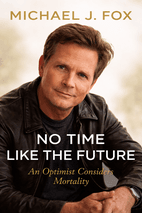
No Time Like the Future by Michael J. Fox Book Cover

by Michael J. Fox

Michael J. Fox's No Time Like the Future offers a candid memoir on aging and resilience, moving beyond simple optimism to explore hard-won acceptance after new health challenges. It resonates with fans and anyone navigating chronic illness or life's unexpected turns.

On Insta.page you also get an Apply This Book tool that lets you combine insights from up to 3 books to solve your specific situation.

Chapter mindmaps

Free preview: chapters 1–4 are fully interactive. Click any node to expand or collapse. Subscribe to unlock the rest.

Chapter 1: Introduction: Fall Guy

Key concepts: Introduction: Fall Guy

1. Introduction: Fall Guy

The Devastating Fall

  • Sudden collapse leaves author helpless on kitchen floor
  • Immediate loss of sensation in left arm
  • Desperate one-armed crawl for help
  • Sharp pain contradicts belief about benign injuries

Health History Context

  • Thirty-year management of Parkinson's disease
  • Recent high-risk spinal cord tumor surgery
  • Fragile recovery from wheelchair to walking
  • Fall felt like betrayal of hard-won progress

Fragile Independence

  • Insisted on working alone against daughter's concerns
  • First time alone in months before accident
  • Confidently claimed to feel 'normal again'
  • Promised to avoid known hazards like walking with phone

Emotional Impact

  • Shame over breaking 'one job: Don't fall' rule
  • Embarrassment more cutting than frustration
  • Sense of personal failure despite warnings
  • Usual optimism and resilience completely abandoned him

Broader Themes

  • Single moment can unravel months of recovery
  • Acute injuries shatter negotiated peace with chronic illness
  • Emotional trauma as debilitating as physical pain
  • Resilience is not constant; moments of defeat occur

Chapter 2: 1. Family Man

Key concepts: 1. Family Man

2. 1. Family Man

Early Fatherhood and Emotional Absence

  • Physically present but emotionally absent due to drinking
  • Parenting blurred by 'Miller Time' haze of alcoholism
  • Performed dad duties while being disconnected

Turning Point to Sobriety

  • Wife's bored exhaustion shocks him into sobriety
  • 12-step program foundation for recovery
  • Sobriety prerequisite for becoming present parent

Family Expansion with Parkinson's

  • Decision to have more children after sobriety
  • Twins' birth complicated by medical condition
  • Parkinson's becomes normalized part of family life

Theory of Time and Parkinson's

  • Children as time machines propelling parents forward
  • Parkinson's imposes deliberate slowness on movement
  • Disease forces him to take his time intentionally

Empty Nest Transition

  • Eldest son's departure brings proud but shattered feeling
  • Special bond built on shared interests and humor
  • Confrontation with mortality and evolving parental bonds

Chapter 3: 2. Dog Years

Key concepts: 2. Dog Years

3. 2. Dog Years

Critique of 'Rescue Dog' Terminology

  • Distinguishes genuine rescue from routine adoption
  • Frames adoption as mutually beneficial partnership
  • Rejects heroic narrative for simple connection

Fleeting Connection: Sanuk in Thailand

  • Adopted neglected puppy while filming in 1988
  • Nursed back to health but couldn't bring to US
  • Left with resort manager, later renamed Michael J. Fox

Fated Meeting: Adopting Gus

  • Both author and wife spotted same flyer independently
  • Adopted black-and-white Great Dane-Lab mix puppy
  • Renamed him Gus, rejecting 'rescue' label

Gus's Therapeutic Role

  • Provided structure during Parkinson's progression
  • Forced engagement through walks and social interactions
  • Eased transition when son left for college

Nature of Canine-Human Bond

  • Developed wordless, communicative connection
  • Characterized by sustained eye contact and understanding
  • Unique interspecies communion, not human replacement

Chapter 4: 3. Act Too

Key concepts: 3. Act Too

4. 3. Act Too

The Pivot on Scrubs

  • Tested new approach: invited symptoms onto set
  • Connected character's OCD to own physical experience
  • Proved he could work by co-opting Parkinson's

Transition to Character Actor

  • Moved from leading man to supporting roles
  • Found artistic liberation in idiosyncratic characters
  • Free from vanity of carrying a story

Playing Complex, Flawed Characters

  • Roles resonated with his own experience
  • Embraced vulnerability as relatable trait
  • Found humor in his condition on Curb Your Enthusiasm

Mastery in Louis Canning Role

  • Played unsympathetic character exploiting disability
  • Subverted sentimental disability tropes
  • Turned diminished expressiveness into enigmatic asset

Core Creative Philosophy

  • Disability as creative tool, not limitation
  • Transforming deficits into artistic assets
  • Focus on character's internal 'bear' over own condition

Continue exploring No Time Like the Future