London Falling Ending Explained
by Patrick Radden Keefe
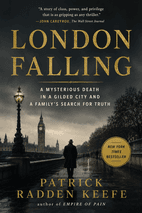
The ending of London Falling leaves you with a lot of questions. This page breaks down what literally happens, why the story ends that way, and where each character lands. No spoilers here, just the setup you need before we dive into the explanation.
The Ending, Explained
ListenWhat Happens at the End of London Falling
In the epilogue, Joe Brettler meets the narrator at a pub in Shepherd Market. He says he lives in Pimlico and cannot avoid passing Riverwalk, which still startles him with pain. He has happy dreams of Zac as a young boy. He says Zac's death brought his parents closer together and he is also closer with them. He points out 5 Hertford Street, the private club where Akbar Shamji was a member. The chapter then flashes back to summer 2019, at Judith's 80th birthday party. Zac attends, looks relaxed, jokes and laughs. He leaves early, returning to Riverwalk. He tells his family to call when they approach Vauxhall Bridge. After the party, Rachelle, Matthew, and Joe drive home. As they cross the bridge, Rachelle telephones Zac, and they all look up and see him on the fifth-floor balcony, a tiny figure waving. Earlier, the Brettlers met two senior police officials (Dean Lanfear and Dean Purvis) at the Houses of Parliament. Matthew presents the Met's failings; the Deans acknowledge mistakes may have been made, mention that Rory Wilkinson ran the investigation with autonomy, and that misgivings remain about Akbar Shamji never being charged. The inquest into Zac's death ended with an open verdict. Verinder Sharma died by suicide a year after Zac, leaving questions about his role. The Brettlers came to believe that Zac, trapped with the violent debt collector Verinder after his deception as an oligarch's son was exposed, jumped from the balcony toward the Thames as an escape. The police investigation was effectively closed. Akbar Shamji moved abroad and never answered key questions about his texts about 'heating up knives.' The Brettlers decide to 'choose life' despite their grief.
The Ending, Explained
The ending crystallizes the book's central themes of deception, ambition, and the impossibility of full knowledge. Zac's final wave from the balcony, rendered nostalgic and innocent in the epilogue, contrasts sharply with the violence and duplicity that surrounded his death. The family's memory of Zac as a carefree young boy edges out the tormented fabulist he became, reflecting the human need to preserve love after tragedy. The meeting with the Deans provides a measure of accountability—the police admit mistakes—but no closure: no charges, no definitive cause. The open verdict and Verinder's suicide leave the truth ambiguous. The Brettlers' conclusion that Zac jumped to escape rather than to die reframes his action as a desperate bid for survival, consistent with his pattern of lying to extricate himself from danger. The unresolved questions—whether Verinder was a police informant, the meaning of Akbar's deleted messages and the 'heating knives' text, the missing evidence—underscore the limits of institutional investigation and the opacity of London's criminal underworld. The epilogue's final image of Zac waving, juxtaposed with the narrator's reflection on ambition and wreckage from Twain and Warner, suggests that Zac's yearning for a grand life, while ultimately ruinous, was also an expression of a universal speculative drive. The Brettlers' choice to live fully, despite their pain, echoes Hugo Gryn's story-with-two-endings and affirms resilience over despair.
The ending hits harder if you see how you got there.
The ending of London Falling makes more sense with the full plot.
Read the full plot, chapter by chapterWhere Every Character Ends Up
Questions the Book Leaves Open
- Whether Verinder Sharma was a police informant, which might explain the lack of a thorough investigation and his apparent protection.
- The exact meaning of Akbar Shamji's text message about 'heating up knives and clearing up blood' and whether it relates to Zac's death.
- What was discussed during the nine-minute phone call between Verinder and Akbar at 2:12 a.m. on the night of Zac's death.
- Why Verinder's balcony glass was wiped clean and why blood spatters were never tested.
- The identity of the person who sent the 'all good x' email from Zac's account at 2:03 a.m., if not Zac himself.
- Whether Zac's jump was a suicide, an accident, or a desperate escape attempt, and whether anyone else was responsible.
- Why the Metropolitan Police lost Zac's phone and iPad in storage and never consulted the GPS data from Akbar's rental Mercedes.
These are answered in the chapter summary. See the full plot →