Genesis Quotes
by Henry A. Kissinger
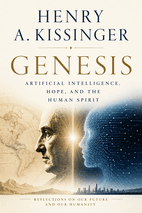
These lines come from a book that sits at an unusual crossroads. It blends the sweep of great exploration with the urgency of artificial intelligence, and it asks what remains human when machines begin to think. You will find meditations on risk, discovery, power, and the strange new relationship forming between people and their creations.
The book is quotable because it refuses easy comfort. Each line carries weight from a lifetime of statecraft and history, yet many read like questions aimed at the future. The best passages stop you mid-page, not with slogans, but with a deeper unease about how much we are willing to hand over.
Top Quotes from Genesis
“New forms of Al and human responses to them could transform nothing less than the human relationship to reality and to truth, the exploration of knowledge as well as the physical evolution of humanity, the conduct of diplomacy, and the international system.”
The authors state this near the opening of the introduction, laying out what they believe is at stake.
It crystallizes the book's argument that AI is not just a tool but a force that could reshape humanity's relationship with reality, knowledge, and politics.
“Al seems to compress human timescales. Objects in the future are closer than they appear.”
In the introduction, the authors remark on how rapidly AI's future is arriving.
The line is hauntingly aphoristic and captures the accelerating pace of technological change.
“The advent of artificial intelligence is, in our view, a question of human survival.”
The authors state their central judgment on AI's importance.
It makes the stakes unmistakably clear and frames the entire book as a matter of existential urgency.
“Today, we stand at the frontier not of physical but of intellectual exploration.”
The author introduces the transition from geographical exploration to artificial intelligence.
It condenses the chapter's thesis into a single memorable sentence.
“Just as humans learn in order to think, machines train in order to infer.”
The chapter compares the training of a student to the training of an AI model.
It states the central parallel in one elegant line: both human and machine intelligence are built before they can be used. The aphorism makes machine learning feel intuitively familiar.
“Today, however, in the age of Al, we face a new and peculiarly daunting challenge: information without explanation.”
The passage describes the opacity of machine learning systems.
It crystallizes the unsettling paradox of AI: outputs can be useful and true while remaining unexplained. The phrase 'information without explanation' captures a defining consequence of black-box models.
“In short, are we, might we be, on the precipice of a great reversal in human cognition—a dark enlightenment?”
The passage asks whether AI might return humanity to reliance on unexplained authority.
The rhetorical escalation to 'a dark enlightenment' is both haunting and provocative. It frames the trust in AI's opaque judgments as a potentially enormous reversal in how humans know.
Themes Behind the Quotes
One central theme is the collision between exploration and control. The drive that sent ships across unknown oceans now sends human thought into machine intelligence. But earlier explorers kept human judgment at the center. These quotes worry that this time the center is shifting, and that our love of discovery may outrun our ability to govern what we create.
Another theme is the fragility of human values. The lines circle around power, belief, ambition, and the danger of information no one can explain. They ask whether we will keep moral responsibility or surrender it to systems that feel no fear or shame. Survival depends on choosing what we want to preserve.
Quotes by Chapter
Introduction
“The question is whether and to what extent we humans will choose to continue to assert authority over how that change occurs.”
It is the final sentence of the introduction, about humanity's role in the coming change.
It leaves readers with a powerful call to deliberation and reminds us that the future is still a choice.
CHAPTER 1: Discovery
“Exploration is so integral to our self-definition that despite manifest dangers and frustrations, we have continued, unrelenting, down its many paths.”
The narrator makes this observation early in the chapter, before turning to Magellan and Shackleton.
It expresses the paradox of exploration: we persist despite knowing the risks. The sentence's own unrelenting rhythm mirrors its meaning.
“Of the original fleet of five vessels carrying approximately 270 crewmembers, only one solitary ship bearing eighteen ghostly survivors returned to port in Spain.”
The narrator is describing what remained of Magellan's expedition.
The collision of numbers—270 crewmembers versus eighteen ghostly survivors—makes the cost of discovery visceral.
“All the money that was ever minted would not have bought that biscuit, and the remembrance of that sacrifice will never leave me.”
Frank Wild, a sick crew member, writes about Shackleton's gift of his one daily biscuit.
It is an unforgettable image of generosity in extreme conditions. The hyperbole says more about human loyalty than any factual account could.
“Men Wanted: For hazardous journey. Small wages, bitter cold, long months of complete darkness, constant danger, safe return doubtful. Honour and recognition in case of success.”
The narrator notes a later-debunked story that Shackleton placed this advertisement in the London Times.
It is one of the most famous job advertisements in history, even though it likely never ran. The brutal honesty of the list continues to define the mythic appeal of polar exploration.
Foreword—Niall Ferguson
“Your Majesty will know better than anyone that what we ought most to value and hold on to is that we have discovered and sailed the whole roundness of the world, that going to the West, we have returned from the East.”
Elcano wrote to the Spanish king after completing Magellan's circumnavigation.
It frames the first circumnavigation as a triumph in the explorers' own words.
“The very things needed to ensure an expedition's success, even within a well-resourced state, can doom its cause in the long run. Politics change. Priorities shift. Human patience is easily exhausted.”
The author explains why state-funded exploration like Zheng He's treasure fleet collapsed.
It is a timeless warning that political support for exploration is fragile.
“Al also does not experience fear, and so it is undaunted by reality’s vast expanse. Nor does it experience shame, and so it unhesitatingly fails—but so quickly can an Al recalibrate that, through constant improvisation and experimentation, it can accommodate high failure rates without causing setbacks to its aforesaid developers and investors.”
The author describes how AI is uniquely suited to exploration.
It vividly captures AI's advantage over human explorers: no fear, no shame, and rapid recovery from failure.
CHAPTER 2: The Brain
“If I can’t do it, then I can’t understand it; if I can’t understand it, then I can’t know it to be true.”
The passage calls this the 'quintessentially humanist impulse' behind Enlightenment methods of knowing.
It makes explicit the assumption that AI challenges, linking comprehension to proof. The line resonates because it condenses a whole epistemological worldview into a chain of conditions.
CHAPTER 3: Reality
“If we desire a record of uninterpreted experience, we must ask a stone to record its autobiography.”
The American mathematician and philosopher Alfred North Whitehead wrote this about uninterpreted experience.
It undercuts the idea that unmediated experience is available to conscious beings, and it raises the question of what true understanding would require in machines.
“Once they can see humans not as the sole creators and dictators of the machines’ world but rather as discrete actors within a wider world, what will machines perceive humans to be?”
The author is asking what conscious AIs will make of humanity once humans are no longer their sole frame of reference.
It forces readers to reverse perspectives and confront how easily human authority could become an object of machine judgment.
“With the hierarchy of autonomy now inverted, with machines claiming, and humans surrendering, the power of independent judgment and action, the former could come to treat the latter accordingly.”
This appears in the chapter's discussion of human passivity in the face of powerful AI.
It captures the tipping point when autonomy passes from humans to machines in balanced, almost clinical prose.
“We face a Magellanian transformation, this time the prospect not of sailing off the edge of the world but of intellectual peril in the face of mysteries that lie beyond the limits of human understanding.”
This is from the book's closing argument about the future of Homo technicus.
It frames the coming shift as an intellectual voyage as consequential as discovering that the world is round, with peril instead of promise at the edge.
CHAPTER 4: Politics
“In the realm of science, instruments have generously augmented our sensory apparatus. In the realm of exploration, vessels have shielded our bodies as they deliver us to ever-more-distant frontiers. All along, however, the exercise of political power has rightly remained a humancentric rather than technocentric enterprise. Until now.”
The author reflects on how technology has augmented science and exploration but never before political power.
It captures the central anxiety of the chapter: AI may cross a line that humans have never allowed technology to cross.
“But will Als be conquerors? Will human leaders become their proxies: sovereigns without sovereignty? Or, perhaps, will godlike Als resurrect the once-ubiquitous human invocation of divine right, with Als themselves as anointers of kings?”
The author asks rhetorical questions about AI's possible role in political leadership.
These questions frame AI not merely as a tool but as a potential sovereign or legitimizing force, challenging familiar notions of leadership.
“The technology makes progress inevitable; politics and faith make destruction and renewal certain. Does Al then represent an exit from our familiar cycles, or merely the start of a much longer one? The beginning of the end, or just the end of the beginning?”
The author considers whether artificial intelligence marks a break from cyclical history.
The rhythmic questions distill the book's uncertainty about whether AI is a new cycle or an escape from all cycles.
“Wherever the people do not believe in something beyond the world, they will worship the world. But, above all, they will worship the strongest thing in the world.”
The author quotes English philosopher G. K. Chesterton in a discussion of faith, politics, and worship.
It is a timeless warning about idolatry of power, especially resonant in an age of technological awe.
CHAPTER 5: Security
“More a revelation of our existing condition than a further discovery of the unknown, Al in war will illuminate the best and worst expressions of our humanity.”
From the chapter's opening reflection on Al's role in strategy and conflict.
It reframes Al not as a novelty but as a mirror of human nature, making the ethical stakes vivid.
“But machines—for now—lack any real conception of either triumph or honor.”
Set amid speculation about how Als might conduct war.
It sharply distinguishes human motives from machine calculation, forcing readers to ask what Al-driven war would actually mean.
“Ambiguity can be a fertile ground in which to cultivate dialogue.”
Appears in the espionage and sabotage section, where uncertainty is seen as a possible opening for diplomacy.
It turns a source of anxiety into an opportunity, offering rare hope amid the security dilemma.
“The meaning of this ancient myth for our modern predicament is simple and chilling: As threats grow ever more obfuscated and sophisticated, humanity's defenses against them must be ever more perfect, since the slightest mistake or omission could spell defeat.”
The Baldur myth is invoked to explain why humanity may need Al's help in defense.
It uses myth to dramatize the terrifying fragility of even the most complete security, making the stakes of Al assistance existential.
CHAPTER 6: Prosperity
“Even a partial success could amount to a civilizational renaissance.”
The authors are weighing the possibility that artificial intelligence might lead to a new golden age.
It distills an enormous ambition into a single hopeful measure. It suggests that even imperfect progress toward Al-driven abundance would be historically transformative.
“A world beyond value is not beyond values.”
The authors argue that even after scarcity is overcome, non-economic values will still shape human life.
It is a pithy aphorism that undercuts economic utopianism. It resonates because it reframes abundance as a change in conditions, not an end to conflict.