Do Hard Things Mindmap: Visual Summary of All Chapters | Insta.Page

Do Hard Things — Interactive Mindmaps

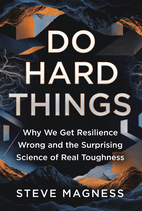
Do Hard Things by Steve Magness Book Cover

by Steve Magness

Steve Magness's Do Hard Things dismantles the broken "toughness" model of stoic suppression and authoritarian control, offering a science-backed framework for genuine resilience through self-awareness, acceptance, and autonomy. Written for coaches, leaders, athletes, and anyone seeking to transform hardship into growth.

On Insta.page you also get an Apply This Book tool that lets you combine insights from up to 3 books to solve your specific situation.

Chapter mindmaps

Free preview: chapters 1–4 are fully interactive. Click any node to expand or collapse. Subscribe to unlock the rest.

Chapter 1: Chapter 1: From Tough Coaches, Tough Parents, and Tough Guys to Finding Real Inner Strength

Key concepts: Chapter 1: From Tough Coaches, Tough Parents, and Tough Guys to Finding Real Inner Strength

1. Chapter 1: From Tough Coaches, Tough Parents, and Tough Guys to Finding Real Inner Strength

The Flawed Traditional Definition of Toughness

  • Stoicism, grit, and bulldozing through pain
  • Masculine ideal of enduring without complaint
  • Prioritizes appearance over true resilience

Bobby Knight's Authoritarian Model

  • Toughness as overcoming obstacles without self-pity
  • Methods based on fear, control, and humiliation
  • Winning results but abusive coaching style

Authoritarian Parenting and Callous Language

  • High demandingness, low responsiveness parenting style
  • Leads to lower independence and higher aggression
  • Phrases like 'man up' reinforce fake toughness

Deadly Consequences of Fake Toughness

  • Jordan McNair died from heatstroke in 2018
  • Rhabdomyolysis cases from 'toughen up' workouts
  • Creates fragile individuals dependent on external fear

Redefining Real Toughness

  • Experiencing discomfort and leaning in thoughtfully
  • Pete Carroll's approach: meditation, yoga, trust
  • Research shows trust promotes mental toughness

The Four Pillars of Real Toughness

  • Ditch the Facade of fake strength
  • Listen to Your Body's distress signals
  • Respond Instead of React to challenges
  • Transcend Discomfort through preparation

Author's Personal Collapse and Lesson

  • Vocal cord issue triggered breathing failure on track
  • Pushing through made the problem worse
  • Learned to relax when instinct said tighten up

Chapter 2: Chapter 2: Sink or Swim: How We Took the Wrong Lesson from the Military

Key concepts: Chapter 2: Sink or Swim: How We Took the Wrong Lesson from the Military

2. Chapter 2: Sink or Swim: How We Took the Wrong Lesson from the Military

The Junction Boys Myth

  • Bryant's 1954 camp: 70 of 100 players quit
  • Season ended with 1 win, 9 losses
  • Only 8 survivors played on 1956 championship team
  • Camp was about weeding out, not building grit

Misunderstood Military Model

  • Culture borrowed 'sink or swim' from military image
  • Hell Week sorts existing toughness, doesn't develop it
  • Military has moved past this approach

SERE Training: The Real Lesson

  • Classroom training comes before stress exposure
  • Stress inoculation: teach skills first, then apply
  • Coping strategies learned before facing hardship

Modern Military Mental Coaching

  • All branches adopted psychological performance coaching by 2000s
  • Skills: goal setting, self-talk, attention control
  • RAND: master mental skills before stress exposure

The Inner Spiral

  • Sequence: feel → inner debate → urge → decision
  • Brain seeks fastest exit from uncertainty
  • Negative thoughts are protective alarms, not weakness

Real Toughness Defined

  • Not ignoring alarm or powering through
  • Pause between unease and reaction
  • Choose purposeful response over instinctive one

Thriving Under Pressure

  • Appraise stress as challenge, not threat
  • Use wide range of coping tactics
  • Train biology and psychology to navigate discomfort

Chapter 3: Chapter 3: Accept What You Are Capable Of

Key concepts: Chapter 3: Accept What You Are Capable Of

3. Chapter 3: Accept What You Are Capable Of

The Expectation-Reality Gap

  • Brain compares expectations to actual experiences
  • Performance = Actual demands + Expected demands
  • Honest expectations enable steady pacing
  • Blind confidence is less effective than accurate appraisal

Challenge vs. Threat Mindset

  • Perceiving stress as challenge keeps you functional
  • Threat perception triggers survival mode shutdown
  • Veterans secrete adrenaline; novices secrete cortisol
  • Accurate appraisal is the sweet spot for toughness

Setting Effective Goals

  • Set appropriate goals that stretch without overwhelming
  • Authentic goals reflect your true self, not others' expectations
  • Process-oriented goals give actionable feedback
  • Narrow success definitions trigger protection mode

Stress Distorts Self-Perception

  • Fatigue and pain make you underestimate abilities
  • Sleep deprivation reduces perceived capability
  • Recognize negative bias under stress
  • Course-correct by focusing on strengths and opportunities

Priming for Accurate Appraisal

  • True toughness starts before the challenge
  • Expectations set stage for biological reactions
  • Prime mind by focusing on strengths, not weaknesses
  • Clear sight of reality is foundation of real grit

Chapter 4: Chapter 4: True Confidence Is Quiet; Insecurity Is Loud

Key concepts: Chapter 4: True Confidence Is Quiet; Insecurity Is Loud

4. Chapter 4: True Confidence Is Quiet; Insecurity Is Loud

The Quiet Insecurity of High Achievers

  • Buddy Edelen shattered records but couldn't trust rest
  • Obsessive overwork masks fear of stopping
  • Pattern seen in entrepreneurs and CEOs

Confidence as a Cognitive Filter

  • Elite athletes all experience low confidence
  • Confidence tints how we see challenges
  • High confidence expands focus and resilience
  • True toughness means acting despite doubt

The Failure of Fake Confidence

  • Faking it until you make it ignores reality
  • Self-esteem movement was built on weak research
  • Overconfidence triggers crisis when reality hits

Contingent Self-Worth Traps

  • Seeking self-esteem creates dependence on praise
  • External rewards lead to least improvement
  • Genuine confidence comes from doing the work

Lower the Bar, Raise the Floor

  • Focus on what you can reliably repeat
  • Consistency breeds security over perfection
  • Stop chasing best performance

Embrace Vulnerability and Evaluation

  • Acknowledge weaknesses without shame
  • Use evaluative integration for balanced view
  • Hiding flaws gives them power

Develop a Quiet Ego

  • Turn down defensiveness and self-protection
  • Absorb criticism without losing footing
  • Calm confidence doesn't need to shout

Chapter 5: Chapter 5: Know When to Hold ’Em and When to Fold ’Em

Mindmap locked. Subscribe to unlock all chapters of Do Hard Things.

Subscribe to unlock

Chapter 6: Chapter 6: Your Emotions Are Messengers, Not Dictators

Mindmap locked. Subscribe to unlock all chapters of Do Hard Things.

Subscribe to unlock

Chapter 7: Chapter 7: Own the Voice in Your Head

Mindmap locked. Subscribe to unlock all chapters of Do Hard Things.

Subscribe to unlock

Chapter 8: Chapter 8: Keep Your Mind Steady

Mindmap locked. Subscribe to unlock all chapters of Do Hard Things.

Subscribe to unlock

Chapter 9: Chapter 9: Turn the Dial So You Don’t Spiral

Mindmap locked. Subscribe to unlock all chapters of Do Hard Things.

Subscribe to unlock

Chapter 10: Chapter 10: Build the Foundation to Do Hard Things

Mindmap locked. Subscribe to unlock all chapters of Do Hard Things.

Subscribe to unlock

Chapter 11: Chapter 11: Find Meaning in Discomfort

Mindmap locked. Subscribe to unlock all chapters of Do Hard Things.

Subscribe to unlock

Chapter 12: Chapter 1: We Are All in Survival Mode

Mindmap locked. Subscribe to unlock all chapters of Do Hard Things.

Subscribe to unlock

Continue exploring Do Hard Things