Do Hard Things Key Takeaways
by Steve Magness
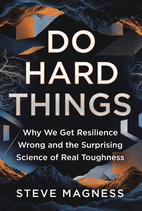
5 Main Takeaways from Do Hard Things
Real Toughness Is Relaxation and Control Under Pressure
The author's own collapse from a breathing problem showed that the 'push through it' model fails. True toughness means staying calm and in control precisely when discomfort peaks, a skill that applies to sports, parenting, leadership, and daily life.
Ditch the Facade of Toughness and Embrace Vulnerability
Most people confuse loud arrogance with confidence, but real confidence is quiet and grounded in experience. Acknowledging your weaknesses disarms defensiveness and builds genuine strength, as shown in the book's chapter on quiet confidence.
Your Emotions Are Messengers, Not Dictators
Instead of ignoring feelings or being ruled by them, learn to read and interpret internal signals accurately. Using precise language like 'I'm experiencing anxiety' transforms emotions into useful tools for decision-making, not commands to obey.
Respond Instead of React by Pausing and Choosing
The brain's default under stress is to react impulsively. Toughness is the ability to pause and run the feel-debate-urge-decision cycle, letting you choose wisely whether to persist, quit, or shift strategy based on the situation.
Build a Foundation of Autonomy, Belonging, and Safety
Sustainable resilience requires an environment where you have choice, feel you belong, and can take risks without fear. Fist bumps, unstructured moments, and psychological safety create trust—far more than forced toughness or micromanagement.
Executive Analysis
The five takeaways together redefine toughness as a skill of inner steadiness and self-awareness, not brute endurance. Magness dismantles the flawed 'push through' model by showing that real strength comes from relaxing under pressure, embracing vulnerability, treating emotions as data, pausing before reacting, and building supportive environments. Each takeaway counters a common myth—for instance, that confidence means never doubting—and replaces it with a science-backed, actionable approach that applies across sports, parenting, and leadership.
This book matters because it offers a practical antidote to toxic hustle culture and the 'sink or swim' mentality. Magness provides clear tools like the feel-debate-urge-decision cycle, reappraisal techniques, and the four pillars of genuine toughness. Sitting at the intersection of sports psychology, neuroscience, and leadership, it empowers readers to handle high pressure without burnout and helps leaders foster resilience in others through autonomy and connection. It's a timely, research-driven reframing of what it means to do hard things.
Chapter-by-Chapter Key Takeaways
From Tough Coaches, Tough Parents, and Tough Guys to Finding Real Inner Strength (Chapter 1)
The author's collapse from a breathing problem revealed the limits of the "push through it" model of toughness
Real toughness requires relaxation and control precisely when discomfort peaks
The same principles apply far beyond sports—to parenting, leadership, and everyday life
Most people operate with a fundamentally flawed definition of toughness that prioritizes appearance over genuine strength
The book will introduce four pillars: Ditch the Facade, Listen to Your Body, Respond Instead of React, and Transcend Discomfort
Try this: Redefine your view of toughness by practicing relaxation and control when discomfort peaks, rather than blindly pushing through—start by taking a slow breath during a stressful moment.
Sink or Swim: How We Took the Wrong Lesson from the Military (Chapter 2)
The feel-debate-urge-decision cycle drives both freak-outs and purposeful responses.
The brain craves certainty and will take shortcuts to end discomfort, even costly ones.
Toughness isn’t ignoring the alarm—it’s learning to pause before reacting, so you can choose wisely.
Try this: Next time you feel a surge of panic or frustration, pause to run through the 'feel, debate, urge, decision' cycle—label the feeling, debate your options, resist the urgent reaction, then choose your response.
Accept What You Are Capable Of (Chapter 3)
Process-oriented goals give you actionable feedback and protect motivation when outcomes are uncertain.
Stress and fatigue distort your perception of your own abilities—recognize that you may be underestimating yourself and adjust accordingly.
Under stress, the brain defaults to a negative bias; prime yourself by focusing on strengths and opportunities before a performance.
Try this: Replace outcome goals with process-oriented ones, and before a stressful performance, consciously remind yourself of your strengths to counteract your brain's negative bias.
True Confidence Is Quiet; Insecurity Is Loud (Chapter 4)
Real confidence is quiet and grounded in experience; loud arrogance is a mask for insecurity.
Overconfidence causes an action crisis—it tricks your brain into thinking the task is easy, then crashes when reality hits.
Build confidence by raising your floor (consistent performance) instead of only chasing your ceiling.
Embrace vulnerability; acknowledging weaknesses disarms them and prevents defensiveness.
Trust the work—confidence comes from purposeful practice, not fear-based repetition.
Quiet your ego by staying open, self-aware, and flexible; evaluative integration strengthens you.
Try this: To build genuine confidence, focus on raising your consistent baseline performance rather than chasing peak moments, and openly acknowledge your weaknesses to prevent defensiveness.
Next chapter: “Know When to Hold ’Em and When to Fold ’Em” is locked
Keep learning from Do Hard Things — and unlock all 600+ book summaries with audio, mindmaps and AI Q&A.
$0.00 due today · 7 days free, then $89.99/year ($7.49/mo) · Cancel anytime before day 7
plus sales tax where applicable