Digital Marketing Made Simple Quotes
by Barry Knowles
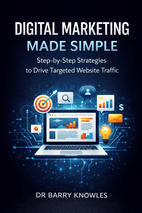
Inside you will find quotes that cut through the noise and get straight to what matters. They cover strategy, focus, patience, and the real purpose behind digital marketing. These are not just clever lines but practical insights you can apply today.
Barry Knowles has a gift for turning complex ideas into simple truths. Every quote feels like a conversation with someone who has been in your shoes. The book earns its quotability by balancing honest reality checks with actionable advice, making it a resource you will want to return to again and again.
Top Quotes from Digital Marketing Made Simple
“Digital marketing doesn't have to be complicated.”
From the 'Key takeaway' section near the end of the introduction.
This simple, direct statement challenges a widespread belief and offers immediate relief, encapsulating the book's core message.
“Digital marketing isn’t just jargon or a passing trend.”
Opening statement of the section busting myths about digital marketing.
It directly challenges the common dismissal of digital marketing as hype, establishing its lasting importance in a single, confident sentence.
“Increased website traffic alone is meaningless unless visitors are encouraged to take action.”
The author explaining that traffic without conversion is futile.
It highlights the importance of purposeful engagement over vanity metrics like raw visitor numbers.
“Digital marketing is about making wise, focused choices rather than simply chasing scale.”
The author summarizing the core principle of effective digital marketing.
It reframes success from quantity to quality of decisions, resonating with business owners seeking efficiency.
“The best content not only informs—it persuades.”
The author explains the role of content marketing.
This short, memorable phrase defines the true purpose of content, inspiring marketers to create material that drives action, not just awareness.
“Spreading yourself too thin reduces your impact and drains your resources.”
From the chapter on choosing digital channels, advising entrepreneurs against trying to be everywhere at once.
This line captures a universal pain point for small business owners, emphasizing the value of focus over breadth.
“Many entrepreneurs find that their most significant breakthroughs happen when they stop chasing trends and focus on what worked initially, often just one well-executed strategy, before scaling outward.”
Concluding advice in the chapter on selecting digital channels.
This quote reframes success as mastery rather than novelty, encouraging readers to double down on proven tactics.
Themes Behind the Quotes
One clear theme is the importance of focus over spreading yourself too thin. The quotes repeatedly warn against chasing every trend or platform and instead urge you to pick what works and do it well. Patience and gradual progress are celebrated over instant wins, with an emphasis on learning from data and adapting as you go.
Another major theme is the shift from vanity metrics to real results. Simply getting more website traffic means nothing if visitors do not take action. The quotes stress the need for a strategic mindset, a strong brand identity, and a deep understanding of your audience. They also highlight how digital marketing levels the playing field for small businesses, as long as you make wise, deliberate choices rather than trying to do everything at once.
Quotes by Chapter
Introduction
“This frustration is real and shared by thousands of entrepreneurs and small business owners across industries.”
The author, Dr. Barry Knowles, acknowledges the reader's feeling of being lost in digital marketing.
It validates a common pain point, making readers feel understood and less alone in their struggles.
“My mission is clear: to make digital marketing understandable and accessible.”
Dr. Barry Knowles states his purpose at the start of the chapter.
This concise, powerful statement sets a clear promise and establishes trust, showing the author's commitment to cutting through complexity.
“You deserve a roadmap that guides you every step of the way.”
The author reassures the reader that they should not settle for guessing or less effective methods.
It reframes the reader's desire for help as a deserved right, empowering them to seek structured guidance.
1.1 Busting the Myths: What Digital Marketing Is (And What It Isn’t)
“Unlike traditional marketing's one-way, static ads in print, TV, or radio, digital marketing is interactive, trackable, and adaptable in real time.”
The author contrasts traditional and digital marketing to clarify what digital marketing truly is.
This succinctly captures the core advantage of digital marketing—interactivity and real-time adaptability—making the distinction crystal clear for readers.
“You gain immediate insight into who engages with your message, what actions they take, and what content is effective.”
Explaining the trackable nature of digital marketing after the contrast with traditional methods.
It highlights the powerful data-driven feedback loop that empowers businesses to optimize campaigns, a key benefit that resonates with anyone seeking measurable results.
“Contrary to popular belief, digital marketing isn’t just about posting on Facebook or sending mass emails with generic deals; it’s more than simply having an online presence.”
Busting the myth that digital marketing is limited to basic social media or email blasts.
This quote dismantles a widespread oversimplification, encouraging readers to see digital marketing as a strategic, multifaceted discipline rather than a checkbox task.
1.2 Defining Digital Marketing: Past, Present, and Future
“Digital marketing requires patience, ongoing planning, and adaptability. Instant wins are rare; most progress occurs gradually.”
The author discussing realistic expectations for digital marketing efforts.
It dispels the myth of quick success in digital marketing and encourages a long-term, disciplined approach.
“You don't need advanced technical skills but rather a strategy and a strong understanding of your audience.”
The author demystifying digital marketing for newcomers.
It empowers readers by shifting focus from technical barriers to strategic thinking and audience insight.
1.3 The Digital Marketing Ecosystem: Channels and Interconnections
“Adaptability will determine success. Businesses that stay flexible, test new channels, and learn from data will succeed as technologies and consumer habits change.”
The author concludes the discussion on digital marketing trends.
This line succinctly captures the core survival skill in a rapidly evolving landscape, motivating readers to embrace change and continuous learning.
“Consumers expect seamless online experiences; they research before making a purchase and trust digital reviews as much as personal referrals.”
The author describes modern consumer behavior.
It highlights the shift in trust and expectation, reminding businesses that digital credibility is now as vital as word-of-mouth.
“Digital marketing enables small businesses to compete with industry giants by offering targeted outreach options within any budget.”
The author discusses the entrepreneurial landscape.
This empowering statement proves that size is no barrier to success, giving small businesses confidence to leverage digital tools effectively.
1.4 How to Set Realistic Goals Using the SMART Framework
“The SMART framework—Specific, Measurable, Achievable, Relevant, Time-bound—offers structure and discipline, turning vague ambitions into actionable targets.”
The author introduces the SMART framework in the chapter on setting realistic goals.
This line clearly defines the SMART acronym and immediately communicates its value in transforming fuzzy ideas into concrete plans, making it a central takeaway for readers.
“Goal-setting is not just busywork; it's a shield against wasted spending and time.”
The author emphasizes the practical importance of goal-setting after describing a real-world example.
This sharp, memorable statement reframes goal-setting as a protective tool, resonating with anyone who has seen marketing budgets wasted without clear objectives.
“Only after defining a SMART goal—“convert 5% of social visitors to buyers within three months’— did they identify weak points and make effective adjustments.””
The author recounts a case where a business fixed its social ad strategy after adopting a SMART goal.
The specific example (including the typo) shows how SMART goals expose weaknesses and drive corrective action, making the framework tangible and credible.
“SMART goals offer focus, responsibility, and a clear path for ongoing improvement.”
The author concludes the section by summarizing the benefits of the SMART framework.
This concise, affirming sentence encapsulates the core promise of the chapter, leaving readers with a motivating and actionable closing thought.
1.5 Choosing Your Digital Battleground: Website, Social, Email, or Search?
“Its power comes from direct communication: a targeted list is an asset you own, not one borrowed from another platform.”
Describing the strength of email marketing in the same chapter.
It highlights a crucial distinction between owned and rented audiences, empowering readers to invest in long-term assets.
“To achieve quick sales, consider launching with PPC or Google Ads. To foster long-term loyalty, prioritize email and content. To build community and engagement, prioritize social platforms where your target audience is most active.”
From the section aligning goals with specific channels in the chapter.
This concise, actionable framework gives readers a clear decision tree for matching objectives to channels.
1.6 Aligning Digital Marketing With Your Business Model for Maximum Impact
“One-size-fits-all approaches—such as copying competitors’ social media calendars or placing generic ads across platforms—can quickly waste time and money, leaving you discouraged and far from your goals.”
The author warns against generic marketing tactics that fail to account for business differences.
This vivid warning resonates with entrepreneurs who have tried copycat strategies and felt frustrated; it validates their experience and encourages a more tailored approach.
“Regardless of your industry, aligning your digital efforts with your unique business model transforms effort into results, ultimately leading to sustainable growth.”
The author concludes the section with a universal takeaway for all businesses.
It delivers an empowering message that customization is possible in any field, motivating readers to trust the process and invest in alignment.
2.1 Crafting Your Brand Identity for Digital Platforms
“The difference lies in brand identity: the combination of visuals, messaging, and tone that signals who you are and what your business represents.”
From the opening paragraph, explaining the key factor that makes brands stand out.
This line provides a clear, concise definition of brand identity, making it a fundamental takeaway for entrepreneurs. It frames brand identity as a strategic tool rather than just aesthetics.
“Consistency is crucial: if your Instagram is playful but your website is formal, it creates confusion.”
From the section on consistency across digital platforms.
Uses a relatable, concrete example to illustrate why inconsistency harms brand trust. The contrast between playful and formal makes the warning instantly memorable.
“When designing a logo for digital use, focus on clarity at any size to make sure it looks sharp as an app icon or social avatar.”
From the advice on crafting visual identity for digital platforms.
Offers actionable, practical guidance that solves a common pain point for small business owners—logos that don't scale well. It's specific and easy to apply.
“Maintaining a strong brand identity is an ongoing process—digital assets can become outdated as trends and platforms change.”
From the section on quarterly reviews and keeping brand identity current.
Reminds readers that brand identity requires regular attention, motivating them to schedule updates. The phrasing normalizes change and reduces complacency.