As an Amazon Associate, we earn from qualifying purchases.
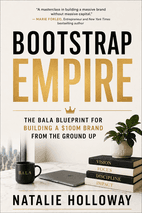
Natalie Holloway's Bootstrap Empire presents a counterintuitive blueprint for building a business without outside funding, teaching aspiring entrepreneurs how to turn constraints into competitive advantages through practical steps like launching first, refining later, and staying customer-obsessed. Written for those lacking venture capital connections who want sustainable success without selling their soul.
On Insta.page you also get an Apply This Book tool that lets you combine insights from up to 3 books to solve your specific situation.
Chapter mindmaps
Free preview: chapters 1–4 are fully interactive. Click any node to expand or collapse. Subscribe to unlock the rest.
Chapter 1: PART I: The Bootstrapper's Mindset
Key concepts: PART I: The Bootstrapper's Mindset
PART I: The Bootstrapper's Mindset
Bootstrapping's Core Lessons
Forces mastery of every business role
Creates obsession with customer feedback
Makes mistakes inexpensive tuition
Teaches value of every dollar
Essential Tool Kit for Launch
E-commerce platforms like Shopify
Design tools: Canva, Figma, Looka
Marketing engines: Dash Hudson, CapCut
Finance tools: Kickfurther, QuickBooks
Mindset Shift: Grit and Persistence
Hustle is unglamorous but necessary
Determination built like a muscle
Pivot when nothing is happening
Failure often precedes success
Turning Points That Made It Real
Influencer Melissa Wood's endorsement
Free People Movement discovery
Feature in Shape magazine
Shark Tank airing and pandemic boom
Habits to Build Today
Build hustle culture as founder
Prioritize deep work for vision
Do hardest task first each day
Make quick, decisive decisions
Chapter 2: PART II: Building Your Empire from Scratch
Key concepts: PART II: Building Your Empire from Scratch
PART II: Building Your Empire from Scratch
Getting Started & Idea Generation
Just start; momentum feeds itself
Adopt a problem-solving mindset
List daily frustrations or market gaps
Find inspiration from shows or podcasts
Eight Essential Launch Categories
Research competitors, patents, and pricing
Develop product from sketch to prototype
Create short brand name and guidelines
Set up legal, finance, and business plan
Launch First, Refine Later
Launch minimum viable version quickly
Iterate based on real customer feedback
Break the mountain into baby steps
Avoid waiting for perfection
Bootstrapping & Constraints
Keep day job; reinvest all revenue
Negotiate everything; triple-bid costs
Use free marketing: partnerships, organic
Avoid multi-year contracts and debt
Common Growth Traps
Premature hiring leads to layoffs
Shiny object syndrome causes half-results
Overbuying inventory nearly breaks you
Don't delegate what you don't understand
Pitching & Handling Rejection
Always be pitching with a memorized spiel
Rejection is a numbers game
Separate self-worth from feedback
Control room energy and prepare outcomes
Operations & Mental Health
Map every step from sourcing to support
Pick realistic daily tasks and move forward
Guard equity and avoid short-term loans
Never neglect your mental health
Chapter 3: PART III: Scaling Without Selling Out
Key concepts: PART III: Scaling Without Selling Out
PART III: Scaling Without Selling Out
Financial Clarity
Master numbers to gain data-driven confidence
Profitability per order beats chasing top-line revenue
Use 'double, double, and buffer' pricing rule
Cash flow timing and inventory discipline are critical
Brand & Storytelling
Merge product with identity to evoke feelings
Evolve taglines with company culture
Differentiate through product, marketing, or both
Personal branding builds trust and drives revenue
Organic Growth Tactics
Use affiliate marketing and micro-influencer gifting
Create customer delight moments for word-of-mouth
Leverage partnerships, events, and daily organic social
Audit marketing tech stack to stay nimble
Smart Hiring
Early hires should be scrappy jack-of-all-trades
Test fit with freelancers before full-time commitment
Agencies offer flexibility without layoff risks
Hire slow, fire fast to avoid costly mistakes
Intentional Fundraising
Bootstrapping first; use Kickstarter or angels if needed
Keep at least 51% ownership with VC funding
Question every dollar and negotiate everything
Say no to protect focus and avoid FOMO
Scaling Momentum
Map product roadmap years ahead
Test new channels when one stalls
Engineer newness monthly to excite customers
Rest and reset to harness 'let's go' energy
Guardrails & Discipline
Create yes filter based on ROI and team efficiency
Limit meetings to protect deep work hours
Empower team and use habit stacking
Every no is a 'maybe later' for future opportunities