Bootstrap Empire Quotes
by Natalie Holloway
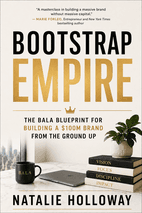
Bootstrap Empire is packed with lines that cut straight to the heart of building a business without outside funding. These are not polished corporate mantras. They are raw, honest truths from someone who lived the grind. You'll find advice about embracing imperfection, trusting data over emotion, and staying focused when no one is watching. Each quote feels like a hard won lesson from a trusted friend.
What makes the book so quotable is its unflinching honesty. Holloway doesn't sugarcoat the struggle, but she also celebrates the freedom and passion that keep founders going. Her words stick because they resonate with anyone who has chosen the harder path for the sake of their own vision. The quotes are memorable because they are both practical and deeply personal.
Top Quotes from Bootstrap Empire
“Bootstrapping is like taking the stairs instead of the elevator. Both paths can get you to the top, but bootstrapping demands more focus with every step and the discipline to keep going when no one's watching.”
Michelle Wahler's quote at the start of the chapter, setting the stage for the bootstrapping philosophy.
The vivid stair-versus-elevator metaphor immediately captures the core sacrifice and reward of bootstrapping, making it instantly memorable and relatable.
“Bootstrapping is falling out of love with perfectionism.”
The author lists this as one of the key benefits of bootstrapping.
This concise, punchy line distills a crucial mindset shift entrepreneurs must embrace—letting go of perfection to move fast and learn from real feedback.
“You will make a mistake—the trick is to not make the same mistake twice.”
The author reflects on early mistakes and learning opportunities in bootstrapping.
It reframes failure as a necessary teacher and offers a simple, actionable principle that encourages resilience and continuous improvement.
“You don't need to wait for that idea to come to you; you can take matters into your own hands and actively come up with that idea yourself.”
The author encourages aspiring entrepreneurs who lack a business idea to proactively generate one.
This reframes idea generation from a passive waiting game to an active, empowering process. It gives readers permission to stop searching and start creating.
“The best marketing doesn't scream—it resonates. Great brands earn trust by doing the hard, unsexy things really well: sweating the details, staying consistent, and showing up with intention every single time.”
From the epigraph opening the Marketing 101 section, attributed to Mélanie Masarin, founder of Ghia.
It contrasts loud marketing with substance, emphasizing consistency and intention, which resonates with founders who want to build authentic brands.
“Don't be scared of selling out; that's the best-case scenario.”
From the Cash Flow and Inventory section, discussing the drop model and inventory management.
It flips a common fear into a positive, encouraging entrepreneurs to prioritize cash health over stock availability.
“Because at the end of the day, you don't want people to be indifferent to your brand—you want them to love or hate it; you want a reaction.”
The author explains why she chose to stand out rather than play it safe with Bala's brand identity.
This line captures the boldness required to build a memorable brand; it challenges the fear of polarization and reminds entrepreneurs that strong reactions drive loyalty.
Themes Behind the Quotes
A central theme is the rejection of perfectionism in favor of progress. Multiple quotes emphasize starting with a good enough prototype, valuing speed over flawless execution, and learning from mistakes rather than avoiding them. This pragmatic mindset allows bootstrapped founders to move forward without the safety net of external funding.
Another key theme is the importance of freedom and intentionality. Bootstrapping preserves the founder's autonomy, letting them build a business driven by passion rather than investor demands. The quotes also highlight that building a strong brand requires consistency and emotional resonance, not loud marketing. Finally, there is a call to embrace strong reactions. Indifference is the enemy. Founders should not fear polarizing their audience, as strong opinions create loyalty.
Quotes by Chapter
PART I: The Bootstrapper's Mindset
“Ultimately, without VC bosses, I've kept my freedom, which is the reason you want to start your company in the first place, isn't it?”
The author explains why they chose to bootstrap instead of taking VC funding.
This line distills the core appeal of entrepreneurship—freedom—and challenges readers to question whether they truly want it.
PART II: Building Your Empire from Scratch
“Passion creates longevity for what you're working on; your obsession for the industry—in my case, fitness—helps you weather the storms and build something amazing.”
The author explains why passion is critical when choosing a business idea.
It reminds readers that enthusiasm alone isn’t enough—sustained obsession is what carries you through hard times. The line resonates because it acknowledges the grind while celebrating the reward.
“The prototype just has to be good enough—it doesn't have to be perfect.”
During the product development section, the author reflects on her early Bala Bangle prototype.
This liberates perfectionists from the paralysis of waiting for flawless execution. It’s a practical, stress‑relieving truth that applies far beyond product design.
“We wanted to keep moving forward because for us, speed was more important than perfection.”
The author explains the 'Bala first, refine later' philosophy after describing a design flaw in the prototype.
This line captures the essential startup mindset of prioritizing speed over perfection, encouraging founders to launch and improve iteratively.
PART III: Scaling Without Selling Out
“Your business is your baby, and naturally, things can get emotional, but when you can ground your feelings in concrete data, you'll navigate both the daily grind and the tough decisions with confidence.”
Celeste Barrett, cofounder of Funboy, offers this advice at the start of the chapter.
It perfectly balances the emotional attachment founders have with the necessity of data-driven decisions, a core theme of the book.