A Child Called It Quotes
by Dave Pelzer
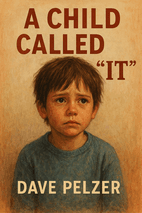
This page collects the most powerful lines from Dave Pelzer's memoir. You will find moments of raw despair, small victories, and a fierce will to survive.
What makes the book so quotable is its honesty. Pelzer writes without self pity, letting the facts speak. His simple language cuts through the horror, making each line feel like a hard won truth. These quotes offer a window into human endurance and resilience, and they remind us of the strength we all carry.
Top Quotes from A Child Called It
“Mother can beat me all she wants, but I haven't let her take away my will to somehow survive.”
David thinks this to himself after being hit by his mother for taking his hands out of the dishwater.
It captures the core of David's resilience and determination to endure even when his body is broken. This line resonates because it shows that abuse cannot extinguish his inner spirit.
“Please!” I whine, “Not today! Don’t you understand, it’s Friday?”
David begs Principal Hansen not to call his mother, fearing the weekend beatings that follow such calls.
The specificity of 'it’s Friday' underscores the terrifying predictability of his abuse. It shows how even a day of the week can be a trigger for immense fear.
“For the first time, / had won! Standing alone in that damp, dark garage, I knew, for the first time, that I could survive.”
After David successfully delayed Mother's attempt to burn him on the stove until his brother arrived home.
This marks a pivotal moment of empowerment where David realizes he can outthink his abuser and resolve to survive. The use of the forward slash (likely a typo for 'I') adds a raw, fractured quality to his triumph.
“You are a nobody! An It! You are nonexistent! You are a bastard child! I hate you and I wish you were dead!”
Mother screams this at David after he brings home a letter from his teacher praising him.
This verbal assault is the most brutal dehumanization in the chapter, stripping David of his very identity and showing the cruelty that fuels his despair.
“Before I opened the car door, I bowed my head and with peace in my heart, I whispered, “... and deliver me from evil.” “Amen.””
The author recalls the moment he left his abusive home for good.
This line captures his faith and inner peace despite years of abuse, showing the power of hope.
“I made a promise to myself that if I came out of my situation alive, I had to make something of myself. I would be the best person that I could be. Today I am.”
The author reflects on his determination to overcome his past.
This is a powerful declaration of resilience and self-empowerment, inspiring readers to take control of their lives.
“The more grisly my situation became, the more I felt as if some immense power were sucking me into some giant undertow. I fought as hard as I could, but the cycle never seemed to end. Until suddenly, without warning, I broke free.”
The author uses a driftwood metaphor to describe his abusive childhood.
The vivid imagery of an undertow perfectly conveys the helplessness of abuse and the sudden liberation, making it deeply moving.
Themes Behind the Quotes
The most striking theme is the struggle to maintain a sense of self in the face of relentless abuse. The mother's cruelty strips away everything, from name to dignity, yet the child clings to a core of willpower. Another key theme is the search for moments of peace and safety, like the warmth of a mother's embrace that is quickly contradicted by reality.
The quotes also highlight the transformative power of small victories, whether it's a stolen cookie or a moment of clarity. There is a pervasive sense of isolation and the desperate need for love and respect. Ultimately, the narrative moves from a place of despair to a promise of self improvement, showing that even in the darkest circumstances, the human spirit can find a way to break free.
Quotes by Chapter
1. The Rescue
“God," I tell myself, “She is so warm.” I don’t want to let go. I want to stay in her arms forever."”
David is hugged by the school nurse after she examines his scars and sees his fear.
This poignant moment reveals David's desperate hunger for affection and safety. The simple warmth of a hug becomes a powerful symbol of the love he has been denied.
“David Pelzer,” he says, “you're free.” “What?” I ask, clutching my only source of food. “I don’t understand. Aren't you taking me to some kind of jail?”
Officer Smith tells David he is free after driving him away from his mother's home.
This exchange captures David's disbelief and the tragic reality that freedom is so foreign to him he assumes jail is his destination. The officer's simple declaration marks a turning point from years of captivity.
2. Good Times
“I felt that the cookie’s message would lead me to my destiny.”
The author recalls a fortune cookie from his childhood.
This line captures the childlike innocence and trust in fate that contrasts sharply with the abuse he later endures.
“Mom told me she was crying because she was so happy to have a real family.”
After Christmas morning, the author asks why his mother is crying.
It reveals the mother's deep emotional investment in family happiness, making her subsequent cruelty all the more heartbreaking.
“Without a word, we stood watching the fireball-like sun as it sank behind the tall trees, leaving bright blue and orange streaks in the sky.”
The family is at the Russian River watching the sunset together.
This vivid, peaceful imagery embodies the perfect family moment that the author would later lose forever.
“I never felt as safe and as warm as that moment in time, at the Russian River.”
The author is being hugged by his mother while watching the sunset.
This line encapsulates the peak of childhood security and love, making the subsequent abuse and neglect even more devastating.
3. Bad Boy
“I felt I was living in a nightmare that Mother had created, and I prayed she would somehow wake up.”
David reflects after Mother raged about a letter from Santa calling him a bad boy.
This line captures the child's desperate hope that his mother's abuse is a bad dream from which she will awaken, highlighting the surreal terror of his daily life.
“I knew if I ever told anyone, the next “accident” would be worse.”
After being taken to the hospital for a dislocated arm that Mother claimed was from a fall, David keeps silent.
This line reveals the suffocating fear and isolation that keeps abused children silent. It powerfully illustrates the threat of escalating punishment that prevents disclosure.
4. The Fight for Food
“I could not satisfy my hunger; not even in my dreams.”
The narrator reflects on his constant hunger after waking from dreams of food he cannot taste.
This line encapsulates the depth of his deprivation, showing that even his subconscious offers no escape from starvation.
“Mother had even stopped using my name; referring to me only as The Boy.”
The narrator describes how his mother dehumanizes him as his abuse escalates.
The loss of his name signifies complete erasure of his identity, making this a chilling marker of his isolation and worthlessness.
“I wished I could dissolve and be gone forever. I wished I would never have to face another human being again.”
After his mother boasts about manipulating the principal, the narrator feels total emptiness and despair.
This raw expression of suicidal thoughts reveals the psychological breaking point of a child who sees no way out.
“She grabbed me by the back of the neck and led me to the kitchen. There, spread out on the counter top, was another full diaper.”
His mother forces him to eat feces after he refuses her earlier command.
The matter-of-fact description of such brutal degradation shocks readers and underscores the relentless cruelty he endures.
6. While Father Is Away
“I wanted my father. But more than anything, I wanted just an ounce of respect; one little bit of dignity.”
David thinks this to himself after Mother taunts him with food and then discards it.
This line captures the deepest needs of an abused child—not just rescue, but human decency and self-worth.
“Some day you and I will both get out of this madhouse.”
Father whispers this to David while they do dishes together.
It shows the father's false hope and his acknowledgment of the abuse, yet his inability to act makes it tragically hollow.
“I looked into his face. The change in Father frightened me. He had dark black circles around his eyes, and his face and neck were beet red. Father's once-rigid shoulders were now slumped over. Gray had begun to take over his jet-black hair.”
David describes his father's physical deterioration during one of his brief visits.
The vivid imagery reveals how the abuse wears down not only the victim but also the bystander, stripping him of vitality.
“Water was my only means of survival. When I filled the metal ice cube tray from the refrigerator, I would tip the corner of the tray to my mouth.”
David explains how he stayed alive during a ten-day starvation period.
This stark detail illustrates the extreme deprivation and the child's resourcefulness in clinging to life.
7. The Lord’s Prayer
“I came to believe that for me, there was no God.”
David reflects while sitting alone in the garage, feeling abandoned.
This line captures the profound spiritual despair of a child who feels utterly forsaken, resonating with anyone who has experienced a crisis of faith.
“I crawled on my hands and knees to the dogs' dish and ate what was left of the pancakes.”
David eats leftover pancakes from the dog's bowl after his mother scraped them there.
It illustrates the depths of degradation and the desperate survival instinct that overrides shame, making the reader viscerally feel his dehumanization.
“With no dreams, I found that words like hope and faith were only letters, randomly put together into something meaningless—words only for fairy tales.”
David describes his internal state after years of abuse, where hope and faith have lost all meaning.
The metaphor powerfully conveys how trauma can erase the ability to believe in a better future, making the reader understand his emotional numbness.