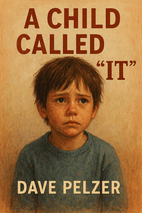
A Child Called It — Interactive Mindmaps

A Child Called It by Dave Pelzer Book Cover

by Dave Pelzer

Dave Pelzer's A Child Called It details his horrific childhood abuse and survival, serving as a pivotal memoir for raising public awareness. It is a stark, firsthand account for readers seeking to understand the realities of child abuse and resilience.

On Insta.page you also get an Apply This Book tool that lets you combine insights from up to 3 books to solve your specific situation.

Chapter mindmaps

Free preview: chapters 1–4 are fully interactive. Click any node to expand or collapse. Subscribe to unlock the rest.

Chapter 1: 1. The Rescue

Key concepts: 1. The Rescue

1. The Rescue

Morning Routine of Abuse

  • David performs chores to earn a meager breakfast of leftover milk and cereal scraps
  • He endures a blow from his mother and feigns submission to avoid further violence
  • His mother threatens him with Uncle Dan and instructs him to lie about his injuries
  • The scene establishes a pattern of control, starvation, and psychological manipulation

School Examination and Documentation

  • The school nurse conducts a routine, documented examination of David's injuries
  • She gently challenges his 'accident' stories by showing previous records
  • David experiences a rare moment of warmth and comfort during the nurse's hug
  • The examination provides official evidence of ongoing physical abuse

The Intervention and Confession

  • David is brought before a group of school officials and a police officer
  • Initially terrified, he is reassured and confesses the truth about his mother's abuse
  • He maintains the stabbing was an 'accident,' showing lingering self-protection
  • The adults listen solemnly, demonstrating a coordinated, risk-taking effort to save him

The Rescue and Realization of Freedom

  • The police officer calls David's mother to sever custody
  • David is placed in the care of juvenile authorities and driven away from Daly City
  • Seeing a highway sign, the officer tells David, 'you're free'
  • David leans back with a tear, internally whispering 'I'm free?'—a tentative first step toward liberation

Chapter 2: 2. Good Times

Key concepts: 2. Good Times

2. Good Times

A Family Portrait

  • Idyllic childhood in 1960s Daly City, described as the real-life 'Brady Bunch'
  • Father Stephen remembered as a strong, affectionate San Francisco fireman
  • Mother Catherine Roerva depicted as the radiant, determined heart of the household
  • Modest home with a view of the Golden Gate Bridge where brothers felt cherished

The Glow of Motherly Love

  • Mother as a perfectionist in housekeeping and gifted, inventive cook
  • Turned meals into educational experiences (e.g., full Chinese-themed night)
  • Used everyday events like a cat giving birth to teach life lessons
  • Driven by deep desire to create magic and surprise for her family

Seasons of Magic

  • Halloween traditions included searching for the 'Great Pumpkin' and gifts under pillows
  • Christmas was an elaborate celebration with full-house decorations and neighborhood tours
  • Mother cried tears of happiness at Christmas seeing her 'real family'
  • Falling asleep to Christmas lights and Bing Crosby created overwhelming excitement

Adventures and Security

  • Weekends included day trips to Golden Gate Park and Steinhart Aquarium
  • Mother meticulously planned spring picnics and summer camping trips
  • Russian River was the most cherished destination for swimming and exploration
  • Powerful memory of sunset by the river where narrator felt ultimate safety and love

Foundation of Childhood

  • Establishes an almost idealized childhood defined by attentive, creative parenting
  • Creates stark contrast with later trauma, heightening emotional impact
  • Mother portrayed as dynamic architect of family happiness and wonder
  • Narrator's identity rooted in these early, protected experiences with family

Chapter 3: 3. Bad Boy

Key concepts: 3. Bad Boy

3. Bad Boy

Systematic Psychological Warfare

  • Discipline escalates into humiliation, violence, and psychological branding
  • The 'mirror treatment' forces him to chant 'I'm a bad boy' while staring at his reflection
  • Punishment shifts from correcting behavior to instilling permanent shame
  • Brothers distance themselves for self-preservation, increasing his isolation

Mother's Deterioration and Rituals of Torment

  • Mother's daily life decays: she lies in a bathrobe, drinks, and watches TV
  • Her clothing signals her mood (bathrobe = terror, nice dress = temporary safety)
  • Forced 'searches' for lost items become solitary torment in the dark garage
  • She reinforces his identity as an 'incompetent loser' through repeated verbal abuse

Father's Complicity and Broken Alliance

  • Mother presents a safer, nicer facade when Father is home
  • The boy clings to Father as a protective shield during these moments
  • Father explicitly warns him to be a 'good boy' while Mother watches approvingly
  • The boy realizes Father sees him as 'bad' and their unspoken alliance is broken

Escalating Physical Violence and Medical Deception

  • Mother's drunken attack dislocates his shoulder while Father is away
  • She invents a false 'fell from bunk bed' story for the hospital and Father
  • The doctor recognizes the lie but fear keeps the boy silent
  • He understands that telling the truth would lead to worse 'accidents'

School as Refuge and Sabotaged Success

  • School provides freedom, friendship, and positive reinforcement
  • He earns 'happy face' papers and feels genuine pride in his achievements
  • Mother falsely claims he's being held back as a 'bad boy' who shamed the family
  • She punishes his external success to maintain control and reinforce his 'bad' identity

Emerging Self-Preservation Strategies

  • He learns to read subtle cues (clothing, mood) to predict danger
  • Fantasy provides temporary escape from loneliness and pain
  • He discovers his own ability to think, plan, and refuse to completely break
  • Silence becomes a survival tool when confronting authority figures like the doctor

Isolation and Abandonment at Aunt Josie's

  • He is unexpectedly dropped off at his aunt's house during a family trip, feeling hollow and unwanted.
  • He attempts to run away to find his family, driven by a painful desire to be with his mother.
  • His attempt results in severe punishment: a violent beating and having soap shoved down his throat.
  • He is permanently forbidden to speak unless spoken to, losing even his voice.

School as a Sanctuary and Home as a Prison

  • He excels academically in first grade, being labeled the class genius.
  • At school, he and his brother Stan are close companions, playing together at recess.
  • At home, their bond is forbidden; Stan must not acknowledge him under Mother's roof.
  • The contrast between his school identity and home reality deepens his isolation.

The Cruelty of Christmas and Maternal Control

  • Mother invents a letter from the North Pole declaring him a 'bad boy' undeserving of Santa's gifts.
  • On Christmas, he receives only two small gifts from relatives while others are lavished with presents.
  • He is forced to do chores in work clothes while the family celebrates.
  • He overhears an argument where Mother asserts sole control over his discipline, isolating him further from Father's dwindling protection.

The Cub Scout Charade and Public vs. Private Persona

  • Mother becomes a den mother, treating other boys like royalty to cultivate a perfect public image.
  • Other boys tell him how lucky he is, deepening his private anguish over her true nature.
  • When she gives up the role, he is relieved to attend meetings elsewhere and experience normalcy.
  • Her performance cracks when she violently prevents him from attending a meeting, revealing her cruelty to an outsider who fails to intervene.

The Stove Incident: A Turning Point in Survival

  • Mother falsely accuses him of playing on grass at recess and punishes him by forcing him to strip naked.
  • She turns on the gas burners, citing a story of a mother who made her son lie on a hot stove.
  • She thrusts his arm into a flame, burning his skin and hair, while mocking his father's absence.
  • Faced with the demand to lie on the flames, his survival instinct shifts from terror to strategic thinking.
  • He learns to stall by asking questions, accepting brutal punches as the lesser evil to avoid being burned alive, using time as an ally until his brother returns.

The Stove Incident as a Turning Point

  • The boy's strategic delay in dressing buys him crucial time until Ron's arrival interrupts the abuse.
  • He experiences a flicker of victory, realizing he has outmaneuvered his mother for the first time.
  • The physical pain of the burn is soothed privately, refusing to give his mother the satisfaction of hearing his distress.

Internal Vow and Psychological Shift

  • He vows to use foresight, strategy, and mental toughness as survival weapons against his mother.
  • He resolves never again to cry or beg, rejecting the role of a helpless victim.
  • He recognizes that his mind, will, and refusal to break are resources she cannot fully control.

The Permanence of the 'Bad Boy' Label

  • Mother reinforces the label to Ron, contrasting him with David to maintain her narrative.
  • Despite the unchanging external label, the boy's internal identity and strategy have fundamentally shifted.
  • The label serves to justify her abuse while isolating him within the family structure.

Isolation and the Garage as a Sanctuary

  • The cold, dark garage becomes a temporary refuge where he can regroup and plan.
  • His physical trembling from fear and anger underscores his solitary struggle.
  • This isolation forces self-reliance, cementing his decision to fight back mentally rather than physically.

Chapter 4: 4. The Fight for Food

Key concepts: 4. The Fight for Food

4. The Fight for Food

Systematic Weaponization of Hunger

  • Mother denies food as a primary tool of control and punishment
  • Constant physical hunger invades even dreams and thoughts
  • Visible neglect through torn clothes and bruises marks his deterioration
  • Reduction to dehumanized status as 'The Boy', confined to basement

Failed Survival Strategies and Escalating Cycles

  • Theft from classmates' lunches leads to school reports and intensified home punishment
  • Risky grocery store raids provide occasional success but inevitable discovery
  • Scavenging spoiled scraps from garbage becomes necessary for survival
  • Each failed scheme results in more severe punishment and deprivation

Crushing of External Intervention

  • Teacher Miss Moss notices alarming state and reports concerns
  • Mother manipulates school authorities by framing narrator as pathological liar
  • School's complicity secured through mother's convincing performance
  • Last hope for outside help destroyed, creating profound hopelessness

Ultimate Humiliation and Broken Bonds

  • Forced to eat vomited food under mother's supervision and father's passive watch
  • Final bond of trust with father shattered through his complicit silence
  • Banished to sleep under kitchen table on newspapers, then to garage
  • Russian River vacation incident: forced face into soiled diaper, severing past happiness

Psychological Warfare and Silent Terror

  • Mother becomes silent, smiling shadow after failed begging scheme discovery
  • Campaign of psychological torment stretches fear over hours and days
  • Aims to break spirit through exhaustion, uncertainty, and anticipation of punishment
  • Chemical torture: forced to swallow ammonia as ultimate act of control

Flickers of Defiance and Resilience

  • Secret acts like spitting out soap or savoring stolen scraps reclaim dignity
  • Mental transformation of meager bites into king's feast
  • Nighttime fantasies of safety and love provide psychological escape
  • Human spirit asserts itself through tiny acts of resistance amidst dehumanization

Complete Isolation and Shrinking World

  • Banished to garage with only cold army cot and gas heater
  • Develops survival posture of curling tightly to conserve warmth
  • Failed begging scheme with neighbors collapses when knocking on mother's friend's door
  • Transformation of run home into 'death march' under betraying cheerful sun

Psychological Warfare and Exhaustion

  • The mother employs prolonged psychological terror instead of immediate physical punishment
  • She shadows the narrator constantly, creating unbearable uncertainty and fear
  • The strategy aims to completely break his spirit through emotional and physical exhaustion
  • The narrator reaches a state of hallucination and mental unraveling from the pressure

The Ammonia Torture

  • The punishment involves forced ingestion of ammonia, causing immediate suffocation
  • The mother demonstrates the torture to the father, who watches with indifference
  • The narrator's body suffers severe physical damage, including a scraped-raw tongue
  • The father's passive complicity deepens the narrator's sense of betrayal and isolation

Small Acts of Resistance

  • The narrator finds tiny spaces for defiance within absolute control
  • Secretly spitting out soap becomes a moment of personal triumph
  • Stealing minuscule bits of frozen food becomes a regular act of rebellion
  • These small acts help preserve a sense of self and dignity

Imagination as Survival Mechanism

  • The narrator transforms stolen food scraps into imaginary feasts
  • Fantasy allows him to reclaim dignity by imagining himself as a king
  • Imagination serves as both emotional escape and psychological resistance
  • This mental tool helps counteract the dehumanizing effects of abuse

Patterns of Continued Abuse

  • After ammonia torture ends, other cruel "games" with chemicals continue
  • These lead to humiliating accidents that further degrade the narrator
  • The abuse follows a pattern of psychological breaking followed by physical punishment
  • The mother maintains absolute control through varied forms of torment

Continue exploring A Child Called It