Your Emergency Contact Quotes
by Jonathan Hung
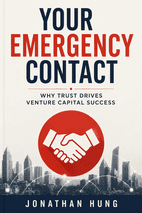
Here you will find the most memorable lines from Your Emergency Contact. Jonathan Hung writes with the honesty of someone who has learned the hard way. The quotes cover investing, relationships, personal growth, and loss. They are the kind of lines you want to save and send to a friend.
What makes this book so quotable is its refusal to offer easy answers. Hung shares hard truths about failure, pride, and what we truly value. His words feel like advice from a trusted mentor, not a self help guru. That is why they stay with you.
Top Quotes from Your Emergency Contact
“I've come to think of life in quarters. From ages zero to twenty, none of us really knows what we're doing, no matter how smart we think we are.”
The author shares his framework for understanding life stages.
This metaphor normalizes early confusion and reframes the pressure to have everything figured out by a certain age.
“Because, at the end of the day, this game isn't about just picking winners. It’s about knowing whom you want in your corner when things get hard.”
The author explains the deeper purpose of venture capital relationships.
It reframes VC from a transactional pursuit of returns to a human-centered endeavor, emphasizing trust and support during inevitable hardships.
“I’m not investing in your optimistic scenario. I'm investing in your backup plan.”
The author explains his investment philosophy when evaluating founders.
It cuts through hype with a stark, memorable demand for realism and preparation, resonating with anyone who values risk-aware decision-making.
“You sold us on the sizzle,” he said, smiling. “Now we want to taste the steak and make sure it is good.”
A fellow GP says this to a founder after a board meeting, using the steakhouse metaphor.
It perfectly captures the gap between initial hype and the need for real delivery, a core theme of the chapter.
“Failure is the most honest teacher. Success can polish your image, but failure shapes your character.”
The author reflects on what they've learned from setbacks in business and life.
This line resonates because it validates the uncomfortable truth that real growth comes from adversity, not achievement.
“I can honestly say that I'd trade all my wealth instantly just to have another day, even another moment, with him.”
The author reflects on the loss of his father, emphasizing that wealth cannot replace relationships.
This line powerfully conveys the ultimate priority of human connection over material success, resonating with anyone who has experienced loss.
“But the truth is, it’s not your first win that defines you. It’s how you show up after your first real loss.”
The author advises younger professionals about the nature of success and resilience.
This line flips the usual celebration of early victories and instead highlights character forged through failure. It’s a memorable, humbling reminder that true growth is revealed in how we handle setbacks.
Themes Behind the Quotes
A central theme is that lasting success depends on trust and genuine human connection. Hung argues that personal dynamics often outweigh economic returns. He values quiet consistency over flashy pitches and emphasizes that pride and ego block real learning. The best partnerships are built on mutual respect, not transactions.
Another theme is the transformative power of failure. Hung reframes setbacks as the most honest teachers. He encourages readers to shift from proving themselves to building something meaningful. Ultimately, success is about who you become along the way, not the wins you collect. Loss and grief also appear, reminding us that relationships outlast any deal.
Quotes by Chapter
Introduction
“I’m not someone who has it all figured out. Even now, as a general partner (GP) running a fund, I'm still learning. Every. Single. Day.”
The author admits his ongoing learning process despite his position.
It humbly rejects the myth of the all-knowing expert, reassuring readers that uncertainty and growth are normal even at high levels.
“Emotional intelligence mattered more than just raw intellect, and that realization gave me confidence.”
The author describes a turning point during a summer internship.
It validates readers who may lack traditional credentials, empowering them to trust their interpersonal skills over formal prestige.
“It's not OK to let pride keep us from learning. It's not OK to stay stuck because we're afraid to ask the question.”
The author critiques the 'fake it till you make it' mentality.
This direct challenge to pride and fear encourages vulnerability as a strength, making it a powerful call to action for growth.
Chapter 1 | Go on Lots of Dates
“I wouldn’t marry someone after two dinners, so why would I tie my name, my capital, and my future to someone I barely knew?”
The author reflects on his early mistake of jumping into partnerships too quickly.
This line powerfully uses a relatable dating analogy to expose the absurdity of rushing into business commitments without proper diligence.
“The people I trust most today aren't the ones who pitched perfectly to me. They're the ones who've shown, over time, that they deliver results quietly, consistently, and without ego.”
The author describes how he evaluates founders and partners based on repeated actions rather than initial impressions.
This quote celebrates humility and reliability over flashy presentations, a timeless lesson for building any meaningful professional relationship.
Chapter 2 | Develop Your One Sigma Confidence
“Clarity often comes after the decision, not before.”
The author reflects on the reality of leading in ambiguous situations.
This concise, counterintuitive truth challenges the common belief that you must be certain before acting, empowering readers to move forward despite incomplete information.
“Trust is the foundation of all strong partnerships.”
The author emphasizes the nonnegotiable importance of trust in investor-founder relationships.
It distills a universal principle that resonates across business and personal life, reminding readers that even the best data cannot replace genuine relational integrity.
“Sometimes the best investment is the one you don’t make.”
The author recounts a near-miss deal that taught him the value of restraint.
This line reframes success as the wisdom to say no, offering a powerful lesson in discipline and risk management that applies far beyond investing.
“You have to prepare for the thing you didn't see coming.”
The author shares his father's advice about protecting the blind side in business and life.
It captures the essence of proactive resilience, urging readers to anticipate the unforeseen and build contingency into their strategies.
Chapter 3 | Deliver More Than Just Sizzle
“If you don't ask, the answer is always no.”
A friend says this to the author while trying to get a better table at a restaurant in Newport Beach.
This simple, direct line serves as a universal reminder that initiative and clarity are essential in business and life.
“Personal dynamics are greater than economic returns.”
A family office investor shares this phrase, which the author has held onto.
It reframes success around trust and relationships, emphasizing that human connection often outweighs pure financial gain.
Chapter 4 | Embrace the Good, the Bad, and the Ugly
“Your conviction doesn’t guarantee market response.”
The author reflects on a lesson from working in his dad's clothing business, where customer taste was unpredictable.
This line challenges the common belief that strong personal conviction ensures success, urging founders to stay realistic about market reception.
“I finally understood that success was not about passing some standardized test or collecting some external badge of honor.”
The author describes a wake-up call during an unpaid internship at the Department of Labor.
It redefines success away from societal markers like prestige and credentials, emphasizing meaningful action over external validation.
“Past success does not guarantee future wins.”
The author warns founders against relying on their previous achievements to open doors.
This concise reminder underscores the need to prove oneself consistently, no matter how impressive the track record.
“Success is about who you become along the climb.”
The author shares his evolved perspective after years in venture capital.
It shifts the focus from external outcomes to personal growth and resilience, resonating with anyone on a long journey.
Chapter 5 | Find Your Emergency Contact
“Good relationships keep us happier and healthier. Period.”
Robert Waldinger, director of the Harvard Study of Adult Development, states this conclusion from decades of research.
It is a succinct, research-backed truth that cuts through the noise, affirming that relationships are the key to well-being.
“When you build relationships on trust, not transactions, you get something deeper. You get clarity. You get perspective. And you get the kind of partnership that outlasts any single deal.”
The author explains the value of building investor relationships based on trust rather than transactions.
This encapsulates the book's central thesis—that deep partnership yields lasting value beyond any single deal.
“The best mentors don’t act like they have all the answers. They're the ones who can laugh at themselves, speak honestly, and never feel the need to prove anything with their bank account or résumé.”
The author describes the qualities of effective mentors.
It offers a refreshing, humble view of mentorship that prioritizes authenticity over ego.
Chapter 6 | What’s Your Grudge?
“Your grudge is the quiet fire that won't go out, the formative moment you haven't fully moved past, the insult or dismissal or disillusionment that still shapes the way you move through the world.”
The author defines the central concept of a grudge as a driving force.
This line captures the essence of the chapter's thesis with vivid, memorable imagery, making it instantly relatable and quotable.
“And learning to work with it, rather than deny it, can be the difference between enduring the long road ahead or quietly bowing out when things get hard.”
After noting that a wound often underlies success, the author advises how to handle that wound.
It offers a clear, actionable choice that reframes a negative emotion as a tool for perseverance, resonating with anyone facing adversity.
“The people I have seen thrive long term, the ones who do not burn out or collapse under their own momentum, are often those who shift from proving something to building something.”
In the section 'Your Grudge Must Evolve,' the author discusses how sustainable motivation changes over time.
This insight distinguishes between reactive and generative drive, providing a blueprint for turning initial anger into lasting purpose.
“The best revenge is not isolation, and it is not winning just to prove others wrong. The most powerful response to setbacks is creating positive, collaborative outcomes.”
Near the end of the relational component section, the author reframes revenge into constructive action.
It subverts the traditional revenge narrative, offering a mature, relationship-centered path that feels both wise and empowering.
Chapter 7 | Live Life in Quarters
“A lifetime of showing up, grinding it out, making the tough calls, giving everything to his family and career ... and then he was gone. No long retirement. No beach house. No quiet afternoons sipping tea and retelling old stories. Just an envelope, a deposit, and a final breath.”
The author reflects on his father's death shortly after receiving his first Social Security check.
This passage starkly contrasts the promise of deferred gratification with the fragility of life, making readers question whether waiting for a future reward is worth the risk. The visceral, poetic imagery of missed retirement dreams resonates with anyone who has lost someone too soon.