Your Emergency Contact — Interactive Mindmaps

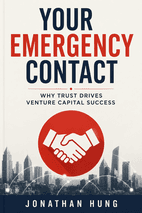
Your Emergency Contact by Jonathan Hung Book Cover

by Jonathan Hung

Jonathan Hung's Your Emergency Contact delivers a blunt, trust-driven guide to venture capital for early-stage founders and aspiring VCs, teaching that chemistry with a founder matters more than metrics and that rejection fuels resilience.

On Insta.page you also get an Apply This Book tool that lets you combine insights from up to 3 books to solve your specific situation.

Chapter mindmaps

Free preview: chapters 1–4 are fully interactive. Click any node to expand or collapse. Subscribe to unlock the rest.

Chapter 1: Introduction

Key concepts: Introduction

1. Introduction

The Author's Motivation

  • No practical guide existed for raising money or building businesses
  • Book is the mentor he wished he had
  • Driven by a hole in the market

The Real Story Behind the Author

  • Father's grit and hustle shaped his worldview
  • Access means nothing without action
  • Emotional intelligence beats Ivy League credentials
  • Father's illness taught resilience and care

The Myth of the Know-It-All VC

  • Most VCs are figuring it out as they go
  • Admitting ignorance is a superpower
  • Losses are inevitable; resilience matters most
  • Pride keeps people stuck

Who This Book Is For

  • New VCs needing behind-the-scenes practical advice
  • LPs considering partnerships with emerging managers
  • Early-stage founders learning VC thinking
  • Students and loved ones of VCs

The Grudge That Drives Everything

  • Every builder has a chip on their shoulder
  • Grudge fuels resilience and direction
  • Book aims to spare others from painful mistakes
  • Identify your deeper reason for building

Chapter 2: Chapter 1 | Go on Lots of Dates

Key concepts: Chapter 1 | Go on Lots of Dates

2. Chapter 1 | Go on Lots of Dates

Volume Builds Pattern Recognition

  • You can't know what fits without many experiences
  • Instinct is unreliable without data from volume
  • Set weekly targets for founder or investor meetings
  • Patterns emerge in yourself, not just in deals

Evaluate the Founder, Not the Pitch

  • The founder is everything; nothing else matters
  • Watch follow-through on small promises
  • Qualify the plan for the money, not vibes
  • Ask for backup plans, not optimistic scenarios

Get a Second Opinion

  • Recap promising meetings with a trusted voice
  • A second opinion reveals what you missed
  • Involve team, advisor, or spouse in decisions
  • Avoid falling in love with potential alone

Don't Rush the Relationship

  • Don't invest after one pitch like a first date
  • Always take a second meeting before deciding
  • Mistakes come from rushing into partnerships
  • Chemistry with a spreadsheet is a myth

Keep Showing Up to Find Your People

  • Feeling invisible means you haven't found fit yet
  • You need the right partner, not everyone's belief
  • Keep moving and learning the language of fit
  • Log meetings and lessons from each misfire

Chapter 3: Chapter 2 | Develop Your One Sigma Confidence

Key concepts: Chapter 2 | Develop Your One Sigma Confidence

3. Chapter 2 | Develop Your One Sigma Confidence

One Sigma Confidence Framework

  • Act at 70% certainty, not 100%
  • Contrasts with Six Sigma manufacturing thinking
  • Clarity often comes after the decision
  • Quantify conviction to separate instinct from insight

Four Pillars Scoring System

  • Score Team, Idea, Valuation, Alignment (1-4 each)
  • Maximum 16 points; invest at 12 (75%)
  • Team first: small, resilient, humble founders
  • Idea must solve real problem with proprietary edge

Post-Investment Accountability

  • Quarterly assessment: green, yellow, red buckets
  • Green: thriving, raising, profitable, exit-ready
  • Yellow: at risk but 12+ months runway
  • Red: no longer viable, under 6 months runway

When to Walk Away

  • Trust can outweigh traction and scores
  • Walk away if 16th point creates real doubt
  • Listen to the knot in your stomach
  • Restraint is as important as spotting wins

Building Confidence Muscles

  • Developed through reps, relationships, real decisions
  • Quantify your confidence on every deal
  • Filter advice by track record, not opinions
  • Show up after the check is written

Chapter 4: Chapter 3 | Deliver More Than Just Sizzle

Key concepts: Chapter 3 | Deliver More Than Just Sizzle

4. Chapter 3 | Deliver More Than Just Sizzle

Sizzle vs. Steak

  • Charisma opens doors, substance keeps you there
  • Pitch is sizzle; execution is the steak
  • Gap between pitch and performance defines credibility
  • Second meeting won on receipts, not charm

Respecting Other People's Money

  • Treat OPM with same care as your own
  • Founders often lose obsessive care after funding
  • Skin in the game changes behavior
  • Author invests 5-10% of own capital per fund

Reputation and Trust

  • Not all money is good money
  • Personal dynamics outweigh economic returns
  • Your word is your most valuable currency
  • Genuine curiosity builds lasting relationships

Post-Investment Communication

  • Real relationship begins after the wire transfer
  • Best founders send honest, concise updates
  • Sound alarm early, not when everything is on fire
  • Concrete questions build trust, vague optimism doesn't

Founder Behavior After Funding

  • Patterns emerge once the money hits the bank
  • Overpromising and underdelivering destroys trust
  • Stay grounded and own your roadblocks
  • Transparency in the 'yellow zone' earns respect

Beyond the Elevator Pitch

  • Good pitch opens door but doesn't carry to summit
  • Scaling needs a Sherpa, not just capital
  • Due diligence reveals what sizzle hides
  • Only 48% of Shark Tank deals actually close

The Student Mindset

  • Evolve leadership as team grows
  • Same approach fails when scaling from 3 to 20
  • Handle failure with maturity and honesty
  • Learning openly earns long-term investor trust

Continue exploring Your Emergency Contact