Warm Bodies Quotes
by John Marrs
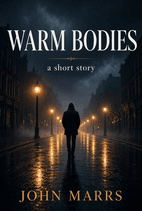
Welcome to a collection of lines from Warm Bodies by John Marrs. Here you will find sharp dialogue, tense narration, and revealing inner monologue. Some lines are darkly funny, some are chilling, and many work as standalone thoughts because they are short, blunt, and uncomfortably honest.
The novel is quotable because it lets ordinary moments sit beside disturbing ideas. Characters explain themselves in ways that feel reasonable, until you remember what they are actually saying. That mix of humour, dread, and self-awareness is what makes these lines stick with readers.
Top Quotes from Warm Bodies
“It's that relationships require honesty and openness. And I'm capable of neither.”
— Granny
While considering Michael’s interest in her and why she refuses romance, Granny explains her reluctance.
It reveals her self-awareness and guilt, suggesting she is hiding something that makes intimacy impossible. The line is a stark, memorable confession.
“Prisoners of war have suffered better treatment.”
The narrator grumbles while standing in the sweltering, airtight plastic shed where she works.
It captures the narrator's dark humor and the extreme discomfort of her secret work.
“My kind of diamond comes on a cutting disc for an angle grinder. Because those things can slice through skin and bone like a knife through butter.”
The narrator begins describing the tools and methods he uses to dismember bodies.
It immediately establishes the narrator's chilling practicality and reframes a familiar saying into something violent and memorable.
“So, if I can’t talk to anyone living, I talk to the dead. And they're great listeners.”
The narrator explains that because he cannot discuss his work with the living, he converses with the dead.
The line is darkly funny and haunting, turning his isolation into a grim rationale for his behavior.
“And I mean that quite literally. Because I pulled them out of his abdomen myself before scattering his body parts across the county.”
After reassuring Lucy that Harry will not return, the narrator silently admits what she did to him.
The line lands as a shocking confession, revealing the grandmother’s hidden brutality in plain, matter-of-fact language. Its calm specificity makes the violence even more disturbing.
“Believe me, if I was selling my body, I'd be in debt from the amount of refunds I'd be giving.”
— Mrs Houghton
Mrs Houghton continues her comic denial of Carly's prostitution suspicions.
It is a perfectly timed punchline that makes her both vulnerable and bitingly funny.
“Masks always slip, no matter how tight you wear them.”
— Brenda
Brenda reflects on Harry's brief periods of acting like a doting father after each child is born.
It distills the novel's theme of abusers hiding behind false charm, in one haunting image.
Themes Behind the Quotes
These lines circle around secrecy and self-justification. Many characters keep parts of their lives hidden, even from people they claim to care about. They tell themselves that their choices are necessary, practical, or deserved, which makes the gap between their public face and private actions a recurring source of tension.
Another theme is the ordinary container for extraordinary darkness. Family life, neighbourly politeness, and familiar routines sit alongside violence, isolation, and moral compromise. The quotes also explore loneliness and the ways people rationalise cruelty to protect their comforts or memories. Underneath the dark humour is a steady question about how well anyone can truly know another person, or admit what they are capable of.
Quotes by Chapter
Chapter 1: Today
“I love being around her, and missed her while she was away with her mum this weekend. Which in hindsight was a blessing, given recent events.”
— Granny
Walking Esme to Holmfield Farm, Granny reflects on missing her granddaughter over the weekend.
The casual mention of “recent events” plants an ominous seed, turning a tender line into foreboding. It shows love shadowed by something unspoken.
“The gate ahead is closed, so unless the dog that left me this gift is able to open and close a latch, it's deliberate.”
— Granny
After finding a dog poo on her doorstep, Granny reasons that it was left deliberately.
It transforms a petty annoyance into a quiet threat and establishes the narrator’s watchfulness. The logic is simple but sinister.
“I don't correct her. Instead, I smile to myself. ‘Oh yes, you're right,’ I reply. ‘So it does.”
— Granny
After Esme says a parsnip looks like a finger while they feed the pigs, Granny chooses not to correct her and agrees.
It is chillingly ambiguous: her quiet agreement hints at a darker understanding rather than a childlike game. The moment turns a mundane farm visit into something unsettling.
Chapter 2: A Month Earlier
“But full disclosure: I have already managed to wheedle out of my granddaughter Jessica what the plans are for today. I hate surprises but love that eight-year-olds can’t keep secrets to save their lives. Not like adults. We can lie at the drop of a hat.”
— Brenda
Brenda is being called into the school assembly hall for her retirement celebration, but she already knows the plan.
It establishes her wry, observant voice and her playful distrust of adults who can lie easily.
“Dad was still on a hospital ventilator when the neighbours started slipping notes through the letter box asking for first refusal when I sold it. They're heartless.”
— Frankie
Frankie explains why she refuses to sell her late father Albert’s cottage to villagers who asked for first refusal.
It is a brutally candid image of neighbours' greed arriving before grief has even passed.
“Most of them probably want to buy it to knock it down and build something bigger. But I grew up here and I'm not having my memories bulldozed for profit. And unfortunately for them, I don't need their money. I'd rather rent the property out than sell it to vultures.”
— Frankie
Frankie tells Brenda why she would rather rent the cottage than sell it to people she sees as vultures.
The line turns a property decision into a defense of memory, home, and integrity against profit.
“I accept a beautiful bouquet of red peonies and white lilies from Mr Armstrong, and an enormous card drawn and signed by all the children, which I'll treasure. Soon after, when I've returned to the staffroom and am hanging up my tabard one last time, my phone vibrates. Not my actual phone, but the burner. The one my family don't know about.”
— Brenda
At her retirement assembly, Brenda receives gifts and then gets a message on the secret burner phone her family does not know about.
It pivots from a warm farewell to a hidden life, ending on a quietly ominous note.
Chapter 3: 29 Days Earlier
“Sometimes I forget that, when you freeze a warm body, the fluids inside can make it expand. This one must have done just that, with enough force to push the lid open a crack.”
The narrator notices the freezer lid ajar and reflects on the human torso stored inside.
The matter-of-fact tone makes the horror feel routine, revealing how deeply the narrator has normalized her secret life.
“I thought my deliveries were cloaked under the cover of darkness and wouldn't garner attention from the neighbours. Clearly, I was wrong.”
After Lucy mentions a policeman's complaint about early-morning deliveries, the narrator realizes her secrecy has failed.
It marks the moment her hidden operations begin to surface, tightening the chapter's tension.
“I do wonder if we're being a bit harsh. Are we not giving what the kids call ‘Mean Girl Energy’?”
— CASSIE
In the village WhatsApp group, Cassie questions the others' harsh gossip about Brenda's shopping.
It sharply names the petty cruelty hiding behind neighborly concern, making the group chat sting.
Chapter 4: Twenty-Four Days Earlier
“I don’t need reminding there's a fine line between madness and sanity. But talking somehow makes what I do feel a little less insular.”
While cleaning the shed and reflecting on his solitary work, the narrator admits why he talks to the corpses.
It captures his self-awareness and loneliness without excusing his actions, making the horror feel uncomfortably human.
“But I'd be kidding myself if I believed the only people I dispose of are those who deserve it. Because it's more than likely that many are ordinary people who have found themselves in extraordinary circumstances.”
The narrator considers the backgrounds of the people he dismembers and admits not all are villains.
It deepens the moral horror by showing he knows his victims are not simply monsters, yet continues anyway.
Chapter 5: Twenty-One Days Earlier
“For obvious reasons I prefer to wait until there's no one else near my plot of land before I bury body parts.”
— Brenda
Brenda is waiting in her car at the allotment, reflecting on why she avoids burying body parts when anyone is nearby.
The line slips a grotesque confession into a mundane caution, making Brenda's secret both chilling and darkly funny.
“I suppose I'm kind of using her, but I do also value her friendship, even if I keep her at half an arm's length - as opposed to everyone else, who gets the full-arm treatment.”
— Brenda
Brenda considers how she uses Lizzie for information while still valuing their friendship.
The arm's-length wordplay and casual self-awareness reveal how she keeps everyone at a calculated distance.
“Even if wrapped in bags and with a handful of air fresheners scattered about, this balmy May does my Toyota no favours.”
— Brenda
Brenda explains why she dislikes leaving wrapped body parts in her car during warm weather.
It blends horror with a petty automotive complaint, a signature of the chapter's macabre humor.
“It was her body language, the way she was dragging her tongue over her scone, licking cream from the knife. It was like a scene from Fifty Shades of Grey.”
— Beth
In the village WhatsApp group, Beth describes Brenda's behavior toward Michael at the café.
The hyperbolic Fifty Shades comparison turns an ordinary flirtation into scandal and shows the group's gleeful exaggeration.
Chapter 6: Twenty Days Earlier
“Their dining room chatter serves as a reminder that, if I have to dismember and dispose of the dead to keep the family coffers full, then so be it.”
While listening to her grandchildren chat at dinner, the narrator reflects on the violent work that funds their lives.
It chillingly justifies horrific violence as an act of love, collapsing the distance between domestic warmth and cold-blooded disposal. The line reveals the narrator’s ruthless pragmatism in a single stroke.
“I'd float around their house like a ghost, in fear of waking the beast. That's why I want each of my grandchildren to make a mess, be noisy and cause chaos. To be the child I never was.”
The narrator remembers her fear-filled childhood and explains why she encourages her grandchildren to be loud and messy.
It turns a simple wish for childish chaos into a heartbreaking rebuke of her own silenced upbringing. The ghost image is haunting and memorable.
“We have always been a safe space for like-minded neighbours. Should anyone decide they are no longer in alignment with our opinions, they aren’t obliged to stay and I wish them all the best in a group that better suits them.”
— BETH
In the village WhatsApp group, BETH announces that Cassandra is no longer a member and invites others to leave if they disagree.
It captures the smiling authoritarianism of a clique, where exclusion is dressed up as polite well-wishing. The message feels familiar and sinister.
Chapter 7: Seventeen Days Earlier
“An intrusive thought sneaks its way in, wanting me to tell her that I can’t talk right now as I have two feet that need detaching from their legs waiting for me in the shed.”
— Mrs Houghton
A social worker arrives unexpectedly at Mrs Houghton's doorstep and asks to come in.
It instantly signals the narrator's dark secret and macabre humor, making the ordinary visit feel dangerous.
“It’s been so long since I've been to bed with a man, I could recertify myself as a virgin.”
— Mrs Houghton
When Carly suggests the house might be used for prostitution, Mrs Houghton denies it.
The self-deprecating joke defuses an absurd accusation while revealing her sharp, unfiltered voice.
“A middle-aged woman standing with a cricket bat above her head, readying herself to beat a social worker to death.”
Mrs Houghton has raised a cricket bat to attack Carly, but Carly is distracted by a phone call.
The image is horrifying and absurd at once, capturing how far the narrator will go to protect her secret.
Chapter 8: Thirteen Days Earlier
“I'd be rewriting history if I told myself killing him was a spontaneous act, or an accident. Because, truth be told, it was completely premeditated.”
— Brenda
While watching Noah play rugby, Brenda reflects on killing her son-in-law Harry.
It is a chilling admission that the killing was planned, not accidental, and shows how far Brenda was willing to go to protect Lucy.