Warm Bodies Themes
by John Marrs
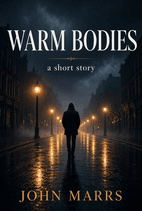
Underneath its plot, Warm Bodies is really about ordinary village and family life colliding with hidden violence. It wrestles with secrecy, self-protection, guilt, and the stories people tell themselves to justify terrible choices.
On this page, you'll find breakdowns of each major theme: double lives, surveillance and gossip, family protection as moral justification, cycles of domestic abuse, guilt and empathy, and the performance of normalcy. Concrete moments include WhatsApp rumours, Ring doorbells, Lucy and Harry, the shed, the burner phone, Holmfield Farm's pigs, and the parsnip that looks like a finger.
Major Themes in Warm Bodies
Double life and secrecy
The novel repeatedly shows characters living ordinary village and family lives while concealing violent, illegal work. Granny/Brenda/Mrs Houghton/the narrator hides a dismemberment-and-disposal business behind upcycling, cleaning and caregiving, using lies, a locked shed and a burner phone. The gap between public identity and private acts drives the plot and most of the suspense.
- Granny lies to Michael that she has work to do when she gets home, after reflecting that relationships require honesty and openness and she is capable of neither.
- Brenda receives a text on a burner phone her family don't know about: 'Monday. Time tbc.'
- The narrator rents a quarter-acre plot from Michael cash-in-hand 'under the guise of growing vegetables and fruits'.
- Brenda deposits her payments in smaller amounts and declares them as upcycling income.
Surveillance, gossip, and community judgment
Village life is policed through WhatsApp gossip, Ring doorbells, photographs, social services and police reports, and neighbours watching from windows. The community's scrutiny becomes hostile and invasive, turning ordinary neighbours into investigators and judges.
- Beth tells the Village Vibes WhatsApp group she has been photographing each dangerously parked vehicle and noting the times.
- Tracy reports seeing Brenda in a plastic suit and mask moving in and out of her shed and pouring buckets down the storm drain; Beth suggests Brenda is running a cannabis farm.
- Beth claims her Ring doorbell captured a car reversing up Brenda's driveway and Brenda answering the door to a man again.
- Michael says his late wife Rachel was in the group and that it criticised her after her death, accusing her of using her cancer for sympathy and comparing her wig to a scarecrow.
- Cassie challenges Beth's harsh tone, with the notes calling it 'Mean Girl Energy' and Beth defending her criticism.
Family protection and moral justification
Violence and body disposal are justified as necessary to protect or provide for family. Characters kill abusers, dismember bodies for money, and tell themselves that principles and morality cannot feed or house the people they love.
- Brenda recalls that killing Harry was premeditated and motivated by protecting Lucy.
- The narrator thinks that 'if I have to dismember and dispose of the dead to keep the family coffers full, then so be it'.
- Brenda tells herself that principles and morality are all well and good, but they will not put food on the table, clothes on her family's backs, or keep a roof over their heads.
- The narrator hopes that killing Harry broke the cycle for Jessica and her sister.
Cycles of domestic abuse
Domestic violence repeats across generations and shapes the family's choices. Lucy is abused by Harry and makes excuses for him, Noah fears becoming like his father, and the narrator reflects that the women in the family are drawn to the wrong men.
- Lucy is found battered and bleeding at seven months pregnant with Esme; she blames herself and hopes the baby will change Harry.
- Noah asks why his father hurts his mother and says he wishes his father was dead.
- The narrator recalls marrying a man like her own father and wonders whether the women in the family are 'genetically predisposed to be attracted to the wrong men. We're like flies to shit.'
- Brenda recalls that Lucy, her mother, and she herself read from the same script.
Guilt, empathy, and self-reproach
Despite the violence, characters show guilt and tenderness toward victims and family. The narrator invents backstories for corpses, admits many are ordinary people, and hates herself for harming Lucy's chances; Brenda is shaken by disposing of someone she knows.
- The narrator admits to talking to the corpses and inventing backstories, then concedes 'I'd be kidding myself if I believed the only people I dispose of are those who deserve it'.
- Brenda recognizes Riley as a local young man close to Noah's age, touches his cheek and promises to be gentle.
- The narrator thinks 'I am a terrible person' after Lucy deflates, and hates herself for taking the potential of a relationship away from the person who deserves it most.
- The narrator says there is no WhatsApp group or Mumsnet thread to discuss the job, so 'if I can't talk to anyone living, I talk to the dead. And they're great listeners.'
Performance of normalcy and deception
Characters perform ordinary roles—grandmother, cleaner, party host, grieving friend—while hiding crimes, and the community's rituals become stages for lies. False stories are maintained through WhatsApp messages, postcards and public appearances.
- Brenda tells the assembly she will spend her early retirement upcycling furniture, tending her allotment and looking after her grandchildren.
- The narrator's family returns from Blackpool unaware of the last few hours; the narrator is exhausted but has 'no intention of letting them see that'.
- Brenda lies that traffic delayed her, though she had actually been waiting in her car outside the allotment for an elderly man to leave before burying body parts.
- The narrator uses Lizzie's face to unlock her phone and sends WhatsApp messages as Beth to convince her friends she is away, and plans to send postcards to Riley's family pretending he is travelling.
Symbols and Motifs
The shed/workroom
A hidden, soundproofed workspace where dismemberment and disposal happen under the guise of upcycling; it represents the double life and the compartmentalisation of violence from family life.
- Granny works inside a soundproofed shed in a hazmat suit and gas mask, stripping a painted console table while a separate project delivered the night before remains the real focus.
- The narrator deep-cleans the shed with a pressure washer while wearing a fresh hazmat suit, then later plans to spray it with luminol and scrub it with hydrogen peroxide, bleach and enzymatic cleaners.
- Carly Hardacre asks to see inside the shed; Mrs Houghton lies that her recent projects were picked up last night.
- Tracy reports seeing Brenda in a plastic suit and mask moving in and out of her shed and pouring buckets down the storm drain.
- The narrator leaves the shed unlocked, and Lizzie slips in, sees Riley's corpse, and is killed.
The burner phone
A secret channel that connects Brenda to The Broker and the paid disposal work; it symbolizes the hidden life she keeps from family and neighbours, and later the mechanics of impersonation and deception.
- Brenda receives a text on a burner phone her family don't know about: 'Monday. Time tbc.'
- Brenda checks her hidden burner phone in the shed; there are no new messages from The Broker, who has been silent for a fortnight.
- The Broker previously messaged Brenda, arranged a trial run, and sent a burner phone; he knows her address without being given it.
The pigs at Holmfield Farm
The pigs represent disposal, consumption and the community unknowingly absorbing the evidence of violence; ordinary farm life masks the transformation of bodies into food.
- Esme feeds scraps to the pigs and notices a parsnip that looks like a finger.
- Brenda feeds Lizzie's severed hands and feet to the pigs at sunrise, intending the pigs' meat to be sold locally so the community consumes Lizzie.
- Michael tells Esme that pigs cannot eat some things, such as food with bristles, and that they will always shit out teeth.
- The narrator thinks 'They all deserve to have a little of Lizzie inside them'.
The parsnip that looks like a finger
A recurring domestic object that resembles a severed body part, it symbolizes how hidden corpses and violence intrude into ordinary family life and how easily the community can mistake remains for harmless food.
- In Chapter 1, Esme notices a parsnip that looks like a finger, and Granny agrees.
- In Chapter 14, Esme again notices a parsnip in the pig pen that looks like a finger; the narrator knows it is Lizzie's severed finger.