The Wilder Way Quotes
by Eva zu Beck
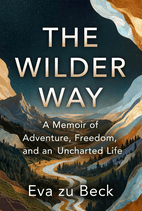
This collection brings together some of the most powerful lines from Eva zu Beck's memoir. You will find words about leaving a comfortable but hollow life behind, about the courage it takes to be truly alone, and about the messy process of figuring out who you are when all the labels fall away.
What makes this book so quotable is its raw honesty. Eva does not polish her doubts or failures. She writes about drinking too much, walking toward a wedding she did not want, and then walking away into the unknown. These quotes capture that turning point, that moment when fear and hope collide. They are for anyone who has ever felt stuck and wondered if there is another way.
Top Quotes from The Wilder Way
“I chose to be alone out here for a reason. And deep down I know that bravery isn't something you find by the side of the road. It's something you forge with the entire might of your daring, out of the depths of fear, doubt, and despair.”
The narrator regains composure and reflects on his purpose for being alone.
This powerful statement redefines courage as an active creation from hardship, inspiring readers to embrace their own struggles.
“How can you ever find yourself if you don't know what you're even looking for?”
The narrator wonders this as she watches other travelers with clear destinations while she has only a vague aim.
This question cuts to the heart of many self-discovery journeys—the paradox of seeking something undefined. It's a haunting, universal line that lingers long after reading.
“We were made to feel, to experiment, to laugh, to cry, to fail miserably, to triumph gloriously, to explore and discover and learn and fill our minds with wonder.”
The narrator reflects on the purpose of human existence after a friend encourages her to find her chi.
This powerful, rhythmic declaration affirms the richness of a full life, offering hope and a reminder that we are meant for more than mere survival.
“D didn’t have to define myself by my job, my relationship status, or the size of my wallet. It didn’t matter who I was, where I was from. I just was.”
The narrator experiences a moment of liberation while wandering the streets of Kathmandu.
It powerfully conveys the freedom of shedding societal labels and embracing a pure, unburdened existence, a core theme of the chapter.
“It's hard to picture yourself doing something if you've never seen anyone like you doing it. In order to be it, you first have to be able to see it.”
The narrator observes the lack of female travel hosts in media and considers her own path.
This statement is an empowering call for representation, inspiring readers to believe in possibilities beyond what they have witnessed.
“Maybe there was something about me that was broken, I thought, and I was like a compass with a faulty magnet that was simply incapable of pointing north, so instead quivered frantically, spinning from one direction to the next.”
The narrator sits on a Himalayan trail, overwhelmed and doubting herself after breaking down.
This vivid metaphor for feeling lost and directionless resonates deeply with anyone who has experienced self-doubt and the struggle to find their way.
“It's easy to fall in love with you,” Leo had once told me, “but very difficult to love you.”
Eva recalls a painful remark from her ex-husband Leo.
This line succinctly captures the paradox of being desired but not truly loved, haunting her new relationship and resonating with anyone who has felt unworthy of lasting love.
Themes Behind the Quotes
A central theme is the painful yet liberating process of shedding old identities. The author confronts the roles she thought she had to play, from corporate success to a marriage that felt like a lie. She realizes that true freedom comes from letting go of external validation and listening to an inner voice that has been silenced for years.
Another major theme is the embrace of uncertainty as a source of growth. The quotes repeatedly show that real strength is not found in comfort but in stepping into the unknown, whether that means traveling to dangerous places or admitting you have no idea what you are looking for. Along the way, connection with strangers and the natural world becomes a new kind of family, and the journey itself becomes the destination.
Quotes by Chapter
Prologue
“For the first time in twenty-eight years, I am truly and deeply alone.”
The narrator realizes their satellite messenger has stopped working, leaving them isolated in the Mongolian wilderness.
This line captures the profound, rare solitude the narrator experiences, making it relatable for anyone who has felt utterly alone.
“Don't judge me!” I shout. “I wasn’t the one that broke the saddle!”
After kicking the saddle, the narrator yells at his horses who stare at him.
This humorous outburst humanizes the narrator and lightens the tension, showing vulnerability and blame-shifting.
Chapter One: The Day I Left It All Behind
“All I knew was that I had never hiked before, let alone on the tallest mountains in the world; that I would be traveling to countries designated as “dangerous” on travel advisory websites; and that this was my Hail Mary attempt to change my life in order not to lose it.”
The narrator reflects on the wild plans she has just shared with her mother.
This line captures the reckless courage of someone who is desperate to escape their old life, acknowledging both her inexperience and her high stakes. It resonates because it frames a risky journey not as adventure but as a last-ditch effort for survival.
“I would do everything in my power not to come back to a city haunted by the ghosts of all my mistakes.”
The narrator internally responds to her mother's offer to return home if needed.
The vivid metaphor of a city haunted by past mistakes gives emotional weight to her determination to move forward. It makes the reader feel the weight of her past and the urgency of her escape.
Chapter Two: Ewa
“The more carefully I looked at my life—as an aspiring corporate boss bitch living in the big city— the more I realized how miserable it was making me.”
The narrator reflects on her life while preparing for her wedding.
This line captures the painful gap between the external image of success and internal emptiness, a universal struggle for anyone who has chased societal expectations.
“I had latched on to Leo because he represented everything I did not have yet craved as a child.”
The narrator realizes the unconscious motivation behind her relationship.
It reveals how unmet childhood needs can drive adult decisions, offering a profound insight into the psychology of attachment and self-deception.
“I was tying myself to a life that would be tantamount to a lie.”
The narrator recognizes the fundamental mismatch between her true desires and the life she is committing to.
This succinct, powerful statement encapsulates the terror of living inauthentically and the courage required to face that truth.
“Only I knew that by walking down that aisle, I was making the biggest mistake of my life.”
The narrator walks down the aisle on her wedding day, crying.
The stark contrast between the joyful occasion and her private desperation creates a deeply moving moment that resonates with anyone who has felt trapped by a choice.
Chapter Three: Notes to a Future Self
“I had made the kind of mistake that binds to you and stays with you for the rest of your life.”
The narrator reflects on the permanence of her betrayal of Leo, which she regrets deeply.
This line captures the haunting weight of irreversible actions and the lifelong burden of guilt, resonating with anyone who has faced a choice they cannot undo.
“What started out as a couple of glasses of wine every evening soon became a bottle a day.”
The narrator describes the gradual escalation of her drinking after the separation.
It illustrates how small coping mechanisms can silently spiral into addiction, making it relatable and unsettlingly real.
“I had not wanted to do anything in a long time. All of a sudden, a desire began to awaken within me.”
In Marrakech, after months of despair, the narrator feels the first spark of hope and a wish for change.
It marks a pivotal emotional turning point, showing that even in deep darkness, a small desire can signal the beginning of recovery.
Chapter Four: Finding Yourself in a Land That Isn’t Yours
“None of us belonged there, and yet we all hoped that we would find something of our own in this land that wasn’t ours.”
The narrator reflects on fellow travelers in Kathmandu, all searching for meaning in a foreign place.
This line captures the universal human desire for purpose and belonging, even in unfamiliar surroundings, making it deeply relatable and poignant.
“To be a true traveler requires strength of character.”
A passage from the narrator's grandfather’s travel chronicle, which she reads before her journey.
This timeless, succinct wisdom encapsulates the resilience needed for authentic exploration and resonates with anyone seeking transformation through travel.
Chapter Five: “I Don’t Have It in Me”
“How generous of the universe to offer me this short, intense human life.”
The narrator stands before the mountain Ama Dablam and reflects on her existence.
This line captures a profound shift in perspective, turning existential angst into gratitude for the fleeting nature of life.
“But in that moment, it started to dawn on me that the universe I existed in didn't care whether I became a successful manager, or a doting mother, or a vagabond wandering the world.”
The narrator gazes at Ama Dablam and contemplates her choices and societal pressures.
It articulates the liberating realization that external expectations are meaningless in the face of cosmic indifference, freeing the reader to follow their own path.
“The real triumph was in feeling the stinging blisters on your feet and to keep going. The greatest achievement was to feel the sunshine and the freezing wind on your cheeks and to keep smiling.”
The narrator reflects on reaching Everest Base Camp, realizing the journey itself was the true reward.
These sentences powerfully redefine success as perseverance and joy in the face of hardship, inspiring readers to find meaning in the process rather than the outcome.
Chapter Six: Adopted by a Pakistani Family
“If I had been so wrong about Pakistan, I thought, what else might I be wrong about?”
The narrator reflects on how her preconceptions about Pakistan were shattered by her experiences.
This line captures the transformative power of travel, urging readers to question their own assumptions and embrace the unknown.
“Can be your family here,” she said. “Your Wakhi family in Jamalabad. You can come back here anytime.”
Goher Nema, the matriarch of the Wakhi family, speaks to the narrator after she mentions missing her own grandparents.
It beautifully illustrates the theme of found family and the profound hospitality that transcends cultural boundaries.
“Suddenly, the world had opened up, and I felt like I wanted to question things, to experience it all from within my own skin, to reach my own conclusions.”
The narrator describes the awakening of curiosity after realizing her earlier biases about Pakistan were wrong.
It encapsulates the liberating feeling of shedding preconceptions and embracing a personal journey of discovery.
Chapter Seven: An Old Lady in the Mountains
“I could feel a fire inside, a burning excitement in a place where there had only been ashes.”
The narrator reflects on her emotional shift after letting go of rigid planning and embracing spontaneity during her travels.
This visceral metaphor captures the transformative power of abandoning control and reigniting passion, resonating with anyone who has felt stifled by over-planning.
“If living an adventurous life meant navigating uncertainty and even embracing it, then I was finally allowing myself to start living adventurously.”
The narrator concludes her internal realization about the value of uncertainty while traveling through Pakistan.
It articulates a liberating philosophy: that true adventure requires not just tolerating but actively welcoming the unknown, inspiring readers to rethink their own approach to risk.
“There was no part of me that wanted to spend my limited time in this world raising children, no part of me willing to deal with the ups and downs of bringing up a human being, no part of me ready to direct all my creative energy and emotional attention toward a child.”
The narrator reflects on her longstanding disinterest in motherhood while observing the childless Bibi Nigor in the mountains.
This honest, unapologetic declaration challenges societal expectations around motherhood, validating the choice to prioritize one's own path and creative fulfillment.
“I might not know what lay ahead, but I knew in that moment I would continue following my bliss through Pakistan.”
After sharing tea with Bibi Nigor in a remote mountain hut, the narrator feels a profound sense of certainty about her unconventional life choices.
It encapsulates the chapter's theme of trusting intuition over plans, offering a powerful closing affirmation that joy can be a reliable guide even without a clear destination.