The Wilder Way Key Takeaways
by Eva zu Beck
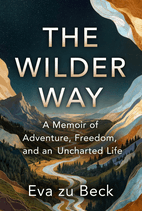
5 Main Takeaways from The Wilder Way
Bravery is forged from fear, not found.
Eva zu Beck shows that courage doesn't come naturally; it's built from deliberate acts in the face of doubt and exhaustion. From pushing through a breakdown on the Everest Base Camp trek to enduring a cargo ship escape from Socotra, she proves that resilience is a muscle you develop by continuing when every instinct says stop.
The script of society is not your own.
The book dismantles the idea that marriage, mortgage, and children are universal dreams. Eva's journey reveals how wedding planning and career pursuits were distractions from discovering her true desires. Letting go of inherited expectations—whether about having kids, religious meaning, or relationship milestones—opens the map to a life that actually fits you.
Privilege grants access, but demands accountability.
Time and again, Eva confronts how her white Western passport unlocked doors—access to male-only jirgas in Pakistan, safe passage through conflict zones, and leniency at borders. She learns that privilege isn't for guilt but for responsibility: using your advantages to honor the gifts and never forgetting the local women who can't do the same.
Small failures forge deeper resilience than big dangers.
Eva's preparation for wolves and bears didn't prepare her for the grinding reality of a broken saddle or the burnout that stripped her of identity. These small, daily defeats became the crucible for real growth. The lesson: don't obsess over dramatic risks; build strength by handling the mundane, persistent challenges that actually define your path.
You are never finished—keep becoming, not finding.
The epilogue rejects the myth of the 'found self.' Eva's journey from London to the Arctic taught her that meaning is created moment by moment, not discovered like a lost object. Freedom isn't a destination; it's the ongoing act of drawing your own map, trusting your instincts, and accepting that the wild life is a continuous becoming.
Executive Analysis
These five takeaways form a cohesive argument: true freedom requires actively dismantling external scripts, embracing vulnerability as fuel for growth, and accepting that identity is a process, not a product. Eva zu Beck weaves her physical adventures—trekking, motorbiking, crossing borders—into a metaphor for inner transformation, showing that the real wilderness lies in the courage to question, stumble, and rebuild on your own terms. The book's central thesis is that a feral life—one rooted in self-reliance, stripped of societal noise—is possible for anyone willing to trade comfort for authenticity.
This book matters because it offers a raw, nuanced counterpoint to glossy travel memoirs and self-help platitudes. Eva openly dissects her privilege, her burnout, and the painful cost of walking away from relationships and security. It sits at the intersection of adventure narrative, feminist manifesto, and practical guide to intentional living. For readers questioning their own life path, 'The Wilder Way' provides not a blueprint but permission: to be feral, to start small, and to draw your own map long after the applause fades.
Chapter-by-Chapter Key Takeaways
Prologue (Prologue)
Isolation reveals unpreparedness: Planning for dramatic dangers (wolves, bears) doesn't prepare you for the grind of daily survival in the wilderness.
Small failures can feel monumental: A broken saddle becomes a symbol of everything going wrong, but it's also where resilience starts to build.
Bravery is a deliberate creation: It's not found but forged from the raw material of fear and doubt.
The horses know: Sometimes the most honest feedback comes from those who don't have the capacity to lie.
Try this: When facing a broken saddle moment—where small failures feel monumental—pause and recognize that this is where resilience begins; build bravery by naming the fear and taking one deliberate step forward.
The Day I Left It All Behind (Chapter 1)
The author is fleeing a painful past in London, not simply seeking adventure.
Her decision is impulsive and risky: no hiking experience, meeting strangers from the internet, traveling to high-risk countries.
She feels like a walking cliché but is too desperate to care.
The giant purple backpack symbolizes both her escape and the weight of starting over.
Her mother’s quiet concern underscores the uncertainty of what lies ahead.
Try this: If you feel trapped by a painful past or a cliché escape fantasy, resist the urge to reinvent yourself overnight; instead, acknowledge that impulse as a sign that something needs to change, then plan a first tiny risk—like meeting one new person or visiting a place that scares you a little.
Ewa (Chapter 2)
Ewa’s drive for security stemmed directly from a childhood marked by parental absence, constant moves, and cultural dislocation.
Her relationship with Leo and her career were attempts to prove she could negotiate life better than her parents had—but she never checked whether the life she was building actually fit her.
The wedding planning became a distraction from deeper questions about children, career, and personal fulfillment.
The chapter illustrates how societal scripts (“marriage, mortgage, lineage”) can feel like destiny until we realize they were never our own.
Ewa’s self-harm and subsequent silence around her doubts reveal the cost of suppressing one’s authentic self in favor of a polished image.
Try this: Examine your life decisions—career, relationship, milestones—and ask whether you chose them because they fit you or because they fit a script; then write down one inherited expectation you can consciously set aside this week.
“I Don’t Have It in Me” (Chapter 5)
Physical exhaustion can unlock mental clarity. When the body is fully engaged in survival, the mind finally quiets and allows deep processing to happen.
The fear of not being enough is often a projection. Her breakdown on the trail stems from a lifetime of feeling defective, but the act of getting up and continuing proves that “enough” is a choice, not a fixed trait.
The journey is the destination. The anticlimax of reaching Everest Base Camp underscores that true meaning lies in the struggle, the small steps, and the moments of awe along the way.
Gratitude for privilege can fuel self-responsibility. Recognizing one’s advantages—passport, education, health—isn’t a reason for guilt; it’s a call to build a life that honors those gifts.
Try this: When physical exhaustion hits during a difficult task, lean into the mental clarity that can follow; use that stripped-down state to process one deep question you've been avoiding, trusting that 'enough' is a choice, not a fixed trait.
Adopted by a Pakistani Family (Chapter 6)
The dangerous Karakoram Highway symbolizes Eva’s willingness to take risks for meaningful experiences and her growing trust in her own resilience.
Returning to Pakistan challenges her binary worldview—the country’s beauty and hospitality dismantle the fear-based narratives she once absorbed.
Learning Wakhi (a language tied to landscape and daily life) deepens cultural connection and mirrors her own need to reconnect with her Polish roots.
The warmth of the Posh family fills a void left by her fractured relationships back home, offering a provisional sense of belonging.
Solo travel becomes a remedy for loneliness, forcing full presence and attention rather than retreat into familiar comforts.
Try this: Challenge a binary worldview by seeking direct experience in a culture you've been taught to fear; even if you can't travel, read a firsthand account or watch a documentary that humanizes the 'other,' and note how your assumptions shift.
An Old Lady in the Mountains (Chapter 7)
Letting go of plans opens the door to serendipity, but it also requires confronting deep personal questions
Encountering people like Bibi Nigor can act as a mirror, revealing what you truly want—or don’t want—for your own life
Judgment about others’ choices (like trophy hunting) often softens when you understand the full context of survival and community
The author’s realization that she doesn’t want children is not a lack, but a positive choice toward a different kind of fulfillment
Gratitude and peace come not from having all the answers, but from trusting the direction you’ve chosen
Try this: After letting go of a plan, ask yourself what you truly want for your own life—not what others expect—and write down one judgment you hold about someone else's choices that might soften if you knew their full context.
What Happens When You Go Viral (Chapter 8)
Validation can be a trap: Internet fame fills emotional voids temporarily but doesn’t heal deeper wounds of guilt or insecurity.
Viral moments often serve agendas: Whether for a government’s PR or a traveler’s ego, popularity can co-opt genuine stories into propaganda.
Privilege is invisible from inside the bubble: Her initial defensiveness gives way to a hard reckoning about how her whiteness shaped her access and platform.
Fame is fickle—rock stars know it best: The high of applause is always followed by silence; building a sense of worth on others’ approval is a shaky foundation.
Try this: When you receive unexpected validation or viral attention, resist letting it fill emotional voids; instead, use that moment to check whether your story has been co-opted by an agenda, and remember that building worth on applause is a shaky foundation.
Kalashnikov Street (Chapter 9)
The former Federally Administered Tribal Areas (FATA) are among the most dangerous regions in the world, with frequent Taliban and army clashes, but also places of stunning beauty and deep cultural tradition.
The Pashtunwali code—especially the tenet of melmastia (hospitality)—is a powerful force, as shown by locals welcoming a foreigner with open arms and refusing payment.
Kalashnikov Street in Landi Kotal epitomizes the region's "Kalashnikov culture," where weapons are more common than food and the legacy of decades of war is on open display.
Foreign women receive extraordinary privileges in conservative Pashtun society, including access to all-male spaces like the jirga, privileges that local women could never enjoy.
The personal cost of such travel is real: relationships suffer under the strain of distance, danger, and the traveler's relentless drive to keep moving.
Try this: In a high-risk situation where locals show extraordinary hospitality, reciprocate by offering genuine gratitude and learning one aspect of their cultural code—like Pashtunwali's melmastia—to deepen your understanding of what binds people together under pressure.
Selfies with Tribal Elders (Chapter 10)
Privilege is invisible until challenged: The author’s Western passport gave her access and protection that local women—and even the men who lost everything—could never dream of.
Jirgas are living, ancient systems of justice: The ritual of placing guns on the grass to guarantee a consensual verdict reveals a deep cultural trust embedded in the process.
Welcoming generosity coexists with deep pain: The man who confronted her was restrained and honest, and his words underscore how the West’s wars created suffering that travelers rarely see.
Self-awareness can be humbling and transformative: The author’s realization that she could have endangered her team through hubris is a powerful lesson in humility and responsibility.
Try this: If you discover that your privilege has given you access others lack, do not shrink from that awareness; use it to take responsibility—speak up when you see inequality, and amplify voices that are not heard instead of centering your own story.
My ‘Khiimori’, the Wind Horse (Chapter 12)
A concussion and physical injury forced a difficult decision to quit the trek, highlighting the tension between safety and the pull of adventure.
Recovery revealed a deeper emotional struggle—grieving the loss of self-discovery and freedom encountered in solitude.
The return to civilization felt jarring, prompting fundamental questions about life before the trek and the existence of undiscovered emotional states.
The experience solidified a clear preference for the wild, adventurous side of life, setting the stage for a transformed identity going forward.
Try this: When injury or external pressure forces you to quit a goal you've invested in, give yourself permission to grieve the loss of self-discovery, then ask what that experience clarified about your true preferences—and commit to one wild choice that aligns with them.
Romantic Pirates (Chapter 14)
The idyllic beach camp hides underlying tensions as the group’s strong personalities clash over the uncertainty of the approaching monsoon and their escape route.
Secrecy and language barriers erode trust; she feels excluded from decisions that affect her survival.
Confrontation reveals that fear, not malice, drives the conflict—but trust cannot be easily restored.
Her desire for solitude and self-reliance grows, symbolized by her vision of solo motorbike travel across the island.
Try this: In a group setting where trust erodes due to secrecy or language barriers, name the fear driving the conflict directly; then decide whether to rebuild trust or honor your growing need for self-reliance by creating a solo backup plan.
Among the Dragon Bloods (Chapter 15)
Buying a motorbike and learning to ride on Socotra was an act of defiance against deep gender restrictions, made possible only because I was a foreign woman.
The Kebany family’s stories of cave-dwelling reveal a way of life that is disappearing—one intimately connected to nature, with a language that boasts a hundred words for rain.
My small experiments in wildness—going barefoot, sleeping without a tent, abandoning razors—gradually shifted my perception of what feels natural and real.
The chapter challenges the idea that a nonconforming lifestyle is a temporary fantasy, asking instead whether modern comforts have led us away from our true, feral nature.
Try this: To challenge deep gender restrictions or societal norms, start with one small act of defiance that is legal and safe—like going barefoot, sleeping without a tent, or learning a new skill—and notice how it shifts your perception of what feels natural.
Paradise Lost (Chapter 16)
A local businessman named
Try this: When a threatening encounter shatters your sense of safety in a place you love, refuse to let that single event define your entire experience; instead, perform a deliberate release ritual—like Eva's breathing exercise—to keep the trauma from becoming your identity.
A Cargo Ship Escape (Chapter 17)
Leaving Socotra brings a complex mix of grief and relief, as the author simultaneously longs for the island and is grateful to escape its threats.
She actively works to release the trauma of Seif’s assault through a breathing ritual, refusing to let the memory define her.
The transition back to modern comforts (flushing toilets, burgers, flat-screen TVs) feels jarring and alien after months of island living.
The ocean journey forces her to confront the deeper question of where she belongs, eventually crystallizing her desire to live wild and rooted at the same time.
The metaphor of tasting direction on the mist becomes her new compass: a commitment to trust her instincts and remain open to whatever comes next.
Try this: As you transition back to modern comforts after a period of wild living, sit with the jarring feeling and let it clarify where you belong; ask yourself: 'If I could taste direction on the mist, where would it lead me today?'
A New Odyssey Begins (Chapter 18)
True freedom often requires cutting spiritual ties to institutions and relationships that no longer serve you—even if those cuts feel radical or lonely.
Her embrace of a “feral” life is not about abandoning civilization but about reclaiming self-reliance and shedding inherited beliefs about what a woman’s life should look like.
Family acceptance rarely comes in the form of explicit praise; sometimes it’s a subtle softening in the eyes, a quiet acknowledgment that your happiness is real.
Building a home on wheels is a practical act of independence, but the real construction happens internally—releasing guilt, forgiveness, and the courage to keep moving toward the unknown.
Try this: To cut spiritual ties that no longer serve you, write a farewell letter to an institution, belief, or relationship that holds you back—even if you never send it—and then take one practical step toward self-reliance, like buying a vehicle or simplifying your living space.
Finding Meaning Without God or Children (Chapter 19)
Owning a vehicle like Odyssey forces a shift from passenger to pilot—physically and metaphorically.
Stability on the road can be found not in a fixed location, but in the ritual of returning to the same sheets each night.
Choosing to be child-free and nonreligious means accepting that meaning must be created in the present, not borrowed from God or future generations.
Being present isn’t about hedonism; it’s about accepting the short, unrepeatable ride and finding your own lane.
A single decision—to refuse the conventional script—can open the map to an entirely new kind of adventure.
Try this: If you've chosen a child-free, nonreligious path, accept that meaning must be created in the present moment; start a nightly ritual—like returning to the same sheets on the road—that anchors you in the now and proves stability can be found in movement.
Drug Mule or Spy? (Chapter 20)
Border security is arbitrary and intimidating – A solo female traveler with stamps from conflict zones triggers intense scrutiny, regardless of her innocent intentions.
Vulnerability strips away identity – The pat down, the handcuffs, the photograph—all designed to make a person feel powerless and anonymous.
Resilience comes from holding onto purpose – Eva’s vision of her future puppy and the road ahead gave her the strength to endure the hours of interrogation.
Appearances matter in unpredictable ways – Her passport history, her jewelry, her hippie clothes—all were read as suspicious. But being a white European woman may have also influenced the polite treatment she eventually received.
The line between innocent traveler and suspect is thin – Eva was released without explanation, a reminder that border decisions are often opaque and final.
Try this: When facing arbitrary or intimidating authority at a border, hold on to a concrete vision of what lies ahead—a future puppy, a stretch of road—to anchor your resilience; remember that vulnerability strips identity, but a clear purpose can carry you through interrogation.
Two: To the North of Alaska (Chapter 22)
Deadhorse is an industrial compound with no amenities for outsiders; the journey matters far more than the destination.
Accessing the Arctic Ocean requires an expensive, mundane tour through the only local agency.
The polar dip became a spontaneous act of claiming freedom and presence, proving that the adventure is in the choices we make, not the logistics.
Try this: At a destination that feels anticlimactic or industrial (like Deadhorse), focus on the journey itself and invent a spontaneous, symbolic act—like a polar dip—to claim freedom and prove that adventure is what you choose to make of any moment.
Three: Burned Out (Chapter 23)
Burnout is insidious: it creeps in slowly and robs you of curiosity, drive, and identity before you even notice.
Stillness can be the antidote, but it takes time—and simply stopping isn’t enough; you have to confront the loss of self.
Quitting a public goal is not failure; it can be an act of courage and self-preservation.
Romantic love can temporarily mask burnout, but incompatible visions of life—especially regarding simplicity and freedom—will eventually surface.
The nomadic self may never fully adapt to a sedentary life, and that tension can be as painful as the burnout itself.
Try this: If you sense burnout creeping in—loss of curiosity, drive, identity—don't ignore it; stop moving and sit still long enough to confront the loss of self, then have the courage to quit a public goal if it no longer serves your well-being.
Four: Coming Home (Chapter 24)
Therapy didn’t “fix” her; it gave her permission to accept herself as not broken. The idea of needing a partner to be whole is a cultural construct, not a universal truth.
True independence requires letting go of the hypothetical future partner who might hold you back. She stops waiting and buys land alone.
Owning land isn’t about possession; it’s about stewardship. She promises to keep the land wild, trusting it will keep her wild in return.
Coming home isn’t a place—it’s the feeling of finally aligning your external life with your internal truth.
Try this: When you feel broken or incomplete without a partner, remember that needing another to be whole is a cultural construct; buy land (or commit to one small symbol of independence) to prove to yourself that you are enough on your own.
Five: The Witch in the Forest (Chapter 25)
The meadow was meant as a permanent sanctuary, but one encounter shattered that sense of security.
Leaving the sacred place feels like a deeper loss than any physical threat.
A wolf is honest in its wildness, but a man can bring unpredictable danger that destroys trust and safety.
Try this: After a sacred place has been violated by human threat, allow yourself to feel the deeper loss of safety, then recognize that a wolf's wildness is honest but a man's unpredictability can destroy trust—and give yourself permission to leave if you must.
Six: The Finish Line (Chapter 26)
The Arctic race wasn't about winning—it was about finding clarity after losing her sense of safety on her own land
Sleep deprivation and extreme physical exertion initially pushed her into a void of despair rather than providing answers
The breakthrough came through exhaustion: she realized she couldn't let strangers dictate how she lives her life
Freedom requires fighting for what matters, even when it's easier to run away
Sometimes the hardest challenges strip away everything until only the essential truth remains
Try this: In extreme physical exhaustion during a race or challenge, let the deprivation strip away everything until only the essential truth remains; then fight for what matters—your freedom to live on your own terms—rather than run away from the hardest battle.
Epilogue (Epilogue)
Stop searching for a finished version of yourself. The "found self" is a myth. You're not meant to be discovered like a lost object—you're meant to keep becoming.
Collect understanding, not answers. The most valuable things you'll gather along the way aren't conclusions but insights that guide you forward.
Real bravery is internal. It's not about physical risk but about having the courage to question, stumble, and rise again.
Freedom can be found anywhere. Your home, your joy, your wild life—they don't have to look like anyone else's. They just have to feel true to you.
There is no blueprint for your path. You have to draw the map yourself, and that's terrifying and beautiful and exactly as it should be.
Try this: Stop searching for a finished version of yourself; instead, collect understanding, not answers. Today, ask one question that opens a path rather than closes it, and draw your own map with the terrifying, beautiful knowledge that there is no blueprint.
Continue Exploring
- Read the full chapter-by-chapter summary →
- Best quotes from The Wilder Way → (coming soon)
- Explore more book summaries →