The Way of Excellence Quotes
by Brad Stulberg
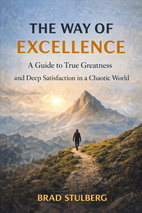
This page gathers some of the most striking lines from Brad Stulberg’s book on what it really means to pursue excellence. You will find observations about the nature of high performance, the value of consistency, and the importance of defining success for yourself.
The book’s quotes resonate because they cut through popular myths and offer a grounded, humane perspective. They speak directly to the reader, drawing on real experience and research. Each line is crafted to be remembered and shared, encouraging reflection on how we live and work.
Top Quotes from The Way of Excellence
“Excellence combines mastery and mattering.”
The author distills the core components of excellence into two key elements.
This simple yet profound pairing of mastery (skill development) and mattering (significance) provides a clear, actionable framework for understanding what excellence entails.
“Excellence is not a destination; it is a process of becoming.”
From the discussion on how worthwhile pursuits shape character.
This line distills the core theme of the chapter—that true excellence is about ongoing inner growth, not achieving a final goal.
“If you don't define your own version of success, someone else will define it for you.”
Part of the advice on aligning actions with personal values.
This empowering statement reminds readers to take ownership of their goals, highlighting the danger of passive conformity.
“There is no greater illusion than thinking the accomplishment of some goal will change your life. What will change your life is how you are transformed in the process of going for it.”
From the section on Goals, the author discusses the true value of pursuing objectives.
This reframes goal-setting from outcome obsession to personal growth, a counterintuitive and liberating insight. It resonates because it aligns with the deeper truth that meaning lies in the journey, not the destination.
“Excellence does not come from intensity. It comes from consistency.”
The author summarizes the central thesis of the chapter.
This line distills the book's core message into a memorable, declarative contrast that reframes how we think about achievement.
“Performative greatness is obsessed with heroic days. Actual greatness concerns itself with heroic decades.”
The author contrasts superficial achievement with lasting excellence.
It captures the tension between short-term spectacle and long-term substance, urging readers to shift their focus from flashy efforts to enduring commitment.
“The quality of your attention shapes the quality of your life.”
The chapter concludes with this thought.
It is a concise and profound summary of the chapter's core message, easy to remember and apply to daily life.
Themes Behind the Quotes
One major theme is that excellence is not a fixed goal but an ongoing process of growth and becoming. The focus is on the journey of transformation rather than any single achievement. This shift in mindset frees us from the illusion that a specific outcome will change our lives.
Another core idea is the power of consistency over intensity. True greatness comes from showing up day after day, not from occasional heroic efforts. This requires making deliberate trade offs and protecting our attention from trivial distractions. Meaningful effort aligned with personal values drives both performance and fulfillment.
Quotes by Chapter
Introduction: Redefining Excellence—and Why We Need It More Than Ever
“Excellence is less a destination and more an energizing process of growth and becoming—an ongoing path that yields our best performances and, every bit as important, our best selves.”
From the author's definition of excellence in the introduction.
It reframes excellence as an ongoing process of growth rather than a fixed goal, emphasizing personal development alongside achievement.
“We are made to move toward excellence as a tree is made to move toward the sun.”
The author uses a nature metaphor to describe humanity's innate drive for excellence.
The comparison to a tree reaching for the sun is poetic and intuitive, conveying that striving for excellence is a natural, fundamental impulse.
“Real excellence is quiet, confident, consistent, respectful of the craft, and interested in the process of self- discovery.”
The author contrasts pseudo-excellence with genuine excellence.
It offers a compelling distinction between superficial, attention-seeking behavior and the quiet, consistent dedication that defines true excellence, resonating with those tired of hustle culture.
Chapter 1: The Biology of Excellence
“It was a pre-intellectual experience guided by an inner knowing I felt in every corner of my being.”
The author describes his instinctive reaction upon encountering a bear during a workout.
This line captures the essence of excellence as a visceral, intuitive response rather than a cognitive process. It resonates because it shows how our deepest knowing operates beyond thought.
“The peak of human experience is a feeling. We get out of our head and into our being.”
The author reflects on the nature of peak experiences in various activities.
Succinctly contrasts intellectual striving with embodied experience, reminding readers that true fulfillment comes from feeling, not overthinking. It speaks to anyone who has lost themselves in a meaningful activity.
“We are at our best when we get into the zone, function in lockstep with our surroundings, and feel our way toward excellence.”
The author summarizes the ideal state of performance based on neuroscience and flow states.
This statement distills the chapter's core message into a memorable, actionable insight. It affirms that excellence is a dynamic, feeling-driven alignment with one's environment.
“We evolved to strive for excellence, which is why it ushers us toward our greatest creations and fills us with satisfaction.”
The author concludes the chapter's argument about the evolutionary roots of excellence.
Connects ancient biology to modern fulfillment, making the pursuit of excellence feel innate and purposeful. It inspires readers to see their drive for mastery as part of their deepest nature.
Chapter 2: The Psychology of Excellence
“The real reward isn’t a bigger deadlift, a faster mile, or a sturdier table; it’s that you become a better version of yourself.”
After citing Peter Korn, Kate Courtney, and Kevin Durant on personal transformation.
It reframes success as self-improvement rather than external achievement, making the concept of excellence accessible and deeply motivating.
“Effort pointed toward a goal we find meaningful will elicit an entirely different stress response than the same effort pointed toward a goal we find meaningless.”
Building on Hans Selye's later research about stress and purpose.
It reveals that meaning transforms the experience of stress, turning potential burnout into fulfillment—a crucial insight for modern life.
Chapter 3: The Philosophy of Excellence
“Excellence is not about perfectionism or obsessing over small details in every aspect of your life. It's about knowing your values and using your innate capabilities to pursue them.”
The author clarifies the meaning of excellence after discussing the ancient Greek concept of arete.
It debunks a common misconception and re-centers excellence on values and purpose, making it accessible and actionable.
“When we pursue excellence, we transcend our small selves—the parts of us that worry, doubt, and fear—and enter into something larger, a dance with the universe.”
The author's concluding reflection on the ultimate reward of striving for excellence.
It poetically captures the profound, almost spiritual fulfillment that comes from deep engagement, offering a vision of wholeness and connection.
Chapter 5: Goals
“Caring deeply is hard, but we can do hard things.”
From the section Overcoming Fear, the author advises self-kindness while embracing vulnerability.
This simple, direct mantra validates the struggle of deep caring while affirming inner strength. It is memorable and empowering, offering a gentle yet fierce encouragement to keep going.
“The things you care about are the things that break your heart are the things that give rise to excellence and fill your life with meaning and joy.”
Near the end of the chapter, in the summary, the author ties together the paradox of caring and vulnerability.
This poetic line captures the essential trade-off of excellence: heartbreak is inseparable from deep fulfillment. Its repetition throughout the chapter makes it a central, quotable thesis.
“Passion emerges over years, not seconds. It's rarely like lightning striking. More often it's like laying bricks for a house.”
From the section Cultivating Care, the author explains how true passion develops slowly over time.
The building-a-house metaphor vividly counters the myth of instant passion, encouraging patience and consistent effort. It is both relatable and visually memorable, making it easy to recall and share.
Chapter 6: Consistency
“What is winning at consistency? It is showing up. It is getting started. It is giving what you've got to give on the day. It is playing the board in front of you. It is coming back tomorrow. It is doing this over and over again.”
The author defines what consistency truly means at the end of the chapter.
This rhythmic, plainspoken definition makes an abstract concept concrete and actionable, reinforcing that consistency is a daily practice, not a one-time feat.
“Staying consistent often requires demonstrating a bit of restraint today so that you can pick up where you left off tomorrow.”
The author discusses how elite athletes and performers avoid overexertion to sustain long-term progress.
It reframes restraint as a strength, not a weakness, and offers a practical paradox: holding back today is key to moving forward tomorrow.
Chapter 7: Trade-Offs
“You need to be a minimalist to be a maximalist. If you want to be really good, to master and thoroughly enjoy one thing, you need to say no to many others.”
Michael Joyner, a distinguished physician and researcher at Mayo Clinic, explaining the necessity of trade-offs for high performance.
This paradoxical statement encapsulates the core tension of excellence: that deep mastery requires deliberate sacrifice, making it both counterintuitive and liberating.
“Being a mature adult means acknowledging that trade-offs exist and being willing to make them.”
The narrator summarizing a key insight after quoting Chelsea Sodaro’s reflections on prioritizing family and triathlon.
It reframes trade-offs not as losses but as signs of emotional maturity, giving readers permission to make hard choices without guilt.
“When you zoom in on any one period of an accomplished person's life, they don’t appear to be balanced. But when you zoom out and look across the entirety of their life, they seem to be quite balanced.”
The narrator observing the pattern among high performers across different domains.
This perspective resolves the false dichotomy between balance and obsession, showing that true balance emerges over seasons rather than moments.
“You can get amazingly strong with one kettlebell. You can write beautifully with a pen and a notebook. You can develop a spiritual practice with nothing but your breath. It really is as simple and as hard as that.”
The narrator arguing against complexity and in favor of focusing on fundamentals.
The vivid, concrete examples demystify excellence and remind readers that remarkable results often come from the simplest, most consistent efforts.
Chapter 8: Focus
“If we fry our brain on the trivial, we cannot expect it to be fully present for the significant.”
The author discusses the consequences of chronic multitasking and fragmented attention.
This vivid metaphor starkly illustrates the trade-off between trivial distractions and meaningful engagement, making it a memorable warning.
“Focus is like a muscle: Use it or lose it; even if you were once strong, regaining your fitness takes time and effort.”
The author explains that focus can be rebuilt with patience and repetition.
The relatable analogy encourages readers that lost focus is not permanent and can be regained through consistent practice.
“We've been conditioned to believe that if we aren't constantly being entertained or excited, if we aren't looking back or thinking ahead, then something must be wrong.”
The author describes a common misconception in the age of distraction.
This line challenges readers to question societal norms about constant stimulation and highlights the value of being present.