The Steps Quotes
by Sylvester Stallone
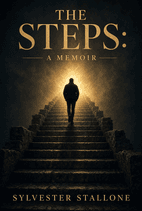
This page collects lines from Sylvester Stallone's The Steps, a memoir about hunger, rejection, and the long grind toward a creative life. You will find hard-won observations about loneliness, failure, auditions, survival jobs, and the private battles that shape someone before anyone knows their name.
The book is quotable because it rarely stays abstract. Stallone turns small moments into blunt lessons, and the best lines feel like advice from someone who earned it. Some are tough, some are tender, and many are the kind you might save for a day when you need a push.
Top Quotes from The Steps
“I was all in, no going back. With luck, only forward.”
He decides to pursue acting in New York despite fear and isolation.
It captures a turning point of total commitment. The spare phrasing turns uncertainty into momentum.
“Rejection is your shadow at every step in this business. You have to find a way to make peace with it.”
After bombing an open musical audition, he reflects on the actor's constant exposure to rejection.
It names the emotional reality of pursuing any creative life and offers a hard-won survival strategy.
“Keep taking chances, keep failing, it’s the only way to learn how to succeed!”
He says this aloud during mirror self-analysis in his room at the Sutton Hotel.
It's a compact, defiant motto that turns repeated failure into the necessary tuition for success.
“I GREW UP ALOT THAT NIGHT. I LEARNED THAT YOU CAN'T run from bullets, and you can’t run from shame.”
After fleeing a violent high school dance and being shot, he draws a hard lesson from the night.
It is a stark, memorable distillation of the cost of running from shame. The line turns a traumatic night into a lifelong rule.
“But the key turning point that winter was the inescapable realization that I had no love coming from anywhere. That was hard for me because I am a person who needs love—more than ever in this loveless part of the city I dwelled in. It forced me to learn how to love myself.”
The narrator reflects on his isolated winter in New York.
It names the painful recognition that self-love can become necessary when no external love is available.
“Dreams give us hope. What I needed was something more tangible than hope—a CONCRETE VISION. I wanted to be able to lock on to a vision, not a wispy dream. A clear, concrete vision. A battle plan. That's the difference between dreaming and doing.”
He distinguishes between wishful dreaming and purposeful action.
It crystallizes the chapter's lesson that action requires a concrete vision, not just hope.
“On the surface, what looked like a “meaningless” usher job was the exact opposite. A movie theater is the greatest cinema college in the world.”
He reflects on taking a job as an usher at the Baronet and Coronet Theatre.
It reframes a low-status job as a serious education in filmmaking. It reminds readers that meaning and learning can be hidden inside ordinary work.
Themes Behind the Quotes
The main themes here are endurance and self-invention. These lines trace a young person trying to survive in a city that feels indifferent, taking whatever work he can find while measuring the distance between where he is and where he wants to be. Loneliness, shame, and rejection keep showing up, but so does the stubborn choice to keep moving.
Another thread is the difference between wishing and planning. Dreams matter, yet the book keeps pushing toward discipline, concrete goals, and the willingness to fail in public. It also explores how people can feel trapped, disposable, or unseen, and how self-respect grows when no outside love or approval is available. The result is a rough, honest map of ambition, survival, and learning to love yourself while chasing something better.
Quotes by Chapter
1: Back in the Kitchen
“Loneliness is the most lethal, often terminal experience, a person has to learn to endure.”
Sly reflects on arriving in New York with no place to sleep and knowing no one.
It frames loneliness as a life-threatening force, not just sadness. The line resonates because endurance is often the only way through it.
“I told myself, “You'll be okay,” like a mantra that I willed myself to believe.”
He tries to comfort himself while sleeping on a bench at Port Authority with his backpack.
It shows self-reassurance as a survival tactic. Readers recognize the effort to believe courage before it feels real.
“Our tiny apartment was basically a hand grenade with the pin half pulled, so it's easy for me to understand why my parents wanted me out, for their benefit and for mine.”
He explains why he was sent as a child to live in a boardinghouse.
The image makes the tension of his childhood home immediate and dangerous. It also reveals empathy for overwhelmed parents.
2: Home Unsweet Home
“Please avoid sleeping in bus terminals. It's impossible. Port Authority might be the largest bus terminal in America. For certain, it's the most chaotic.”
The narrator opens the chapter with hard-won advice after arriving in New York City with nowhere to stay.
It sets the chapter's tone of abrupt displacement and captures how even basic shelter is a battle.
“From dawn onward, herds of humanity barreled through the huge terminal in every direction. It was overwhelming. It wasn't so much the noise they made, though it was incredibly loud, it was the fact that they all had someplace to go. They knew where they were headed. I did not. I hardly knew where I was.”
He observes the morning crowds at Port Authority while he is adrift in the city.
It distinguishes loneliness from mere solitude: everyone else has purpose and direction while he has none.
“The date was August 18, 1969. When I tell you I had no idea what was going on in America, I mean I was at a total loss.”
He sees a newspaper headline about Woodstock and realizes how disconnected he is from current American culture.
It grounds the story in a specific historical moment and makes his alienation concrete.
“Everyone I saw living in these places seemed to have completely given up on life, waiting around for Father Time to make them disappear.”
He is searching flophouses in the Bowery and recoiling from the residents' despair.
It is a haunting image of surrender and explains why he chooses the alley over that fate.
3: Male Pattern Badness
“From there, it was bare wooden stairs with deep grooves worn into them from years of aspiring actors walking up and down, chasing their dreams.”
Sly describes the shabby walk-up office of the last agent on his list.
It captures both the romance and the harsh wear of chasing a career in New York.
“I wanted a job. But when I say this guy looked like a chubby vampire in search of his next meal, I'm being kind.”
Sly weighs whether to trust the strange agent who offered him an audition.
The line mixes streetwise humor with an ominous warning, making the danger feel both absurd and real.
“This was my introduction to a business, to a world, I thought I would love.”
After fleeing Ed's apartment, Sly steps outside and processes what just happened.
It is a stark, sad summation of disillusionment, delivered with a simple repetition that lingers.
“I sensed the drink the director gave me was laced with something. It could've been very bad.”
On his way home, Sly realizes how much danger he escaped.
It confirms the menace of the scene and makes his escape feel lucky rather than merely strange.
4: Lions in Cages
“Criminals belong in jails. Not beautiful animals like these lions. What crimes do they commit?”
While cleaning the lion cages, the author reflects on the animals' captivity.
It turns the lions' imprisonment into a moral question, making their confinement feel unjust and haunting.
“This is a lot of people's fates, when you think about it. By no fault of their own, they get stuck somewhere like a caged animal. No room to roam, no time to think or to have dreams.”
The author compares the lions' cage to the trapped lives of many people.
It captures the chapter's central metaphor of feeling caged by circumstance, with no space for hope or ambition.
“At least I chose my filthy 8/2-by-7 ¥2-foot cage. And I held the key.”
After reflecting on people stuck like caged animals, the author contrasts his own chosen struggle.
It is a defiant statement of agency amid poverty and rejection, reminding readers that choosing one's cage can still mean freedom.
“SMELLING LIKE A CAGED ANIMAL EVERY DAY WAS HARD. Being told I was going to fail because of my look, that was a whole other thing.”
The author sums up the hardship of the zoo job and the agents' harsh rejections.
It connects physical indignity with emotional rejection, showing how both wear down a struggling dreamer.
5: Getting Ready for Failure
“No plan survives first contact with the enemy. I'd already learned to expect doubt and to prepare for failure, embrace them even. It made me feel ready for war. With anyone, for anything.”
He reflects on the relentless rejection from agents and decides to turn negativity into preparation.
It reframes failure as training rather than defeat, making fear feel like something to arm yourself for.
“I was in a battle of me versus me, and I was praying not to lose my nerve.”
Walking through Times Square after the open audition, he confronts his own doubts and determination.
It captures inner conflict as the real fight behind outward ambition, making perseverance deeply personal.
6: Fight or Flight
“I remember that night distinctly. I looked out across the store and wondered, What if this isn’t temporary? What if this is the end of the line? What if I have been fooling myself this whole time?”
Sylvester is alone at the deli, doubting whether his acting dream will ever come true.
It captures the universal fear that a long-held dream may be delusion rather than destiny. The repeated questions make self-doubt feel immediate and raw.
“Moments like these are very hard to navigate, let alone survive, without a support system. I had none, only me.”
He reflects on his isolation during a moment of deep uncertainty.
It speaks to how crushing despair becomes without anyone to lean on. The blunt final sentence makes loneliness feel absolute.
“Everybody has walked away from a confrontation when they should have said something, or held their ground, and it haunts them for the rest of their life.”
He remembers a childhood lesson about backing down from a fight before recounting a dance-hall confrontation.
It names the lingering shame of a missed moment of courage. Readers recognize how small failures can haunt a person for years.
7: My Buddies, the Pigeons
“I wasn't worried about failure, per se. This was something worse— not ever even getting the chance to fail. I had never given that possibility much thought, but now it was digging deeply into my consciousness.”
He describes the fear that haunted him while waiting for an acting opportunity.
It captures a distinct and devastating fear: not failing, but never being allowed to try.
“I'd remind myself that dreams aren't enough. They're like clouds. They're real, but they're ephemeral. You can't hold them. Can't touch them. There's no substance. They disappear, go wherever the wind blows.”
He reflects on the limits of dreaming during his hard winter.
The cloud metaphor makes the elusiveness of dreams vivid and memorable.
8: Impatience Is a Virtue
“Some occupations are meaningless to people—an usher is one of them. You aren't really seen as a person, or a member of society. You're shapeless, disposable, irrelevant.”
He remembers how audiences and society treated him as an usher.
It captures the dehumanization of service workers with brutal clarity. The line makes invisible labor and social contempt impossible to ignore.