The Steps Key Takeaways
by Sylvester Stallone
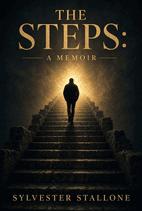
5 Main Takeaways from The Steps
Make Your Own Door When Gatekeepers Refuse Entry
Stallone couldn't get an agent, auditions, or roles, so he wrote Rocky with himself as the lead and made a homemade short as a calling card. The lesson is not to wait for permission; create the work that forces the industry to see you.
Rejection Measures Market Fit, Not Your Personal Worth
Being told he was the wrong type, denied auditions, or fired for ad-libbing reflected what the market was buying that season, not his talent or future. Use rejection as data about fit and timing, then change what the room sees or build your own room.
Build Craft Daily Before Inspiration or Rescue Arrives
Stallone took night jobs to keep days free, studied films from a projection booth, wrote to solve problems, and mined lived material like the deli counter and street fights. Purpose often appeared sideways while he kept doing the unglamorous work that made opportunity usable.
Name Your Terms and Refuse to Sell Cheap
He walked away from a coercive audition and refused a screenplay fee to keep the role of Rocky, pricing money below the part because he knew what destitution felt like. Knowing your terms protects both your dignity and your leverage, even when every door is closing.
Finish Your Own Race on Your Own Terms
Stallone chose his name, invented his story, accepted that nobody was coming to save him, and measured success by daily choices rather than awards or rankings. The people who stand beside you and the chances that arrive late are what persistence earns.
Executive Analysis
These five takeaways form a single argument: the career you want is rarely opened by permission, so you must build the door yourself. Stallone's path from Hell's Kitchen poverty and coercive auditions to writing Rocky's lead role shows that rejection, market typecasting, and family indifference are not verdicts on worth; they are conditions to work around. The throughline is self-authorship—choosing your name, story, terms, and daily practice—while treating every closed door as data and every small job, shift, or failed draft as craft-building material. You cannot control the start, the gatekeepers, or the market, but you can control whether you keep climbing.
Practically, the book matters because it turns a brutal apprenticeship into usable discipline: write your own role, rehearse rejection, protect your creative moments, and measure success by the life that earned it rather than awards or approval. In the memoir/creativity genre, it sits beside artist-survival books, but its specificity—auditions, agents, headshots, contracts, fight choreography, low-budget filmmaking—gives it unusual grit and credibility. It does not promise rescue or a shortcut; it argues that persistence is assembled from ordinary daily choices, and that finishing your own race on your own terms is the real prize.
Chapter-by-Chapter Key Takeaways
Back in the Kitchen (Chapter 1)
Poverty here means physical problems you solve one by one.
In Hell's Kitchen, danger changed the rules of ordinary caution. A child was safer in the roadway than on the sidewalk.
His parents each preferred a convenient version of events. One hid a secret first marriage, the other claimed a stardom her friends never witnessed. Both taught him to invent the story of who he was.
Sent across the river to a boardinghouse of salesmen, stewardesses and drifters, he learned that his parents raised him from far away.
The adult return to Port Authority, sleeping with an arm hooked around a backpack, shows the city that formed him offering no bed and nobody to call.
Try this: Inventory the practical problems poverty creates, question the convenient family stories you inherited, and build a portable sense of home because the city that formed you may never offer you a bed.
Home Unsweet Home (Chapter 2)
In a strange city, what matters most about shelter is whether you can stay. A weekly rate and a locked door beat filth, shared plumbing, and a manager with a gun under the counter.
You can land in a country during a moment everyone else will remember and still survive. A headline about a festival you've never heard of shows how far you are from the culture, not what your chances are.
To break into a closed field, start by admitting what you don't have. Without an agent, talent sits idle, and a directory of agents is the first real resource a newcomer has.
A plan built from quotas, daily counts, and a start date turns an impossible industry into a short list you can work through on foot.
Try this: Secure the cheapest stable shelter you can, admit the resources you lack, and turn an impossible industry into a quota-driven daily list you can work through on foot.
Male Pattern Badness (Chapter 3)
The first thing standing between you and an acting career isn't talent. It's that the people who run the industry won't even let you audition.
Stallone started going by Mike as a kid to avoid getting beaten up. That name stuck with him for years and kept people from knowing who he really was.
Stallone's fifty-cent photo strip got him nowhere because it wasn't a professional headshot. But his bigger problem was that he wouldn't smile for photos at all, and no agent could fix that for him.
An audition in a private apartment with alcohol and a half-dressed man is a sexual proposition. Walking away from it is refusing to be coerced, not missing your big break.
Try this: Stop hiding behind a protective alias, replace amateur photos with professional presentation, and walk out of any audition that is really a sexual proposition—refusing coercion is not missing your break.
Lions in Cages (Chapter 4)
When people judge you against a standard that was never built for you, that's just what being different feels like. Blame the standard, not yourself.
When someone qualified to judge tells you that you're good, that's what turns a private belief into a real direction.
A cage you choose for yourself is not the same as one someone else locks you in. The key matters more than the bars.
Paying for a headshot in advance and working a night shift to keep his days free weren't detours from his ambition. They were the groundwork that made it possible.
Try this: Blame the narrow standard rather than yourself, seek one qualified person's honest assessment, and fund the night-shift groundwork—headshots, free days—that makes a chosen cage worth entering.
Getting Ready for Failure (Chapter 5)
Expect the no before it arrives: in a field where nearly every attempt is turned down, rehearsing for failure is the only way to keep showing up.
A verdict that you are the wrong "type" describes what a market is buying this season, not the limits of what you can become.
Dread that is avoided keeps chasing you; the only real option is to walk straight at it, including into auditions you are certain to lose.
Knowing who you are on the inside is what keeps you steady, because identity is not located in the surface that strangers read.
Try this: Rehearse rejection before it arrives, treat 'wrong type' as market data, and walk straight into dreaded auditions while anchoring identity in who you are, not what strangers read.
Fight or Flight (Chapter 6)
Turning back to fight does not repair a humiliation; the night outside the Father Judge dance ended with a bullet in his arm and nothing recovered.
Institutions do not sort aggressors from victims, as the deli arrest proved when the man who shoved him walked free and he was charged for defending himself.
Inside a system that has already decided against you, survival depends on telling the story it will accept, which is why claiming robberies beat claiming self-defense.
Adaptation is the discipline of calculating what you can do for yourself, since managers, parents, and judges had all declined to help.
A name can be chosen rather than inherited; taking one from an actor with a long career was a bet on endurance, not an escape from his past.
Try this: Calculate what you can do for yourself, tell institutions the story they will accept without surrendering your inner truth, and choose a name that signals endurance rather than escape.
My Buddies, the Pigeons (Chapter 7)
The lesson of a solitary winter is that no one else is coming to give you the affection you are waiting for; you have to build that regard for yourself before anything else can begin.
Persistence through auditions and casting calls does not wear down the people doing the rejecting; their refusals measure fit with a market, not the worth of the person refused.
A dream that stays unformed is comfort during bad weather and nothing more; it turns into doing only once it is given shape, order, and a next step.
Purpose is more often stumbled into than hunted down, and the hunt itself can be what keeps it out of sight; stop seeking, and what was under your nose becomes visible.
Standing among half a million strangers who all intend to begin their real lives at midnight strips away the belief that you are special, leaving only the question of who stays standing through the storm ahead.
Try this: Build self-regard before waiting for affection, convert an unformed dream into shape and next steps, and stop hunting purpose so what is under your nose can surface while you persist through the crowd.
Impatience Is a Virtue (Chapter 8)
Take the job that pays your bills and leaves your days free for the work you actually want.
Use every shift to build craft, contacts, and material.
Study what moves you until you can explain exactly why it works.
Treat service workers as full human beings, because empathy shows up in everything you make.
When a gatekeeper stalls you, take what you came for and walk away.
Try this: Take a bill-paying job that leaves your days free, use every shift to build craft and contacts, study what moves you, treat service workers as full people, and walk away from gatekeepers with what you came for.
Sink or Swim (Chapter 9)
Know what each character wants more than anything else, so their lines cannot be swapped between them.
When a story demands material you have actually lived, do not replace it with invention; mine the deli counter, the street, the man who came at you.
Before sleep, load your mind with the problem you cannot solve, then treat whatever you wake with as something you can use.
Let everyone else describe your hero while he says next to nothing, then cut until what remains stands for a belief worth fighting for.
Never hand your audience an ending that damns the very people the story was written for.
Try this: Define what each character wants more than anything, mine lived material instead of inventing, sleep on the unsolved problem, let others describe your hero, and never end by damning the people you wrote for.
You’re Not Intimidating Enough (Chapter 10)
A career in acting, like any consuming vocation, is less a matter of steady progress than of surviving long enough for the occasional opening to appear.
Rejection can be answered by changing what the room sees, not by accepting the room's first judgment as a verdict on talent.
When a performer commits far enough to stop watching himself, the body's actual limits can be overridden by the character's presence.
The ability to become someone else is not cleanly separable from the risk of losing the self that has to live after the role ends.
Exterior signals about who is strong and who is struggling are unreliable in both directions, so the most imposing surface and the most broken one may conceal the same hunger to be understood.
Try this: Survive until openings appear, change what the room sees instead of accepting its first judgment, commit until the character overrides your limits, and remember imposing surfaces can hide the same hunger to be understood.
School Is What You Don’t Make It (Chapter 11)
Easy Rider showed him that spontaneous screen dialogue could hit as hard as stage-trained acting, and he shifted from wanting to perform in films to wanting to make them.
At Devereux, painting and field events built a physical and creative confidence that social ease and academics did not.
Sal Mineo's audition taught him that real toughness reads as restraint rather than volume, and that roles are often cast before the audition begins.
Poe gave him a ready-made subject when autobiographical screenwriting stalled, and reconnecting with John Herzfeld turned that fixation into a focused screenplay.
Try this: Shift from performing to making when a form ignites you, build confidence through physical and creative practice, read restraint as toughness, and use a ready-made subject with a collaborator to focus stalled writing.
A Home to Write In (Chapter 12)
The first apartment worth having usually costs every dollar you have, not a sensible portion of it. A rent-controlled walk-up above a subway line is worth its roaches once it ends the era of ten rotating roommates.
Working inside the industry, even from a theater's projection booth, is ongoing schooling. The films that ran week after week kept teaching craft that writing on his own could not.
A room becomes a place to write when you remove what you don't need: painted-over windows, a couch off the curb, a found television, and one gifted oak desk wide enough for a legal pad. Nothing in it needs to be shown off or kept up.
You keep going when you're around other people who bet everything. A neighbor who kicks through a closet wall hunting for space. A friend who meets each weekend to insist there is no fallback.
Try this: Spend what it takes on a stable writing home, keep learning inside the industry, strip your room to essentials, and stay near people who bet everything so you keep going.
Keeping It in Gear (Chapter 13)
Study failed films and scripts to see what went wrong. Map how absent plot, underdeveloped writing, unclear dialogue, and wrong casting feed into each other, and treat casting as a decisive test once the script is sound.
Treat a screenplay as a problem to assemble and then solve, and revise by cutting. Dialogue should move the story with only the words it needs.
Plan for many drafts and for most interpretations being discarded. The aim is to hit something that resonates, not to preserve every version or arrive at a final, perfect state.
Work near the people and institutions you want to learn from without pressing for recognition. Proximity and observation can train you even when you feel insignificant.
When an ambition is fed by an old wound, judge it by present costs and rewards, and leave if the risk is out of proportion to the prize.
Try this: Study failed films for structural lessons, treat your screenplay as a problem to assemble and cut, plan for many drafts, work near the institutions you want to learn from, and leave ambitions whose present costs outweigh the prize.
Horses (Chapter 14)
When no one will hand you an opportunity, make your own. A homemade short can work as a calling card even if it never becomes a coherent film.
Lock the story and put one person in charge before filming. Unresolved questions and shared direction will resurface in the edit and break the collaboration.
Who shows up to help and what you improvise on set shape what the project means to the people involved, not just what it costs. The approval earned on set may outlast any footage.
A project built on borrowed gear and divided authority can end with the collaborators taking separate prints and no longer speaking. That risk is part of what you accept when you decide to start.
Try this: Make your own short when no one hands you an opportunity, lock the story under one leader before filming, honor collaborators' contributions, and accept that borrowed gear and divided authority may cost relationships.
Buy Me That Ring! (Chapter 16)
The Lords of Flatbush showed that his screen presence came from making things up, not sticking to the script.
A strong review could call one scene the best in the film and still leave the actor without steady work in New York.
Ad-libbing was both his signature and his liability: it shaped the performances that drew notice, yet it got him fired from The Prisoner of Second Avenue for rewriting a script by Neil Simon.
He decided to go west because the New York market had dried up and he believed his next stage had to happen in a different city.
Try this: Lean into improvisation that creates presence, accept that strong reviews may not bring steady work, know when your signature becomes a liability, and move to a market where your next stage can happen.
The Road Trip (Chapter 18)
A bunch of short-term jobs stays luck until the person taking them decides what they're actually working toward.
Getting plucked from obscurity is not a plan; you have to make your own chance, often before you can even picture what it looks like.
A producer who says to shoot around you has ended one scene, not a career.
Picking your own route matters more than how fast you travel, since whoever sits in back never chooses the destination.
Try this: Decide what your short-term jobs are working toward, make your own chance instead of waiting to be plucked, treat 'we'll shoot around you' as a closed scene, and choose your own route rather than riding in back.
Wedlock and Headlock (Chapter 19)
Every door closed at once, agency, casting, distribution, so he kept writing because the work itself was the only proof he had.
When the roles he wanted would never be offered to him, the answer was to write a lead part into the script rather than wait to be chosen.
Producers took a cheap option as proof he did not believe in himself, so selling low only confirmed their low opinion.
The cost of staying in the game showed up in concrete losses: a wedding assembled from a curtain and a borrowed costume, and a dog surrendered to a stranger for a small sum.
Try this: Keep writing when every door closes, write the lead part you are never offered, refuse to sell low just to prove belief, and count the concrete personal costs of staying in the game.
Do or Die, Sly (Chapter 21)
Boxing pictures had already proved to be a losing genre, so a studio's insistence on a conventionally bankable lead reflected market logic, not mere timidity.
Refusing the screenplay fee to keep the role was arithmetic rather than bravado: a man who knew exactly what destitution felt like could price the money below the part.
Casting works by matching a performer who already exists in the mind's eye to the character on the page, which is why Talia Shire needed no audition and why her presence recast Adrian's family as Italian and moved her to the center of the story.
Supporting roles went to fit rather than fame, with Burt Young supplying Paulie's tenderness and violence and Burgess Meredith accepting scale pay and reading anyway, while Lee J. Cobb, the first choice for Mickey, refused to audition and died the day shooting ended.
Try this: Respect market logic without letting it dictate your role, price money below the part when you know what destitution feels like, cast for fit over fame, and remember scale pay or a skipped audition can still bring the right collaborator.
The Gazelle and the Turtle (Chapter 22)
Apollo Creed could not be cast on muscle alone; the role required a performer who could embody both kingly presence and a character visibly built and transformed.
Ken Norton's brief casting proved that looking the part without the craft to animate it leaves a central character hollow, and his exit for a celebrity competition confirmed the mismatch.
Carl Weathers's surly arrival, his challenge to his scene partner, and his boast that he would beat Rocky in reality were not flaws but the exact nerve and self-belief the role demanded.
The gazelle-and-turtle contrast between the two men showed that screen strength can take opposing forms, and that the scene needed both grace and plodding weight.
The final judgment that Weathers was the ideal choice suggests that the right actor for a defining role often arrives as an unlikely, risky pick rather than a conventional one.
Try this: Cast for embodied presence and craft rather than muscle alone, treat a performer's nerve and self-belief as assets, and accept that the ideal choice for a defining role may be an unlikely risky pick.
Motherly Love (Chapter 23)
A contract can hand you a career-defining part while taking away ownership and making it easy to fire you for vague offenses. The same deal that creates a star can also keep that star powerless.
His mother could not see her son's achievement, doubted his writing, and retreated into old grievances. Her approval was never something he could count on.
Fake screen boxing stuck around because productions cast celebrities and never demanded real training. A convincing fight depends on footwork, torso rotation, hand speed, shoulder movement, and head feints all being believable before a punch lands.
The seasoned fight coordinator called the opening combination nonsense and quit. The breakthrough came from studying old fight films and writing punch sequences on note cards until the fight told a story through movement.
Try this: Read contracts for the power they remove, stop waiting for family approval, and make screen fighting believable by studying footwork, torso rotation, hand speed, and writing punch sequences until they tell a story.
The Blue Hat (Chapter 24)
When a performer wears his own clothes into a role, the clothes stop being a costume and become the truth.
A low-budget production applies more pressure than a lavish one, since the same usable film must come out of a fraction of the money and the days.
The detail that completes a character is usually found, not designed, and it is often a hat; no amount of scripted description can do the work that the right wrong-looking object does on sight.
You are not handed the power to make your own choices. You take it in short, ugly fights, and the proof is a stranger identifying the character before he has seen a single frame.
Try this: Wear your own truth into the role, respect the pressure of low budgets, find the completing detail rather than design it, and take creative power in short ugly fights until a stranger recognizes the character.
The Steps (Chapter 25)
Take the role, even if you don't feel ready yet.
Keep climbing past the obstacles that remind you of every failed attempt. The burn in your legs means you're moving.
When resources disappear, the stripped-down version can reveal an emotional truth that a crowded scene would have buried.
Treat mistakes and accidents as raw material. An unrehearsed gesture at the top can let out what you've been holding in.
Try this: Take the role before you feel ready, keep climbing through reminders of failure, strip scenes to reveal emotional truth, and use unrehearsed mistakes as raw material at the top.
Pull the Plug (Chapter 26)
The emotional center of a film can be a character's confession of what he cannot do, not the contest he is trying to win.
Choosing to attempt a long shot despite the likelihood of failure matters more than the result.
Protecting a vital creative moment may mean breaking the normal rules of a professional set, because the pressure to move on can override the need to get it right.
The best work often comes at the end of an exhausting process, and people only see how good it was after the fact.
Try this: Locate the confession of what your character cannot do, attempt the long shot despite likely failure, break normal set rules to protect the vital moment, and expect the best work at the end of exhaustion.
The Fight Within the Fight (Chapter 27)
A film can rise above its violent subject matter when its characters make you feel how badly people want to beat impossible odds.
A climactic fight lands emotionally when it unfolds slowly, with strong images and music that pull viewers past their revulsion.
Problems behind the scenes, like a parent's indifference or a missed cue, can matter as much as anything on screen.
The best test of whether a scene works is how the audience physically reacts, not what the creator thinks.
Anonymity ends not when you finish a work, but when strangers give you their honest respect, which may have been the real goal all along.
Try this: Make characters feel the impossible odds, slow the climactic fight with strong images and music, let off-screen problems fuel the work, test scenes by audience physical reaction, and measure success by strangers' honest respect.
To All the Rockys (Chapter 28)
A movie about one man's private happiness can outlast films that set out to remake the world, and audiences decide which one endures.
You can't change what already happened, so keep chasing what's ahead, even when it stays out of reach.
The people who believed before there was anything yet to believe in are the ones worth having beside you. An empty seat hurts just as much at the highest moment as at the lowest.
A single ceremony can hand the same person a defeat and a triumph within the same hour, which is why awards matter less than the life that earned them.
Whatever a person finally wins is assembled out of ordinary daily decisions. The dream becomes real only after you've done the choosing.
Try this: Chase what is ahead rather than rewriting the past, keep believers beside you even when a seat is empty, treat awards as less important than the life that earned them, and assemble the dream from ordinary daily choices.
Epilogue (Epilogue)
People don't just admire Rocky. They see themselves in him. He never had anything to fall back on, and audiences recognize their own refusal to stay down.
Nobody is coming to save you. So it's on you to keep going.
You don't choose where you start, and you're never guaranteed to finish on top. What you can control is whether you keep taking the hits and stay in the fight.
Finishing your own race on your own terms matters more than any ranking the world gives you. The people who stand beside you, and the chances that come late, are what that persistence earns you.
Try this: Recognize that audiences see themselves in the fighter who refuses to stay down, accept that no one is coming to save you, control only whether you keep taking hits, and finish your own race on your terms.