The Risk Worth Taking Quotes
by Teri Ijeoma
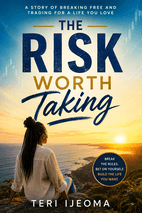
These quotes come from a book about taking a leap and betting on yourself. You'll find lines that cut to the heart of why we stay stuck and what it takes to break free. Some are sharp observations about work, money, and personal worth. Others are raw moments of realization that feel like a wake up call.
What makes this book so quotable is its honesty. The author doesn't sugarcoat fear or failure. She shows how real growth comes from facing both. The quotes stick with you because they speak to universal struggles with a fresh voice. They are the kind of lines you want to save, share, and come back to when you need a reminder to keep going.
Top Quotes from The Risk Worth Taking
“I've always believed that financial education is about more than dollars and cents. It’s about dignity. It’s about choices. It's about purpose. It’s about waking up every day knowing you are the driver of your own life.”
Tiffany “The Budgetnista” Aliche reflects on the deeper meaning of financial education.
It reframes money as a tool for autonomy and self-worth, inspiring readers to see beyond numbers and connect finance to their personal agency.
“It’s not just about learning to trade stocks. It's about learning to trust yourself again. It’s about realizing that the most significant and most rewarding investment you'll ever make is in yourself.”
Tiffany explains the true lesson of the book for anyone hesitant about investing.
It highlights the emotional and personal transformation that investing can bring, making the concept of risk-taking deeply relatable and empowering.
“What if the life you want is just one risk away? That's the question this book dares you to ask.”
Tiffany poses a provocative question to the reader about stepping beyond comfort zones.
It challenges readers to reconsider their own limitations and the potential hidden in taking a single, courageous leap.
“As someone who has stumbled, fallen, and gotten back up again, I can promise you that betting on yourself is always the best investment you'll ever make.”
Tiffany shares her personal experience of overcoming financial mistakes and rebuilding trust in herself.
It offers credibility and hope, showing that self-investment pays off despite past failures, and encourages readers to take that risk.
“I was in a burning house... and I didn’t run. I just sat there. What kind of life is that?”
From Erin's journal entry after a nightmare about her own passivity.
The burning house metaphor viscerally illustrates how staying in familiar toxicity is a form of self-destruction, compelling readers to ask themselves the same question.
“Yes, it is a risk. But baby, it sounds like this is the risk worth taking.”
Granny responds to Erin's fear of losing everything by chasing her dreams.
This line encapsulates the book's core message and validates the courage to pursue meaningful risks.
“The question isn’t whether I made a mistake. It’s whether I'll let that mistake teach me or destroy me.”
From the journal entry after a devastating trading loss.
Resonates because it reframes failure as a pivotal choice between growth and defeat.
Themes Behind the Quotes
A central theme is the idea that true financial education is about more than money. It connects to dignity, purpose, and the ability to shape your own life. The quotes repeatedly challenge the notion of playing it safe, urging readers to take calculated risks and invest in themselves first.
Another strong thread is the battle between external expectations and internal fulfillment. Many quotes highlight the pain of living for others approval and the relief that comes from finally choosing your own path. They emphasize that courage is not the absence of fear but moving forward despite it. Mistakes are reframed as lessons that can teach or destroy, depending on your mindset. The overall message is one of empowerment through consistent action and emotional awareness.
Quotes by Chapter
Chapter 1: How Did I Get Here?
“How do I work so hard, give so much, and still feel so hollow inside?”
Erin's inner thought during the staff meeting as she reflects on her burnout.
This line captures the universal ache of overachievers who sacrifice everything yet feel empty, making it deeply relatable for anyone questioning the cost of their ambition.
“She imagined her tombstone etched in pitiful simplicity: ERIN WAS A RULE FOLLOWER.”
Erin's dark moment alone on the bathroom floor after learning of her best friend's death.
It starkly summarizes the tragedy of a life lived for others' expectations, forcing readers to confront the fear of dying unfulfilled and unnoticed.
“The laughter stitched through years of friendship had abruptly ended.”
Erin realizes her best friend Stephanie has died and those soul-lifting conversations will never happen again.
This beautiful metaphor for loss and the sudden end of shared joy resonates with anyone who has experienced the brutal finality of losing a loved one.
“She had to wear the mask of presence and get through the workday, even if every fiber of her being screamed to flee.”
Erin forces herself to enter the school after receiving the news of Stephanie's death.
It perfectly articulates the exhausting act of suppressing grief to meet professional obligations, a painful reality familiar to many who have had to hide their emotions at work.
Chapter 2: How Do I Break Free?
“Each trade was a whispered rebellion, a defiant gesture, a middle finger to “the man.””
Describes Erin's feeling when she trades stocks at work.
It captures the empowering thrill of reclaiming agency in a soul-crushing job, turning a small act into a symbol of resistance.
“You're fighting for him to acknowledge you and recognize your worth when you should be fighting for yourself to be happy.”
Sarah says this to Erin after hearing about her toxic boss.
This quote reframes the struggle from seeking external validation to prioritizing one's own well-being, a powerful shift for anyone in a draining situation.
“If you could do anything in the world, what would it be? If money were no object, what would you be doing instead of this?”
Sarah asks Erin this question to challenge her to rethink her career.
This timeless, provocative question strips away fear and obligation, forcing honest reflection about what truly matters—a catalyst for change.
Chapter 3: The Risk Formula
“Courage doesn’t mean you're not scared. Courage means you do it scared.”
Granny tells Erin that courage involves acting despite fear.
This reframes courage as action in the face of fear, empowering readers to take risks even when afraid.
“You can either choose to go down the same monotonous path that has left you burnt out and a shell of who you were created to be, or you can make a radical change, take a bet on yourself, and live the life you were created for.”
Granny encourages Erin to embrace change and bet on herself.
This presents a stark choice between stagnation and transformation, motivating readers to pursue their true potential.
“I have spent every single day working myself to the bone, trying to please you. I have missed out on so much in my life trying to be a part of this Morningside ‘family.’ It's clear you don’t want an assistant principal. You want a lackey. A punching bag. Well, moving forward, it won't be me. I quit!”
Erin finally stands up to her abusive boss Peter and resigns.
This powerful declaration of self-worth and boundary-setting resonates with anyone who has endured toxic work environments.
Chapter 4: Can I Win at This Game?
“Your limiting beliefs are stifling your joy, dear. Your ‘responsible brain’ has labeled this as too expensive, and now you have starved yourself of the opportunity to experience something that would bring you happiness.”
Granny speaks to Erin after Erin dismisses the Nomads program as too expensive.
This line exposes how self-imposed financial caution can become a barrier to joy, and Granny's direct yet loving confrontation of Erin's 'limiting beliefs' makes it a powerful wake-up call for anyone stuck in a scarcity mindset.
“Now it's your ‘yes’ season. You became really good at delaying your gratification. But now you have a new goal of happiness and fulfillment.”
Granny explains to Erin that after four years of disciplined saving, it's time to shift from saying 'no' to saying 'yes' to life.
This passage reframes financial discipline as a temporary phase rather than a permanent identity, offering a compelling blueprint for transitioning from survival mode to intentional living.
“You have to choose yourself over and over again.”
Granny concludes her advice about courage and the 'yes' season.
This short, repeatable mantra captures the essence of self-worth and the ongoing effort required to prioritize one's own dreams, making it instantly memorable and quotable.
“I guess I need to give myself permission to color outside the lines.”
Erin reflects on Granny's lesson about shifting from her 'no' season to her 'yes' season.
The metaphor of coloring outside the lines beautifully encapsulates the tension between conformity and self-expression, resonating with anyone who has felt trapped by expectations.
Chapter 5: How to Set Expectations
“The trading account isn’t extra money; it's the engine. If I cut it down, I don’t just lose money. I lose momentum and leverage.”
Erin explains to Maya why she can't dip into her trading account to cover expenses.
This line reframes money from a static resource to a dynamic tool, making readers rethink how they protect their growth capital. It underscores the emotional and strategic cost of compromising a long-term goal for short-term relief.
“The stock market is like chess. Big banks and stockbrokers use every game piece—bishops, knights, and queens—and that's how they make so much money for themselves and their clients. But the average person? They look at the same chessboard of investing and they are only using pawns.”
The online course instructor uses a chess analogy to explain why most people underperform in investing.
This vivid metaphor makes a complex financial concept instantly accessible, empowering readers to level up their investment strategy. It challenges the passive mindset and inspires proactive, multi-tool thinking.
“The key to success is consistency. Consistently making small gains over and over instead of trying to knock it out of the park.”
The instructor explains the secret to winning in trading during an online course.
This principle counters the allure of quick, big wins and replaces it with a sustainable, disciplined approach. It resonates with anyone who feels overwhelmed by ambitious goals and needs permission to celebrate incremental progress.
Chapter 6: How to Place a Trade
“The hardest thing about trading wasn't pressing the buttons; it was managing her emotions.”
This line appears in the narrative describing Erin's internal struggle during her first profitable trade.
It captures a universal truth that applies not just to trading but to any high-stakes endeavor: technical skill is secondary to emotional control. Readers remember it because it reframes failure as a mindset problem rather than a knowledge gap.
“The stock market isn’t just some mysterious system for rich people. It's a tool that can give you freedom.”
Erin says this at the end of her impromptu investing class to demystify the market for her fellow nomads.
It strips away intimidation and reframes the stock market as an accessible instrument for personal empowerment. The contrast between 'mysterious system' and 'tool for freedom' is both inspiring and reassuring.
Chapter 7: What Just Happened?
“She was living her dreams instead of sitting in the fire.”
Erin reflects on her journey as she packs to leave Seoul.
It captures the dramatic shift from a miserable past to a fulfilling present, resonating with anyone who has escaped a toxic situation.
“Blowing caution to the wind, Erin filled in the order.”
Erin impulsively buys a penny stock despite ignoring her own rules.
This line marks the turning point of her financial disaster, illustrating how overconfidence and greed can override good judgment.
“And if you quit now, how will you ever get your money back?”
Erin's mother responds after Erin sobs about her trading loss.
It delivers an unexpected, empowering perspective that reframes failure as a learning opportunity rather than a reason to give up.
“Iexpected an “I told you so.” Instead, she gave me courage and clarity.”
Erin reflects on her mother's supportive advice in her journal.
This line highlights the emotional turnaround from expecting criticism to receiving encouragement, showing the power of compassion in moments of crisis.