The Oxford Detective Society Quotes
by Faith Martin
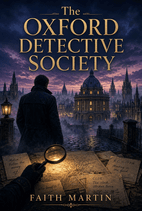
This collection gathers some of the sharpest lines from The Oxford Detective Society. Inside you will find snappy dialogue, scene-setting narration, and the kind of inner monologue that makes a character feel real. The novel is a mystery, but it is also about how stories are told, who gets believed, and what people decide to remember.
What makes these quotes so quotable is their mix of wit and feeling. They can turn from dry observation to quiet dread in a sentence. They sound human. Whether a character is being funny, defensive, or broken-hearted, the voice is never flat. That range is why the book stays with you.
Top Quotes from The Oxford Detective Society
“Life was all about fun, right? Until suddenly, it wasn't. People started dying of so much fun, and so many of them had been in the music industry.”
— Monty
Monty, at her own party, is remembering the wild early-1960s London years and the music-world deaths that followed.
It distils a generation's bright hedonism into a sudden, sobering turn; the word 'fun' becomes its own kind of trap.
“And as the water filled her up, sucking the remaining heat out of her body and replacing it with a chill that grew and grew, she understood, with a mixture of panic and awe, that she no longer had to wonder how death should be. Death was already upon her.”
Monty falls into the pond after staring at her reflection and wondering if she could see Glen in the water.
The prose moves from a shock of cold to a strange, terrible clarity, and the final short sentence lands like an inescapable truth.
“Neither. I see myself more as one of those fabulous women in American television shows who can shoot a grape off the vine at thirty feet, whilst wearing high heels and putting a good-looking man in his place all at the same time.”
— Freida
Freida jokes about accompanying Lyssa to lunch with the mysterious Elizabeth.
It is funny, self-possessed, and instantly vivid, capturing Freida’s larger-than-life personality.
“She was found in her garden, drowned in the pond, the day after her twenty-third birthday,’ she said simply. ‘At her own birthday party.”
— Elizabeth
Elizabeth shows Lyssa an old photograph of Monty and tells her how she died.
The understated delivery makes the tragedy land harder, and the detail of a birthday party is chilling.
“I hope they lived fast, died young and left good-looking corpses. That was the saying, wasn’t it?”
— Jason
Jason cheerfully speculates about the doomed couple while discussing the press's treatment of them.
His flippant pop-culture cliché becomes unbearably poignant once the reader learns how young Monty died.
“For although the Lucky Cuckoos did indeed become notorious for their luck, their luck was mostly all bad. Very bad.”
Lyssa reflects on the band's history after reading old newspaper articles about their tragedies.
The irony of the band's name is delivered with a sharp, memorable punch that sums up the chapter's tragic arc.
“Would you believe, we'd none of us ever heard of an avocado before. It was a big deal, eating one. Racey hated the taste but pretended he didn't. Bless him!”
— Monica
Monica recalls the sudden wealth and novelty of the 1960s music scene.
It captures an era through a small, human detail and shows Monica's affectionate, rueful memory of Racey.
Themes Behind the Quotes
One clear theme is the gap between public reputation and private reality. Several quotes show how quickly a person can be reduced to a headline, especially a young woman surrounded by money, fame, and scandal. Another theme is death and the way it changes how stories are told. The quotes circle around a life cut short, but they are less concerned with the moment of dying than with what is left behind.
Love and grief also run through these lines, often tangled with class and money. There are hints of a relationship between people from very different worlds, and the questions that creates about motive and trust. Memory is just as important. Characters look back with affection, regret, and wariness, aware that the same past can be remembered in very different ways. The result is a portrait of a case where emotion and evidence keep pulling in opposite directions.
Quotes by Chapter
Prologue: Oxfordshire, England, June 1966
“Glen was gone, dead at just twenty-five. He'd left her, without warning, with only the recorded sound of his voice for company and his awful taste in art.”
Monty is alone in the moonlit garden, drinking and grieving the man she loved.
The sharp, offhand detail of his awful taste in art makes the grief feel lived-in and specific rather than abstract.
“They thought you would sully me, sweetheart,’ Monty said, leaning forward again, picking up her glass and toasting the fountain ironically. ‘Taint me and lead me astray. And so you did, you lovely, lovely man, you. Did I ever thank you properly for that?”
— Monty
Drunk and heartbroken, Monty addresses the dead Glen while toasting the fountain he insisted on installing.
It is a love letter disguised as a rebuke, blending defiance, sorrow, and gratitude in one aching toast.
1: Oxford, England, Present Day
“To hear them talk, she was an immoral, drunken, drug-crazed, out-of-control nymphomaniac and nobody was surprised by her self-destruction.”
— Elizabeth
Elizabeth describes how the press portrayed her dead relative Monty after her death.
It condemns media misogyny and gives Monty her dignity back, making Elizabeth’s anger palpable.
“That's why I want us to put the record straight,’ she said firmly.”
— Elizabeth
Elizabeth explains why she wants Lyssa to write Monty’s biography.
It states the emotional core of the chapter and turns a biography into a defiant mission.
2
“Well, Kyle, what do you think about Monty Montrose? Wild child or Miss Understood?”
— Lyssa
Lyssa pauses in front of a framed photograph of her late husband before starting her research on Monty Montrose.
The line turns research into a quiet, grieving conversation, making her loss and her need for connection deeply felt.
“Monty was only a day over twenty-three when she died.”
— Lyssa
Lyssa reveals Monty's age to Carter and Jason while discussing her fate.
The stark, simple detail makes the tragedy feel immediate and unjust, cutting through the era's glamorous clichés.
3
“Anything less than an immaculate garden wouldn't cut the mustard.”
Elizabeth Grainger surveys her immaculate garden, which she maintains as a showcase for potential clients.
It wryly condenses how her aesthetic standards are tied to her business and self-image.
“It wasn't enough for her to live life in the slow and comfortable lane, when what she really wanted to do was soar.”
Elizabeth reflects on her privileged start and her ambition to move beyond her comfortable life.
It distills her ambition into a single soaring image and makes her desires feel both personal and universal.
“Don't worry about that. I'll make it part of the contract that she keeps me updated on her progress every other day, and if it looks as if she might cause trouble, Ill head her off and keep her on track.”
— Elizabeth
Elizabeth tells the unnamed man on the phone that she will keep the biographer Lyssa Moore under control.
It exposes her controlling and manipulative side, adding quiet menace to her professionalism.
“Thinking up book titles was her least favourite thing, since she found it almost impossible to reduce seventy thousand words or more to a single concept.”
Lyssa tries to come up with a working title for the biography she has been commissioned to write.
Writers and readers alike will recognise the struggle to compress a huge project into a short title; it is a witty, true observation.
4
“It was as if the media at the time was determined to find nothing good in the new, emerging youth culture of the day, and so had derided the YMT as yet another sign of Monty's degenerate nature.”
Lyssa reads through old newspaper coverage of Monty’s charity for unmarried mothers.
It captures the reflexive hostility of the press toward Monty and youth culture. The irony of calling a charity a sign of degeneracy makes the media’s bias feel both absurd and cruel.
“Why should she, who already had a wealthy family behind her and access to a substantial trust, profit from the death of her lover, a working-class boy made good?”
Lyssa considers the public criticism Monty faced after Glen left her his estate.
It distills class resentment and outrage into one sharp, accusatory question. It shows how Monty was judged no matter what she did.
“Drunken, lonely and not thinking straight, might she not simply have decided that she'd rather rejoin her lover in the next life than stay and fight things out in this one?”
Lyssa pauses and wonders whether Monty’s death could really have been accidental.
It is the emotional hinge of the chapter, turning research into a haunting possibility. The reader is left sharing Lyssa’s doubt and grief.
“It was annoying because he knew it to be true.”
Jonas reflects on how his family’s wealth ultimately came from Glen’s pop career.
It exposes the insecurity beneath Jonas’s success. The quiet discomfort of the sentence makes it linger.
5
“She was acting like a heroine from a woman-in-peril film!”
Lyssa dismisses a faint whine she heard on her landline after a phone call.
The self-aware genre wink lightens the creeping unease and hints at trouble to come.
“I don’t go out of my way to drag reputations through the mud — but I don’t flinch from looking things in the eye either.”
— Lyssa
Lyssa reassures Monica about her approach while interviewing her.
It defines Lyssa's journalistic integrity and sets the tone for the truth she is hunting.
“They're all dead and gone now, aren't they? Nothing can hurt them any more.”
— Monica
Monica decides to speak candidly about Racey and Monty.
The line carries a mournful finality and grants permission to revisit painful history.
6
“Evergreen. Had they chosen it because they'd believed that their own love story would also remain evergreen? If so, it only made the tragic end of their story all the more poignant.”
Lyssa reflects on the true name of Monty and Glen's home after Monica dismissively calls it 'Monty's Mansion'.
It turns a small detail into a poignant meditation on love and tragic endings.
“Men don't talk down about a beautiful woman unless they’re a bit obsessed with her as well, do they? Not in my experience they don't.”
— Monica
Monica suggests that Racey's excessive hatred of Monty may have hidden an obsession.
A sharp, worldly insight into how strong dislike can mask fascination.
“How could they? They were mostly working-class lads like Racey and Glen, and they didn’t know the industry. Unless they caught a lucky break —a really lucky break — they didn’t stand a chance.”
— Monica
Monica explains why the band initially put up with Monty buying their way to the top.
It captures the brutal odds working-class musicians faced and why Monty's money felt indispensable.
“It absolutely floored Monty, I can remember that much. Even as a callow young girl, I could see she was devastated.”
— Monica
Monica remembers Monty's devastation after Glen's sudden death.
It reminds readers that Monty was not just a manipulator but a woman who genuinely loved Glen.
7
“Whatever the truth is, there'll have to be more to it than the generic “Oh, she was a bad 'un” rubbish that's been floating around out there about her for over fifty years now.”
— Elizabeth
Elizabeth tells Lyssa to investigate Monty's story honestly and without bias.
It captures the novel's theme of confronting messy historical truth rather than easy narratives.
“Help? Hell, I think she wrote all the lyrics. And he wrote the music. I think that’s why he left her the money in his Will. He believed she'd earned it and deserved to have it!”
— Elizabeth
Elizabeth reveals her belief that Monty wrote the lyrics to Glen's songs, explaining his Will.
It is a pivotal, exhilarating revelation that reframes Monty's legacy.