The Other Kind of Lion Themes
by Catherine Ryan Hyde
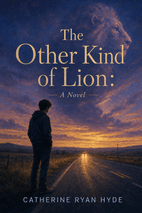
Underneath its plot, The Other Kind of Lion is really wrestling with how care passes between people outside biological family, and how grief, names, poverty, war, and aging shape the ways people rescue each other and judge themselves.
Here you will find theme analysis of compassion, chosen family, and mutual rescue; grief, loss, and letting go; names and identity; poverty, caretaking, and the limits of help; war, duty, and moral judgment; and aging, mortality, and the one precious life, with moments like Shirley's early help, Cash's name change, lunch money and rent, Reid's draft and Curtis's refusal, and Shirley's stroke. You will also find symbols: Phoenix the horse, the lion with a thorn in its paw, the chalkboard, and tomato soup with grilled cheese.
Major Themes in The Other Kind of Lion
Compassion, Chosen Family, and Mutual Rescue
The novel repeatedly shows care being offered to someone outside the biological family and then returning in unexpected forms. Shirley's early help to Cash becomes a lifelong bond, and Cash's later care for Shirley after her stroke makes the relationship reciprocal rather than charitable.
- Shirley invites Ludlow to dinner, helps make the nickname Cash stick, and Curtis gives him a ride while worrying about his lunch money.
- Shirley tells Cash he does not have to ask to come in for dinner and says, 'You're one of us now,' which Cash calls the best thing anybody ever told him.
- After Shirley's stroke, Dr. Cash Pierce appears at her bedside, says he has searched for her for fifteen years, and promises to take care of her.
- Shirley tells Cash in the cafeteria that when one of them needs help, the other helps, and nobody keeps score.
Grief, Loss, and Letting Go
Loss accumulates across the book through Hal, Reid, Cash's disappearance, Edsel, Phoenix, and finally Curtis. Shirley's central struggle is learning to let people go while still remembering them, and the novel repeatedly frames grief as something to be felt rather than avoided.
- Shirley rushes to the window because Phoenix made a greeting she associates only with Hal, her husband who has been dead nearly fifteen years.
- Waiting past five o'clock for Curtis and Cash, Shirley feels that everyone who means anything to her is exiting her life one by one, or two at a time.
- Shirley refuses a sedative after the military notification because 'It's my job to feel this. No shortcuts.'
- Shirley tells Hallie there is no real 'how' to loss: 'You do it because you have no choice but to do it.'
Names and Identity
Names in the novel mark belonging, shame, self-invention, and changing roles. Ludlow becomes Cash, Shirley considers returning to her maiden name, and Bernie asks whether keeping her own name was wrong, showing identity as something characters actively choose.
- Ludlow says other kids mock his name and that he wants a nickname; Curtis proposes Cash, and the chapter ends with Ludlow becoming Cash Pierce at Shirley's table.
- Shirley tells Jace to stop calling his brother Lud and call him Cash because the new nickname matters to him.
- Shirley tells Curtis she is about eighty-five percent sure she will return to her maiden name because wearing her late husband's name has begun to feel like playacting.
- Bernie asks Shirley whether keeping her name was wrong; Shirley says it was a good decision.
Poverty, Caretaking, and the Limits of Help
The book ties care to material need: lunch money, rent, reduced-price lunch, and food insecurity shape Cash's and Jace's lives. Shirley wants to help, but the novel also shows the limits of what one family can sacrifice and the humiliation that can accompany aid.
- Curtis reports that Ludlow often has no lunch money and sometimes no bread or peanut butter at home.
- Jace visits Shirley late at night to ask for rent help and declines her idea of a collection or church help as humiliating.
- Cash explains he did not call Jace after being assaulted because the owner would dock his pay and there is not much to eat at home; he says he is afraid to go back to being hungry and has only three shirts.
- Shirley considers selling Hal's truck and housing the Pierce boys in Reid's room, but concludes a sacrifice like that would only postpone the inevitable and she cannot bring herself to do it.
War, Duty, and Moral Judgment
The Vietnam War divides the family and the neighbors over what duty, loyalty, and courage mean. Reid goes when drafted, Curtis refuses registration and leaves for Canada, and characters judge one another sharply for those choices.
- Reid opens the Selective Service letter, confirms it is what they expected, and says he has to go; he refuses to dodge because it would dishonor his father's memory.
- Curtis tells Shirley that on his eighteenth birthday he will not register and will go to Canada.
- Doris Steen accuses Shirley of helping Curtis dodge the draft; Shirley yells back about losing her husband and Reid and says Doris sacrificed nothing.
- The young soldier tells Shirley that the sole-survivor protection was amended last year, so Curtis could be drafted if there is a need.
Aging, Mortality, and the One Precious Life
The novel moves from Shirley caring for a hungry boy to Shirley herself being old, ill, and cared for after a stroke. Cash's phrase 'your one precious life' becomes a call to keep trying, and the ending treats death with acceptance rather than only fear.
- Dr. Wells notes Phoenix is twenty-four and that Edsel is also old; Shirley asks Phoenix to 'get older than horses are supposed to get.'
- Cash tells Shirley she has to try 'because it's your life, Mrs. Shirley. Your one precious life,' and argues that even a few remaining years would make it more precious.
- Cash tells Shirley, 'Good life, good death. That's all we can ask for,' and Shirley later finds the way open and says 'Hal.'
Symbols and Motifs
Phoenix the horse
Phoenix represents memory, recognition, and continuity across loss. His nicker connects Shirley to Hal and later to Cash, and his plaque keeps that bond physically present on the old property.
- Phoenix nickers at Ludlow and trots along the fence reaching toward his hand; Shirley associates that greeting only with Hal.
- Shirley finds Phoenix down with colic and is desperate not to lose him, partly because he was Hal's horse.
- Cash reveals he bought Shirley's old property and wheels her to the pasture, where Phoenix's slate plaque remains.
The lion with a thorn in its paw
Cash's fable of the lion with a thorn in its paw symbolizes compassion, rescue, and repayment. Shirley removed a thorn from Cash's life when he was eleven, and Cash returns to care for her when she is vulnerable.
- Dr. Cash tells Shirley the fable of the lion with a thorn in its paw and says she took a thorn out of his paw when he was eleven.
- Cash tells Shirley she 'double-crossed' him by saving him again, and Shirley says he saves her every day.
The chalkboard
The chalkboard represents Shirley's need to communicate and hold onto agency after her stroke. It becomes a practical tool for speech loss and a record of her emotional honesty.
- Dr. Cash brings Shirley a chalkboard and says he is coordinating with her doctors.
- Shirley writes 'MISSED YOU SO MUCH' on the chalkboard, and Cash cries and pulls the car over.
- Shirley writes 'WE SHOULD BOTH LET OURSELVES OFF THE HOOK' for Cash.
Tomato soup and grilled cheese
Tomato soup and grilled cheese represent care, comfort, and repair. The meal marks Shirley's motherly care for Cash and later becomes Cash's way of caring for Shirley.
- After Cash is assaulted at school, Shirley takes him home and makes him grilled cheese and tomato soup.
- Cash makes tomato soup and grilled cheese for Shirley, explaining it was his favorite meal from the day Shirley picked him up from school and fed him.