The Other Kind of Lion Quotes
by Catherine Ryan Hyde
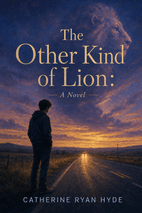
On this page you will find lines from Catherine Ryan Hyde's novel that stick with you after the book is closed. Some are spoken aloud, some belong to the narrator, and some are the quiet thoughts characters would never say out loud. Together they show the book's range, from plainspoken dialogue to sharp inner monologue to scenes that land because of how carefully they are observed.
What makes these lines worth sharing is their honesty. They do not dress up fear, grief, or family trouble. They just say it plainly, often in a way that feels familiar, and that is why readers keep coming back to them.
Top Quotes from The Other Kind of Lion
“People don’t reassemble themselves and breathe again.”
— Shirley
Rushing to the window after Phoenix nickers, Shirley half expects Hal to return.
It captures grief’s irrational hope and the blunt impossibility of reunion in one line.
“People don’t slip away and cry when nothing is wrong. And nobody should tell a child that everything is fine when they can see the truth with their own eyes. It puts them in a position where they have to disbelieve either the adult or their own perceptions, and unfortunately they tend to do the latter. Being children.”
Cash finds Shirley crying on the porch and asks what is wrong.
It captures the moral care behind Shirley's refusal to lie to a child, even as her own fear is exposed.
“Do you call it a fight when only one person is hitting?”
— Cash
Shirley asks Cash whether he got into a fight after picking him up with a black eye.
It reframes a beating as something other than a fight and shows Cash's raw confusion about violence.
“Why are we even people? Why do we have to have this life thing? Is it just so we can be unhappy?”
— Cash
After his bad day, Cash asks Shirley why people must have unhappy lives.
It voices a child's raw existential despair and anchors the chapter's title.
“You always like to think there’s something or somebody looking out for you. If you know what I mean. Kind of like a net to break your fall. But this is the real world, right? And we're on our own whether we like to see it that way or not.”
— Jace
On the porch at night, Jace tells Shirley what he thinks people imagine will catch them when they fall.
The line names a human need for protection while refusing it, making Jace's self-reliance feel both hard-earned and bleak.
“Because if you say it, then it will be real. It will really have happened. And then it can never unhappen, and I can never go back. And I just absolutely will not allow that.”
— Shirley
Leaning inside the slammed door, Shirley tries to deny what the officers' visit would make real.
It captures the superstition of grief, where saying the worst thing aloud threatens to make it irreversible. The voice is raw and absolute, refusing a reality she cannot bear.
“It wasn't that kind of ‘no.’ Nobody is going to give me something so I can’t feel this. I'm a mother. It's my job to feel this. It’s what I signed up for. No shortcuts. No taking the easy way out.”
— Shirley
When the young officer suggests a doctor might sedate her, Shirley refuses to numb her grief.
Shirley claims her sorrow as a maternal duty rather than a symptom to be medicated. The line is fierce, unsentimental, and deeply protective of her own feeling.
Themes Behind the Quotes
The novel keeps circling around loss and the way families try to hold themselves together after it. Grief shows up in practical details, in silence, in anger, and in the effort to protect children from truths they can already see. Duty is another thread, whether it is the pressure to serve, the pull of family obligation, or the feeling that love means staying watchful and present.
Many of these lines are also about growing up too fast. Young characters are forced to read the adults around them, ask hard questions, and decide what they owe themselves and each other. Underneath that is a stubborn hope: people may not be able to undo pain or guarantee safety, but they can still try to be there when someone stumbles.
Quotes by Chapter
Chapter One: The Opposite of Me
“I don’t mean he hates me or anything. But I don't think he came over to say he liked me. I think he came over to ask if I was okay.”
— Ludlow
Ludlow explains why Phoenix followed him along the fence and reached for his hand.
It reveals a lonely boy’s intuitive sense that the horse was checking on him, not simply greeting him.
“He's out in the truck. I picked him up and gave him a ride home 'cause I was worried about him. I asked him if he could at least eat when he got home, but he just shrugged.”
— Curtis
Curtis explains why he brought Ludlow home after school.
It shows a teenager’s practical compassion and the painful smallness of the boy’s hunger.
“And that was how Ludlow Pierce became Cash Pierce, all at once and for all of time, right there at Shirley Bennett's kitchen table. It was one of those moments when things change and never change back again. In more ways than one.”
At dinner, Curtis suggests a nickname that sticks.
It marks the chapter’s emotional turning point and hints that the boy’s new name will matter far beyond school.
Chapter Two: Two Ways to Die When You’re Twenty-Five
“Guy dies at twenty-five, seems to me most likely it’s car accident or Vietnam. But if you don’t want to talk about it, that’s okay by me.”
— Jace
After Shirley says her husband died at twenty-five, Jace tries to guess the cause.
It captures a young man’s blunt, practical way of approaching grief and his awkward offer not to pry. The line is plainspoken but unexpectedly gentle.
“Which it tends to in this life, Shirley thought. Especially if you're an eleven-year-old and an eighteen- year-old out in the world alone.”
— Shirley
After Jace says it is nice to know help exists if push comes to shove, Shirley reflects on how precarious that is for him and Cash.
The line quietly reveals Shirley’s sympathy for the brothers and the fragility of their independence. It turns a practical conversation into a larger comment on survival.
“Don't call him Lud anymore. Call him Cash.”
— Shirley
As Shirley leaves the Texaco station, she tells Jace one free thing he can do for his brother.
It is a small, concrete act of respect that matters deeply to Cash. The line shows Shirley’s understanding that dignity can be as urgent as food or money.
Chapter Three: Deep Freeze
“The envelope was a manila color with an almost orangey tone. In the upper left was a pre-printed box with a return address that clearly had been applied with a rubber stamp. Above the box was printed the sub-zero freezer of a phrase, the one that had caught her eye and stopped her cold. “Selective Service.””
Shirley stops cold in the afternoon mail after spotting a Selective Service envelope addressed to Reid.
The phrase 'sub-zero freezer' makes bureaucratic mail feel physically menacing, and the quoted agency name lands like a verdict.
“I cry. Just like you're doing. When my mom got arrested I was really scared and I cried and cried. I cried for a long time. In a way it doesn’t help but in another way it does. After a while you're just done crying and then at least you have that part over with.”
— Cash
Cash tells Shirley how he coped after his mother was arrested, offering her comfort.
A child's plain account of grief becomes unexpectedly wise, showing tears as something to finish rather than avoid.
“Lots of things happen in this world, Shirley thought, that don’t happen because I let them.”
— Shirley
After Curtis accuses Shirley of letting Reid go, she silently reflects on her lack of control.
It distills the helpless anger of a mother watching larger forces decide her son's fate.
Chapter Four: Why Are We People?
“But you also feel more like my mom than my mom does.”
— Cash
During lunch, Cash admits a truth he hesitated to say to Shirley.
It captures his longing for maternal care and the painful comparison to his own mother.
“I can't in all honesty say as I do, hon. I think if it was, my husband would have come home from the war. Or at least, after losing him, Reid wouldn't have to go over there and take that same chance.”
— Shirley
Cash asks whether life should be fair, and Shirley answers honestly about her husband and son.
It grounds abstract fairness in personal grief and wartime loss.
Chapter Five: Nocturnal Aviation
“I'm sure it does. It's always a comfort to think you're being offered some kind of special protection from loss. But once you've been hit in the face with that loss, you know it isn’t true. I only know this is the first night since Hal died that I haven't had two sons around the house.”
— Shirley
Shirley responds to Doris's claim that faith in God's protection helps after a son goes overseas.
It turns religious consolation into something brittle by measuring it against the specific, unanswerable fact of Hal's death.
“She wondered how it would feel to a person to be told that there's some special duty they have to perform, consistently and on an ongoing basis, to earn the right to exist.”
While Doris insists a horse's purpose is to be ridden, Shirley reflects on why usefulness is demanded of some lives.
It quietly expands a conversation about Phoenix into a meditation on conditional worth and the right simply to exist.
“She walked away without turning around to watch him board the bus. It wasn't easy, but she simply insisted it of herself. She cried all the way home.”
After Reid's bus pulls up, Shirley leaves the station without watching him board.
Her refusal to look is an act of self-protection, and the final sentence lets the grief she has been holding back break through.
Chapter Six: One by One, Disappearing
“She felt as if all the people who meant anything to her were exiting her life one by one. Or even two at a time. It was a panicky feeling. Panicky and deeply sad at almost exactly the same moment.”
Shirley waits past four thirty for Curtis and Cash to come home, fearing a drunk-driving accident has taken them too.
It captures grief as a series of absences and shows how panic and sadness can arrive at once.
“Maybe he would walk with a limp, but he would walk, and his life would go on. And he would be home, and alive.”
— Shirley
While considering whether she can house Curtis and Cash, Shirley daydreams about Reid coming home injured but alive.
It reveals a mother's desperate bargain with fate and the unbearable cost of her hope.
“The day I turn eighteen, I’m not going to register. I'm going to Canada.”
— Curtis
Curtis tells Shirley that he will refuse draft registration and leave for Canada when he turns eighteen.
It is a blunt declaration of moral refusal that also threatens to remove another person from Shirley's life.
“I think I might be more worried about him than I am about Reid.”
— Curtis
After Cash and Jace disappear, Curtis admits to Shirley that Cash's helplessness frightens him more than Reid's wartime danger.
It names a different kind of danger and makes Cash's vulnerability vividly real.
Chapter Seven: Obey
“I want you to know I'll try to catch you if you fall, even though of course that’s harder to do from so far away.”
— Shirley
Shirley writes to Cash after learning he has moved to Pennsylvania, offering a lifeline despite the distance.
It captures her motherly instinct and the ache of caring for someone who is now almost a continent away.
“Then she leaned back and pulled hard and he obeyed her fury and stumbled to his feet.”
After finding Phoenix down with colic, Shirley commands the horse not to quit and hauls him upright.
The line turns her desperation into elemental force and shows obedience arising from love and fear rather than submission.
“He's used to living with somebody who lets him use his own judgment on things, and now he's just following orders all day long. Obey, obey, obey.”
— Curtis
Curtis reports what Reid wrote from basic training about the loss of freedom and constant orders.
The repeated 'Obey' makes military discipline sound both alien and dehumanizing, sharpening the chapter's theme of control.
“That he was Dad's. Which is stupid, because I didn't even know Dad. I mean, not really. I know I was born while he was still here. But I don’t remember.”
— Curtis
Curtis admits that part of his fear of losing Phoenix comes from the horse having belonged to the father he never really knew.
It captures grief for an absent parent and the way animals can carry family memory, even when that memory is painfully incomplete.
Chapter Eight: Fresh Amendments to the Sole Survivor Policy
“You will not! You will get off my property! You will not come any closer! You will not open your mouths! You will not say what you came here to say!”
— Shirley
After two uniformed men walk up her driveway, Shirley refuses to let them deliver their news.
The repeated refusals turn words into a shield against devastating news. Her command to stay silent reveals how much power she believes the announcement will have.