The Mirror of Infinite Endings Themes
by Stephanie Garber
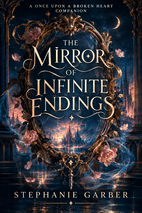
Underneath its magical quests, The Mirror of Infinite Endings is really wrestling with love as a choice you have to test, fight for, and defend, not just enjoy. It asks what home means when the Hollow itself is alive, how temptation and fae bargains lure Evangeline with wonder and hidden costs, and how memory, identity, mortality, and secrecy shape every relationship.
On this page, you'll find each major theme explored through concrete moments: love worth infinite endings, Evangeline's longing for home, dangerous deals at the Emporium of Elsewhere, fractured selves, immortal Fates and mortal loss, and secrets that nearly break Jacks and Evangeline. You'll also see recurring symbols: the Mirror of Infinite Endings and the Mirror of Second Chances, the animate Hollow, broken-heart cookies, and the hourglass tattoo.
Major Themes in The Mirror of Infinite Endings
Love tested, fought for, and worth infinite endings
The book treats love as something that must be chosen, tested, and defended rather than simply enjoyed. Evangeline insists real love is worth fighting for, while the fairy's tests force her and Jacks to fall in love in another life and find their way back to each other. Jacks's fairy bargain to bind their lives together and his eventual proposal both frame love as a commitment that reaches across possible worlds.
- Evangeline tells LaLa that real love is always worth fighting for and that when it is real, the only thing that feels impossible is giving up.
- The fairy says, 'There is so much love in the world, but the loves that go untested just aren't very strong.'
- Jacks makes a deal with a fairy to stop Evangeline from aging.
- Evangeline loves the idea of infinite endings but wants all her endings to involve Jacks.
Home and belonging
The Hollow functions as more than a setting: it is an animate, magical home that reflects and responds to the people within it. Evangeline longs for the Hollow to be full of smiling guests and shared food, and Jacks comes to see it as home again after his parents died. The house's moods, warnings, and comforts make belonging feel like something alive.
- Food appears when the clock strikes a meal.
- The glass cupboard rattles and its doors open, revealing empty shelves, signaling that Evangeline's work for tomorrow is not done.
- The hall clock chimes Cider as if warning Jacks not to get carried away.
- The Hollow shows displeasure at a vampire's presence by flickering candles, rattling drawers, and slamming doors.
- Jacks says, 'I think the Hollow is glad that you're home.'
Temptation, curiosity, and dangerous magical bargains
Enchanted places and fae deals repeatedly promise wonder, answers, or fixes while carrying hidden costs. Evangeline is drawn into the Emporium of Else and the Mirror of Infinite Endings despite her caution, and Jacks makes a fae bargain to bind his life to hers. LaLa's final choice before the Mirror of Second Chances shows how tempting a second chance can be even when it costs everything.
- Evangeline tells herself she will not step into the mirror, but overcome by curiosity she presses her hands to the glass and says she would like to see what else could be.
- The Emporium's magic is old fairy-tale magic, not the Hollow's whimsical magic; Evangeline finds it tempting and senses it would not be wise to drink in too much of it.
- The fae offers to bind Evangeline's life to Jacks's, warning that if either dies the other dies.
- LaLa resists, then is tempted by the Mirror of Second Chances and touches her fingers to the glass.
Memory, identity, and alternate selves
Magical mirrors and fae tests fracture memory and identity, making characters question which life and which self are truly theirs. Evangeline lives another version of her life in the mirror world, then returns as herself while the other Evangeline's memories fade into a story. LaLa's missingness and the Mirror of Second Chances further tie identity to what can be remembered and erased.
- Evangeline cannot remember why she entered the bedroom or getting the hourglass tattoo; the whole morning is a blur.
- The other Evangeline's memories stop feeling like her own and feel like a story she once read.
- Jacks sees mirror Jacks and says, 'That's not me.'
- LaLa carries a missingness, a hole inside her she cannot remember the cause of.
- The Mirror of Second Chances would erase LaLa's memories of the past.
Mortality, aging, loss, and missingness
The divide between immortal Fates and mortal humans creates ongoing grief and drives crucial bargains. Evangeline dreads that Jacks will never grow old while she will, and Jacks seeks a way to stop her aging without losing her humanity. Other characters carry losses of their own, from LaLa's missingness to Chaos's lost humanity and Evangeline's guilt over Luc.
- Evangeline reflects that because Jacks is a Fate he will never grow old while she will.
- Jacks wishes to stop Evangeline from growing older while keeping her human and alive.
- LaLa longs to see her brother Lyric again and is tempted by a chance to save her parents, her brother, the Merrywood, and even Castor Valor.
- Narration says vampires long for their former humanity; Chaos still wants to be the person he was.
- Evangeline feels responsible for Luc Navarro being cursed, mauled, and turned into a vampire.
Secrecy, protection, and communication in love
Characters often hide dangerous truths to protect each other, but that secrecy creates fear, jealousy, and near-loss. Jacks burns letters and withholds the Emporium page, while the fairy binds him from speaking of the tests at all. The novel ultimately suggests that love requires brave communication, not only protection.
- Jacks burns Poison's letter, dismisses it as unimportant, and kisses Evangeline to distract her.
- Jacks refuses to give Evangeline the Emporium of Else page, thinking there is always another way.
- The fairy forbids Jacks from speaking of the tests or he would forget it all.
- Both Evangeline and Jacks were afraid to talk about their fear of losing each other; Evangeline thinks if one had been brave enough to talk, neither might have been afraid.
Symbols and Motifs
The Mirror of Infinite Endings and the Mirror of Second Chances
These mirrors represent alternate lives, unrealized endings, and the dangerous temptation to trade the present for what could have been or a second chance. They offer glimpses of different choices while warning that entering or changing them carries a severe cost.
- Evangeline encounters the Mirror of Infinite Endings and sees her reflection change into a wedding dress before she steps through.
- Jacks watches through the mirror as another version of himself pulls Evangeline close, and he admits he is jealous but says, 'That's not me.'
- In the epilogue, the young man explains the Mirror of Second Chances, which offers a chance to relive LaLa's life at the cost of everything, including her life and memories.
- LaLa touches her fingers to the Mirror of Second Chances despite resisting at first.
The Hollow
The Hollow symbolizes animate, magical home and belonging, reflecting the emotional state of its inhabitants. Its clock, cupboard, food, and moods make the house feel alive, welcoming, and protective, while its irritation when Evangeline leaves or Chaos visits shows how deeply it is tied to love and safety.
- Food appears when the clock strikes a meal.
- The glass cupboard rattles open to show empty shelves and tell Evangeline her work is not done.
- The Hollow becomes irritable when Evangeline leaves and shows displeasure at Chaos's vampire presence.
- Jacks says the Hollow is glad Evangeline is home.
The broken-heart cookies in the glass box
The two pale pink sugar cookies shaped like halves of a broken heart represent tested love, divided halves, and the possibility of reuniting after fae trials. They link Evangeline and Jacks's shared tests to their future commitment.
- After Evangeline and Jacks pass the fairy's tests, the fairy drops a small glass box tied with ribbon that holds two pale pink sugar cookies shaped like two halves of a broken heart.
- Jacks stops Evangeline from opening the glass box, saying they should wait in case of temporary side effects and not ruin tomorrow.
- Evangeline eats a broken heart cookie before Jacks proposes marriage.
The hourglass tattoo
The moving hourglass tattoo symbolizes time running out, the cost of magic, and Evangeline's mortal vulnerability in a world of Fates. It measures her remaining time and connects her fear of losing love to the urgency of choosing before the sand runs out.
- In the mirror world, Evangeline notices a moving hourglass tattoo on her wrist.
- Mistress Luck warns Evangeline not to let the hourglass sand run out.
- Evangeline watches the sand in the hourglass fall and realizes she has only minutes to decide what to do.