The Lean Startup Quotes
by Eric Ries
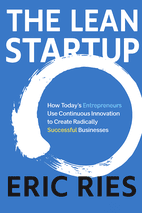
Here you will find a curated set of quotes from The Lean Startup. Each line captures a core idea from Eric Ries's approach to building businesses. You will see themes of experimentation, validated learning, and pivoting. These are not just motivational sayings but practical principles for navigating uncertainty.
The book earns its quotability by turning complex management concepts into simple, memorable statements. Ries distills years of experience into sentences that stick with you. They offer a new lens for viewing failure, measurement, and innovation. Whether you are a founder or a corporate leader, these words can change how you work.
Top Quotes from The Lean Startup
“The fundamental activity of a startup is to turn ideas into products, measure how customers respond, and then learn whether to pivot or persevere.”
This is the Build-Measure-Learn feedback loop, a central concept of the Lean Startup.
This succinctly captures the iterative, experimental nature of the Lean Startup approach, providing a clear actionable framework for entrepreneurs.
“The goal of a startup is to figure out the right thing to build—the thing customers want and will pay for—as quickly as possible.”
This appears in the section explaining the Lean Startup's focus on validated learning.
It crystallizes the core mission of a startup, shifting focus from execution to discovery, which is a powerful reframe for entrepreneurs.
“A startup is a human institution designed to create a new product or service under conditions of extreme uncertainty.”
The author defines what a startup is in the chapter.
This concise definition reframes startups as institutions, not just products, and emphasizes extreme uncertainty as their defining condition. It broadens the concept beyond Silicon Valley to any organization facing unpredictability.
“Validated learning is the process of demonstrating empirically that a team has discovered valuable truths about a startup’s present and future business prospects.”
The author introduces the concept of validated learning as a rigorous method for startups.
This definition provides a clear, empirical alternative to vague claims of learning, emphasizing evidence from real customers, which resonates with anyone seeking concrete progress metrics.
“If you cannot fail, you cannot learn.”
From the section 'From Alchemy to Science', discussing the scientific method in startups.
This line succinctly captures a fundamental principle of lean startup methodology: that learning requires the possibility of failure.
“Success is not delivering a feature; success is learning how to solve the customer's problem.”
Mark Cook, vice president of products at Kodak Gallery, describing the cultural change at Kodak Gallery.
This redefines success from output (shipping features) to outcome (customer learning), a core mindset shift in lean experimentation.
“The MVP is that version of the product that enables a full turn of the Build-Measure-Learn loop with a minimum amount of effort and the least amount of development time.”
This defines the Minimum Viable Product in the Build phase of the feedback loop.
It succinctly clarifies what an MVP truly is—not a half-baked product, but a purposeful experimental tool—which is essential for anyone applying the Lean Startup methodology.
Themes Behind the Quotes
A central theme is that startups must operate like scientists. Instead of following a fixed plan, they run experiments to test assumptions. The Build-Measure-Learn loop drives this process, turning ideas into products, measuring customer response, and deciding whether to pivot or persevere. Validated learning becomes the true measure of progress, not just delivering features.
Another theme is embracing failure as necessary for learning. Success comes from quickly discovering what customers want, not from executing a flawless plan. This leads to the minimum viable product, which helps teams learn with minimal waste. The goal is to build a sustainable business by adapting to reality.
Quotes by Chapter
Foreword
“One of the things I admire about Eric Ries's The Lean Startup is its ability to teach anyone how to do this using a scientific approach.”
Jeff Immelt explains why he admires the book in his foreword.
It highlights the book's key promise—making entrepreneurial methods accessible to anyone through a scientific framework.
“GE is all about constant reinvention. We iterate, innovate, and improve.”
Jeff Immelt describing GE's corporate culture.
This succinctly captures the core principles of both GE's legacy and the lean startup mindset.
“We are adding the principles of The Lean Startup to GE's long tradition of continuous improvement, and across GE there are many projects where we are learning, iterating, and delivering outcomes in a new way.”
Immelt explains how GE integrates lean startup methods.
It shows how a century-old industrial giant adapts modern innovation practices, making the book relevant beyond startups.
“For GE, these concepts accelerate impact, learning, improvement, and validation.”
Immelt summarizing the benefits of applying lean startup principles.
It lists the four key outcomes that resonate with any organization seeking faster, validated progress.
Introduction
“The stories in the magazines are lies: hard work and perseverance don't lead to success.”
The author reflects on the myth of the successful entrepreneur perpetuated by media.
This line resonates because it challenges the common narrative that hard work alone guarantees startup success, offering a more honest and sobering perspective that many entrepreneurs secretly fear.
“Entrepreneurship is a kind of management.”
The author states a core thesis of the Lean Startup method.
This counterintuitive statement redefines entrepreneurship as a disciplined, learnable practice rather than a chaotic, mystical art, empowering aspiring founders.
“Startup success can be engineered by following the right process, which means it can be learned, which means it can be taught.”
The author summarizes his key insight after years of experience.
This quote gives hope and a practical roadmap, emphasizing that success is not random but can be systematically achieved through a teachable methodology.
1. Start
“Because startups often accidentally build something nobody wants, it doesn’t matter much if they do it on time and on budget.”
This is part of the critique of traditional productivity metrics in startups.
It exposes the futility of traditional efficiency measures when the product itself is flawed, a humbling and memorable warning.
“Unfortunately, too many startup business plans look more like they are planning to launch a rocket ship than drive a car.”
This appears in the metaphor contrasting rigid planning with adaptive steering.
The vivid rocket-versus-car analogy makes the danger of overplanning instantly relatable and unforgettable.
“Hey had “achieved failure”’—successfully, faithfully, and rigorously executing a plan that turned out to have been utterly flawed.”
This describes a company that executed a flawed plan perfectly, leading to disaster.
The oxymoron 'achieved failure' perfectly captures the tragedy of executing the wrong strategy, a cautionary tale that sticks with readers.
2. Define
“I have come to believe that intrapreneurs have much more in common with the rest of the community of entrepreneurs than most people believe.”
The author reflects on entrepreneurs inside large companies after discussing Mark and SnapTax.
This line challenges the traditional separation between startup founders and corporate innovators, unifying them under the same entrepreneurial principles. It encourages established companies to see their internal innovators as true entrepreneurs.
“When you have only one test, you don't have entrepreneurs, you have politicians, because you have to sell.”
Scott Cook, Intuit's founder, explains how running many experiments changes organizational culture.
This vivid contrast between experimentation and politics highlights how a high-test environment empowers entrepreneurs over salespeople. It resonates with anyone who has seen good ideas killed by internal lobbying.
“What Mark was missing was a process for converting the raw materials of innovation into real-world breakthrough successes.”
The author analyzes why Mark, a capable corporate manager, still struggled despite having all prerequisites.
This line pinpoints the central problem the Lean Startup solves: having resources and vision is useless without a repeatable process. It speaks to the frustration of leaders who lack a systematic way to achieve innovation.
3. Learn
“What if we found ourselves building something that nobody wanted? In that case what did it matter if we did it on time and on budget?”
The author reflects on the common pitfall of measuring progress by plan adherence.
This question cuts to the core of startup failure—building something nobody wants—and challenges the traditional definition of productivity, making it a powerful wake-up call for entrepreneurs.
“The effort that is not absolutely necessary for learning what customers want can be eliminated.”
The author concludes that learning is the essential unit of progress, so any effort not contributing to that is waste.
This principle forces startups to ruthlessly prioritize and eliminate non-essential work, echoing lean manufacturing's focus on value—a transformative mindset for resource-constrained teams.
“We adopted the view that our job was to find a synthesis between our vision and what customers would accept; it wasn't to capitulate to what customers thought they wanted or to tell customers what they ought to want.”
The author describes the right approach after learning from customer feedback at IMVU.
It captures the delicate balance between vision and customer reality, rejecting both blind capitulation and arrogance—a nuanced insight that guides product development.
4. Experiment
“The goal of every startup experiment is to discover how to build a sustainable business around that vision.”
Explaining the purpose of startup experiments guided by the startup's vision.
It clarifies that experiments are not just for testing random ideas but are aligned with the long-term vision of building a sustainable business.
“A true experiment follows the scientific method. It begins with a clear hypothesis that makes predictions about what is supposed to happen. It then tests those predictions empirically.”
Introducing the concept of a true experiment within the Lean Startup methodology.
Provides a clear, memorable definition of what constitutes a valid experiment, grounding startup practices in rigorous science.
Part Two: Steer
“If we're building something that nobody wants, it doesn’t much matter if we're doing it on time and on budget.”
This appears in the section discussing the Measure phase and the challenge of determining real progress.
It captures the core fallacy of traditional project management applied to startups—focusing on efficiency rather than value creation, making it a memorable warning against building without validated learning.
“The Lean Startup method builds capital-efficient companies because it allows startups to recognize that it's time to pivot sooner, creating less waste of time and money.”
This concludes the introduction to the pivot, the final and most important step of the Build-Measure-Learn loop.
It directly links the method's core benefit—capital efficiency—to the timely decision to pivot, emphasizing that speed of learning trumps rigid perseverance.
“I call the riskiest elements of a startup’s plan, the parts on which everything depends, leap-of-faith assumptions.”
This introduces the concept of leap-of-faith assumptions in the context of identifying hypotheses to test scientifically.
The phrase 'leap-of-faith assumptions' vividly captures the high-stakes uncertainty that makes startup planning fundamentally different from executing a known business model.
5. Leap
“The first fact was the raw amount of time Facebook's active users spent on the site. More than half of the users came back to the site every single day.”
The author describes Facebook's early metrics that validated its value hypothesis.
This passage provides a concrete, memorable example of customer engagement as a key indicator of value. It shows startups that raw usage and daily return rates can be more telling than revenue in early stages.
“If they are true, tremendous opportunity awaits. If they are false, the startup risks total failure.”
The author summarizes the high-stakes nature of leap-of-faith assumptions in a startup.
These two short sentences capture the binary risk that every entrepreneur faces, making the concept of leaps of faith visceral and unforgettable. It underscores why rigorous testing is essential.