The Lean Startup Key Takeaways
by Eric Ries
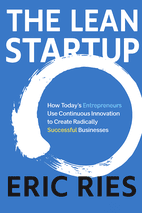
5 Main Takeaways from The Lean Startup
Startups succeed through validated learning, not just intuition or luck.
The Lean Startup method uses the Build-Measure-Learn loop to test hypotheses with real customers, turning assumptions into empirical evidence. For example, GE's FastWorks initiative shows how large companies can accelerate learning and reduce waste.
Build a Minimum Viable Product (MVP) to test core assumptions quickly.
Instead of building a perfect product, create the simplest version to gather customer feedback. This approach, as seen with IMVU's teleportation feature, helps validate value and growth hypotheses without extensive resources.
Use innovation accounting to measure progress based on actionable metrics.
Avoid vanity metrics that don't guide decisions; instead, focus on data that shows cause and effect. This framework helps startups track real progress and decide when to pivot or persevere.
Pivot based on insights, not stubbornly persevere on failing ideas.
When experiments show that assumptions are wrong, change strategy decisively. The pivot decision is a key part of the Lean Startup, allowing for adaptation without wasting time and resources.
Foster a culture of experimentation and adaptation in any organization.
Entrepreneurship isn't limited to startups; large companies can innovate by embracing lean principles. This requires leadership to support continuous testing, as demonstrated by SnapTax's disruptive breakthrough through rapid experimentation.
Executive Analysis
The five key takeaways collectively form the book's central thesis that startup success can be engineered through a disciplined, scientific process. By advocating for validated learning, MVPs, innovation accounting, strategic pivots, and a culture of experimentation, Eric Ries constructs a framework that transforms entrepreneurship from a game of chance into a systematic endeavor. This methodology applies lean principles to innovation, ensuring that resources are directed toward customer-validated insights and away from wasteful assumptions.
This book has revolutionized business thinking by providing actionable strategies for reducing risk and accelerating growth in uncertain environments. Its practical impact extends beyond tech startups to legacy corporations, as seen in GE's FastWorks, fostering agility and continuous improvement. Positioned at the intersection of lean manufacturing and agile development, 'The Lean Startup' remains an essential guide for anyone seeking to innovate effectively in today's dynamic markets.
Chapter-by-Chapter Key Takeaways
Foreword (Foreword)
Entrepreneurs universally exhibit traits like speed, innovation, and comfort with uncertainty, which can be cultivated in any organizational setting.
The Lean Startup provides a scientific, adaptable framework for driving disruption and continuous improvement.
GE's FastWorks initiative exemplifies how large companies can integrate lean principles to accelerate learning, validation, and customer outcomes.
Collaboration with external thinkers, like Eric Ries, helps legacy firms maintain relevance and agility in fast-changing markets.
Embracing a culture of iteration and external inspiration, as modeled by Thomas Edison, is crucial for long-term success and impact.
Try this: Cultivate entrepreneurial traits in any organization by integrating lean principles for continuous learning and customer outcomes.
Introduction (Introduction)
Startup success is not about innate talent or luck; it can be engineered through a disciplined process that embraces experimentation and learning.
The Lean Startup methodology applies principles from lean manufacturing to innovation, focusing on rapid iteration, validated learning, and measurable progress.
Entrepreneurship should be viewed as a manageable discipline, requiring new accounting and management techniques tailored to uncertainty.
Common startup failures often stem from outdated myths and a lack of adaptive processes, which the Lean Startup addresses by prioritizing customer feedback and scientific testing.
This approach is scalable and applicable beyond tech startups, offering a framework for innovation in any organization seeking to reduce waste and achieve sustainable growth.
Try this: Apply the Lean Startup methodology to treat entrepreneurship as a manageable discipline, prioritizing customer feedback and scientific testing.
Part One: Vision (Chapter 1)
Vision serves as a foundational anchor for growth, turning ambiguity into focused direction.
Personal vision emerges from self-reflection and evolves through real-world application.
Consistent, small actions aligned with vision compound into significant transformation over time.
A shared vision can unify teams and communities, amplifying impact beyond individual efforts.
Try this: Anchor your growth in a clear vision and align daily actions to compound into significant transformation over time.
1. Start (Chapter 2)
Entrepreneurship requires a disciplined management approach to avoid chaos and harness opportunities in uncertain environments.
The Lean Startup adapts lean manufacturing principles, using validated learning as a measure of progress to eliminate waste and focus on customer needs.
Startups should emulate driving a car—using the Build-Measure-Learn feedback loop for constant adjustments—rather than rigid, rocket-ship-like planning.
A clear vision guides the startup, while strategy and products are iteratively tuned, with pivots made when necessary based on insights.
Balancing growth, optimization, and steering activities is key, and entrepreneurial management applies to both new ventures and internal innovators in established companies.
Try this: Steer your startup using the Build-Measure-Learn feedback loop for constant adjustments, balancing vision with iterative strategy.
2. Define (Chapter 3)
Entrepreneurship is universal: It includes anyone creating new value under extreme uncertainty, regardless of their role or organization size.
Startups are human-centric: Success depends on building institutions that foster innovation, not just on products or ideas.
Process over prerequisites: Having vision and resources isn't enough; a structured approach like the Lean Startup is essential for converting ideas into impact.
Innovation thrives with experimentation: Rapid testing and customer feedback, as shown in the SnapTax story, drive disruptive breakthroughs.
Leadership enables change: Senior managers must cultivate systems and cultures that support continuous experimentation, shifting from control to empowerment.
Try this: Build institutions that foster innovation by empowering teams to experiment rapidly, regardless of organizational size.
3. Learn (Chapter 4)
Validated learning is the core measure of startup productivity, emphasizing progress through empirical evidence over mere activity.
Experimentation is essential for uncovering customer needs, with both successes and failures providing valuable insights.
Avoid the "audacity of zero" trap by embracing small, early data to guide decisions rather than delaying for perceived certainty.
Focus on principles, not just tactics, as the Lean Startup approach adapts to any industry by treating development as a series of scientific experiments.
Try this: Measure productivity through validated learning from experiments, avoiding the trap of delaying for perfect data.
4. Experiment (Chapter 5)
Start small with low-cost experiments to gather immediate, actionable feedback.
Use real-world data from limited rollouts to refine and scale services iteratively.
Embrace responsiveness to public input, allowing organizational strategies to adapt to changing markets.
Shift from plan-driven management to an experimental approach for greater innovation and success.
Try this: Start with low-cost experiments to gather immediate feedback and iteratively refine your services based on real-world data.
Part Two: Steer (Chapter 6)
The Build-Measure-Learn feedback loop is the cornerstone of steering a startup, emphasizing speed and learning over perfection.
Leap-of-faith assumptions, such as value and growth hypotheses, must be tested early to validate the business model.
A minimum viable product (MVP) enables rapid experimentation with minimal resources, focusing on customer feedback.
Innovation accounting provides a framework for measuring real progress through actionable metrics, avoiding distractions from vanity data.
The pivot decision is a strategic response to learning, allowing startups to adapt efficiently and reduce waste.
Planning in reverse—from learning goals to product builds—ensures that every effort contributes to validated insights.
Try this: Implement the Build-Measure-Learn loop to test leap-of-faith assumptions with MVPs and use innovation accounting for measurable progress.
5. Leap (Chapter 7)
Identify and test core leaps of faith—especially value and growth hypotheses—through direct customer engagement to avoid building on faulty assumptions.
Use analogs and antilogs to frame strategic risks, but prioritize empirical validation over persuasive analogies.
Adopt a "go and see" mindset (genchi gembutsu) to gather firsthand insights, ensuring decisions are based on real-world observations rather than reports.
Treat customer archetypes as provisional hypotheses, refining them through continuous learning rather than treating them as fixed truths.
Balance action and analysis by recognizing when to stop planning and start building, using tools like the minimum viable product to test assumptions efficiently.
Try this: Validate your core value and growth hypotheses through direct customer engagement and firsthand observations.
6. Test (Chapter 8)
Wizard of Oz testing enables startups to validate ideas without solving all technical challenges early, as seen in Aardvark’s success.
Quality in an MVP is defined by customer feedback, not preconceived standards; simple solutions like IMVU’s teleportation can outperform complex features.
Common MVP obstacles—legal, competitive, branding, and morale issues—can be managed through strategic choices like using alternate brands and embracing iteration.
Innovation accounting provides a framework for measuring progress beyond traditional metrics, turning failures into learning opportunities and guiding pivots.
Try this: Develop a minimum viable product to test ideas without solving all technical challenges, focusing on customer feedback over preconceived standards.
7. Measure (Chapter 9)
Actionable metrics clarify cause and effect, replacing vanity metrics with data that guides specific improvements.
Accessible metrics use simple, people-focused reports to ensure everyone in the organization can understand and apply insights.
Auditable metrics build trust by allowing data verification through customer interactions and transparent data sources, fostering a culture of accountability and continuous learning.
Try this: Replace vanity metrics with actionable, accessible, and auditable data to guide specific improvements and foster accountability.
8. Pivot (or Persevere) (Chapter 10)
Lean Startup principles build resilience by equipping teams with tools for swift error detection and adaptive pivoting.
The core processes—from leaps of faith to MVP testing, innovation accounting, and pivot/persevere decisions—form a solid groundwork for startup development.
Success hinges on transitioning from deliberate, slow-paced navigation to high-velocity execution, emphasizing acceleration as the ultimate goal.
Try this: Build resilience by using innovation accounting to detect errors swiftly and make pivot or persevere decisions based on insights.
Part Three: Accelerate (Chapter 11)
Embrace ambiguity: Startup decisions are rarely black-and-white; prioritize learning over perfection in areas like product releases and infrastructure investment.
Define value as learning: Waste is anything that doesn’t contribute to validated insights about your business model and customers.
Adapt lean principles: Use frameworks from manufacturing to eliminate inefficiencies while maintaining the flexibility needed for innovation.
Plan for growth without rigidity: Techniques like small batches and cross-functional collaboration help scale agility, preventing bureaucracy from stifling progress.
Try this: Embrace ambiguity in decisions by defining value as learning and eliminating anything that doesn't contribute to validated insights.
9. Batch (Chapter 12)
Small batches reduce delays and waste across industries, from software to healthcare, by minimizing rework and improving responsiveness.
Pull systems align production with real demand, cutting inventory costs and enabling just-in-time workflows that enhance efficiency.
Startups should use hypothesis pull, where experiments based on learning goals drive development, not assumed customer wants.
Rapid experimentation with small batches allows for quick pivots and cost-effective validation, as seen in Alphabet Energy’s approach.
Lean processes support organizational learning, creating a culture that can adapt and innovate consistently over time.
Try this: Reduce waste and improve responsiveness by working in small batches and using pull systems aligned with real demand.
10. Grow (Chapter 13)
Growth engines provide quantitative metrics to gauge product/market fit, such as viral coefficients or compounding growth rates, moving beyond subjective assessments.
Innovation accounting helps track progress by focusing on directional trends in metrics, ensuring development efforts drive meaningful customer behavior changes.
Momentum in growth rates often matters more than absolute numbers; consistent improvement indicates real traction, even from a low base.
All growth engines eventually diminish as customer segments saturate, necessitating continuous adaptation and new initiatives to sustain long-term success.
Try this: Gauge product/market fit using quantitative growth engines and track directional trends in metrics to sustain long-term success.
11. Adapt (Chapter 14)
Start Five Whys with narrow, clearly defined problems and expand gradually to build team proficiency.
A dedicated Five Whys master is critical for guiding the process and ensuring accountability.
Involve all stakeholders in Five Whys sessions and avoid addressing historical "baggage" all at once.
Transitioning to smaller batches requires cross-functional collaboration, customer engagement, and supportive tools.
Adaptive organizations blend cultural change with process innovations to maintain speed and learning in growth.
Try this: Apply the Five Whys technique to narrow problems, involve stakeholders, and build team proficiency in root cause analysis.
12. Innovate (Chapter 15)
Expand the sandbox gradually to build on successes while protecting innovators from organizational politics.
Embrace the transition from innovator to guardian by applying scientific inquiry to new suggestions, avoiding dogma.
Use theory to navigate challenges, distinguishing between temporary setbacks and systemic issues during adoption.
Prioritize validated learning over individual efficiency, expecting initial discomfort as teams adapt to cross-functional workflows.
Adapt the Lean Startup as a flexible framework, leveraging communities of practice for ongoing support and refinement.
Try this: Expand innovation sandboxes gradually, applying scientific inquiry to new suggestions and prioritizing validated learning over individual efficiency.
13. Epilogue: Waste Not (Chapter 16)
System Over Individual Brilliance: Taylor's legacy shows that sustainable progress comes from systematic approaches, but they must evolve to include human creativity and avoid rigidity.
Preventable Waste: Much innovation waste stems from working on unvalidated ideas; the Lean Startup offers a scientific method to test hypotheses and pivot based on learning.
Avoiding Dogma: The movement must resist becoming a pseudoscience itself, emphasizing empirical validation over rigid formulas while honoring entrepreneurial vision.
Research and Ecosystem Change: Advancing innovation requires rigorous testing of methodologies and structural shifts, like a Long-Term Stock Exchange, to support long-term thinking.
Empowering Teams: By fostering a culture of experimentation and accountability, organizations can unlock human potential, reducing wasted time and focusing on meaningful creation.
Try this: Prevent innovation waste by testing hypotheses scientifically and fostering a culture of experimentation and accountability.
14. Join the Movement (Chapter 17)
Act Over Read: While resources abound, the true value comes from engaging with communities and applying ideas in practice.
Leverage Local and Online Networks: From meetups to mailing lists, these platforms provide support and real-world insights.
Start with Foundational Texts: Books like The Four Steps to the Epiphany and key blogs offer essential groundwork for customer development and growth.
Explore Broader Influences: Understanding concepts from disruptive innovation to lean manufacturing enriches your approach to startup challenges.
Try this: Engage with lean startup communities and apply the principles in practice, starting with foundational texts and real-world experimentation.
Continue Exploring
- Read the full chapter-by-chapter summary →
- Best quotes from The Lean Startup → (coming soon)
- Explore more book summaries →