The Last to Drown Quotes
by Noelle W. Ihli
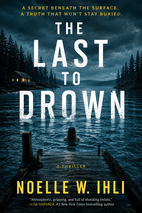
Sift through these lines and you'll find a mix of dialogue, narration, and the kind of inner monologue that arrives when the bottom drops out. Some lines come from a river guide's mouth, others from a woman remembering her husband and trying not to lose herself. Together they capture the unsteady beat between hope and panic.
What makes this book quotable is how personal the danger feels. The words don't just describe whitewater and dark caves. They get inside a mind that is grieving, exhausted, and still fighting. You will find love written in strange, tough places, and fear that sounds familiar. And you will find phrases that stick with you long after the raft stops shaking.
Top Quotes from The Last to Drown
“There's nothing like a Class-Four rapid to get you out of your head.”
— Macy
Macy tells the group that river guiding is recreation therapy and that the canyon is medicine.
It captures the wilderness healing idea central to the trip and gains irony because Kaia is still trapped in her own head.
“The trip was supposed to mark our thirtieth birthdays. It still does, I guess. But I'm the only one here to celebrate.”
— Kaia
Kaia thinks about the couples retreat she originally booked with her husband Parker before switching to the women’s trip.
The stalled, broken rhythm of the sentences makes the milestone feel hollow and sharply conveys her grief.
“He would have stayed awake as late as anyone tonight, soaking in every second of the first campfire. And he'd be nudging me to notice the freckles of light dotting the sky.”
At the campfire, the narrator thinks of Parker while looking up at the stars.
It shows grief as an ongoing presence, still shaping how beauty and ordinary moments are experienced through the missing person.
“Because the river doesn’t care whether you're a murderer or a random middle-aged woman. If you hit a boulder, it'll send your raft into a tailspin or a hole, regardless.”
The narrator realizes the river is impartial as the women plot to force Bryan to lead through the next rapid.
It strips the standoff down to a universal truth: nature has no interest in guilt or innocence. That neutrality makes both the rapids and Bryan more terrifying.
“You tap out, or you get taken out. Don’t you dare tap, baby. Fight. One more time. When the wave draws back, look at the angle of the boulder’s edge.”
— Parker
Kaia hears her husband Parker's voice in her head while she is pinned in the raft and desperate for a way out.
It is a sharp, urgent survival mantra, and the command not to tap gives Kaia the jolt she needs to keep fighting.
“I'm already dead, you motherfucker. Just keep moving and leave me here, I beg, and the truth of that statement cuts so deep, I can't imagine a knife blade would feel any worse.”
— Kaia
Kaia is floating face-down in the river, hoping her attacker will mistake her for dead and leave her in the recirculating hole.
It is a raw, desperate plea that doubles as a confession—she is begging for survival even while saying she is already lost.
“It's okay to breathe again. It's okay to want to.”
— Parker
In a drowning vision, Kaia's late husband Parker gives her permission to keep living.
The line turns breathing and wanting into the same redemptive act, arriving at the exact moment Kaia is ready to give up.
Themes Behind the Quotes
The quotes revolve around the weight of loss and the stubborn effort to keep moving. Grief appears not just as sadness but as a voice inside the narrator's head, a reminder of someone who should still be there. The river, the canyon, and the dark cave all become versions of the same enemy: being trapped. Again and again, fear tries to turn characters inward, and the hardest instinct is trust in one more breath.
Alongside the fear runs a quieter theme: the right to want to live. These lines show characters who argue with their own despair, who refuse to let a predator or an accident decide the ending. There is also a sharp awareness of how violence and manipulation work, especially when aimed at women. But the core theme is resilience, not the loud triumphant kind, but the kind that happens in whispers, in ugly words, in the moment someone chooses to keep going.
Quotes by Chapter
Part 1 - Chapters 1 to 3
“That apartment isn't home, though. Home is Parker.”
— Kaia
After another woman assumes Kaia has a good one waiting at home, Kaia contrasts her empty apartment with her husband.
It compresses love and loss into a simple redefinition of home as a person rather than a place.
“I think about that moment every day. How stupid I was. How I'll never be that naive person again.”
— Kaia
Kaia recalls the moment she heard Parker’s voice after rescuers reached him in the cave and believed he was safe.
The short, self-lacerating sentences capture survivor guilt and the painful distance between hope and hindsight.
Part 2 - Chapters 4 to 7
“You all really wanna know? You won't be able to forget it. Believe me.”
— Josh
Josh asks the group if they want to hear the story of the Camas Creek massacre.
The warning promises that the story will haunt the listeners, and the pause before the telling makes the dread contagious.
“Can you even imagine? From all accounts, Stroop was an incredible river guide. But something in his brain must've just snapped.”
— Allie
Allie describes how Kellen Stroop, a trusted river guide, began his violent attack in the dark.
It captures the unsettling idea that sudden violence can come from someone who seemed skilled and normal.
“Even though the victims were dead, their remains were trapped. Just like Parker was.”
The narrator reacts to descriptions of bodies pinned in the river after the massacre.
It connects the physical horror of the victims' remains to the narrator's personal grief for Parker, making the story feel deeply intimate.
Part 3 - Chapters 8 to 11
“They started when my second round of in-vitro failed last year.”
— Allie
After Allie’s night terror wakes camp, she admits from inside her tent that her terrors are not about true crime.
The confession replaces a creepy campfire story with real, private grief. It humanizes Allie and makes her earlier performance feel like armor.
“And it was there last night, I swear. I saw it. So somebody must have taken it while everyone was asleep.”
— Josh
Josh insists the satellite phone was in the emergency box when he checked it before bed.
This turns a possible packing mistake into a deliberate act. Suspicion suddenly falls on everyone in camp, deepening the unease.
“There's no way out of here but downstream.”
Macy downplays the missing satellite phone, and the narrator realizes how isolated the group is.
The one-way river becomes an image of entrapment. It is a terse, chilling reminder that no rescue or exit is available.
“There’s no emergency, I tell myself. Not yet.”
After the search for the satellite phone fails, the narrator heads to her tent trying to calm herself.
The last two words undercut the whole reassurance. They reveal that the real danger has only been postponed.
Part 4 - Chapters 12 to 16
“We've all had a tough day. But it's not gonna get any better if we stay up all night freaking out. Tomorrow we've got a lot more rapids. The best thing for both of you—for all of us—is to get some rest.”
— Josh
After Allie and Nikki break down crying at the campfire, Josh tries to calm them instead of reacting with irritation.
It shows exhausted kindness and a guide's steadiness precisely when the group is fraying, making his reassurance feel earned.
“I know you don’t want to hear any more about Camas Creek, but I'm really freaking out. We can't just go to sleep.”
— Allie
At the campfire after a brutal day on the river, Allie sobs that she can't simply sleep after the group has already dismissed her fears.
Her raw admission cuts through the group's forced composure and captures how real dread refuses to be politely set aside.
“That whispered word, “Nashville,” never failed to make me smile, even in the most stressful moments. Until our final moment. There was no “Nashville” to be found in that underground cave system. And without him, there is no Nashville here, either.”
— Kaia
Kaia remembers the word she and Parker used as a private reminder that they would survive hard, ugly experiences together.
The passage distills grief into a single lost ritual: the coping mechanism that used to save her no longer works without him.
“Panic—stronger than anything I've ever felt—utterly overtakes me. I can’t breathe. I'm trapped, stuck, in the dark. Just like Parker in that cave. I'm going to drown.”
— Kaia
Thrown from the raft, Kaia is trapped underwater in whitewater and connects the terror to Parker's death in a cave.
The short, pounding sentences make the reader feel the claustrophobia and link present danger to past grief.
Part 5 - Chapters 17 to 20
“I have to believe we've still got a chance. But almost isn't good enough.”
— Kaia
During the descent into Anvil Falls, Kaia tries to hold on to hope as the raft ahead nearly makes it past the boulders.
The blunt second sentence cuts through the hopeful first, making the coming catastrophe feel inevitable.
“This is Third Man Syndrome, the uselessly rational part of my brain manages to interject. But I'm not listening to it, I'm listening to him.”
— Kaia
Kaia senses Parker's voice warning her to duck just before the raft reaches the hidden wire.
It captures the human choice to trust love over logic, especially when logic can't explain what the heart knows.
“The river has gone eerily silent. No moans. No cries for help. Only the distant thunder of the falls behind us.”
After the wire kills most of the women and Macy disappears, Kaia scans the dark water for survivors.
The short, percussive sentences make the silence more horrifying than the screams that came before it.
“I told her to get on that first raft before me, because I wanted her to be safe.”
— Deborah
After her sister Beth's body is found, Deborah admits she urged Beth onto the lead raft to protect her.
It distills survivor's guilt into a single devastating sentence: an act of love becomes the reason for loss.
Part 6 - Chapters 21 to 24
“But at this moment, the river is stronger than any of us.”
The rafts collide near the head of the rapid and the current seizes Bryan’s gear boat.
A stark, quietly fatalistic line about how human plans dissolve in the force of the river. It undercuts the women’s small victory with immediate danger.
“It's almost like Bryan is our guide again, leading us to safety. For now.”
Successfully copying Bryan's exact line through the rapid, the narrator is struck by how safe it feels.
The irony is chilling—their murderer has briefly become their only path to survival. The dangling 'For now' makes the temporary relief feel even more fragile.
“And then I realize this is precisely what he wants. To watch us—any of us who survived the razor wire— run.”
After passing Bryan on calm water, the narrator reads his relaxed, almost pleased posture.
It is the moment the narrator sees their escape for what it is: part of Bryan's game. The image of being toyed with, not merely pursued, makes the fear sharper.
Part 7 - Chapters 25 to 28
“Fuck him. Don't listen to anything he says. We've survived this long. Now we're going to ruin his plans.”
— Deborah
Leo taunts and insults the women from behind on the river, and Deborah responds with fierce support after Allie is shaken.
It is blunt, defiant solidarity in a moment of terror, and it channels their exhaustion into stubborn resolve.
“There are so many ways to die, a strangely calm, defeated voice in the back of my mind whispers, while the muscles in my arms scream with the effort that feels more futile by the second. It's not Parker's voice. It's my own.”
— Kaia
The raft is pinned between two boulders in a violent rapid while Kaia and the others struggle to break free.
It lays bare the moment when hope starts to curdle, and the recognition that this despair is her own makes the terror intimate and raw.
“And every woman knows that the fastest way to enrage a man like that is with the idea of people laughing at him.”
— Kaia
Kaia hurls insults at Leo and launches herself downstream, deliberately making herself the target so the other women might escape.
It is a cutting, hard-won observation about power and humiliation, darkly witty even in mortal danger.