The French Illusion Quotes
by John Grisham
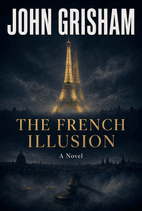
Here is a collection of lines from The French Illusion that stuck with us. You will find tense dialogue, close narration, and raw inner monologue as characters move through fear, love, and suspicion. Some quotes are short and sharp, while others linger because they capture a feeling you might recognize.
What makes the novel quotable is how often it turns big emotions into simple, direct language. A honeymoon can feel watched. A family can feel cornered. A person can be far from home and still carry home around inside. These lines work as reminders, warnings, and small windows into lives under pressure.
Top Quotes from The French Illusion
“He surveillance began on the third day of the honeymoon, though the bride and groom had no possible way of knowing it.”
The novel opens by revealing that Paul and Chelsea are being watched during their Paris honeymoon without their knowledge.
It establishes a chilling dramatic irony and immediately turns a romantic trip into a thriller.
“Following the young lovers was easy because their destinations and movements were so clearly telegraphed, and the thought of looking over their shoulders never crossed their minds. They had eyes only for each other. There was no one back there.”
The surveillance team tracks the couple through Paris because their itinerary is so public.
The last line is quietly terrifying, contrasting their romantic focus with the watchers behind them.
“Fritz, can you believe this? They have our children.”
— Justine
Justine, speaking to Fritz by phone, reacts to the news that both couples' children are in the kidnappers' hands.
The plain words make the kidnapping immediate and unbearable.
“The money represented their life's work, assets, and savings, and the fact that it would disappear into a dark world and enrich a bunch of criminals was sickening. But it was nothing compared to losing Paul.”
The Tanners sell their home and liquidate savings to raise Paul's ransom.
It measures the devastating cost of the ransom against the unthinkable cost of losing a child. The moral arithmetic is painful but clear.
“Paul was everywhere; in the happy photos on the credenza and counter, in the Valentine's cards stuck to the fridge, in the Redskins beer mugs hanging from the cabinet, in the old sneakers and tennis rackets stuffed in a basket near the hall.”
Chelsea visits the condo she shared with Paul and finds reminders of him throughout the rooms.
The accumulation of ordinary domestic details makes Paul's absence both intimate and unbearable.
“As I said, I was waterboarded fourteen times. You are at ten, so only four more to go.”
— Nabeed
Nabeed tells Paul how many waterboardings remain in the interrogation.
The calm arithmetic of torture is more terrifying than any threat, making the next rounds feel inevitable.
“You never get in trouble for the things you don’t say.”
— Nash
As a fledgling covert operator traveling to Camp Peary, Nash adopts this rule to avoid giving his handlers anything.
It captures the self-protective silence of tradecraft in a single, memorable maxim. It also foreshadows the mental discipline he will need during interrogation training.
Themes Behind the Quotes
The novel keeps circling around surveillance and secrecy. People are watched, tracked, and manipulated, often without realizing how exposed they are. That creates a constant sense of paranoia, where ordinary moments like travel or a meal can feel staged and dangerous.
Another major thread is family under siege. Parents and spouses face impossible choices involving money, safety, and trust. Love pushes people to act, but it also makes them vulnerable. The story also touches on deception, duty, revenge, and the ways people survive trauma by retreating into memory or focusing on the next small step. Fear and loyalty pull characters in different directions, and not everyone is who they appear to be.
Quotes by Chapter
Chapters 1-5
“For the benefit of her followers she posted a daily schedule of their honeymoon in Paris, evidently in the belief that they were the first couple in history to attempt such a romantic adventure.”
Chelsea's social media posts are being monitored and indexed by the surveillance team.
It sharply captures how performative intimacy and oversharing become dangerous vulnerabilities.
“Inside the restaurant down the street, Paul and Chelsea lunched on grilled sole and sipped cold wine.”
While Malik is drugged and abducted outside, the newlyweds eat lunch nearby unaware.
The calm meal creates a devastating contrast with the crime unfolding just down the street.
Chapters 6-11
“Did the fools know they were killing him? Did they care? Was that their goal, a slow excruciating death by suffocation?”
— Paul
While hooded and bound in captivity, Paul wonders if his captors mean to suffocate him.
The questions convey raw terror and the slow, claustrophobic horror of his ordeal.
“He had been trained in the basics of martial arts in the navy and could survive any fight. This, though, was not a fight.”
After being beaten while bound and hooded, Paul realizes his naval training is useless in this situation.
It starkly contrasts his past capability with his present helplessness.
“Lowell and Sam are adamant that we do not call the FBI. They think these thugs might be watching our phones. They've already hacked into Lowell's office system. He said that calling the FBI could get both of them killed. It's all about money and the quicker we can deliver it, the quicker we see our kids.”
— Fritz
Fritz explains to Linzy why the family is reluctant to contact the FBI despite the kidnapping.
It captures the impossible choice between trusting authorities and obeying kidnappers to save their children.
Chapters 12-16
“Hell yeah there was an illegal activity. It was commonly known as kidnapping, and they were paying the ransom to save Chelsea. Nothing else mattered.”
The Clayburns sign bank paperwork denying illegal purpose while secretly arranging a ransom payment.
It strips away legal euphemism and names the desperate truth driving the parents. Nothing else in their world can compete with saving Chelsea.
“They met halfway, in the aisle, and embraced each other as never before. Clutching and grabbing, they retreated to the narthex, sat on a narrow bench, and squeezed hands while they wiped tears. She was more beautiful than ever, tears and red eyes and all.”
Chelsea and Lowell reunite inside the Church of Our Lady of the Assumption after her release.
The physical details make the reunion feel raw and earned. It captures parental love and relief too deep for words.
“Only days earlier, he had escorted his daughter, the most beautiful bride in the world, down the aisle. Now she was upstairs hiding in a dark room and praying her new husband was safe.”
Lowell waits in a Paris hotel while Chelsea refuses to leave without Paul.
The contrast between wedding joy and hostage aftermath is heartbreaking. It shows how quickly a dream turned into a nightmare.
Chapters 17-22
“Well, Pascal, it looks as though my weekend and your weekend just went down the drain.”
— Jean-Pierre Chalamet
At the end of their Friday meeting about the Tanner kidnapping, Chalamet remarks to Pascal.
Darkly humorous understatement that signals the disruption ahead.
“I can't enjoy anything, Mom. I ache from head to toe and it has nothing to do with being bound and drugged and tossed around. I want to see and feel my husband.”
— Chelsea
Chelsea talks with her mother, Justine, in the kitchen after returning home.
Raw, exhausted honesty that shows her pain is not merely physical but rooted in missing Paul.
“Now, a week after that, she was home and alive but her world was shattered and empty and would remain so until Paul came home.”
Chelsea is back with her family after being released, but her relief is overwhelmed by Paul's absence.
Puts her survival and trauma in stark contrast, showing that her life remains suspended until Paul returns.
Chapters 23-29
“He was in a dark room in a dark building on the dark side of the world. Where, exactly, would he run to if he made it out the door?”
Paul is caged and considering escape from his captors.
It conveys the total isolation and disorientation of captivity, making escape feel almost pointless. The repetition of dark makes the setting feel like a world stripped of hope.
“Why worry about noise? It was the military thing—don’t let the assholes know how much they're hurting you. But they knew.”
— Paul
While being flogged, Paul tries to suppress his screams.
It captures his soldierly defiance and the captors’ chilling awareness that his silence is part of the game. The blunt final sentence lands like another blow.
“Their leader wanted bruises, whelps, small cuts, injuries that would eventually heal, so that more could be inflicted. He played the long game.”
Paul's captors beat him methodically during his imprisonment.
It reveals a calculated sadism that is far more frightening than blind violence. The phrase the long game makes the suffering feel endless.
“I'm sorry, but what would that warning look like, Mr. Tanner? Ads in bridal magazines? Warnings to wedding planners and travel agents? Postings in the lobbies of the favorite hotels in Paris? Fifty million Americans travel abroad every year, we can’t protect them all. When you go to another country you assume the risk.”
— Maceas
During the CIA/FBI briefing, Maceas responds to Fritz's demand for warnings about kidnappings.
It is a cold, pragmatic statement that makes official helplessness sound almost like indifference. The line lingers because it turns ordinary travel into a calculated gamble.
Chapters 30-33
“He was her top choice. She had reviewed and analyzed hundreds of prospects and finally settled on Stuart Nash. Now, finally, here he was in the flesh.”
As Rae Claire sits near Stuart at the seminar, the narration reveals she had already selected him after studying many prospects.
It turns an apparently chance meeting into a calculated operation and creates immediate dramatic irony.
“Stu, my man, nothing is as it seems. Please, give us a few minutes.”
— Webb
Webb reappears in a small conference room after supposedly rushing back to Philadelphia.
The line signals that the seminar, the friendship, and the chance encounter are all part of a larger deception.
“We're both CIA, embedded within other government agencies.”
— Rae Claire
Rae Claire reveals her and Webb's real employer to Stuart after he demands answers.
It is the pivotal disclosure that transforms the conversation from strange proposal to clandestine recruitment.
“She's the bride, and she's calling the shots. It’s her operation. I’m here as a member of the team.”
— Webb
Webb explains Rae Claire's role in the planned honeymoon infiltration and rescue operation.
It reverses Stuart's assumptions about who is in charge and establishes Rae Claire as the operation's leader.
Chapters 34-39
“Soldiers don't think about money. Those three guys are in trouble because they wore our uniforms. I once wore one too.”
— Stuart
At an airport bar, Stuart explains to Rae Claire why he refuses the money for the Paris operation.
It distills Stuart's sense of duty and brotherhood, making his refusal of payment feel principled rather than naive.
“That skinny kid was me, twelve years ago.”
— Nabeed
Nabeed reveals to Paul that he was the abused boy in the Abu Ghraib photograph Paul has seen.
The line makes the geopolitical horror intensely personal, turning a remembered photograph into a living enemy.
“Revenge, justice, money. I have plenty of motives, Lieutenant.”
— Nabeed
Nabeed answers Paul's accusation that the kidnapping is about revenge.
The blunt triad is chilling because it refuses to hide revenge behind a single noble cause.
Chapters 40-44
“He learned to mentally vacate his surroundings and take himself to his boyhood home on a farm in Indiana, a place with great memories.”
A legendary field officer describes how he survived four years of captivity by retreating into his happiest childhood memories.
It shows that the mind can become a refuge even in the most brutal circumstances. The line is both practical and deeply human.