The Calamity Club Book Club Questions
by Kathryn Stockett
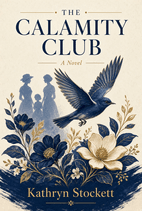
These questions assume everyone has finished the book and contain spoilers, including the ending.
The Calamity Club is rich with messy choices, shifting loyalties, and hard questions about family, respectability, and survival. The characters rarely make clean decisions, so readers will likely disagree about who was right, who was reckless, and what any of them owed one another.
Use these questions to get past plot summary and into character motive, moral compromise, and the novel's treatment of institutions and loss. Pick a few that spark the strongest reactions, or work through them in order for a fuller conversation.
Characters and Choices
- 1.Birdie's opening purchase of ninety-nine prophylactics under a false name shows her willingness to deceive for someone else's sake. How does that moment foreshadow her later role in hiding the brothel from Mrs. Tartt, and did you find her choices consistent from beginning to end?
- 2.Discuss Charlie's decision to run a brothel in Mrs. Tartt's house as a means to get Meg back. Does her motive justify the risk she imposes on Birdie, Mrs. Tartt, Flossy, Ruby, and the other women, especially after Priscilla Stuggs's arrest?
- 3.Frances demands that Birdie promise never to see her again after learning the dance club is a brothel. How do Frances's fears about respectability and being known as a divorced woman explain that reaction, and did you sympathize more with Frances or with Birdie?
- 4.Birdie keeps Garnett's plan to return Meg to the orphanage secret from Charlie to prevent rash action, and Charlie later becomes furious when she learns the truth. Did Birdie make the right call, and how does this compare with other protective lies in the novel, like Birdie's watered-down letter to Mama?
- 5.Birdie tells Jack she cannot have children and tries to end their relationship; Jack responds that he would rather be with her without children and reveals his plan to run Henry Tartt's bank in Oxford. Did you believe his plan and Birdie's choice to trust him, especially given his marriage and divorce?
Meg, Family, and Belonging
- 6.Meg clings to the belief that her mama will return even after Ava forces her to repeat that mamas do not come back. How do Ava's warning, Miss Garnett's cruelty, and the View Day adoption process shape Meg's desperate need to be chosen, and how did that arc affect you?
- 7.Meg's adoption by Tom and Lucille Heidelberg seems like a rescue but becomes another precarious home. How do Lucille's drinking, Tom's suicide, and Mrs. Heidelberg's decision to send Meg back to Oxford shape the novel's argument about what makes a family?
- 8.Charlie reveals to Birdie that Welty Pittman is Meg's father and that Garnett had her committed and sterilized. How does that revelation reframe Garnett's treatment of Meg and the novel's critique of eugenic rhetoric about feebleminded mothers?
- 9.Meg puts on Tom's pink bathing suit under her dress and writes her name in his Fitzgerald book before leaving the Heidelbergs. What does that gesture reveal about her grief, and how did it affect your reading of her final reunion with Mama?
- 10.At the orphanage, Birdie asks to adopt Meg and threatens Garnett with exposure to the Anti-Vice League; Welty backs her and hands over Meg's file. Did you agree with Birdie's decision to intervene this way, and what do you make of the ending leaving Meg with Charlie rather than with Birdie?
Community, Survival, and Hypocrisy
- 11.Trace Mrs. Tartt's arc from selling her possessions to Mr. Fauster and giving up her wedding ring to agreeing to keep the club open two more nights after Charlie offers her a share. What does her choice reveal about grief, pride, and the value she places on Idlewilde?
- 12.The novel repeatedly contrasts institutional charity with neglect: the Orphan's welcome sign, Miss Garnett's award, the mold in the blue office, and the cannery work program. Which scene most effectively exposed that hypocrisy for you, and why?
- 13.Flossy, Ruby, Virginia, Esmeralda, Trixie, and Dixie form a makeshift community at Idlewilde. How do their stories about how they entered sex work complicate Birdie's initial judgment of the business, and what does the novel suggest about female solidarity in desperate circumstances?
Endings and Unresolved Threads
- 14.The final image is Mrs. Tartt dancing alone in the moonlight to a record, holding someone who is not there. How does that moment connect to Rory's departure, Henry's death, and the novel's broader treatment of loss and illusion?
- 15.The ending resolves Meg's return to Charlie and suggests a future for Birdie with Jack, but leaves Frances estranged and Mrs. Tartt alone. Which thread felt most unresolved to you, and what would you have wanted the novel to address before it ended?