The Art of War Sun Tzu - Complete Edition Quotes
by Sun Tzu
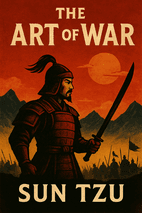
This collection brings together thirty of the most insightful passages from Sun Tzu's classic work on strategy and warfare. You will find timeless advice on leadership, planning, and the art of achieving your objectives with minimal disruption. These are not just ancient military tactics but principles that apply to modern business, personal challenges, and everyday decision making.
What makes the book so quotable is its clarity and universal wisdom. Each line delivers a powerful truth in just a few words, making them easy to remember and share. The quotes challenge conventional thinking about competition and victory, encouraging you to outthink rather than overpower. They remain as relevant today as when they were first written.
Top Quotes from The Art of War Sun Tzu - Complete Edition
“If you know yourself—your strengths and weaknesses—and you know your enemy, you can win every time.”
From the analysis of Chapter 1, discussing the importance of preparation.
It distills a timeless strategic principle into a simple, memorable formula, emphasizing the power of self-awareness and intelligence over brute force.
“If you can win without even fighting, that's the ultimate victory.”
From the analysis where Sun Tzu's advice on avoiding prolonged war is summarized.
It encapsulates the ideal of achieving objectives through strategy and efficiency rather than direct conflict, resonating with anyone seeking peaceful or diplomatic solutions.
“Victory lies in achieving decisive results, not in prolonged campaigns.”
Sun Tzu concluding the chapter with a key principle.
It succinctly captures the core philosophy of avoiding protracted conflict, a timeless lesson in strategy.
“The best military strategy is to capture a state intact. An inferior strategy is to destroy it.”
Sun Tzu outlines the principle of minimizing destruction in warfare.
This line encapsulates the ideal of achieving victory with maximum preservation, a timeless lesson in strategy and leadership.
“The highest priority in war is to attack the enemy’s strategy.”
Sun Tzu explains the hierarchy of targets in warfare.
It distills the essence of strategic thinking: defeating an opponent's plans before engaging in physical combat.
“The greatest victories come not from brute force but from wisdom, preparation, and adaptability.”
From the concluding summary of Chapter 3.
This memorable line distills the entire chapter's lesson into a universal truth, inspiring readers to prioritize strategic thinking and flexibility in any endeavor.
“Success doesn't come from chance or brute force; it comes from avoiding mistakes and taking advantage of the enemy's errors.”
This is from the analysis explaining Sun Tzu's core philosophy on winning through strategy rather than luck.
It reframes success as a deliberate, mistake-avoiding process rather than a gamble, making it universally applicable to business, sports, and life.
Themes Behind the Quotes
A central theme is achieving victory through wisdom rather than brute force. Sun Tzu emphasizes strategy, preparation, and knowing both yourself and your opponent. He advocates for winning without fighting whenever possible, preserving resources and minimizing conflict. Another key idea is the importance of deception and surprise, attacking where the enemy is weakest.
Another major theme is the need for efficiency and decisiveness. Prolonged wars are destructive, so the best generals strike quickly and use the enemy's own resources. The ultimate goal is to subdue the opposition while causing the least harm. These themes highlight practical, adaptable approaches to any competitive situation, from business to personal life.
Quotes by Chapter
Introduction
“True victory lies not in brute force but in achieving one's objectives with minimal conflict and disruption.”
This line appears in the introduction describing the core philosophy of Sun Tzu's The Art of War.
It encapsulates the essence of Sun Tzu's strategic approach, appealing to modern readers who value efficiency and conflict avoidance. The principle is universally applicable in competitive environments like business and personal relationships.
“Victory is not just about defeating opponents but about creating conditions where success is inevitable.”
This appears near the end of the introduction, summarizing the teachings of The Art of War.
It reframes the concept of victory from a zero-sum struggle to a proactive strategy, inspiring readers to focus on preparation and positioning. This perspective is empowering and aligns with modern ideas of strategic foresight.
“He advocates for achieving goals with the least possible harm—whether to one's own resources, people, or adversaries.”
This describes Sun Tzu's moral dimension, emphasizing restraint and efficiency in achieving objectives.
It highlights the ethical aspect of Sun Tzu's philosophy, which resonates in a world increasingly concerned with sustainability and responsible leadership. This line underscores that true success is not destructive but harmonious.
Chapter 1 - Laying Plans
“If you, entrusted by your ruler with the command of armies, build your strategy upon these five principles, victory will follow you.”
Sun Tzu addresses a commander in Chapter 1 - Laying Plans.
This line encapsulates the core promise of Sun Tzu's teachings: that disciplined adherence to fundamental principles guarantees success.
“Every military campaign must be rooted in deception.”
Sun Tzu states a key principle of warfare.
This succinct statement is one of the most famous and influential ideas in military strategy, emphasizing the importance of misdirection.
“Attack where he is unprepared, and strike when he least expects it.”
Sun Tzu gives tactical advice on exploiting enemy vulnerabilities.
This line is a timeless and actionable piece of wisdom, often cited in both military and business contexts.
Analysis of Chapter 1
“Pretend to be weak when you're strong, make your enemy think you're somewhere you're not, or lure them into traps.”
From the section on deception in warfare within the analysis.
These concrete examples of strategic deception are vivid and widely applicable beyond military contexts, making the concept of outthinking opponents easy to grasp.
Chapter 2 - Waging War
“One cannot keep troops in the field for an extended period without inflicting significant harm on the State and ruining one’s own reputation.”
Sun Tzu warning of the consequences of prolonged warfare.
This line underscores the severe political and reputational risks of extended campaigns, resonating with leaders and strategists.
“Victory must always remain your ultimate goal in war.”
Sun Tzu emphasizing the primary objective in military operations.
A simple, powerful reminder that all action must serve the ultimate goal of victory, preventing distraction.
Analysis of Chapter 2
“He warns against dragging out campaigns, because prolonged wars drain your country's finances, exhaust your troops, and hurt the people back home.”
From the analysis of Sun Tzu's Chapter 2, summarizing his warning against extended warfare.
This line captures the core economic and human cost of war, making it resonate with readers who value efficiency and the well-being of society.
“One way to do this? Use the enemy's resources to sustain your army. Take their supplies, disrupt their logistics, and weaken them without wasting your own resources.”
Advice from the analysis on how to shorten campaigns by leveraging the enemy's own assets.
It presents a clever, resourceful strategy that turns the opponent's strength into a weakness, appealing to readers who admire tactical ingenuity.
“A skilled general understands that a quick, strategic win is far better than a drawn-out war.”
Closing insight from the analysis, emphasizing Sun Tzu's philosophy on decisive victory.
This concise statement encapsulates the timeless wisdom that speed and strategy trump prolonged conflict, resonating with anyone seeking effective leadership.
“Plan well, act decisively, and never let a war drag on longer than it needs to.”
From the 'In Short' summary of the chapter analysis, offering a direct takeaway.
It distills the chapter's lesson into a memorable, actionable mantra that applies to both military and everyday challenges.
Analysis of Chapter 3
“Sun Tzu tells us that the ultimate goal is to preserve, not destroy.”
Opening of the analysis, summarizing the core philosophy of Chapter 3.
This line encapsulates the central theme of minimizing harm and focusing on preservation, which resonates as a timeless principle not only in warfare but in leadership and conflict resolution.
“The chapter emphasizes that the best strategy is to subdue the enemy without fighting.”
From the discussion of Sun Tzu's key strategy in Chapter 3.
This quote highlights the ideal of achieving victory through intelligence and indirect means, appealing to readers who value wisdom over brute force.
Chapter 4 - Tactical Dispositions
“Invincibility lies in defense, while the potential for victory lies in attack.”
Sun Tzu explains the roles of defense and attack in warfare.
This line succinctly captures the core duality of military strategy—defense for security, attack for opportunity.
“To defend is to acknowledge insufficient strength; to attack is to demonstrate strength in abundance.”
Sun Tzu elaborates on the meaning of defense and attack.
It provides a clear, memorable definition of the strategic postures, resonating with leaders facing resource constraints.
“A victorious army secures the advantage before the battle begins. An army destined for defeat engages in battle with nothing but hope.”
Sun Tzu contrasts the preparation of a victorious army with that of a doomed one.
It highlights the critical importance of pre-battle planning and positioning, a lesson applicable beyond warfare.
Analysis of Chapter 4
“A skilled general plays chess, not checkers.”
The analysis uses this metaphor to illustrate Sun Tzu's emphasis on foresight and positioning over reactive moves.
The simple, vivid contrast immediately conveys strategic depth versus brute-force thinking, making it a memorable shorthand for thoughtful planning.
“If you don't make mistakes, you can’t lose.”
This appears in the 'Key Lessons' section summarizing Sun Tzu's advice on avoiding errors.
Its absolute, almost mathematical logic is both inspiring and sobering, emphasizing personal accountability as the path to invincibility.
“Victory is just the natural result of doing things right.”
The analysis states this while explaining Sun Tzu's view that true masters achieve victory through preparation, not luck.
It elegantly distills the idea that success feels effortless when the groundwork is done, encouraging patience and disciplined execution.
Chapter 5 - Energy
“Attack openly, but secure victory through secrecy. In this lies the very essence of mastery in troop management.”
Sun Tzu explains the core principle of combining direct and indirect forces in warfare.
This line distills the paradox of warfare: visible actions can mask hidden intentions, a timeless lesson in strategy and deception.
“It is through its momentum that water surging in torrents crashes against rocks; it is through precise judgment of distance that a hawk strikes down its prey with unerring accuracy.”
Sun Tzu uses natural imagery to illustrate the importance of momentum and timing in attack.
The vivid comparison to water and a hawk makes the abstract concepts of force and precision instantly memorable and universally applicable.