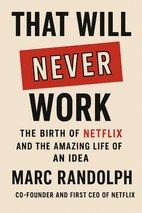
Chapter 1: 1. Against Epiphanies
Key concepts: 1. Against Epiphanies
Against Epiphanies
The Collaborative Idea Generation Process
- Daily commute pitches between Marc Randolph and Reed Hastings establish a ritual of idea testing
- Reed Hastings provides logical, Spock-like dissection of each business concept
- Christina Kish's analytical prowess and Te Smith's narrative savvy form a critical brain trust
- Every concept undergoes ruthless scrutiny before being accepted or discarded
- The process emphasizes gradual development over sudden inspiration
Rejecting the Epiphany Narrative
- Personalized shampoo moment illustrates the deceptive nature of 'aha' moments
- Silicon Valley's love for perfect origin stories oversimplifies complex innovation
- Real ideas emerge slowly through weeks of discussion and research
- Good and bad ideas are often indistinguishable in the moment
- Foundational principle: distrust epiphanies as reliable indicators of viability
Marc Randolph's Formative Influences
- Father's meticulous craftsmanship taught the joy of building process over finished product
- Family imperative to own a business for control and estate building
- Edward Bernays and Sigmund Freud family connection provided marketing psychology foundation
- Direct marketing experience honed ability to connect products to human desires
- Combination of building instinct and marketing savvy fuels entrepreneurial drive
Scalability as the Critical Filter
- Reed Hastings introduces geometric growth as essential principle
- Viable service must allow serving thousands without proportional increase in difficulty
- Personalized physical goods fail scalability test due to manufacturing constraints
- Search shifts toward recurring services with efficient unit economics
- Scalability immediately disqualifies many initially appealing concepts
The Reality Testing of Ideas
- VHS tapes by mail concept initially seems perfect solution to video store inconvenience
- Grounded skepticism from Marc's wife provides initial reality check
- Christina's financial analysis reveals impossible costs and slow postal turnaround
- Convenience must drastically outweigh cost to compete with existing solutions
- Whiteboard erasure symbolizes necessary process of discarding failed concepts
Professional Context and Motivation
- Impending corporate merger creates professional limbo and job insecurity
- Marc's team has time but no mission, collecting paychecks in boring office environment
- Reed Hastings' burnout leads him toward education reform interests
- Notebooks filled with ideas reflect determination to build something from scratch
- Search for new venture emerges from restlessness rather than clear opportunity
The Collaborative Brain Trust
- Christina and Te serve as essential, complementary forces in the idea generation process.
- Christina provides intense, detail-oriented analysis of numbers and business model feasibility.
- Te brings marketing, media, and storytelling expertise, viewing ideas through a PR lens.
- Their dynamic with the author is one of constructive skepticism, subjecting every idea to research and whiteboard math.
- The collaborative process is described as pleasurable and generative, akin to the author's father's design work.
The Dog Food Debacle and the Scalability Principle
- Reed Hastings dismisses the custom-blended pet food idea based on a lack of scalability.
- He articulates the core challenge of service businesses versus scalable product businesses.
- The ideal model requires serving many customers with the same effort as serving one.
- Customer relationships should be recurring, not one-time transactions.
- This principle immediately disqualifies many personalized, infrequently purchased goods ideas.
The Spark of an Alternative: VHS by Mail
- The author jokingly suggests 'videotapes' as a response to Reed's scalability criteria.
- The team seizes on the idea, exploring an online VHS rental service to bypass video store inconvenience.
- Initial enthusiasm focuses on solving the customer pain point of trips to Blockbuster with kids.
- The concept represents a shift toward addressing a known market need with a new delivery model.
The Harsh Reality Check
- The author's wife, Lorraine, provides immediate grounded skepticism about practicality and messiness.
- Christina's research reveals fatal flaws: high VHS tape costs ($80 for new releases) and slow postal turnaround.
- Unit economics show a mailed tape might rent only 4 times monthly versus a store's 25, making breakeven impossible.
- The model asks customers to trade instant Blockbuster access for delayed convenience—a poor bargain.
- The VHS-by-mail idea is ultimately erased from consideration after confronting market and financial realities.
Key Takeaways
- Innovation is a team sport, forged through collaboration with diverse thinkers who challenge assumptions.
- Scalability is non-negotiable—viable ideas must allow geometric, not arithmetic, growth.
- A new service must offer compelling advantages that outweigh costs compared to existing alternatives.
- Passion is not a business model; ideas must survive ruthless financial analysis and market reality.
- The search must continue under strict parameters of scalability, repeat value, and unit economics.