Stop Living Paycheck to Paycheck Interactive Mindmaps for Stop Living Paycheck to Paycheck (Free)

Stop Living Paycheck to Paycheck — Interactive Mindmaps

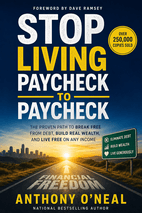
Stop Living Paycheck to Paycheck by Anthony O'Neal Book Cover

by Anthony O'Neal

Anthony O'Neal's Stop Living Paycheck to Paycheck presents a phased "Escape Plan" for breaking free from financial instability, centered on a written vision, zero-based budgeting, and the Debt Snowball Method. Written for anyone trapped in the cycle regardless of income, it covers building a one-month buffer, earning extra income, investing, and creating family wealth structures to achieve lasting freedom.

On Insta.page you also get an Apply This Book tool that lets you combine insights from up to 3 books to solve your specific situation.
Chapter mindmaps

Free preview: chapters 1–4 are fully interactive. Click any node to expand or collapse. Subscribe to unlock the rest.

Chapter 1: Why Are We Living Paycheck to Paycheck?

Key concepts: Chapter 1: Why Are We Living Paycheck to Paycheck?

Chapter 1: Why Are We Living Paycheck to Paycheck?

The Paycheck-to-Paycheck Trap

  • Good incomes still leave no safety net
  • One unexpected bill can wipe out savings
  • Affects households across all income levels

The Road to Zero Wealth

  • Wealth is what remains after debts
  • Black median wealth projected zero by 2053
  • Latino median wealth projected zero by 2073
  • Wealth is buffer against shocks and opportunity

Destructive Decisions

  • Spending often doesn't match income
  • Credit card debt tripled since 1999
  • High earners can live paycheck to paycheck
  • Fix starts with asking if outflows match inflows

A Corroded Culture

  • Success equated with display, not security
  • Bentley drew attention; BMW drew nothing
  • People buy symbols of status over wealth

Misguided Mindsets

  • Same income yields accumulation or emptiness
  • Money's purpose determines financial outcome
  • Mindsets matter as much as budgets and culture

Chapter 2: Introduction

Key concepts: Introduction

Introduction

The Trap of the Prescribed Path

  • Hard work, saving, retirement still leads to broke
  • Cultural script is fundamentally flawed
  • Alternative path is not obvious

Two Cultural Traps

  • Spending money we don't have for fake success
  • American Dream: decades of work, inadequate retirement
  • Older couples work into seventies or depend on children

Misguided Mindsets

  • Fake it 'til you make it: living above your level
  • Fear of money: savings accounts lose buying power
  • Passive waiting for miracles instead of acting on faith

Wealth as Freedom

  • Wealth measured by freedom, not net worth
  • Father's example: golfing Tuesday, no boss
  • Wealth buys joy, peace, family time, generosity

Phase 1: John and Jasmine

  • $7,000 credit card debt, no savings
  • Expecting a baby, house dream before kids
  • John vows to find a way out

Chapter 2: Write Your Financial Vision

Key concepts: Chapter 2: Write Your Financial Vision

Chapter 2: Write Your Financial Vision

Dreams vs. Visions

  • Dreams are comforting fantasies that kill urgency
  • Visions are written dreams with plan and commitment
  • Dreams comfort; visions compel action

Defining a Financial Vision

  • Three to five sentences describing financial house complete
  • Work backward from retirement or chosen horizon
  • Ask guiding questions for 5, 3, 2, 1-year milestones

The Hendersons' Example

  • Envisioned paid-off home and $1M retirement at 45
  • Set five-year goal: 20% down, emergency fund
  • Three-year: $20K down payment, maxed Roth IRAs
  • One-year: eliminate all non-student debt

God-Sized Vision

  • Vision so large it requires divine help
  • Small visions fail to inspire commitment
  • A 'why' without tears won't survive the price

Three Steps to Write Vision

  • Write down every dream that matters, think big
  • Circle 5-10 emotionally or practically significant dreams
  • Combine overlaps into 3-5 statements with timeline
  • Work backward to set 1, 2, 3, 5-year landmarks

Chapter 3: Give Your Money a Mission

Key concepts: Chapter 3: Give Your Money a Mission

Chapter 3: Give Your Money a Mission

The Problem with No Plan

  • Spending without a plan causes financial dread
  • Earning more or spending less doesn't fix fear
  • Root issue: no vision or plan for money

Monthly Money Vision Defined

  • Short-term plan behind long-term Financial Vision
  • Assign every dollar of expected income before month starts
  • Planned money counts as already spent
  • Ends paycheck-to-paycheck living

Why Budgeting Is Necessary

  • You can't manage what you don't measure
  • Budget reveals what you can truly afford
  • Protects marriage from money arguments
  • Shared plan creates accountability

Building a Monthly Money Vision in Six Steps

  • Track income history from past three months
  • Identify total expected income, averaging irregular amounts
  • Track expenses into six Cornerstones plus extras
  • Determine average monthly outflow over ninety days

Key Takeaways

  • Assign every dollar before month begins
  • Plan must be below income, not equal
  • Reconstruct spending from last ninety days
  • Let unused funds roll into next month
You've reached the end of the free mindmaps

Next chapter: “Chapter 4: Get Safe and Secure” is locked

See every chapter of Stop Living Paycheck to Paycheck as an interactive mindmap — and unlock all 500+ book summaries with audio and AI Q&A.

$0.00 due today · 7 days free, then $89.99/year ($7.49/mo) · Cancel anytime before day 7

Continue exploring Stop Living Paycheck to Paycheck