Shoe Dog Quotes
by Phil Knight
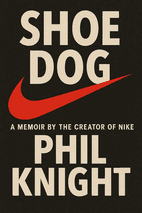
These quotes from Shoe Dog capture the raw, unfiltered voice of Phil Knight as he built Nike from nothing. You will find lines about running, business, fear, and the stubborn belief it takes to keep going. Some are funny, some are painful, but all are honest.
What makes this book so quotable is its refusal to sugarcoat. Knight shares his doubts, his mistakes, and the people who made it all possible. These quotes remind us that building something great is messy, scary, and ultimately worth it.
Top Quotes from Shoe Dog
“And I found that I could run. And no one could take that away.”
Phil Knight discovers his talent for running after his mother suggests he try track.
This succinct line embodies resilience and the discovery of a personal passion that becomes a lifelong anchor, resonating with anyone who has found solace in their own abilities.
“Belief, I decided. Belief is irresistible.”
Knight reflects on how his mail-order business took off spontaneously.
This line captures the raw, almost magical force of conviction that drives entrepreneurs, distilling a complex idea into a simple, punchy truth.
“Life is growth,” I said. “Business is growth. You grow or you die.”
Phil Knight arguing with his banker Harry White about the company's rapid growth.
This line captures Knight's relentless entrepreneurial philosophy and the core tension between risk-taking and conservative banking, making it a timeless motto for startups.
“Don’t tell people how to do things, tell them what to do and let them surprise you with their results.”
The author explains the lesson he took from studying heroes like Churchill, Kennedy, and Tolstoy.
This line encapsulates a minimalist, trust-based leadership philosophy that empowers others to excel.
“Someone somewhere once said that business is war without bullets, and I tended to agree.”
The author muses on the parallels between business and war while reflecting on his management style.
It captures the competitive, zero-sum nature of entrepreneurship in a memorable metaphor.
“If my life was to be all work and no play, I wanted my work to be play.”
Phil Knight reflects on his decision to quit Price Waterhouse and dedicate himself to Blue Ribbon.
This line captures the essence of turning passion into a livelihood, a universal dream for anyone seeking fulfillment in their career.
“I wanted what everyone wants. To be me, full-time.”
Knight explains his desire to leave accounting and live authentically.
It distills a profound human longing for authenticity and purpose into a simple, relatable statement that resonates deeply.
Themes Behind the Quotes
A central theme in these quotes is the tension between fear and love, especially in relationships with family and in business. Knight constantly wrestles with doubt and the pressure to succeed, but he also finds moments of pure belief that drive him forward. The idea that belief is a powerful force appears again and again.
Another major theme is growth as a necessity. Knight views life and business as a process of constant expansion or decline. He embraces failure as part of the journey, advocating for speed over perfection. The quotes also highlight the value of trust and letting people surprise you, as well as the struggle to balance work and personal identity.
Quotes by Chapter
1. 1962
“Before I died, became too old or consumed with everyday minutiae, I wanted to visit the planet’s most beautiful and wondrous places. And its most sacred.”
The narrator, Phil Knight, reflects on his desire to travel the world before settling into a routine life.
This line captures the universal yearning for adventure and meaning before the responsibilities of adulthood take over, inspiring readers to pursue their own grand dreams.
“In many ways my father was a conventional Episcopalian, a believer in Jesus Christ. But he also worshipped another secret deity—respectability.”
Phil Knight describes his father's dual devotion to religion and social standing.
The contrast reveals the tension between outward conformity and inner desires, a relatable struggle for anyone balancing personal ambition with societal expectations.
“I will never forget that day. Dragging my bat along the sidewalk, I staggered home and holed up in my room, where I grieved, and moped, for about two weeks, until my mother appeared on the edge of my bed and said, “Enough.””
Phil Knight recalls being cut from the baseball team as a freshman and his mother's intervention.
This moment highlights vulnerability and the power of maternal encouragement, showing how a simple push can redirect a life toward newfound strengths.
2. 1963
“I was at the pyramids, I was at the Temple of Nike. I was wondering about my shoes.”
Phil Knight describes being mentally absent while showing his travel slides to neighbors.
This line perfectly captures the tension between past adventure and present ambition, showing how his mind is already fixed on the future business of shoes.
“Are the best moments of my life behind me? Was my trip around the world... my peak?”
Knight reflects while eating lunch on a bench and watching a travel agency window.
It articulates a universal fear of having already lived one's greatest experiences, making readers question their own outlook on life.
“Everyone, but everyone, changes jobs at least three times.”
Don Frisbee, CEO of Pacific Power & Light, advises Knight against taking a job at an investment firm.
This practical wisdom about career mobility is both timeless and reassuring, resonating with anyone uncertain about their professional path.
“I’m an accountant now and giving some thought to blowing my brains out.”
Knight writes to his friend Carter, expressing his misery working at an accounting firm.
The dark humor and stark honesty about discontent in a conventional job makes this line both shocking and relatable.
3. 1964
“God, they were beautiful. They were more than beautiful. I'd seen nothing in Florence or Paris that surpassed them.”
Phil Knight's first sight of the Tiger shoes he ordered from Japan.
Captures the awe and passion that ignited his lifelong obsession with running shoes, setting an almost sacred tone for the journey ahead.
“One ounce sliced off a pair of shoes, he said, is equivalent to 55 pounds over one mile.”
Bill Bowerman explains his philosophy on shoe lightness.
Illustrates Bowerman's obsessive, mathematical approach to performance and underscores a core principle that shaped Nike's design ethos.
“Love and fear—the same binary emotions governed the dynamic between me and my father.”
Phil Knight reflects on his complicated relationships with Bowerman and his own father.
A universal truth about the powerful, often conflicting emotions that define formative relationships, resonating with anyone who has sought approval and struggled with authority.
4. 1965
“I looked up to the man when he saw something deeper in numbers, but I loved him when he saw something special in me.”
Knight reflecting on his admiration for his Price Waterhouse mentor Delbert Hayes after Hayes defended him in a bar.
It beautifully expresses the difference between professional respect and personal loyalty, resonating with anyone who has had a mentor who believed in them beyond the obvious.
“I wanted to keep my foot pressed hard on the gas pedal.”
Knight describing his determination to keep growing Blue Ribbon despite banker warnings about equity.
A vivid metaphor for unyielding ambition and the willingness to take risks, embodying the reckless drive that defines many entrepreneurial journeys.
“Equity—I heard it while brushing my teeth in the morning. Equity—I heard it while punching my pillow at night.”
Knight obsessing over the word 'equity' after his banker repeatedly lectured him about it.
The repetition and mundane imagery convey the suffocating pressure of financial constraints, making readers feel the obsessive weight of a startup founder's worries.
5. 1966
“I wasn’t much for setting goals, but this goal kept flashing through my mind every day, until it became my internal chant: Fail fast.”
The author describes his internal mantra as he faces the risks of starting his own business.
It has become a famous startup maxim, embodying the willingness to take risks and learn from failure.
“There was only one person on the planet rootless enough, energetic enough, gung-ho enough, crazy enough, to pick up and move to the East Coast, on a moment's notice, and get there before the shoes did.”
The narrator (Phil Knight) gazes at the horizon and considers who could possibly drop everything to relocate for the upcoming shipment.
This line encapsulates the reckless, audacious spirit that defined early Nike — the kind of person who would leap into the unknown for a crazy idea, which resonates with anyone who has taken a huge risk to chase a dream.
6. 1967
“He looked off and asked the walls or the shoes or the Great Spirit why he shouldn't just shut up and do it, do whatever I asked, and be down-on-his- knees grateful for the damn opportunity, when anyone could see that he was—he searched for the exact words —“a talentless fuck.””
Johnson delivers a rambling monologue to Knight inside his Santa Monica store, wrestling with the decision to move east.
Johnson's raw self-deprecation reveals the deep vulnerability and insecurity beneath his fierce loyalty, making the moment unforgettable and human.
“The truth of the matter is, we have forty thousand dollars in sales, and more than that in debt, so there's simply nothing to divvy up here, fellas. We're fighting over slices of a pie that doesn’t exist.”
Knight responds to Owen Johnson's demand that his son be made a full partner in Blue Ribbon.
This line cuts through the negotiation with brutal honesty, capturing the precarious reality of the startup and Knight's unyielding pragmatism.
“This is how we're going to build a shoe company?”
Knight and Woodell sit amidst scattered shoes and empty boxes after a high school kid leaves without buying anything.
This moment of bemused despair encapsulates the absurdity and grit of early entrepreneurship, resonating with anyone who has started from nothing.
“Within days he'd found and rented a little house behind a funeral parlor.”
After a run, Johnson quickly finds and rents a house.
It illustrates Johnson's decisive, resourceful nature and the humble, unconventional beginnings of Blue Ribbon.
8. 1969
“E shoe company was a living, breathing thing, I said, which I'd created from nothing. I'd breathed it into life, nurtured it through illness, brought it back several times from the dead, and now I wanted, needed, to see it stand on its own feet and go out into the world.”
Knight describes Blue Ribbon to Penny during their first date at the zoo.
This metaphor personifies his business as a fragile but resilient child, showing the emotional weight of entrepreneurship and the drive to see it succeed.
“I didn't know why I was telling Miss Parks, except that Calcutta had been one of the loneliest moments of my life, and I felt very unlonely just then.”
Knight opens up to Penny about his past while walking at the zoo.
It reveals vulnerability and the transformative power of connection, showing how love can heal old wounds and banish loneliness.
9. 1970
“Because,” Woodell’s mother said, “if you can't trust the company your son is working for, then who can you trust?”
Woodell's mother explains why she and her husband are giving their life savings to Phil Knight.
This line underscores the profound loyalty and trust that the Woodell family places in Knight and the company, highlighting the personal stakes behind the business.
“God, we are really screwing our customers,” Johnson wrote. “Happiness is a boatload of Cortez; reality is a boatload of Bostons with steel wool uppers, tongues made out of old razor blades, sizes 6 to 6 12.”
Johnson, Blue Ribbon's sales rep, vents about inventory problems in a letter to Knight.
This quote captures the chaotic supply chain issues with a blend of humor and frustration, making the operational struggles visceral and memorable.