Shoe Dog Key Takeaways
by Phil Knight
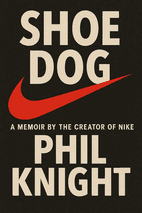
5 Main Takeaways from Shoe Dog
Embrace the Grind: Success is Built Through Relentless Persistence and Resilience.
Phil Knight faced countless setbacks, from supplier betrayals like Onitsuka's to near-bankruptcy cash flow crises, but he never gave up. His persistence in fighting legal battles and innovating under pressure shows that enduring hardship is essential for building something lasting.
Build a Tribe, Not Just a Team: Unconventional Culture and Loyalty Drive Results.
Knight hired misfits and fostered a culture of brutal honesty and trust, exemplified by the 'Buttface' ethos. This allowed for creative problem-solving and fierce loyalty from key hires like Jeff Johnson, turning shared struggle into a strategic advantage that fueled Nike's growth.
Innovate from Desperation: Breakthroughs Often Emerge from Existential Crises.
When faced with cash flow problems, Knight created the 'Futures' program, revolutionizing the industry. Similarly, Bowerman's waffle sole was born from a need for better traction, showing that pressing challenges can spark revolutionary solutions that define a brand.
Trust Your Gut Over Conventional Wisdom: Intuition and Faith Outweigh Spreadsheets.
Knight often made decisions based on instinct, such as hiring Stretch for a critical move or holding firm on the IPO price. He valued faith over financial logic, as seen in his handling of bank negotiations, highlighting that entrepreneurial success requires defying safe advice.
The Journey is the Reward: Fulfillment Comes from the Struggle, Not the Outcome.
Despite Nike's IPO success, Knight felt regret and a desire to relive the journey. The book emphasizes that the process of building, with all its trials and camaraderie, holds more value than financial wealth, as reflected in his focus on legacy and relationships.
Executive Analysis
The five takeaways collectively argue that Nike's genesis was not a calculated business plan but a human saga of perseverance. Knight's journey shows that entrepreneurial success is forged in crises, built by unconventional teams, and driven by a faith that often contradicts rational advice. The central thesis is that the essence of building something great lies in embracing the struggle, trusting your instincts, and valuing the people who join your quest.
"Shoe Dog" matters because it strips away the glamour of entrepreneurship to reveal the gritty, emotional reality. It offers practical lessons on resilience, innovation under pressure, and cult-like team building that are applicable to any venture. As a memoir, it stands alongside classics like "Liar's Poker" for its unvarnished honesty, providing not just a case study but a visceral inspiration for founders and leaders.
Chapter-by-Chapter Key Takeaways
1. 1962 (Chapter 1)
The solo journey through Europe’s cultural capitals serves as an immersive education in art, history, and the often-arduous human effort behind enduring genius.
Historical reflection is punctuated by visceral encounters with 20th-century political trauma, particularly in Germany, where ideological conflict manifests in stark, human detail.
The Acropolis in Athens delivers a transcendent sense of homecoming and connection, implicitly tying the classical ideals of victory, persuasion, and art to the narrator’s nascent business ambitions.
Despite the profound experiences abroad, the narrative’s urgency immediately refocuses on the unfinished project at home, highlighting the trip’s ultimate purpose: to return and build something.
Try this: Use travel and cultural immersion to gain perspective, but always return focused on your core mission.
2. 1963 (Chapter 2)
The narrator struggles with reintegration, feeling permanently altered (“worldly”) by his travels and emotionally disconnected from his former life.
He is trapped in a cycle of waiting—for the promised shoes from Onitsuka and for a sense of purpose—while being pressured into conventional, practical career choices.
His accounting job represents a surrender to this practicality, but it comes at a high cost of personal freedom and joy, leading to profound disillusionment.
A deep nostalgia for his travels and a fear that his best days are behind him create a powerful tension between responsibility and passion, setting the stage for his future entrepreneurial journey.
Try this: Channel the tension between passion and practicality to fuel your entrepreneurial leap, even when it means leaving comfort behind.
3. 1964 (Chapter 3)
Entrepreneurial success often starts organically through passion and word-of-mouth, but scaling requires navigating formal financial and legal challenges.
Direct, courageous confrontation is sometimes necessary to resolve business conflicts, requiring personal resilience and a willingness to face failure.
Cultural understanding and personal rapport can be decisive in international business, but ultimately, decisions may hinge on a founder's intuition and personal identification.
Life's most important personal and professional turning points often occur unexpectedly, born from moments of both crisis and serendipity.
The relationship with Sarah ends decisively, with her citing a lack of “sophistication” as the reason, a rejection that deeply wounds the narrator and momentarily eclipses his passion for the fledgling shoe business.
Familial support proves crucial in the aftermath of heartbreak. Jeanne’s direct compassion leads directly to her hiring, marking a pivotal shift from a solitary venture to a true family business.
Personal setback and professional necessity converge, forcing the narrator to accept help and formally expand his team, even in a state of despair.
Try this: Leverage personal setbacks as catalysts for building your team, recognizing that trusted support often comes from unexpected places.
4. 1965 (Chapter 4)
Persistence in innovation, even in the face of silence or rejection, can eventually lead to breakthrough results.
True inspiration for problem-solving often comes from observing everyday objects and experiences, from an octopus leg to a rain-soaked track.
Bowerman’s work was driven by a holistic, perfectionist obsession with enhancing athletic performance, encompassing equipment, nutrition, and environment.
His foundational belief that everyone is an athlete fueled projects, like his jogging book, that aimed to democratize fitness far beyond competitive running.
Try this: Observe everyday experiences for innovative ideas, and champion a mission that democratizes access to your product or service.
5. 1966 (Chapter 5)
A critical logistical problem is solved by identifying Stretch as the only person with the perfect, unconventional temperament for a sudden, demanding move.
The narrator’s decision is marked by a blend of absolute certainty in Stretch’s capabilities and amused curiosity about his personal adjustment.
The closing line effectively sets the stage for the next phase of the story, introducing an element of character-driven anticipation.
Try this: Identify and deploy unique talents in your team based on their temperament, not just their resume, to solve critical problems.
6. 1967 (Chapter 6)
Johnson demonstrates immediate, independent action by securing a physical base of operations—a house serving dual purposes as both office and home.
His unconventional choice of location highlights a focus on function over form.
The financial request to the narrator reveals Johnson's expectation of backing and creates a moment of tactical tension, as the narrator's silence becomes a form of response.
Try this: Empower autonomous action in your team members, and be prepared to support their functional choices even when unconventional.
8. 1969 (Chapter 7)
Full Commitment: Knight leaves his secure job to run Blue Ribbon full-time, betting entirely on the company’s future as sales surge.
Fateful Hires: He hires Carolyn Davidson for graphic design and, far more perilously, enlists Fujimoto as an informant inside Onitsuka.
Partnership Under Strain: The relationship with Onitsuka, particularly with Kitami, grows suspicious and tense, highlighted by their underwhelmed visit to Blue Ribbon’s office.
Personal Foundations: His marriage to Penny becomes a crucial stabilizing partnership, tested and strengthened as they prepare for parenthood and purchase their first home.
Reckless Gambit: The decision to employ a “spy” and, worse, to document it in a company memo, creates a significant vulnerability for the young business.
Total Commitment: The personal and financial stakes for the founders reach a new peak, with family homes and life savings pledged to the company's survival.
Foundational Friendship: The shared struggle of finding a new office deepens the bond between the narrator and Jeff Johnson, highlighting their complementary strengths and shared "one task" philosophy.
Strategic Growth: The move to a professional office in Tigard represents a calculated compromise to gain bank respect, accompanied by the strategic promotion of Johnson to a role better suited to his talents.
Perspective Shift: The birth of Matthew Knight provides a profound, life-altering moment of joy and a new lens through which to view success and legacy.
Operational Crisis: Bork's near-mutiny exposes critical stress points in the company's expanding operations, leading to the practical solution of centralizing warehouse management and bringing another trusted person, Johnson's mother, into the fold.
Try this: Bet on your vision with full commitment, but ensure personal foundations are strong to weather the inevitable professional storms.
9. 1970 (Chapter 8)
The Fragility of Success: Even with explosive sales growth, Blue Ribbon exists on a razor's edge, perpetually threatened by supplier unreliability and a lack of banking support.
The Price of Dependency: Being wholly dependent on a single supplier (Onitsuka) and a single banker (Wallace) puts Knight in an extremely vulnerable position with no leverage.
Innovation Born of Desperation: The failed public offering and the humiliating personal loans force Knight to seek radically new solutions, leading him to the innovative concept of partnering with a Japanese trading company for financing.
The Human Element of Business: The chapter highlights how business is driven by personal relationships—some fraught with cold hostility (Kitami), some transactional and cruel (Wallace), and some rooted in profound trust and sacrifice (the Woodell family).
Foreshadowing of Conflict: The discovery of Onitsuka's betrayal, mere months after signing a new contract, sets the stage for an inevitable and monumental clash, transforming the business struggle into a personal battle for survival.
Try this: Cultivate multiple relationships and backup plans to avoid dangerous dependencies on single suppliers or financiers.
10. 1971 (Chapter 9)
A tense, surreal meeting in Japan underscores the high-stakes corporate betrayal facing Blue Ribbon, blending business espionage with awkward personal moments.
Bill Bowerman’s invention of the waffle sole is depicted as a moment of divine inspiration, born from connecting everyday observations (a waffle iron) to specific athletic problems (traction on a new track).
The narrative highlights perseverance through failure, as Bowerman’s iterative process—ruining a waffle iron, testing brittle molds—finally leads to a revolutionary design.
This innovation is framed as a foundational, historic breakthrough that would fundamentally change athletic footwear and performance.
Try this: Foster a culture where iterative experimentation and connecting disparate ideas can lead to foundational breakthroughs.
11. 1972 (Chapter 10)
The Munich Olympics massacre profoundly impacted Bowerman, leading to his retirement and symbolizing how external violence could invade and diminish the sanctuary of sport.
Nike's first foray into celebrity endorsements, signing Ilie Nastase for $10,000, was a financial gamble but a strategic necessity to compete with established brands.
The University of Oregon's football victory while wearing Nikes provided a personal and symbolic win for the narrator, embodying the emotional convergence of fan, entrepreneur, and brand identity.
Despite a year shadowed by death and difficulty, the narrative finds resilience and hope in competitive spirit and commercial milestones.
Try this: Align your brand with authentic moments of victory and resilience, even in the face of external tragedies.
12. 1973 (Chapter 11)
Faith as a Foundational Value: Unshakeable belief, exemplified by Strasser, is valued as highly as skill or talent within Blue Ribbon’s culture.
The Constant Cash Flow Crisis: Success brought new, more intense problems. Explosive demand created a logistical and financial chokehold where delayed shipments could trigger a chain reaction leading to bankruptcy.
Innovation Born of Desperation: The “Futures” program was a radical, industry-defying gamble created to solve a cash flow crisis, demonstrating how existential threats can drive major innovation.
Life Amidst the Chaos: Knight’s narrative weaves intense business pressure with deeply personal moments, highlighting the constant juggling act and the very human need to find solace, even in a football game, during times of extreme stress.
Try this: Create radical solutions to cash flow crises by pre-selling futures, turning desperation into a competitive advantage.
13. 1974 (Chapter 12)
Adapt or Die: External economic forces (the floating yen) necessitate a drastic and immediate shift in manufacturing strategy away from Japan.
Resourceful Grit: Overcoming humiliation and rejection, the team finds an unlikely solution in a ruined New England factory and a classic, skilled “shoe dog,” Bill Giampietro.
The “Whatever It Takes” Mentality: Johnson’s reluctant but ultimate acceptance of a near-impossible task exemplifies the company’s culture of embracing roles outside their expertise and being unafraid of failure.
Aggressive Growth vs. Conservative Finance: The company consistently operates ahead of its financial means, defying cautious bankers to pursue sales and endorsements, a strategy that leads to both major opportunities (Connors’s wins) and setbacks (the broken deal).
The Prefontaine Anchor: Despite setbacks and betrayals in the endorsement arena, the legendary success and spirit of Steve Prefontaine remains a central, stabilizing source of identity and pride for the team.
Try this: Pivot your strategy aggressively in response to external shocks, and be willing to place key people in uncomfortable roles for survival.
14. 1975 (Chapter 13)
Strategic Crisis Management: Isolating conflicting parties can prevent a bad situation from cascading into a catastrophe, turning a potential disaster into a manageable, if farcical, operation.
The Power of a Loyal Advocate: A powerful ally willing to “go all in” can transform a defensive position into one of strength, using both financial resources and strategic influence to resolve a crisis.
Negotiation Through Leverage: The resolution with the bank demonstrates that effective negotiation often involves creating new leverage points, such as threatening a future valuable relationship, to settle immediate disputes.
Actions Over Numbers: The episode criticizes rigid, by-the-book financial oversight, highlighting how intuition, loyalty, and decisive action can solve problems that spreadsheets and conference rooms cannot.
Try this: Isolate conflicts to prevent escalation, and leverage loyal advocates to negotiate from strength when traditional systems fail.
15. 1975 (Chapter 14)
Resilience is often forged in moments of simultaneous crisis and relief, as Blue Ribbon’s financial reprieve is instantly overshadowed by personal tragedy.
Steve Prefontaine’s indomitable spirit served as a direct inspiration for Knight’s own perseverance in the face of business adversaries.
True legacy extends beyond records; it lives in the collective imagination and the physical places that become symbols of a person's impact, demanding preservation.
Leadership involves making commitments based on principle, not just financial capability, as evidenced by the vow to honor Pre's memory despite company hardships.
Try this: Honor inspirational figures by making principled commitments that outlive them, using their spirit to fuel perseverance.
16. 1976 (Chapter 15)
Personal Investment: The Shorter incident transforms the business from a commercial venture into a personal extension of the founder's identity, where rejection of the brand feels like a rejection of self.
Cultural Engine: Nike's "Buttface" culture—built on brutal honesty, dark humor, and radical trust among a band of perceived misfits—becomes its strategic advantage, enabling creative problem-solving and fierce loyalty.
Leadership Paradox: The narrator's hands-off management style empowers his unconventional team but mirrors his perceived shortcomings as a hands-off father, creating an unresolved tension between building a company and nurturing a family.
Defining Momentum: Despite the Olympic failure, Nike's sales double to $14 million in 1976, forcing serious, repeated debates about taking the company public to sustain its explosive growth, a decision weighed against the fear of losing their unique culture.
Try this: Build a culture of brutal honesty and trust that becomes your core engine for innovation and loyalty, even as you scale.
17. 1977 (Chapter 16)
A pivotal moment of paternal pride emerges from an unlikely source—a violent NBA incident that spotlights the Nike swoosh, validating the narrator's work.
Despite legal troubles, rapid sales growth fuels personal optimism, symbolized by a move to a new home intended to foster family connection.
The narrator's commitment to sports highlights a painful disconnect with his sons, whose rebellion and disinterest expose a deep family fissure.
The year closes with a poignant reflection on the irony and injustice of building a life around sports while facing rejection of that world within his own home.
Try this: Seek validation in unexpected places, but confront the personal costs of success, especially in family relationships.
18. 1978 (Chapter 17)
Burnout at Scale: Success and pressure can combine to create widespread organizational burnout, where leaders lose clarity and make poor judgments.
The Cost of Eccentricity: The very unconventional, rebellious spirit that built Nike begins to clash with the operational discipline needed to run a larger, embattled company, exemplified by the dress code revolt.
Talent in the Wrong Seat: Placing a talented person (like accountant Ron Nelson) in a role that doesn't match their skills (apparel design) can lead to costly, demoralizing failures.
Innovation's Double Edge: A breakthrough product like the Tailwind can become a catastrophic liability if rushed or improperly tested, damaging morale and the brand.
The Personal Toll of War: A high-stakes legal battle exerts a severe human cost, pushing dedicated individuals like Werschkul and Strasser to their psychological limits.
Try this: Actively manage the transition from rebellious startup to disciplined scale-up, ensuring talent is in the right roles to avoid burnout.
19. 1979 (Chapter 18)
A personal, visceral confrontation with a government bureaucrat symbolizes the threat of large, impersonal systems to entrepreneurial enterprise.
Successful political lobbying requires not just access but clear objectives, as evidenced by the squandered opportunity with Senator Hatfield.
External crises exist alongside internal growth, with moments of commercial success (the new store) occurring simultaneously with existential fights.
Securing the supply chain is a perpetual, strategic challenge, leading to the high-stakes decision to pursue manufacturing in China.
Talent acquisition is risky, and expertise in a critical area can come packaged with profound interpersonal shortcomings, creating new management dilemmas.
Try this: Personalize systemic threats by confronting them directly, and balance external fights with internal growth by securing critical resources.
20. 1980 (Chapter 19)
The IPO price negotiation was a tense battle of wills, where holding firm on principle ($22 per share) ultimately prevailed.
Success was met with introspection and routine rather than exuberance, highlighting a disconnect between financial achievement and personal fulfillment.
The protagonist's predominant emotion was regret and a desire to relive the journey, suggesting the process and struggle held more value than the outcome.
Despite monumental personal wealth, the world and the protagonist's core identity remained unchanged, emphasizing the enduring nature of character beyond financial milestones.
Try this: Hold firm on your valuation during an IPO, but reflect on the journey's value over the financial outcome to maintain perspective.
21. Night (Chapter 20)
Peace Through Prosperity: Commerce and shared economic interest are powerful, healing forces that can build bridges between former enemies.
Patient Growth: True strength and effective leadership, whether in a jungle or a corporation, develop organically and require patience, not force.
Legacy of Relationships: A life’s true value is reflected in enduring partnerships, family, and the fulfilled lives of those you journeyed with.
Purpose Over Money: Wealth is a tool for impact, not an end goal. Staying grounded in your core identity is essential to using it well.
Passing the Torch: The ultimate calling for a trailblazer is to illuminate the path for others, sharing hard-won lessons about perseverance, faith, and the acceptance of both luck and regret.
Try this: Measure success by the enduring relationships and positive impact you create, using wealth as a tool for legacy rather than an end goal.
Continue Exploring
- Read the full chapter-by-chapter summary →
- Best quotes from Shoe Dog → (coming soon)
- Explore more book summaries →