Presumption of Guilt Themes
by Peter Kirkland
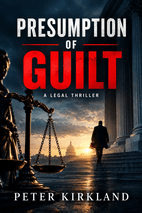
Underneath its plot, Presumption of Guilt wrestles with grief, doubt, and the uneven search for justice. Lily's loss of Sophia and need for answers drive the story, while Shannon's case shows how bail, evidentiary rules, hearsay, and prosecutorial discretion can outweigh simple truth. It also explores motherhood and protection, surveillance and retaliation, and how loyalty and community can both shelter and exclude.
This page covers each theme with concrete moments: grief and justice through Lily and Shannon; legal inequities through bail, hearsay, and discretion; motherhood through Destiny, Jasmine, and Lily; surveillance through footage, a rooftop watcher, and Shannon's hidden shower cavity; doubt through shifting proof; and loyalty through Keith and community exclusion. It also traces symbols: Merlin, the dojo and soji sweeping, Sophia's cherry pie, and the neodymium magnet video.
Major Themes in Presumption of Guilt
Grief and the search for justice
The book follows Lily Greco's grief for Sophia and her need to know what happened, while also showing grief fueling the pursuit of justice for Shannon and Destiny. Memory recurs through recognition, graves, recipes, and the idea that the dead do not rest until the truth is known.
- Ms. Greco interrupts Andy Davis's bail hearing because she believes he killed Sophia and wants to keep him in jail; the judge dismisses her claim, and Davis gets bail.
- Jack Duval says somebody has to help the dead because they don't rest until we know what happened to them.
- At Sophia's grave, Lily dislikes the perfect marble angel and Shakespeare quote, saying death has smoothed Sophia's rough edges away, and prefers the messy grass.
- At Thanksgiving, Lily serves cherry pie made with Sophia's recipe, and her mom becomes emotional.
Limits and inequities of the legal system
Legal outcomes turn on bail money, evidentiary rules, hearsay and foundation, and prosecutorial discretion rather than simple truth. Destiny cannot afford private counsel, PFA records are civil and invisible, bail creates financial burden, and key evidence can be withheld or missed.
- Judge McKenzie dismisses Ms. Greco's claim because the PFA was civil and does not appear in routine checks, and sets Davis's bail at $100,000.
- Lily tells Destiny defense retainers are $40,000–$50,000; Destiny says she cannot afford it and later has no retirement, home equity, or family means.
- Polenko sets Destiny's bail at $200,000 with electronic monitoring, noting the ankle bracelet's monthly cost; Greco argues high bail would separate her from her child and risk her home.
- Greco objects to the key card records on foundation and hearsay grounds; Polenko sustains the objection because hearsay alone is not enough.
- Novak offers Destiny a plea to third-degree murder and a misdemeanor firearm charge with a recommended twenty-year sentence and parole eligibility after ten years.
Family, motherhood, and protection of children
Mothers and parental love drive choices: Destiny fights to stay with Jasmine and plan her education, Lily becomes Jasmine's caregiver, and Angie's open adoption shows maternal sacrifice. Family also appears as chosen support at the dojo and at Thanksgiving.
- Destiny insists, 'My daughter is eight years old! She needs me around!' and Lily cares for Jasmine after Destiny's arrest.
- During trial lunch, Destiny calls her mother to keep contributing to Jasmine's college savings while Destiny is in prison, saying Darius wants Jasmine to join the military but education matters.
- Destiny arranged an open adoption for Angie's daughter and secretly sends photos; she says a mother needs to see her child's face.
- Mrs. Greco invites Destiny and Jasmine for Thanksgiving; Jasmine laughs with Merlin and Destiny watches with joy.
Surveillance, hidden evidence, and fear of retaliation
Watching and being watched pervades the book: security footage, prison cameras, a rooftop watcher, a missing phone, a hidden cavity, and threats. Evidence is concealed, fabricated, or dangerous to expose, and characters fear retaliation for speaking.
- Lily photographs a short-haired man in black on a roof across from the dojo, watching her building.
- Shannon's recovered phone video shows her using a neodymium magnet to reveal a hidden cavity behind a shower tile where contraband was stashed.
- Angie Campbell writes that guards were smuggling and selling to inmates, Shannon planned to report it, and Angie was transferred for safety after talking; she asks Lily to burn the letter.
- Jack reveals a vendor was contacted by someone impersonating Novak's secretary to request more camera footage; only forty minutes from one camera had been sent.
- Nyesha appears in the bathroom doorway, says 'Hmm' twice, asks 'What are we going to do with you?' and does not move out of the narrator's way.
Doubt, trust, and the uncertainty of proof
Characters repeatedly confront how hard it is to know guilt or innocence. The book distinguishes probable cause, preponderance, reasonable doubt, and proof, while showing that evidence can be ambiguous and even a not-guilty verdict does not resolve every question.
- Jack says they are never sure on any case, and advises Lily to 'Hold your opinions lightly.'
- Lily watches Destiny's body language and believes her, then worries Angie may have made up the story as bait.
- Lombardo testifies striations match Destiny's gun but also that the analysis is not 100% accurate; Greco gets him to concede DNA, fingerprints, and gunshot residue produced no evidence Destiny fired the gun.
- Greco's closing argues reasonable doubt because in almost fifty hours of footage, no one saw Destiny sneaking around the metal detector; the jury finds her not guilty.
- After the verdict, Andrew Davis's case is out of Lily's control, and a killer has already beaten the system once.
Loyalty, friendship, and community exclusion
Friendship and loyalty motivate dangerous help and legal risk, while community can also exclude outsiders. The book contrasts Keith's fierce loyalty with warnings that friendship clouds judgment, and contrasts the dojo community with mothers closing ranks.
- Keith pulls Andy Davis's intake file from the firm's system and says, 'when it comes to my friends, I'm like a one-man Mafia.'
- Bobby Greco tells Lily that representing Destiny in a murder trial is the wrong decision and warns that friendship clouds her judgment.
- Novak says Destiny is 'not one of us'; other moms close their circle so Destiny is not welcome.
- The dojo is remembered as a community Sophia built; Sasha suggests practical self-defense classes, and Lily recruits Sasha and Mr. Williams as potential witnesses.
- During voir dire, the judge reads questions about interracial friendships and whether racism is a thing of the past, and Lily uses all her peremptory strikes.
Symbols and Motifs
Merlin the dog
Merlin represents Sophia's legacy, comfort, healing, and chosen family after loss.
- Sophia Greco rescued Merlin; after her death he is Ms. Greco's dog and companion.
- Teaching classes and playing fetch with Merlin makes Mrs. Greco feel out of her head, back into her body, and puts everything back where it belonged.
- At Thanksgiving Merlin eats turkey and licks Jasmine, making her laugh while Destiny watches with joy.
The dojo and soji sweeping
The dojo symbolizes Sophia's legacy as community, discipline, and belonging, while soji sweeping represents ritual effort to settle the mind and maintain the space Sophia built.
- Sophia built the school into a community and wanted kids' classes to burn off energy, build confidence, and make friends.
- The narrator enforces bowing and does soji sweeping, while Sophia is remembered for comfortable chairs that encouraged parents to stay.
- Sasha suggests practical self-defense classes, and Lily recruits Sasha and Mr. Williams as potential witnesses.
Cherry pie made with Sophia's recipe
The cherry pie symbolizes memory, grief, family continuity, and shared comfort after loss.
- At Thanksgiving at Lily's mom's house, Lily serves cherry pie made with Sophia's recipe; her mom becomes emotional.
- Her mom suggests saving cherry pie for Lily's dad; Lily plans a second Thanksgiving with him.
Shannon's hidden shower cavity and neodymium magnet video
The hidden cavity represents concealed prison corruption and buried truth that Shannon was trying to expose.
- Shannon's recovered video shows her using an Amazon-bought neodymium magnet to pull out a shower tile, revealing a hidden cavity behind it where contraband was stashed.
- On the video Shannon says, 'maybe someday soon this will be, like, exhibit A.'
- Angie Campbell's letter reports guards were smuggling and selling to inmates, Shannon planned to report it, and Angie was transferred for safety after talking.