Presumption of Guilt Quotes
by Peter Kirkland
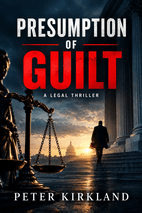
This page gathers lines from Presumption of Guilt, a legal thriller that mixes courtroom tension with family loyalty and private doubt. You will find sharp dialogue from hearings and jail visits, plainspoken narration that sets a scene, and inner monologue where the narrator tries to make sense of grief, evidence, and responsibility.
The novel is quotable because it keeps things human. People argue, remember, joke darkly, and admit they do not have all the answers. The best lines land without fuss, whether they are about justice, motherhood, loyalty, or the strange calm that can come when life keeps being unfair.
Top Quotes from Presumption of Guilt
“I did not do this. Listen to me. I did not have anything to do with what happened to Shannon. My daughter is eight years old! She needs me around! Nothing Darius does to me matters more than that.”
— Destiny
In the jail meeting, Destiny insists she is innocent and that her daughter needs her.
Her raw denial and maternal desperation make the murder charge feel immediate and devastating.
“Oh, I'll have a great lunch. I'll tell this accomplished Florida trial lawyer that my daughter, who teaches kung fu, is representing a friend of hers in a murder trial. When he asks why, I won't have an answer, because there isn’t one.”
— Dad
Lily calls her dad for advice about representing Destiny in a murder trial.
It captures his sarcastic disappointment and the absurdity of Lily's situation. It shows how her choice looks from the outside.
“I mean, I got my ideas. You can't help that. But I don’t close the net before it's ready. I let it close itself.”
— Darius
Darius explains how he approaches the investigation while continuing his treadmill workout.
It captures a disciplined, patient investigative philosophy and is a memorable line about not forcing conclusions.
“I hated the way that death had smoothed all Sophia's rough edges away, like an internet filter turning a real human face into a beautiful cartoon.”
— Lily
Lily visits her sister Sophia’s grave and reflects on the Shakespeare epitaph and marble angel.
It is a haunting image of how grief and memory can sanitize a real person, making the loss feel both universal and personal.
“Do you think you're in a fucking movie? Or some TV lawyer show where the whole case is over in forty minutes and none of the main characters die?”
— Dad
During the drive to the steakhouse, Dad reacts to Lily’s hope that exposing the prison drug ring will quickly unravel the murder case.
It punctures the tidy logic of legal dramas and insists on the real-world danger Lily is underestimating.
“I guess in prison it's not a real high bar. You pretty much get used to not existing. It’s gold if someone even treats you like a human being.”
— Angie
Angie describes what Shannon’s kindness meant to women inside SCI Moreland.
It distills the dehumanization of prison into a single, devastating standard of mercy.
“She wasn't a prison guard. That had only ever been her day job. She was a mother and a protector of mothers.”
After Destiny explains she secretly sends Angie photos of her daughter, Lily reconsiders who Destiny really is.
It reframes Destiny from a prison guard into a quiet protector, revealing the moral center of her character.
Themes Behind the Quotes
The quotes keep circling the gap between what the law can prove and what people believe in their gut. Innocence and guilt are not abstract ideas here. They show up in bail hearings, jail visits, family sacrifices, and the fear of losing a parent or child. The system feels less like a machine for truth and more like a set of pressures that fall hardest on people without money or power.
Another thread is identity and loyalty. Characters ask what someone is beyond a job title or a criminal charge, and they struggle with the cost of protecting the people they love. Grief and memory also run through the book, along with the quiet hope that dignity can survive inside institutions built to strip it away. The result is a story more interested in human consequences than easy answers.
Quotes by Chapter
Chapters 1-2
“So he hadn't been part of Sophia's life. He was part of mine.”
— Ms. Greco
At the bail hearing, Ms. Greco suddenly recognizes the defendant as a man she once faced in a protection-from-abuse case.
The reversal is chilling: the man she assumed was connected to Sophia was actually connected to her. It reframes the entire case around her own past.
“Every story I'd told myself about her death vanished, but nothing rational came to replace them.”
— Ms. Greco
After recognizing Davis, she realizes her prior explanations for Sophia's death have collapsed.
It captures the vertigo of grief when a new fact destroys every comforting narrative at once. The absence of a replacement explanation is as haunting as the realization itself.
“And if I was the connection between Sophia and the dead-eyed man on the courtroom screen, then the prosecutor, Novak, was wrong. This hadn't been involuntary manslaughter. It was murder.”
— Ms. Greco
She pieces together that Davis's grudge against her may explain why her sister was shot.
It is the chapter's sharpest turn, moving from confusion to accusation in three blunt sentences. The final words land with the force of a verdict.
“I did not know how I was going to explain to my mom that today, one day after they arrested him, the man who killed my little sister got back out on the street.”
— Ms. Greco
After the judge sets bail, she anticipates telling her mother that Davis will be released.
It makes the legal outcome devastatingly personal. The sentence carries the unbearable gap between an arrest and anything resembling justice.
Chapters 3-5
“I didn't have an answer. We were looking at the third rail of the American justice system, and I didn’t want to touch it. But she needed help, so I told her what I knew.”
— Lily
After Destiny asks who could afford a defense lawyer, Lily confronts the brutal cost of justice.
It names the systemic inequality at the heart of the story while showing Lily's reluctant moral commitment.
“The room had nothing in it but a table, two chairs, a fluorescent ceiling light, and a clock on the wall. I checked my watch. The clock was wrong.”
— Lily
Lily waits in a private meeting room at the county jail before Destiny is brought in.
The sterile details and wrong clock create a quiet sense of institutional unease and time out of joint.
“If that's the situation, then your job is to give the judge a nice speech that the press can cover—this is already on the news, so there'll be a reporter or two in the courtroom—and then hand your friend some Kleenex and hug her goodbye.”
— Bobby
Bobby explains what Lily can do if Destiny is charged with first-degree murder.
It is a devastatingly practical view of how little a bail hearing may accomplish, reducing Lily's role to comfort.
Chapters 6-7
“Hen the sheriff's deputy brought Destiny into the courtroom, she walked down the aisle with her head held high. Despite her orange jumpsuit and the fact her hands were cuffed in front of her, she only lost her dignified manner for a second, when she spotted her husband in the audience and did a double take.”
Destiny Harris enters the courtroom for her bail hearing.
It captures her dignity under accusation and the intimate disruption of seeing her husband, setting up the love-triangle charge.
“And the motive here is as old as the hills. It's jealousy. A love triangle. Because Ms. O'Neill made a youthful mistake: She became involved with a married man. She was seeing Darius Williams, the husband of Ms. Harris there. And she paid for that youthful mistake with her life.”
— Novak
Novak summarizes the Commonwealth's murder motive during Destiny's bail hearing.
It reduces a homicide to an ancient jealousy story while publicly exposing Destiny's marriage, making the accusation feel both intimate and damning.
“Candidly, Your Honor, she would lose her child if that happened, and her home would be foreclosed upon. And I don’t think, constitutionally, we can do that based on hearsay alone.”
— Lily Greco
Lily argues against denying bail based only on hearsay about the key card records.
It ties a legal standard to the real-life consequences of incarceration—losing a child and a home—making the bail argument visceral.
“That amount, I knew, was just about the max that she could afford. I was quietly ecstatic. Getting bail on these charges was pretty close to a miracle. At least for now, Jasmine wouldn't lose her mom.”
— Lily Greco
After the judge sets bail at $200,000, Lily reflects on what it means for Destiny and her daughter.
It undercuts the legal victory with the precariousness of Destiny's freedom and centers the human stake—her daughter.
Chapters 8-10
“I hadn't told him why I'd decided to represent Destiny. I was too ashamed of having made her burn through all her resources getting out on bail, leaving nothing to pay for her defense. My dad had never been someone I could share my mistakes with.”
— Lily
Lily reflects after her father criticizes her decision to represent Destiny.
It reveals the guilt and shame driving her. It also shows the fragile father-daughter dynamic.
“It was a concrete fortress in the shape of an X, surrounded by a high, razor wire-topped fence. Gun towers stood at each corner, and two parking lots flanked the building, one of them with its own high fence.”
Lily arrives at the state prison to investigate the crime scene.
It vividly conveys the intimidating, institutional power of the prison. The imagery makes the setting feel like a character.
“Maybe it was nothing, but I didn’t remember seeing anybody's feet inside.”
— Lily
After visiting the prison locker room, Lily recalls a small detail about the occupied shower.
It is a chilling, understated clue that suggests something was off at the scene. It leaves readers with a sense of dread.
Chapters 11-13
“I only got two reasons. Number one, that woman mattered to me. Number two, my baby girl needs her mother. That's it.”
— Darius
While working out in his apartment gym, Darius tells Lily and Jack why he wants to know who killed Shannon.
It cuts through speculation to his raw personal stakes: love for Shannon and his daughter’s need for her mother.
“The grass on her grave was a tangled mix of dead, dull yellow and new spring green, with a few bald patches of dirt. It was a mess. I liked that better than the beautiful angel. I thought Sophia probably would too.”
— Lily
At Sophia’s grave, Lily contrasts the messy grass with the expensive monument above it.
It finds honesty and comfort in imperfection, suggesting Sophia would prefer being remembered as she really was.
Chapters 14-16
“Maybe Shannon thought it was more important to protect Angie, though. You know what they do to snitches in there, especially if they're snitching on guards.”
— Destiny
Destiny reads Angie’s letter at her kitchen table and speculates why Angie might have stayed silent about drug smuggling at Moreland.
It captures the lethal prison code around snitching and shows Destiny thinking like someone who understands the stakes.
Chapters 17-19
“It was a fact of life: Tornadoes exist. Death comes to all of us. People lie. All those things still upset me. I wondered what it was like to reach an age where the energy you used to waste on being upset about those things was available for something more useful. I kind of envied him his calm.”
After Jack says "People lie" while they consider whether the narrator's prison source could be lying about Nyesha, the narrator reflects on that hard truth.
It compresses cynical wisdom with lingering hurt, capturing the exhaustion of learning that deception is ordinary. Readers feel the narrator's envy of Jack's hard-won calm.
“Which is why I've found it's best to hold your opinions about a case real lightly, until you can't anymore.”
— Jack
Jack gives the narrator advice while they review Nyesha Walker's dossier and consider multiple possibilities.
It is a concise, memorable rule for investigation and life, warning against premature certainty. The line carries the authority of experience without sounding preachy.
“I'd learned in seventh grade, after losing my first martial arts competition, to disconnect my facial expressions from my feelings and thoughts. You had to, or else your opponent could anticipate your next move.”
After Novak hands over Nyesha's statement, the narrator hides her reaction and refuses to give him satisfaction.
It reveals the narrator's strategic discipline and the way past losses shaped her courtroom composure. The martial arts metaphor makes her emotional control vivid and earned.
“I picked her stool up and set it back where it belonged. She’d need water, I figured, when she was done throwing up.”
After Destiny runs from the kitchen to vomit upon hearing Nyesha can testify, the narrator quietly tends to the room.
The small, humane gesture contrasts with the grim revelation and shows the narrator's practical compassion. It is a quiet, memorable image of care amid crisis.
Chapters 20-22
“My cat's name was crossed off at the top.”
— Sarah Williams
Sarah describes the threatening list Drew left after he poisoned her cat.
The crossed-off cat name makes the threat intimate and cruel, showing Drew's capacity for premeditated violence. It turns a domestic detail into a chilling warning.
“And it had your name—your last name—twice.”
— Sarah Williams
Sarah reveals that the list also included Lily's name twice.
The line makes the danger personal and suggests Drew kept a numbered plan for the people he targeted. It raises the stakes for Lily herself.