Pardon My Book Quotes
by Big Cat
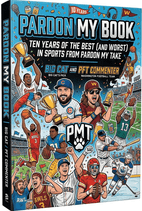
These lines come from a book that is part memoir, part inside look at how Pardon My Take came together. You will find funny stories, honest doubts, and a lot of buddy energy. There are observations about sports, friendship, internet culture, and the strange road to building something people actually want to listen to.
Big Cat and PFT are not trying to sound profound. They just tell it like it happened, with jokes and tangents and a fair amount of chaos. That is what makes the book quotable. The best lines feel like a conversation you would want to pull out and send to a friend, because they capture the spirit of two guys who never stopped having fun.
Top Quotes from Pardon My Book
“We met online, just two dudes sliding into each other's DM’s way back in 2013 when the internet was still fun and stupid and far less cynical.”
The narrator describes how he and his future podcast partner first connected on Twitter.
It captures the nostalgic, pre-cynical internet era and reframes sliding into DMs as something charming. It resonates with anyone who misses when social media felt more playful.
“How the fuck is it actually real that Big Cat and PFT were born within a day of each other? And the answer is, we don’t know, our parents I guess were horny at the exact same time, and it's weird to think about too much.”
They marvel at being born just one day apart.
It is irreverent and hilarious, embodying their signature blunt humor.
“Big Cat was born January 30th, 1985 at 2:11 am., and PFT was born on January 31st, 1985 at 8:15 am. There has been one single day Big Cat has been on this earth without PFT.”
They describe the exact birth dates that made their partnership seem inevitable.
The 'one single day' detail is poetic and makes their lifelong bond feel fated.
“Really stupid guys having fun riffing on sports—or, as a listener once said, Idiot Jazz.”
The narrator explains the meaning behind the show's name and its approach.
This line perfectly captures the show's self-aware, irreverent identity in a single catchy phrase.
“A podcast where nothing is ever taken seriously and sports are meant to be fun couldn’t have asked for a better launching point than a guy’s full cock and balls flashing in front of the NFL world.”
The narrator reflects on the Chris Jones Combine story that inspired the first mini episode.
It is audaciously on-brand, showing how the show turned absurdity into a signature launching pad.
“We can confidently assume there are a couple people floating out there who listened to the very first episode of Pardon My Take, immediately unsubscribed, and never came back. And to those people we would say, we don’t blame you. It sucked.”
After describing how rough the first episode was, the authors address the listeners who gave up on it.
It is brutally honest and self-deprecating, owning the failure without making excuses.
“Turns out, the wheel works and that trying to reinvent it is very stupid.”
They are explaining why their attempt at '4 good minutes' interviews failed.
It is a funny, quotable reminder that some formats exist for a reason.
Themes Behind the Quotes
One big theme is friendship as a creative force. The book keeps coming back to two people who found each other online and then decided to trust that connection. That trust matters more than any plan. They built something by believing in each other, even when it would have been easier to walk away.
Another theme is refusing to fit in. The story is full of moments where the media world did not take them seriously, so they leaned into their own weird version of sports talk. They made fun of themselves, celebrated the dumbest parts of fandom, and chose independence over approval. The quotes also show that loyalty, patience, and a willingness to embrace chaos can turn a wild idea into a real thing.
Quotes by Chapter
When Two Twitter Accounts Meet: An Internet Love Story
“We didn’t know it at the time because we were just two dudes admiring each other across the concert venue that was the internet.”
The narrator reflects on the Twitter exchange before their podcast existed.
The concert-venue metaphor makes an online friendship feel romantic and fated. It’s a memorable image for how a digital connection can still be genuine.
“Neither of us was doing it on purpose, it was pure parallel thought.”
The narrator explains why fans accused the two of stealing each other's jokes.
It captures the uncanny creative chemistry between the two friends. The phrase 'pure parallel thought' is a memorable way to describe finding your creative twin.
“Why doesn’t anyone accuse Cal Ripken of doing steroids?”
The narrator remembers the first riff he and his partner ever did together.
It’s a perfect example of their absurdist sports humor. The random, confident accusation is quotably ridiculous and shows how their minds aligned.
30 Hours in 1985
“Is this a bit too? A show where being purposefully idiotic for effect blends with how stupid we can actually be in real life resulting in jokes, facts, and stories being put into a magic bullet blender producing an idiot smoothie we drink every day.”
The authors describe the chaotic, self-aware tone of their podcast.
The 'idiot smoothie' metaphor is vivid and perfectly captures their blend of intentional and accidental stupidity.
“Two guys that should be rivals but ended up being friends.”
The authors note their unlikely friendship despite being on opposite sides of a sports media war.
It distills the book's central theme: friendship can cross professional and cultural divides.
Blogs With Balls
“At that moment, Big Cat turned to Hank and said, “We've got him. He can’t trash us with his SB Nation friends—he's down to party with us and do a little coke. He's cool.””
After PFT accepts an invitation to do a bump at a party, Big Cat declares him trustworthy.
It is a darkly comic turning point that bonds the characters through shared mischief. The line exposes the informal loyalty tests behind their later partnership.
“Sometimes you need to do a little coke with your boys to make sure they aren't going to be a spy for a rival blog.”
The authors add a tongue-in-cheek disclaimer after telling the party story.
The absurd logic is memorable and encapsulates the fratty, irreverent tone that defines Barstool-era writing. It also shows the book's self-aware humor.
“Little did we know at the time that Blogs with Balls would essentially be the catalyst for PFT joining Barstool and Pardon My Take starting.”
The narrator reflects on the conference in retrospect.
It gives the chapter its stakes and dramatic irony, hinting at the origin of Pardon My Take. The line makes a single event feel like destiny.
“It's Sam Bowie over Michael Jordan, Darko over Melo—just a crazy decision in retrospect, given PFT’s talent and following.”
Describing SB Nation's decision not to give PFT a full-time job.
It uses a sports-history analogy to underline how obviously wrong the call was. The comparison gives readers a visceral sense of overlooked talent.
The Chernin Deal
“We may not have known it at that exact second, but it was clear deep in the subconscious: if we wanted to be successful, it was going to be on our own terms, not through acceptance by the rest of the media.”
Big Cat reflects after a hostile conference panel where both he and PFT were dismissed by traditional media.
It captures the defiant, self-reliant mindset that defined Pardon My Take's identity.
“PFT would never be accepted as a true talent at a blog trying to do real journalism and align more with traditional media. Big Cat would never be accepted in the “in club” because Barstool was always going to be judged.”
Big Cat describes how he and PFT arrived at the same outsider status from different paths.
It resonates with anyone who has felt rejected by an establishment and found solidarity in shared exclusion.
“Pardon My Take was just a seed of an idea, not even close to fully hashed out, but this experience was what got the ball rolling in that direction.”
Big Cat connects the humiliation of the conference panel to the birth of Pardon My Take.
It shows how a painful moment became the catalyst for something transformative.
“So thank you, Blogs with Balls. Thank you, SB Nation. You unintentionally did more for the creation of Pardon My Take than you'll ever realize.”
Big Cat closes his reflection by sarcastically thanking the organizations that rejected them.
The ironic gratitude is memorable and turns rejection into fuel for success.
Three Guys Coming Together
“My Name is Henry Lockwood and I am going to be a game changer for your mayoral campaign because I can give you all the film and editing services you need for your mayoral campaign for prices I GARUNTEE you will not find anywhere else. FREE.”
From Hank's resume submitted to Dave's failed mayoral campaign.
“I think I'm done after this. I think I'm just going to live a normal life, maybe go back to school or something.”
Hank, burned out on the road, tells Big Cat he is thinking about leaving Barstool.
It's a raw, vulnerable moment that makes a larger-than-life origin story feel human. Many readers know the feeling of wanting to give up right before a breakthrough.
“He was burnt-out, and I got it. I'd been in the same headspace before Dave told us about the Chernin Deal.”
Big Cat explains why he understood Hank's exhaustion.
It shows the shared low point that bonded them before Pardon My Take. Empathy like that makes the eventual partnership feel inevitable.
“Maybe Big Cat knew something I didn’t because he said, “Just trust me. Stick this out.””
Hank recalls Big Cat's advice after he confided that he wanted to quit.
This is the hinge moment of the origin story—an act of trust that changed everything. "Just trust me. Stick this out." is simple, magnetic, and exactly the push Hank needed.
Bird’s Nest
“To Hank's credit, he didn’t hesitate. He just said, “All right. I trust you.””
Big Cat recalls how Hank agreed to stay after a conversation during the NLCS.
It distills the entire partnership into a simple, immediate expression of trust.
“Hank was teetering on the decision to walk away, but a simple conversation with Big Cat on a shitty RV during the NLCS got him to buy back in.”
Big Cat describes the moment that kept Hank from leaving.
The image of a pivotal decision happening on a beat-up RV makes the origin story feel relatable and real.
“It was like Steve Jobs in his garage with Steve Wozniak when they decided to start Microsoft. Minus billions and billions of dollars and the whole “revolutionizing how the world works” part.”
Big Cat compares the founding team to a famous tech origin story.
The joke lands because it inflates the moment then immediately punctures it with the truth.
“Hank trusted Big Cat, Big Cat trusted Hank, and that was all that was needed to get the first two pieces locked in.”
Big Cat sums up how the core partnership formed.
It is a clean, memorable line about how mutual trust can be enough to start something.
So, How Do We Make a Podcast?
“After a couple years of flirting, various dates and cocaine parties, the marriage that would define both of their careers would officially be consummated.”
The narrator describes PFT finally agreeing to join Big Cat at Barstool.
It frames a business decision as a wild, committed relationship, blending humor with the high stakes of their careers.
“It was the type of dinner where, if you were sitting at the table next to us, you’d think we were talking about Josh Allen winning MVP or a party in Scottsdale with the Gronkowskis (brothers).”
The narrator describes the creative brainstorming dinner in Austin before the first real taping.
It gives readers a vivid glimpse of the freewheeling, playful energy that fueled the show's creation.