Pardon My Book Key Takeaways
by Big Cat
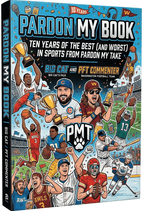
5 Main Takeaways from Pardon My Book
Trust and friendship beat strategy in creative partnerships
PFT and Big Cat's show was born from making each other laugh, not from a business plan. Their partnership survived near-departures, contract anxiety, and a public-company sale because neither thought he mattered more than the other. Loyalty was the product before the podcast was.
Independence and non-interference are worth more than big checks
The Chernin deal and Penn acquisition worked because non-interference was a hard condition, not a courtesy. ESPN and FS1 offered distribution but wanted the Barstool brand erased, so those offers were refused. Create your own platform rather than borrow someone else's on their terms.
Turn every mistake, weakness, and attack into content
An accidental logo theft became marketing, the shabby van lowered guests' guard, the dip-spit bottle became a running fight, and injuries were posted in an official report. The show's amateurish beginnings and improvised detours were not problems; they were the show.
Relentless daily output creates loyalty that no platform can buy
During the pandemic, the show kept posting and manufactured competitions out of trivia and retro games, making stranded listeners feel seen. The audience treated the show as an audio backdrop to engagements, moves, and newborn feeds. Consistency made the bond feel like friendship, not expertise.
Adapt to any medium while keeping the same inside-joke soul
The show's central act can migrate from podcast to text thread, stream, or future medium because sports always produce material. It beat mainstream outlets by pairing constant work with readiness to change, and its imagined endings are mutations, not switch-offs. The content habit outlasts the business.
Executive Analysis
Together these takeaways show that Pardon My Take's success was not a stroke of luck but a method: build on real friendship and trust, choose independence over gatekeeper approval, keep producing at relentless volume, and turn every limitation, mistake, injury, or hostile moment into content. From the failed test that made PFT drop his character to the accidental logo infringement and the shabby van, the show treated constraints as raw material. The partnership survived because neither host believed he mattered more than the other, and the business survived because non-interference was a hard condition and the audience was treated as family.
This book matters because it reframes a modern media success story as a transferable playbook for creators: don't wait for permission, own your format, adapt to platforms, and let the people you work with become the story. It sits at the intersection of memoir, business narrative, and podcasting history, closer to a behind-the-scenes oral history than a traditional self-help book. For anyone building an independent career in media, it offers proof that chemistry, trust, and discipline can outperform legacy institutions.
Chapter-by-Chapter Key Takeaways
When Two Twitter Accounts Meet: An Internet Love Story (Chapter 1)
The joke-stealing accusations were a misreading of two comedians who independently converged on the same absurd angles, not evidence of copying.
Their entire operation began as an unplanned experiment in making each other laugh, with the podcast arriving only as a byproduct of that impulse.
The Cal Ripken exchange crystallized their shared comedic principle: no sports figure, however iconic, should escape the kind of scrutiny applied to lesser stars.
PFT's anonymity did more than protect his identity; it forced their first meeting to be a genuine test of whether the on-screen chemistry could survive face-to-face.
Try this: Build creative partnerships by testing chemistry in unplanned low-stakes settings; shared absurd humor can create more than any formal plan.
30 Hours in 1985 (Chapter 2)
The move from DMs to text messages, paired with a joking podcast about Cal Ripken and steroids, was the real seed of what became a professional partnership.
Their Super Bowl 49 meeting brought together two tiny operations: SB Nation’s part-time anonymous credential and Barstool’s four-man debut out of a cheap Scottsdale Airbnb.
The podcast’s origin is a biological fluke: Big Cat entered the world thirty hours before PFT, a gap that now reads as destiny but was pure coincidence.
Dave’s instant trust in Big Cat and the absurd shared moment of smell-testing a bag of cocaine established the tone of the crew that would later define their careers.
Try this: Turn coincidental timing and small beginnings into origin stories; trust the people who trust you and embrace absurd moments that define team culture.
Blogs With Balls (Chapter 3)
Blogs with Balls functioned less as a media conference than as a ritual of legitimacy, conferring importance on bloggers while the traditional outlets still called the shots.
The shared cocaine moment at the party was more than a birthday anecdote; it turned a potential critic into a participant and made future attacks unthinkable.
Both PFT and Big Cat arrived in Chicago expecting the conference to validate their career paths, and both left having to confront that the old media world was not ready to take them seriously.
SB Nation's refusal to offer PFT a full-time role at that dinner now looks like the kind of personnel blunder franchises spend years regretting.
Try this: Seek legitimacy from peers rather than old-media gatekeepers; use rejection as proof that independent validation matters more.
The Chernin Deal (Chapter 4)
The exclusion PFT and Big Cat faced from established media was not a dead end but the condition that forced them to build an independent format.
Barstool's sale to Peter Chernin's firm succeeded only because the agreement made non-interference a hard condition, not a courtesy.
The New York move and new investment did more than supply capital; they turned a blogging operation into a daily production house for video and audio content.
KFC Radio's early bet on podcasting supplied the proof that shifted the expanded company's priorities toward audio as a core revenue stream.
Try this: Make non-interference a hard condition in any deal; use new investment to build daily production capacity and scale what early experiments prove.
Three Guys Coming Together (Chapter 5)
The Barstool lineup that emerged in 2016 was less a natural meeting of minds than a deliberate arrangement, with the Chernin investment as the enabling condition.
Big Cat’s plan for Hank did not depend on Hank knowing the plan; it depended on convincing him to stay for a future only Big Cat could see.
The hire of a producer who once submitted a boastful, misspelled resume to Dave’s failed campaign shows that Barstool’s path to its core personnel ran through audacity as much as competence.
PFT’s recruitment and Hank’s retention were two halves of one move, meaning the podcast that defined that era could not have existed without solving both pieces at once.
Try this: Recruit people by seeing their future role before they do; combine persuasion with audacity and solve both halves of a team puzzle at once.
Bird’s Nest (Chapter 6)
A project that almost ended before it started was saved by one direct profession of trust inside an old RV, and that mutual commitment became the actual foundation for the first two pieces.
Big Cat’s invocation of Jobs and Wozniak was less about the project’s potential scale and more about giving the partnership a founding myth, one where loyalty between two people precedes any product or plan.
PFT was recruited not through a formal pitch but because he happened to pass through Chicago in November 2015, meaning the final piece came down to timing and proximity rather than persuasion alone.
Try this: Save a stalled project with one direct personal commitment; give the partnership a founding myth of loyalty before product or plan exists.
So, How Do We Make a Podcast? (Chapter 7)
The show's defining tone came from a failed test that forced PFT to drop his character and simply be himself.
The name and logo were products of chance, not strategy, with the logo's accidental infringement fitting the show's improvisational DNA.
Recording the first episode at PFT's house with the dog present made the show's casual intimacy a feature from day one.
Deliberately timing the first tape to coincide with a major sports story gave the new show an immediate reason for listeners to tune in.
Big Cat's personal courtship of PFT over wings, then PFT's hesitation after corporate money arrived, shows the show's birth depended on trust surviving institutional pressure.
Try this: Test your format by letting authenticity replace persona; record in comfortable settings, time launches around big stories, and keep trust intact under pressure.
Rules for a Podcast (Chapter 8)
Time your taping and release around when your audience actually listens, even if that means recording late into the night instead of your preferred morning schedule.
Fill a moment no other show owns, such as recapping the previous evening’s games before breakfast, rather than copying a segment that already exists elsewhere.
Treat your scripted segment list as disposable and let the host’s improvised riffing define the show once it starts landing.
When a launch stalls, the way out is to judge your own format from the listener’s side and discard what is failing before pride cements it.
Try this: Schedule content when your audience actually listens; own a moment no one else fills and drop scripted segments once they fail.
The 4 Keys to Making a Successful Podcast (Chapter 9)
The circumstances that looked like amateur mistakes at launch, from an off-season start to a shaky connection, did more for the show than the original plan, forcing a flexibility that made it a year-round property.
A cease and desist over the lifted logo became the show's best marketing moment, because the hosts' mocking response converted a legal threat into viral mainstream coverage.
The recurring-guest model that came out of the Morrison interview rests on a clear bargain: make fun of the guest, but direct twice as much mockery at yourself.
Joe Buck's open, unguarded appearance worked because the hosts treated him as a person rather than a target, and in return the show gained both legitimacy and a lasting friendship.
The hosts' daily worry about aging was the show's real center: joking with friends about growing older made an unhappy fact tolerable, and that was the purpose the whole operation served.
Try this: Turn amateur mistakes and legal threats into marketing by mocking them; build recurring-guest bits on self-mockery and honest aging.
What if We Took the Podcast on the Road (Also a Gorilla Got Shot) (Chapter 10)
The advantage Barstool had was the absence of permission, and that is exactly why the formula worked; any approval process would have killed Grit Week before it started.
The unplanned and nearly failed stops produced the best material, so the lesson of the trip is that closing the gap between booked and improvised is the whole game.
When Pittsburgh radio made room instead of treating the podcast as competition, both sides won, and that single welcoming gesture is why the collaboration runs a decade later.
Co-opting Harambe revealed the show's actual edge over the networks: not budget or polish, but the speed to turn a news cycle into a running joke while it was still trending.
Grit turned out to be a method, not a test: cheap clothes, friends with microphones, and a willingness to be ridiculous in public, a definition that has not needed revision since.
Try this: Act before asking permission; leave room for unplanned stops because they create the best material, and co-opt trending news as it breaks.
The New York Move, and the Time We Bought a Gambling Goldfish (Chapter 11)
The New York move confirmed that the show's identity depended on being in one room, with the scheduled podcasts as the core and the improvised stunts and side content as the differentiation.
Larry II was less a gambling experiment than a content engine: every video made with the fish generated a new spin-off, from Chaw Dogs to the Stu Feiner episode to Barstool Sports Advisors.
The decision to sell ownership certificates turned a joke into a binding promise, and the only resolution that preserved the joke was to honor the certificates as real debts.
The goldfish's season ended as a near-miss, and the Week 15 collapse proved that once the potential winnings become real to you, the luck tends to dry up.
Try this: Use one content engine to generate multiple spin-offs; treat jokes as binding promises and honor them, but know luck dries up once money becomes real.
Barstool Van Talk: A Shit-Show (Chapter 12)
The ESPN offer was a raid dressed as a partnership, and the name fight was the moment the real stakes became visible: the network wanted the hosts, not the Barstool brand, and only Dave Portnoy's insistence on the title exposed it.
No ratings success could outweigh the brand problem; the show was ESPN2's number two program in the key demographic, nearly beating First Take, yet internal opposition made the Barstool association a fatal liability.
The cancellation was liberating, not damaging: the hosts already had the top sports podcast in the country, and the experience proved television was a ladder they didn't need, which is why FS1's later offers were refused.
The standard for assigning blame in a TV cancellation is simple: one episode and it's the network's failure; six episodes and it's the talent's. That test gave the hosts permission to keep going.
Try this: Resist partnerships that want your talent but not your brand; let cancellation confirm you do not need a platform and judge failure by who controlled it.
The Interview Hall of Fame (Chapter 13)
An interview is a gamble that settles only after it airs: the taping that becomes a beloved appearance can look, in the room, exactly like the one that scars the show.
Some guests can only work in person, with the whole room as part of the act. Bill Walton's extra forty-five minutes and his useless two-foot clock were the interview itself, and the contact high could not survive a Zoom screen.
Preparation and ignorance both fit the show: Jerry O'Connell won the hosts over by doing homework harder than any fan, while Brooks Koepka won a US Open having done none, so the real variable is temperament, not research.
The interviewer's fear is part of the product. Waiting out Jim Harbaugh as he clotted on a bloody tissue loosened the entire conversation, and the lasting payoff of a supposedly one-shot get is an ongoing relationship like the yearly welcome-back text.
Own the result while you can. A guest's later triumph becomes the show's bump, and the eight-million-listen glory of the Harbaugh episode was halved once Big Cat and PFT discovered their counting was buggy.
Try this: Treat every interview as a gamble; adapt to temperament, let fear be part of the room, and own the result before it airs.
JJ Watt (Chapter 14)
The online pile-on against Watt was aimed less at who he was than at the Captain America persona he had adopted, and the criticism stung because part of it was deserved.
Reading the hostile comments through his grandmother’s eyes reframed the ordeal from entertainment to a real moral injury, forcing a choice between performance and authenticity.
Showing up hungover and in person disarmed the feud in a way no online apology could, because physical presence makes the target into a person rather than a symbol.
The charity raised by AWLs demonstrated that the collective energy of a mob can be converted into goodwill when the human connection is made first.
Try this: Separate a public persona from the actual person; disarm feuds by showing up in person and convert mob energy into goodwill.
Blake Bortles (Chapter 15)
The Pardon My Take interview works because it trades the polished obligations of team media for spontaneity, and Bortles' comfort shows that freedom is what makes the segment memorable.
Wikipedia Club’s comedy depends on everyone coming in cold; Bortles’ single failed attempt to prepare only proves that reading ahead destroys the bit.
Blake of the Year is less a contest of who answers best and more a game of who can answer first, which is why Griffin’s constant availability outweighs Koepka’s skill.
The later reckoning between Bortles and the hosts reveals that the podcast’s irreverence never erased the underlying respect, and that both sides were willing to own their roles afterward.
Try this: Keep interviews spontaneous and guests unprepared; build rituals where speed beats polish and let respect surface after the jokes.
Blake Griffin (Chapter 16)
Accepting that the private group chat is ruder than any recorded segment is the price a famous guest pays for staying genuine with Barstool.
The Blake of the Year award works as comedy because the ritual prevents Brooks from ever winning; the joke is the permanent loss.
Staying present, not preparation, is the shared skill behind Griffin's stand-up and basketball, and the nerves before every game are part of that focus.
The most hostile audience a player faces is not online but the fans behind the bench, who sit close enough to disrupt the game; true friendships, meanwhile, form in repeated festival appearances rather than on camera.
Try this: Let private group chat be ruder than on-air bits; make comedy from permanent inside jokes and measure guests by presence, not preparation.
Ryen Russillo (Chapter 17)
Leadership earned through one-on-one bonds, not team speeches, is what lets a newcomer earn trust and keeps teammates connected after retirement.
Declining an opportunity because you consider it beneath you can curdle into a full-time grievance when someone else seizes it and succeeds.
A media brand can thrive by using cheap technology to fill a void that traditional outlets won't touch, and its interviews gain power once the audience knows anything can be asked.
When your peers blow past you, the only productive response is to convert jealousy into motivation, and to make peace with a solid third-place spot at fifty.
Even the most dominant operation has vulnerabilities; for Pardon My Take that means being overrun by the next invading wave, and a collective look that seems designed to repel viewers.
Try this: Earn leadership through one-on-one bonds; avoid letting missed chances curdle into grievance and turn jealousy into motivation.
Chris Long (Chapter 18)
The show's early, video-less chaos was a strength, because it made listeners feel like they had stumbled into a private conversation rather than a polished production.
Reducing star athletes to just another voice in the group chat is what made the comedy work and the guests feel genuinely accessible.
Being a fan matters more than being an insider; the shared reaction with the audience is the real product, not "NFL guy" expertise.
For podcasters, the sustainable play is to lead with passion and to ignore critics who have no personal stake in you.
The show's shitshow humor helped normalize a new irreverence, leaving a lasting imprint on how young men talk about sports and friendship.
Try this: Embrace early mess because it makes listeners feel included; lead with shared fandom and ignore critics with no personal stake.
Kyle Long (Chapter 19)
A single trusted referral, like Jay Cutler vouching for Big Cat, can give a new relationship a head start that organic interaction never would.
PFT's technique of breaking people down before building them up turns a potential confrontation into a bond, which is how a leg lock threat became the start of a friendship.
Big Cat's way of criticizing a losing team while keeping an optimistic outlook let the show stay credible to frustrated fans without turning toxic.
When Long's privacy was accidentally violated on a livestream, Big Cat's first instinct to invite him onto the show proved the friendship had grown beyond a media transaction.
Try this: Use trusted referrals to fast-track relationships; break tension by lowering then lifting people and keep criticism optimistic.
Ryan Whitney (Chapter 20)
Big Cat's direct invitation and his stepping in when the hotel turned the guest away show a network that ran on personal trust and informal recruitment rather than institutional process.
Whitney earned his seat by matching the show's unrelenting workload, not by outdoing its segments: years of late-night recording and constant availability mattered more than creative ideas.
The disappearance of the Twitter playground closes off the casual public banter that let a distant fan become a regular, making Whitney's path a artifact of a specific media era.
Whitney's NBA take never shifting, even after he moved from outsider to insider, indicates the show's culture rewards a stable persona over opinions that adapt to the room.
Try this: Recruit through personal trust and availability; reward consistent presence over creative pitches and keep a stable persona.
Scott Van Pelt (SVP) (Chapter 21)
Being missed, not being popular, is the true test of a show: daily radio presence buys an audience but never an ache of absence.
Take away the apparatus that keeps guests in check and they begin performing who they are; a dead Hartford studio turned into chaos on one Tiger Woods text, the same trick Stern built a career on.
Cancellation can say nothing about what a show was worth; Van Talk's end was a verdict on its surroundings, not its content.
The beach voicemail carries the whole method: overreaching for a joke costs nothing, and the real skill is getting teased and loved in the same breath.
Try this: Make yourself missed, not just popular; remove constraints to reveal real selves, and overreach for jokes so you can be teased and loved.
Mike Florio (Chapter 22)
Trust is built by being willing to be the object of the joke yourself, not by staying safe behind the persona.
A simple precondition, like learning a stranger's real name, can turn a wary interview into a lasting partnership without killing the absurdity.
The fantasy-football joke works because it inflates an honest distaste into a running gag with fabricated layers, and the audience knows the distaste is real.
Florio's inherited lesson is that the house always wins, so gambling money should be budgeted like a movie ticket and flagged as a problem the moment it stops being entertainment.
Dismissing a pattern-based prediction as fanfiction is a way to avoid facing it, not a reason to disregard it.
Try this: Build trust by being the object of the joke; learn real names to disarm interviews, keep honest distaste as a running gag, and treat gambling as entertainment.
Josh Allen (Chapter 23)
Clean humor, not edginess, is what turned a mockery account into the beginning of a friendship.
A prank stays comfortable only when trust already exists, which is why the sleepover stunt never felt hostile.
By playing along with the parody account, Allen traded the role of the mocked quarterback for a seat at the table.
The friendship is no longer a bit: Allen still reserves Barstool roles in his dream backfield, and the promised ten-percent cut has become part of the joke.
Try this: Start friendships with clean humor and parody; play along with the bit to move from mocked outsider to table seat.
Adam Schefter (Chapter 24)
Being mocked by a show you barely know can feel like a threat, but accepting the invitation turns ridicule into a running bit you can shape.
A career built on hard news can be overshadowed by a comedy show, proving that public identity is often set by whoever makes you most memorable.
Once Schefter started trading jokes with his tormentors, the hostility became a collaborative game, and the stranger who once worried about a setup became a recurring co-performer.
Try this: Accept invitations from those who mock you; turn ridicule into a collaborative running bit and let a stranger become a co-performer.
Jerry O’Connell (Chapter 25)
The show's appeal to a guest like O'Connell is that it treats sports as a comedy of the personal and absurd, not a ledger of wins and rings.
A guest can turn the show's running joke against itself: by treating fantasy drafting as a performance of quirks, O'Connell earned a lasting identity as the poem guy.
What looks like indulgence from the outside is actually a structural divide: Dan and Eric get Thursday through Monday every week, a full-time job that only the one percent could sustain.
For a guest who already has a career and a family, the show's chaos offers a return to the pre-fame freedom of just being yourself, the same feeling O'Connell traces back to Stand by Me.
The show's longevity rests on its audience treating hosts and guests like family, tolerant of lineup changes as long as the vibe stays intact.
Try this: Treat sports as comedy of the personal and absurd; let guests turn running jokes into identity and protect the vibe over lineup.
Jim Harbaugh (Chapter 26)
Football is not a profession for Harbaugh but an inherited condition of life, one he can only describe through the metaphor of a twin who has never existed without his twin.
In Harbaugh's world, the intensity of daily football transforms a roster into a family: teammates become brothers, coaches become second fathers, and players become sons who are loved.
His coaching method rests on three acts: live the standard yourself, give each player a fighting chance at his assignment, and reduce every situation to its simplest executable form.
The measure of Harbaugh's approach is visible in his coaching tree, as assistants who embodied his ideal of the low-maintenance energy giver now run programs of their own.
Barstool's blend of irreverent humor and genuine sports knowledge works for Harbaugh as a credibility bridge to young players and to his own seven children.
Try this: Lead by living the standard yourself; make teammates family, simplify situations, and grow your approach through people.
Chris Berman (Chapter 27)
Do the real work days before the visible moment, gathering notes and facts so the live performance feels unscripted because it is so thoroughly prepared.
Bring the same intensity to a forgettable setting that you would to the biggest stage, since grit shows up in how you treat the unglamorous games.
Build your style deliberately by absorbing and mixing the voices you most admire, and accept that your style is built from the voices you admire.
Give an unfamiliar platform a genuine chance on your own terms, and let shared nicknames and inside jokes turn suspicion into mutual respect.
Try this: Prepare so thoroughly that live moments feel unscripted; bring equal intensity to small settings and build style from admired voices.
Stu Feiner (Chapter 28)
The podcast archive grants every throwaway line a permanent life, so a stray May remark about the Bills and Chiefs became part of Feiner's public identity, and the misses that once faded from memory now remain attached to their authors indefinitely.
Being turned into a recurring spoof did not bury Feiner's act; it restarted it: the Barstool version of The Sports Advisors has lasted long enough to stand as a real professional chapter, not a joke appended to a failed career.
Feiner's standing inside Barstool came from his friendships with BigCat, PFT, and Hank; being one of the regulars made him a recurring character whose value to the show was personal rather than predictive.
Pardon My Take turned out to be the defining act of the gambling-entertainment genre, and the successors that borrow its structure have confirmed, rather than displaced, its primacy.
Try this: Remember every throwaway line now has permanent life; embrace the parody version of yourself and build value through friendships, not predictions.
Mark Titus (Chapter 29)
The failed ESPN stint revealed that traditional media wanted Barstool's success but would have forced the show to abandon its own identity to get it.
The Twitter era that spawned PFT's invented persona rewarded obscure satire and small but devoted followings; today's platform, built around seeking out ideological opponents, would have starved that character.
Titus's audience is not a demographic but his brother, a forty-year-old Midwestern dad, and measuring every joke against that single laugh keeps the work honest.
The show survived its growth because the hosts matured without trying to sound youthful, and each added contributor knew exactly which role to play; most shows crumble on that exact equation.
Try this: Refuse to abandon your identity for a bigger platform; aim every joke at one honest listener and add contributors with exact roles.
Timm Woods (Chapter 30)
A session where players ignore the rules and sabotage each other can be funnier than any by-the-book game.
The size of an audience says nothing about how its hosts will treat an outsider.
A player's choice of class can reveal personality, but only after the play begins.
The discomfort of being a newcomer comes from your own assumptions, not from the group's actual behavior.
Try this: Let players ignore rules and sabotage each other because chaos is funnier; judge groups by how they treat outsiders and let personalities emerge.
Mr. Portnoy (Chapter 31)
Being out of your element turns an ordinary activity into an adventure, but only if you let go of the need to belong to the in-group.
The emotional core of fandom, the rooting, the booing, the grieving, is identical whether the stage is a stadium or a gaming table.
The rise of tabletop gaming points toward a future where a dragon fight and a fourth-quarter drill command the same kind of cheering.
Early membership in a growing organization compensates for what you lack in influence or contacts, as long as someone upstairs recognizes your value.
Voicing the complaint everyone shares is a way to speak for the silent majority, even when it feels like a car ad.
Try this: Step outside your element without needing to belong; find the emotional core in any fandom and speak for the silent majority.
Coach O (Chapter 32)
When you need someone’s commitment, identify the person who truly shapes their decisions, then win that influencer over with the same energy you give the prospect.
Make self-awareness your central discipline: because no one else can change you, treat honest self-review as the necessary first step to any real improvement.
Build relationships with the people surrounding your work, not just the principals; a chance encounter with two podcast hosts grew into a lasting bond that carried through years.
Try this: Win over the influencer who shapes a decision; make honest self-review your discipline and build relationships with the people around your work.
A Pump-up Speech from Coach O (Chapter 33)
Settle on a single catchphrase that captures your whole presence, because one memorable phrase will always outlast a long explanation.
Let the phrase find you rather than forcing it: people instantly detect a slogan that was assembled for effect instead of grown from your own habits.
Treat the catchphrase as your calling card in a noisy environment, the one string of words that lets strangers place you before you even introduce yourself.
Test any candidate phrase against the way you actually talk, and keep only the one that rolls out of you without effort, the way Coach O’s “Geaux Tigers” did.
Try this: Let a catchphrase find you from your habits; use it as a calling card and keep only the phrase that rolls out effortlessly.
The Business End (Chapter 34)
A contract priced for one moment loses its fairness the moment the business around it grows, so staying current requires actively checking the market rather than assuming an employer will adjust.
Most outside offers are not true alternatives; a viable one must be something you would actually want to build or run, not merely a check from a rival hoping to damage your current home.
A fair deal remains fragile until it is signed, because an ownership change or a sudden crisis can erase the negotiating table and send everything back to square one.
Staying is the rational outcome when the work itself is what you love and leaving would turn you into the cautionary figure who destroys a dream job for a few more dollars.
The same underpaid-in-household standoff repeats across generations, so the original version becomes a template for recognizing the pattern when it reappears in someone else's story.
Try this: Check your market value actively; accept outside offers only if you would want to build that thing, and sign fair deals before ownership shifts.
Barstool Becomes the Sportsbook (Chapter 35)
A creative duo breaks up only when one member thinks he matters more than the other; PFT and Big Cat never did, so their partnership became sturdy enough to survive a near-departure.
Being told that staying for a disrespectful deal would hurt worse than leaving allowed PFT and Big Cat to face a possible split honestly, and the honesty itself deepened the friendship.
Penn’s acquisition worked because its buyer believed in Barstool and would not interfere, and because Dave used the sale to win Big Cat a signing bonus that compensated for years of underpaid sacrifice.
The public-company sale imposed an isolation none of the deal’s terms valued: Big Cat had to endure PFT’s contract anxiety while carrying secret knowledge that the sale would end it.
After the sale closed, the show faced no comparable obstacle, marking 2019 as the last point at which a single contract decision could have ended the whole enterprise.
Try this: Prevent creative splits by never believing one partner matters more; face hard choices honestly and compensate early sacrifice when the sale closes.
Remember Covid? That Fucking Sucked (Chapter 36)
The pandemic exposed that the show's bond with its audience came from uninterrupted daily output, not from the sports calendar, so the gratitude of stranded listeners became the franchise's real foundation.
With live sports gone, PMT manufactured competitions out of trivia, horse racing, and a retro video-game dynasty, proving that the show's dramatic stakes were entirely self-generated.
The 24-hour beer, hot dog, and treadmill marathon turned self-inflicted discomfort into a substitute for cancelled events, making endurance itself the content.
The pandemic's lasting product was the Chicago fun factory, because the half-empty New York office made clear that a constantly populated office was more valuable than a schedule of events.
Try this: Keep producing daily even when the calendar disappears; manufacture stakes from trivia and endurance and let audience gratitude become the foundation.
What If We Could Eat Ice Cream Every Day? (Chapter 37)
A show's identity can be physical: the fun factory office turns the podcast's playful energy into the actual space where work happens.
The cramped Lakeview office's toilet flushes show that a mismatched setting can audibly degrade the product, making the move less a luxury than a necessity.
The gambling cave is not a result of the show; it is a preexisting ritual that the show now accommodates, given it would occur at someone's house regardless.
The cave's origin in PFT's Austin townhouse reveals that the most important traditions begin informally before they get a dedicated room.
Try this: Give your show a physical home that matches its energy; move when the setting degrades the product and let informal rituals earn dedicated rooms.
The Past, Present, and Future (Chapter 38)
The show's stability depends on a rotating cast of interns and bit players who absorb the interpersonal friction that would otherwise split the hosts.
A crew member's survival on the show is determined by how effectively their personal quirks become recurring bits: Bubba's sneeze turns into a germaphobe grudge, Billy's keto obsession into a urine-test strip moment, and Jake's sports-business nerd into a foil for Billy.
Katz and PFT Commenter report that the FDA later approved the research chemical Billy had injected into PFT's arm, retroactively vindicating Billy's boundary-pushing content.
The crew's high turnover, exemplified by Jake's departure to pursue play-by-play, is as essential as the hosts' continuity, and the human fallibility fueling the show's content is exactly what an AI counterpart would lack.
Try this: Let interns and bit players absorb friction; turn personal quirks into recurring bits and accept turnover as essential to continuity.
Hank Lockwood (Chapter 39)
You can trace the show’s decade-long growth to the hosts’ willingness to keep evolving around their own sense of humor, plus a humility and generosity that kept success from breeding ego.
You can identify Hank’s real producer role in jobs that went far beyond recording: being the contrarian voice, booking guests, planning shoots, and linking merch with sales.
The nonstop flow of ideas from Big Cat and PFT initially looked to Hank like extra chances to fail, but their faith in him turned that pressure into a foundation for confidence.
Fan attention still confuses Hank because he reads it as proof of the hosts’ brand power, not as recognition of his own contribution.
The gratitude Hank shows his parents, grandfather, and off-mic crew, together with his hope of never leaving the producer chair, marks the end of his self-doubt.
Try this: Keep evolving around your own humor; accept pressure from people who believe in you and direct credit to your family and crew.
Jake Marsh (Chapter 40)
Seizing a chance in the minutes after hearing about it can matter more than any formal application process.
The way to convert a temporary role into a permanent one is to accept every early assignment, even when the main event disappears.
A reputation built on on-air stunts and shared travel ends up being remembered less for the stunts than for the people involved.
Ending a run with genuine gratitude rather than ambition or bitterness is what lets you call a job the best years of your life.
Try this: Seize opportunities in the minutes after hearing them; accept every early assignment even when the main event disappears, and leave with gratitude.
Billy Football (Chapter 41)
A media career can start on an absurdity, not a credential: Billy's internship hinged on a parking place for Danny Woodhead.
The "Mental Alphas" plan shows how the show manufactures comedy from the gap between its hosts' self-deprecation and the physical alpha myth they project onto guests.
Growing up publicly from 18 to 24 means the on-air persona is not a character but an archive of real maturation, mistakes included.
What separates the show's run from its peers is sheer volume of output, which Billy measures against Gladwell's threshold for outlier-level success.
The brand's future is automated: the show will eventually stream from AI hosts to nursing homes, proving its survival no longer depends on its original bodies.
Try this: Let a media career start on an absurdity; grow publicly through mistakes and keep volume high enough to reach outlier success.
Max Dolente (Chapter 42)
The path from behind-the-scenes editor to on-air personality so often runs through an unguarded, imperfect moment, not through a planned audition.
A successful show dynamic depends on sharply different functions: one person drives, another reacts, a third holds the structure, and a fourth anticipates what the audience will see.
Fan assumptions about feuds between coworkers can be the exact opposite of the real relationship, which is built on trust and proximity.
In a workplace built around content, no moment is ever truly private; every conversation and reaction is a potential segment.
The control room and the on-air booth are the same job: the person who predicts the next clip is as responsible for the show as the voice on the mic.
Try this: Let unguarded imperfect moments reveal talent; give each team member a distinct function and treat the control room and booth as one job.
Connor “Memes” Filberto (Chapter 43)
A show that looks spontaneous on air is still built from deliberate structure: only the scripted opening segment is prepared, while everything else depends on co-hosts carrying remembered intensity from the games they actually watched.
Sustained, visible fandom can function as a résumé: the social account Memes ran during COVID is what got him hired, despite his having no editing equipment and no production background.
A media job secured through passion does not stay secure without absorption: the role expanded into editing, TikTok, YouTube, ads, and audio, with days that ran from 3:30 a.m. recording to editing for the early-morning listeners.
The hosts' workload is not chaotic creativity but managed pre-planning; Big Cat had Grit Week fully mapped before Memes' first day, with PFT already filling in his part.
What separates a fan from a staff member is the willingness to take the worse version of the job first, trading a stable salary for a low-wage internship and a long commute on the promise of an opportunity.
Try this: Show sustained visible fandom as a résumé; absorb every task across editing and social, and take the worse version of the job first.
The End of Pardon My Take (Chapter 44)
The show is not bound to any current platform: as long as sports keep producing material, its central act can migrate to a text thread, a stream, or some future medium entirely.
The show beat mainstream sports media by pairing constant work with a readiness to adapt, while its competitors talked down to the audience they were chasing.
Every imagined exit, from dementia and prison to AI clones and a 2066 rights war, either mutates the show into something else or removes the hosts outright; no scenario just switches the podcast off.
A real end would be a contraction, not a stop: if the network dissolves, the crew takes the IP and halves production, yet keeps recording because the content habit outlasts the business that once hosted it.
Try this: Detach your content from any platform; keep adapting as long as sports produce material and let the content habit outlast the business.
What Pardon My Take Means To You, from AWLs (Chapter 45)
The hosts' appeal is closer to friendship than expertise, and that is why the connection outlasts whatever game or topic prompted it.
The show has become the audio backdrop to family life, playing through engagements, weddings, moves, newborn waits, and overnight feeds, often winning over the other half of the couple.
Being a fan is demonstrated through effort and timing: finding the logo before episode one, pushing through Alaskan field camps for a signal, or turning a car-only rule into a Monday, Wednesday, Friday ritual.
The Jerry O'Connell tribute treats rambling draft previews, invented catchphrases, and a still-unclaimed big win as lovable, showing how the show's willingness to derail is exactly what endears it to fans.
The community's self-deprecating name is worn sincerely, because what binds listeners is not sports expertise but a shared affection for nonsense that loses none of its warmth for being low-stakes.
Try this: Build your audience as friendship, not expertise; make the show a backdrop to family life and demonstrate fandom through effort.
Vanny Woodhead and the Unintentional Genius of Looking like Shit (Chapter 46)
The van's shabbiness did the social work for them: a scruffy, unthreatening entrance made guests drop their guard, and that effect worked whether or not anyone had planned it.
Dressing down on purpose is never as effective as genuinely not caring, because the first reads as a costume while the second reads as safety.
The tornado chase was the crew's whole dynamic in one sequence: one person commits fully to the danger, one unravels gloriously, and the other two provide mockery and commentary.
The lost key and the blown tires marked the start of a long, accidental decline, and the van's final form as a crushed cube was the right ending precisely because nobody chose it with any ceremony.
Try this: Let shabbiness do the social work; genuinely not caring beats costuming and let accidental decline end without ceremony.
The Dip Spit Bottle (Chapter 47)
The mystery of the spit bottle is as close to solved as it will ever get: the uncapped Mountain Dew sitting by PFT’s desk fit his known habit, and his later admission simply confirmed what the circumstances already suggested.
The argument lasted because the two men had incompatible routines: Big Cat’s categorical refusal to spit into Mountain Dew bottles meant that only PFT’s setup could explain the evidence, leaving no real room for shared blame.
When proof is thin, the push to “accept either bottle could be mine” is not fairness; it is an attempt to turn a factual question into a matter of perception, and that move is what the fight was really about.
Try this: Argue from evidence and routines, not perception; when proof is thin, 'either bottle could be mine' can be a move, not fairness.
The Sunglasses Reveal (Chapter 48)
The sunglasses were the real character: what began as a bid for anonymity became a binding contract, and the man behind them mattered less than the concealed object itself.
The reveal proved the mystery was the payload: fans howling at unremarkable eyes as "freaky" or "flounder" were mourning the lost concealment, not meeting the person.
The bit carried a physical price: five years of constant shades darkened bars into hazards and damaged PFT's eyesight, so the joke was never purely performative.
The mystique is transferable: a pair of sunglasses grants anyone borrowed authority, which is why the accessory outlives the face it hides, as Kliff Kingsbury's career shows.
Try this: Use a concealment object as a binding character; remember the mystery is the payload and the price may be physical.
Lottery Ball Blues (Chapter 49)
A joke built from the simplest possible materials can outlast its premise when the audience is invited to participate, turning a one-off bit into a shared ritual.
Public taunting ends reliably when the target explicitly asks for it, but a game the audience runs itself has no off switch, which is why Hank dreaded the move to Chicago.
The lottery ball bit reached its natural end only when chance produced a dramatic outcome, the sole unpicked number on the 100th draw, meaning the resolution had to come from outside the joke.
The curse never really dies; it transfers to the next person in line, so ending one phase of the bit only sets up its continuation under a new host.
Try this: Turn one-off jokes into shared rituals; let targets end taunts, but know audience-run games have no off switch until chance provides an ending.
10 Rules to Gambling From One of the Worst Gamblers of All Time by Big Cat (Chapter 50)
Take the over and bet straight, because unders torture you and teasers are traps.
Never fade friends; treat group bets as a way to strengthen friendships rather than as win-oriented wagers.
Honor gambling karma by betting only within your own limits and never shaming anyone else's unit size.
When you are running cold, fade yourself, skip the trendy picks, and ignore tout services.
Keep perspective in both directions: after a brutal loss repeat "they're just kids," and when you want a carefree movie, bet the under so you can enjoy the film before checking scores.
Try this: Bet straight and take the over; never fade friends, keep gambling within limits, fade yourself when cold, and keep perspective.
Fatherhood by Big Cat (Chapter 51)
Treat any fatherhood advice, including from this chapter, as noise; the only useful rule is that there is no rule.
In an emergency, trust your instincts over whatever you've read; holding a baby upside down to clear spit-up won't drain the child, and those panicked moments become the memories you keep.
Your children outrank every professional achievement, so measure fatherhood in belt promotions and newly learned words, not in audience numbers.
Try this: Treat all fatherhood advice as noise; trust instincts in emergencies and measure life by your children's milestones, not audience numbers.
Lebron James is selfish for not acknowledging that the media got it right by PFT Commenter (Chapter 52)
LeBron's stardom was built on the media's early bet on him, so his refusal to acknowledge that debt is like acting like he did it all alone.
Declaring oneself the only honest voice in sports media is itself an agenda, not an escape from the game.
Hyping LeBron Jr. is an unearned replay of his own origin story, a copy that exposes his insecurity about how his fame was made.
Because a single wrong prediction like Nuzzi's gets amplified while correct calls go unrecorded, the media's reputation is built on its misses.
Try this: Acknowledge the media that helped build you; declaring yourself the only honest voice is an agenda and the public remembers misses.
Fullbacks by PFT Commenter (Chapter 53)
The fullback earns a roster spot not by what he does with the ball but by how he carries his body into contact; the tilt is the visual proof of that commitment.
The rankings invert conventional stat logic: a fullback who breaks off long runs is actually failing his job description, since the position's glory is in absorbing a tackle for a teammate's gain.
Being a fullback is an ethos rather than a position on the depth chart, which is why a soccer player like Brandi Chastain can out-fullback Jim Brown, and why a runner as great as Brown ranks lower than pure blockers.
From Kreider's pained lean to Riggins's urinating in meetings to Neal's handing off on the Music City Miracle, the highest-ranked fullbacks share a refusal to play the game on the offense's terms.
Try this: Value the teammate who absorbs contact over the one who breaks long runs; judge fullbacks by commitment and refusal to play by offense's terms.
The Beautiful Game (Golf) by Hank Lockwood (Chapter 54)
The handicap system dissolves the skill gap: a round is won by beating your own baseline, not by out-shooting the other player.
Golf's therapeutic value comes from its structure, giving a focused, timed, social activity that leaves no room for outside worries.
Switching to lefty made sense for Lockwood because his power comes from his left-side lower body, and a fresh technical base beats correcting years of righty habits.
What turned recreation into obsession was not the score alone but the social stakes: sober team matches and losing cash to a gloating friend make every shot matter.
A public commitment to a swing overhaul is reinforced by measurable goals, like breaking 100 or recording a birdie count, which turn a lark into a project.
Try this: Beat your own baseline, not the opponent; use golf's structure as therapy, switch technical bases if it fits, and make public measurable commitments.
The Goddamn Jets: A Manifesto by Memes (Chapter 55)
The Namath curse explains nothing: the Jets have reached the playoffs since 1969, and the real curse is an owner whose $8.1 billion valuation gives him no reason to field a winner.
The entire rebuild now reduces to Dante Moore's decision: with him the run begins immediately, and without him the only sensible move is to treat 2026 as a loss and invest every asset in defense.
The 2027 path only pays off if the Jets resist the temptation to chase a wild-card in 2026, using that year to stock defensive talent and cap space so a rookie-contract quarterback can carry the team to a Super Bowl.
A head coach's success is tied to the coordinators he brings with him, as Arians proved in Tampa, so the Jets' turnaround depends on hiring a complete staff, not a famous name.
Try this: Blame ownership, not curses; plan around a franchise quarterback and invest every asset in defense when you lack one.
Zac Cornleius on Icecream (Chapter 56)
The Jets' chronic failure is better explained by a vendetta from the PFT host tied to Mike Florio than by team talent, so a Super Bowl win is more a media feud than a football forecast.
The most credible origin of ice cream is Tang dynasty China, where milk, flour and camphor were frozen in metal tubes, while rival claims amount to slushies or later derivatives.
Salt in the freezing process was the true technical breakthrough that turned coarse Asian frozen desserts into smooth European ice cream.
Ice cream entered England as a state secret under Charles I, so the first serving at the Feast of St George was a display of royal privilege, not a public treat.
In America, ice cream was democratized early over colonial shop counters and presidential tables, and only in the twentieth century did commercial brands bury that homemade and local past.
Try this: Know the real history of things you love; ice cream came from Tang dynasty China and salt was the breakthrough, so treat origin myths with skepticism.
An Ice Cream-Lovin’ Gator by Jakob Ames (Chapter 57)
The opening image of ice cream uniting everyone foreshadows that belonging comes from shared joy, not from official credentials.
Four failed walk-on tryouts prove that chasing a dream for which you have no training can still be worthwhile, because the attempt itself opens other doors.
Getting roasted after blurting out "Gauntlet?" was less a humiliation than an initiation, the moment Jakob was absorbed into the Yak's culture.
Big Cat's decision to pay the $10K bonus from his own pocket turns a corporate perk into a personal bond, showing that acceptance at Barstool is genuine.
Try this: Chase dreams without credentials because the attempt opens doors; let being roasted be an initiation and turn corporate perks into personal bonds.
Rico Bo$co on How to Destroy Your Opponents in Pickup Basketball (Chapter 58)
Treat a benefactor's generosity as a debt of loyalty, and pay it back with full commitment on the court.
Hold your first and twelfth man to the same standard of effort, because a championship culture is built on equal regard, not star treatment.
Run the box action with the come-to-ball screen as a decoy so the screener can seal his defender and take the layup.
When the defense adjusts to the seal, fire the kick-out to the open shooter rather than forcing the inside look.
Pass the championship playbook down to the next coach, keeping the legacy alive beyond your own tenure.
Try this: Repay generosity with full commitment; hold everyone to the same standard, use decoy screens to seal, and pass the playbook down.
Jerry O’Connell’s 2026 Fantasy Football Guidelines (and Life Lessons) (Chapter 59)
Spend your first-round pick on a workhorse running back whose backup can't vulture goal-line touches, then use the second round on an elite tight end or quarterback.
Target teams' second wide receivers in rounds four through eight, since they draw weaker coverage and carry the best mid-draft value.
Stream your defense week to week and start whoever is facing the Jets.
Respect the AFC team rules: exactly one Brown and one Jaguar, draft the Bills' single lead back and Bengals who score, but never touch a Patriots back, a Jet, or a Ravens receiver.
Load up on Lions and Buccaneers in the NFC, steer clear of Eagles when their season goes wrong, and leave the Vikings undrafted even if the grudge began with a scorched state-fair candy bar.
Try this: Draft a workhorse back and elite tight end early; target second wide receivers mid-draft, stream defenses against the Jets, and respect team rules.
Mount Rushmore of Best Italian American Athletes, with Max Dolente and Mike Florio (Chapter 60)
The winning framework is a narrative draft, not a stat draft, which is why a behind-the-scenes staffer who fed cannoli and flipped the Eagles' fortunes can be carved into the same mountain as decorated coaches.
What an athlete represents can beat what he achieved: Marino's lightning release and Pittsburgh roots can trump Montana's rings, and DiMaggio's purely Italian name can outweigh even his streak.
Fiction earns a place alongside fact, because Rocky carries the immigrant experience of Italian American families more vividly than most actual players.
The no-go list is as instructive as the picks, since a team's colors, a coworker's obnoxious fandom, and three hours of screaming are all legitimate grounds for exclusion.
Post-career iconic presence decides close calls, which is why a trophy and an invented machine keep Lombardi and Zamboni in the conversation.
Try this: Draft narratives, not stats; let representation beat achievements, include fiction when it captures experience, and honor post-career iconic presence.
Pardon My Take Official Injury Report (Chapter 61)
A broken foot, a seized back, or a dog-chewed pinkie are not reasons to cancel; they are the show's raw material.
The official injury report is a flexible genre that ranks hosts, omits ambiguous causes, and turns private medical drama into public entertainment.
When childbirth, kidney stones, and panic attacks all land on the same calendar, the podcast still posts; continuity is sacred and bodies are disposable.
The Zamboni's hidden personal origin story proves that even the most familiar names in sports culture can carry a human history nobody thinks to ask about.
Try this: Treat injuries as raw material, not reasons to cancel; keep continuity sacred and let bodily damage become public entertainment.
PMT’s 100 Best Magazines of All Time (Chapter 62)
The injury log treats the hosts' bodily damage as routine production cost, with Friday illnesses scheduled so the show can still recover by Sunday.
The countdown honors iconic titles and niche absurdities alike, making the ranking a joke and a eulogy in one gesture.
Placing Sports Illustrated next to the IKEA catalog puts famous magazines and silly catalogs on the same level.
A list that includes Emu Today & Tomorrow suggests media greatness, in this show's view, means becoming part of the show's inside jokes.
Try this: Rank iconic and absurd media on the same level; use lists as jokes and eulogies and define greatness by becoming an inside joke.
What Does Grit Mean to You? (Chapter 63)
Grit is inherited from place more often than from anything else: a city, a region, or a coaching tree can hand it to you.
A callus can grow only after a blister breaks, so grit is a buildable condition rather than an inborn trait.
The adversity camp splits grit into sheer endurance and the harder skill of keeping your confidence when your potential goes unmet.
The offhand definitions are also claims to authenticity: a Waffle House joke, a losing team's shirt, or a parent's long shift all serve as proof of grit.
Try this: Find grit in place, build calluses after blisters, and prove authenticity through small daily claims like a long shift or a losing team's shirt.