Ikigai Quotes
by Héctor GarcÃa
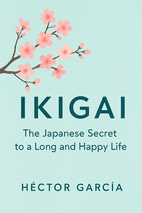
This collection brings together some of the most memorable lines from Ikigai. You'll find wisdom on purpose, longevity, and the simple joys of daily life. What makes the book so quotable is how it turns everyday habits into profound life lessons. The quotes come from Okinawan centenarians, philosophers, and modern thinkers. They feel both ancient and fresh.
These are the kinds of lines you want to share with a friend or keep near your desk. They offer practical guidance without being preachy. Expect to encounter ideas about community, resilience, and the importance of staying busy with meaning. Each quote invites reflection and a small shift in perspective.
Top Quotes from Ikigai
“Rather than harbor animosity toward outsiders, however, Okinawans live by the principle of ichariba chode, a local expression that means “treat everyone like a brother, even if you've never met them before.””
The authors note how Okinawans responded to tragedy with a principle of universal brotherhood.
It reveals a profound cultural value that fosters community and forgiveness, key to happiness and longevity.
“According to those born on Okinawa, the island with the most centenarians in the world, our ikigai is the reason we get up in the morning.”
The author introduces the concept of ikigai as understood by Okinawan elders.
This line encapsulates the core definition of ikigai as a daily purpose, making it both memorable and universally relatable.
“One of the most common sayings in Japan is “Hara hachi bu,” which is repeated before or after eating and means something like “Fill your belly to 80 percent.””
The chapter introduces the Japanese practice of eating until 80% full.
This quote presents a simple, actionable wisdom from Japanese culture that promotes health and longevity through mindful eating.
“Everything can be taken from a man but one thing: the last of the human freedoms—to choose one's attitude in any given set of circumstances, to choose one's own way.”
Viktor Frankl, reflecting on his experiences as a prisoner at Auschwitz, asserts this as a fundamental truth about human resilience.
This line distills the core of logotherapy into a single, empowering idea: that even in the most extreme suffering, we retain the power to choose our response. It resonates deeply because it transforms victimhood into agency, offering hope in seemingly hopeless situations.
“He who has a why to live for can bear with almost any how.”
Viktor Frankl cites Nietzsche's famous aphorism in Man’s Search for Meaning to explain the importance of purpose.
This succinct aphorism captures the essence of meaning-centered living—that a strong sense of purpose makes even the hardest circumstances endurable. It sticks with readers as a timeless, actionable truth about human motivation.
““Put your hand ona hot stove for a minute and it seems like an hour. Sit with a pretty girl for an hour, and it seems like a minute. That is relativity.””
Attributed to Albert Einstein, used to illustrate how perception of time changes with enjoyment.
This quote succinctly captures the subjective nature of time, resonating with anyone who has experienced time flying when happy or dragging when bored.
“In an increasingly unpredictable world moving ever more quickly, a detailed map may lead you deep into the woods at an unnecessarily high cost. A good compass, though, will always take you where you need to go.”
From Joi Ito and Jeff Howe's book Whiplash, advising on navigating uncertainty.
This metaphor of compass over map is memorable and practical, urging readers to focus on a clear direction rather than rigid planning.
Themes Behind the Quotes
The search for purpose, or ikigai, is the most prominent theme. Having a reason to get up each morning brings satisfaction and directs daily life. This purpose often involves serving others or engaging in activities that create a state of flow. Moderation also appears strongly, with simple habits like eating lightly, sleeping well, and walking regularly. These practices support both physical health and mental calm.
Resilience and attitude form another core theme. The freedom to choose one's perspective even in hardship is highlighted, often through references to logotherapy. Community bonds, captured by the idea of treating all people like family, are equally important. A final thread is the acceptance of death as part of life, which frees people to live without worry. Together these themes offer a balanced approach to longevity and fulfillment.
Quotes by Chapter
PROLOGUE: Ikigai: A mysterious word
“This Japanese concept, which translates roughly as “the happiness of always being busy,” is like logotherapy, but it goes a step beyond.”
The authors discuss the meaning of ikigai in contrast to logotherapy during their conversation.
It captures the essence of ikigai in a simple, memorable phrase that contrasts with Western psychology.
“Nurturing friendships, eating light, getting enough rest, and doing regular, moderate exercise are all part of the equation of good health, but at the heart of the joie de vivre that inspires these centenarians to keep celebrating birthdays and cherishing each new day is their ikigai.”
The authors list elements of longevity and highlight ikigai as the core.
It beautifully balances practical habits with a deeper spiritual core, making the concept of ikigai tangible and aspirational.
“Because those who discover their ikigai have everything they need for a long and joyful journey through life.”
The authors conclude the prologue with an inspiring call to find one's ikigai.
It is a powerful, uplifting conclusion that encapsulates the book's promise and motivates readers to seek purpose.
I: IKIGAI
“Having a clearly defined ikigai brings satisfaction, happiness, and meaning to our lives.”
The author states the benefits of finding one's ikigai.
It succinctly summarizes why ikigai matters, offering a compelling promise that resonates with anyone seeking fulfillment.
“For many, serving the community becomes part of their ikigai.”
Discussion of the moai tradition and community bonds in Okinawa.
It highlights that purpose can be found in helping others, making ikigai a communal rather than purely individual pursuit.
II: ANTIAGING SECRETS
“To keep healthy and have a long life, eat just a little of everything with relish, go to bed early, get up early, and then go out for a walk.”
A centenarian woman in Ogimi, the village with the Guinness record for longevity, sang this as part of a song about healthy living.
It offers simple, actionable wisdom from someone who has lived to almost 100, making the advice feel authentic and timeless.
“We have to learn to turn off the autopilot that's steering us in an endless loop.”
Roberto Alcibar, a certified mindfulness instructor, said this while explaining the importance of breaking habitual patterns to reduce stress.
The metaphor of 'autopilot' resonates in our fast-paced, distracted world, reminding us to be present and intentional to improve well-being.
“There is a tension between what is good for someone and what they want to do.”
Neuroscientist Shlomo Breznitz stated this in an interview, discussing why people resist mental challenges that benefit their brains.
It captures a universal human struggle—choosing comfort over growth—and motivates readers to embrace discomfort for long-term cognitive health.
III: FROM LOGOTHERAPY TO IKIGAI
“You see, doctor? You have spared her all that suffering, but the price you have to pay for this is to survive, and mourn her.”
Frankl responds to a grieving doctor who could not get over his wife's death, reframing the doctor's pain as a meaningful sacrifice.
This powerful reframe transforms unbearable grief into a purposeful act of love, showing how meaning can be found even in loss. It is memorable for its gentle but profound shift in perspective, offering solace to anyone who has mourned.
“As for myself, I can look back peacefully on my life; for I can say my life was full of meaning, and I have tried hard to live it fully; I have done my best—I have done my best for my son. My life was no failure!”
A suicidal mother in Frankl's group therapy imagines herself on her deathbed and realizes the meaning her life already had.
This climactic confession illustrates how discovering hidden meaning can heal even the deepest despair. Its raw emotion and triumphant conclusion make it an unforgettable testament to the power of purpose in overcoming suicidal thoughts.
IV: FIND FLOW IN EVERYTHING YOU DO
“Flow is “the state in which people are so involved in an activity that nothing else seems to matter; the experience itself is so enjoyable that people will do it even at great cost, for the sheer sake of doing it.””
Mihaly Csikszentmihalyi's definition of flow from his book Flow: The Psychology of Optimal Experience.
It clearly articulates the essence of flow as an intrinsically motivating state, inspiring readers to seek activities that provide such deep engagement.
“To be able to concentrate for a considerable amount of time is essential to difficult achievement.”
Said by Bertrand Russell, quoted in the context of taking on challenging tasks.
It emphasizes the value of sustained concentration for achieving difficult goals, encouraging readers to develop focus as a key skill.
V: MASTERS OF LONGEVITY
“Eat and sleep, and you'll live a long time. You have to learn to relax.”
Misao Okawa, the world's oldest living person at 117, shares her simple self-care routine when asked about her secret to longevity.
This quote strips longevity down to basic, joyful acts of self-care, reminding readers that a long life can come from simply eating well, resting, and not overcomplicating things.
“We're all going to die. Some people are scared of dying. Never be afraid to die. Because you're born to die.”
Walter Breuning, the second-oldest verified American man, declared this in a 2010 interview with the Associated Press.
This blunt acceptance of mortality is both liberating and profound, encouraging readers to let go of the fear of death and focus on living fully instead.
“All that I have produced before the age of 70 is not worth being counted.”
Hokusai, the legendary Japanese artist, wrote this postscript in his One Hundred Views of Mount Fuji, expressing his belief in lifelong artistic growth.
This line defies the notion that creativity declines with age, inspiring readers to see later decades as a time of deeper understanding and even greater achievement.
“That is the only thing which the mind can never exhaust, never alienate, never be tortured by, never fear or distrust, and never dream of regretting.”
T. H. White, in The Once and Future King, describes the enduring power of learning as a refuge from life's hardships.
This quote elevates learning as the ultimate lifelong pursuit—a source of meaning that remains immune to loss and regret, resonating deeply with anyone seeking purpose.
VI: LESSONS FROM JAPAN’S CENTENARIANS
“The secret is smiling and having a good time.”
Yuki, an 88-year-old woman in Ogimi, says this while eating dessert at a restaurant.
It's a simple, universal truth that prioritizes joy and positivity over rigid rules for longevity, immediately resonating with readers.
“The grand essentials to happiness in this life are something to do, something to love, and something to hope for.”
The authors reflect on the principles observed in Ogimi, quoting Washington Burnap from two centuries earlier.
This timeless triad captures the core of ikigai and provides a clear, actionable framework for a fulfilling life.
“The secret to a long life is not to worry. And to keep your heart young—don’t let it grow old. Open your heart to people with a nice smile on your face.”
An Ogimi centenarian shares advice during an interview about longevity.
This directly links emotional resilience and social warmth to physical longevity, offering both comfort and actionable wisdom.
“There's no secret to it. The trick is just to live.”
A centenarian responds when asked about the secret to a long life.
The profound simplicity and humility of this statement remind readers that the journey itself is the answer, not any hidden formula.
VII: THE IKIGAI DIET
“It's easy to do: When you notice you're almost full but could have a little more... just stop eating!”
This is from the explanation of the Hara hachi bu principle, the 80 percent rule.
It offers a simple, actionable rule for mindful eating that is easy to remember and apply.
“The idea is to still be a little bit hungry when you finish.”
This follows the explanation of Hara hachi bu, describing the desired feeling after a meal.
It challenges the modern habit of eating until stuffed, promoting a counterintuitive yet healthful mindset.
“The calorie restriction we've been discussing is one of the most effective ways to add years to your life.”
This appears in the section discussing the benefits of eating less and Hara hachi bu.
It makes a bold, direct connection between caloric intake and longevity, motivating readers to reconsider portion sizes.