Die With Zero Quotes
by Bill Perkins
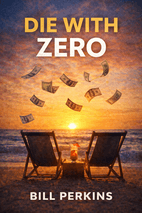
These quotes from Bill Perkins pull back the curtain on how we spend our time and money. They challenge the conventional wisdom of saving everything for later. Each line cuts to the heart of what we might be missing. The book is quotable because it turns everyday choices into big life questions. It is hard to read a quote without feeling a nudge to change something.
You will find sharp observations about work, memories, and the true cost of delay. Perkins speaks plainly, without fluff, and his words often feel like a friendly kick in the pants. They are the kind of lines you want to share with a friend or scribble on a sticky note. There is a deep honesty here that makes the book unforgettable.
Top Quotes from Die With Zero
“Squandering our lives should be a much greater worry.”
The author argues that fear of wasting money is less important than fear of wasting time.
This line flips conventional thinking and prioritizes life experiences over financial hoarding, making it a memorable rallying cry.
“The business of life is the acquisition of memories. In the end that's all there is.”
This is a line from Carson, the butler of Downton Abbey, quoted by the author.
It distills the book's core philosophy into a single, memorable sentence, reminding readers that memories are life's ultimate currency.
“If you die with $1 million left, that's $1 million of experiences you didn’t have.”
The author explains the waste of dying with unspent money by equating it to missed experiences.
This simple, vivid contrast makes the abstract concept of waste tangible and emotionally resonant.
“And I can't think of any worse form of waste than squandering your life energy.”
The author shares his personal philosophy on efficiency and waste.
It captures the core emotional argument of the book, framing excessive saving as a profound loss of one's most precious resource.
“Once you're in the habit of working for money to live, the thrill of making money exceeds the thrill of actually living.”
Describing how even successful people like John Arnold become addicted to work.
This insightful psychological observation highlights the dangerous shift in priorities that can trap anyone, not just the wealthy.
“The value of time with your kids is like the value of water—if you've got 50 gallons of water, you wouldn't pay a dime for an additional gallon of water. But if you're dying of thirst in the desert, you might be willing to cut off your arm to get even one gallon.”
The author uses an analogy to illustrate the diminishing marginal value of time with children.
This metaphor powerfully conveys how the value of time with kids changes depending on how much you already have, making it relatable and memorable.
“The utility, or usefulness, of money declines with age.”
The author reaches a central realization after noticing that his elderly grandmother could not spend the money he gave her.
This simple statement is profound and easily remembered, encapsulating a lifetime of observation. It forces readers to reconsider their own saving habits and encourages them to use money when it can bring the most joy.
Themes Behind the Quotes
A central theme is that experiences, not money, are the true currency of a life well lived. The quotes consistently urge readers to see each day as an opportunity to collect memories. They challenge the automatic habit of working harder to earn more without asking whether that extra money will ever be used for something meaningful. There is a strong emphasis on recognizing that the value of money declines as we age, making it crucial to spend on experiences while we can still enjoy them.
Another major theme involves the relationship between time and wealth. Many quotes highlight the danger of postponing joy or connection with loved ones, as time and energy are non renewable resources. The idea of taking calculated risks earlier in life appears often, as does the importance of shifting from a reactive bucket list to proactive time buckets. Generosity toward family, especially sharing time rather than just money, is a recurring thread. Overall, the quotes push a mindset of intentional living over automatic accumulation.
Quotes by Chapter
Optimize Your Life
“So your life is the sum of your experiences.”
The author summarizes his philosophy after discussing the value of experiences over possessions.
It is a simple, powerful statement that encapsulates the book's core message, urging readers to focus on accumulating experiences.
“It was like the end of The Matrix, when Neo walks around seeing the world as it is. That's how I was after reading the book: I started going around calculating hours needed to buy stuff.”
The author describes his paradigm shift after reading 'Your Money or Your Life'.
The Matrix analogy makes the abstract concept of life energy concrete and memorable, illustrating a transformative moment in the author's thinking.
“Movement is life, and as we move we get continuous feedback—which leads to discovery, wonder, joy, and all the other experiences you can have throughout life's great adventure.”
The author explains the fundamental connection between movement, energy, and life experiences.
This line beautifully encapsulates the idea that life is an active journey of discovery, turning a biological necessity into a poetic invitation to embrace experience.
Invest in Experiences
“They build a well, they get a pump, and as the pump pumps water into a cup, the cup quickly fills, so the water starts overflowing. They take a sip and they keep pumping. And at the end of their lives, after a lifetime of pumping, they see that they're still thirsty. What a waste!”
The author uses this metaphor to describe people who work endlessly without truly enjoying life.
The vivid, relatable imagery powerfully illustrates the emptiness of a life spent chasing money instead of experiences, making it hard to forget.
“You can't take those away, and I would never have them erased for any amount of money.”
Jason Ruffo says this about his European backpacking trip, which he funded with a loan shark loan.
It captures the irreplaceable value of life experiences and the idea that memories are priceless, even compared to financial wealth.
“When you're too frail to do much of anything else, you can still look back on the life you've lived and experience immense pride, joy, and the bittersweet feeling of nostalgia.”
The author reflects on his father's final years after giving him an iPad full of memories.
This line makes the concept of 'retiring on memories' deeply personal and emotionally resonant, motivating readers to create memories worth savoring later in life.
Why Die with Zero?
“Because even if you enjoyed every minute of the work that brought you that money, failing to spend that money is still a waste.”
Responding to the objection that people who love their jobs don't need to spend all their earnings.
It challenges a common rationalization by insisting that the purpose of earning is to enjoy the fruits, not just the process.
How to Spend Your Money (Without Actually Hitting Zero Before You Die)
“If you live your life with fear and avoidance, my bet is you will either fritter your money away or play it so safe that you will leave many, many years of your hard-earned money behind—so you'll be working many years as a slave to your own fears.”
The author warns against letting fear drive financial decisions.
It vividly captures the psychological trap of either reckless spending or extreme hoarding, reminding readers that fear can consume their life energy.
“The human brain is wired to be irrational about death.”
The author quotes his friend Cooper Richey to explain why people avoid planning for mortality.
This concise, provocative statement sums up a core human bias that underlies many poor life and financial choices.
“The premise of this book is that you should be focusing on maximizing your life enjoyment rather than on maximizing your wealth.”
The author clarifies the central goal of the book.
It reframes financial planning from accumulation to experience, making it a powerful guiding principle.
“Dying with zero is not only about money: It's also about time.”
The author concludes the chapter by broadening the concept.
It elegantly reminds readers that life's ultimate resource is time, not money, making the message both memorable and actionable.
What About the Kids?
“I call it the three Rs—giving random amounts of money at a random time to random people (because who knows which of your heirs will still be alive by the time you die?).”
The author summarizes the problem with leaving inheritances to chance.
The alliterative 'three Rs' makes the critique of unstructured bequests instantly memorable and highlights the absurdity of relying on luck for such an important decision.
“If you're really putting your kids first, as you claim you are, don’t wait until you're dead to show your generosity.”
The author challenges people who use 'what about the kids?' as an excuse to delay giving.
This line directly confronts a common rationalization, turning the moral argument around and forcing readers to examine their own actions.
“Of all the experiences you are trying to bequeath to your child, one of those experiences is time with you.”
The author argues that a parent's real legacy is shared experiences, not money.
This reminder reframes the concept of legacy from material wealth to meaningful connection, which touches readers on a deeply personal level.
Balance Your Life
“I'm still a big believer in taking risks when you're young enough to recover from the possible downside— but only if there’s an upside, a reward that makes the risk pay off.”
The author reflects on his own experience after he swung from extreme thrift to excessive spending.
It captures the essential trade-off between taking risks for memorable experiences and being reckless. Many young people can relate to the temptation to overspend or undersave, and this line offers a clear guideline.
“No, the key takeaway, I now realize, is to strike the right balance between spending on the present (and only on what you value) and saving smartly for the future.”
The author distills the core insight from his boss Joe Farrell's advice about balancing spending and saving.
This line succinctly defines the book's central theme of balancing present enjoyment with future security. It resonates because it rejects extreme frugality and extreme spending alike, advocating for mindful, value-driven spending.
“To my way of thinking, no way can the same ratio of spending to saving be right for everyone—and, more important, no way should your savings percentage be the same when you're 22 as when you're 42 or 52.”
The author critiques fixed-ratio budgeting rules like the 50-30-20 rule.
It challenges conventional personal finance advice that applies the same savings rule to everyone regardless of age. Readers may feel liberated from guilt about not saving a fixed percentage when they are young.
Start to Time-Bucket Your Life
“If someone had told me that by this date my kid would stop wanting to watch the Heffalump movie, I probably would have watched it with her a lot more.”
The author reflects on the moment his daughter outgrew their favorite movie, illustrating how we often miss fleeting opportunities.
This relatable image of a parent's regret instantly makes abstract ideas about life's limited phases concrete and emotionally resonant.
“We all die a multitude of deaths throughout our lives.”
The author introduces the concept of 'mini-deaths'—the endings of different life stages like childhood, college, or early parenthood.
The line is a memorable and provocative aphorism that reframes aging not as a single end but as a series of losses that demand proactive planning.
“The day I die and the day I stop being able to enjoy certain experiences are two distinctly different dates.”
The author distinguishes between physical death and the earlier loss of ability to have specific experiences.
This sharp distinction challenges the common assumption that we have unlimited time for everything, urging readers to prioritize experiences before windows close.
“Time buckets are proactive and let you plan your life; a bucket list, on the other hand, is a much more reactive effort in a sudden race against time.”
The author contrasts his recommended time-bucketing method with the traditional bucket list approach.
It succinctly highlights the core practical takeaway of the chapter: thoughtful advance planning beats last-minute scrambling when time is scarce.
Be Bold—Not Foolish
“At the end of my life, I am convinced, my joy will come from my memories—and that trip to St. Barts will be right near the top of the list.”
The author reflects on his lavish 45th birthday party and the enduring value of the experience.
This line powerfully encapsulates the book's core idea that memories, not money, are the ultimate source of fulfillment, urging readers to invest in experiences that last a lifetime.
“If you have your nose to the grindstone too much every day, you run the risk of waking up one morning and realizing that you may have delayed too much.”
The author warns against excessive delay of gratification, a common pitfall for savers.
It vividly captures the danger of sacrificing present joy for a future that may never come, a relatable fear that motivates readers to reconsider their balance between work and life.