Die With Zero — Interactive Mindmaps

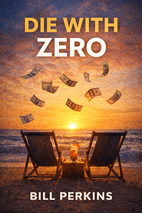
Die With Zero by Bill Perkins Book Cover

by Bill Perkins

Bill Perkins's Die With Zero challenges conventional retirement saving by advocating for maximizing life fulfillment through strategic spending on experiences. It provides a framework for optimizing your wealth across your lifetime, targeting anyone seeking to align their finances with meaningful living.

On Insta.page you also get an Apply This Book tool that lets you combine insights from up to 3 books to solve your specific situation.

Chapter mindmaps

Free preview: chapters 1–4 are fully interactive. Click any node to expand or collapse. Subscribe to unlock the rest.

Chapter 1: Optimize Your Life

Key concepts: Optimize Your Life

1. Optimize Your Life

The Stark Awakening: Confronting Mortality

  • Erin and John's story illustrates the sudden impact of a terminal diagnosis
  • Death reveals life's finiteness, yet people often live as if time is infinite
  • Prioritizing present experiences over work can be the right choice in limited time
  • Simple pleasures and family time become paramount when time is short

Life as an Optimization Problem

  • Maximize fulfillment and minimize waste given finite time and resources
  • Timing experiences correctly is crucial—some are only possible at certain life stages
  • Squandering life is a greater risk than squandering money
  • Delayed gratification becomes irrational when it prevents ever enjoying experiences

The Honorary Billionaire Mindset

  • Spend generously on life experiences now, unlike billionaires who accumulate faster than they can spend
  • Critique of the 'Space Invaders' approach to wealth—racking up points without a fulfillment strategy
  • Wealth should be converted into lifetime fulfillment while you can enjoy it
  • Focus on using resources for experiences rather than perpetual accumulation

Consumption Smoothing Across a Lifetime

  • Balance spending across your lifetime rather than impoverishing your younger self
  • Younger self shouldn't sacrifice excessively for a wealthier future self
  • Match spending to earning potential at different life stages
  • Avoid extreme frugality when future earning potential is high

Life Energy: A Transformative Framework

  • View money as finite hours of your life traded for pay
  • Evaluate decisions in terms of life energy required, not just monetary cost
  • Move beyond mere frugality to conscious allocation of life energy
  • Trade-off between allocating life energy to earning versus directly having experiences

Experiences Over Material Goods

  • Experiences pay a 'memory dividend' that grows in value over time
  • Experiences make life richer rather than smaller
  • Prioritize experiences that bring personal happiness and fulfillment
  • The 'die with zero' philosophy: fully using resources for a life of experiences

From Autopilot to Intentional Living

  • Shift from passive accumulation to active pursuit of meaningful experiences
  • Apply guiding principles for wiser decision-making despite life's unpredictability
  • Balance preparation for the future with living fully in the present
  • Humans as energy-processing units whose ultimate reward is accumulating positive experiences

The Life Energy Framework

  • Money represents 'life energy'—the finite hours of your life traded for pay
  • Evaluate purchases by calculating the life energy required to earn the money for them
  • Higher salaries don't always mean higher hourly income when factoring hidden costs like commutes and work attire
  • This framework encourages deliberate choices by comparing costs against required life energy

Experiences as Ultimate Value

  • Spending on experiences provides more lasting happiness than material goods
  • Experiences pay a 'memory dividend' that increases in value over time
  • Excessive frugality when you can afford experiences makes your world smaller
  • The central question becomes: How do you maximize the value of your experiences?

The Die With Zero Philosophy

  • Aim to fully use resources for a life of experiences rather than accumulating wealth
  • Target audience is those saving too much out of irrational fear, not those in poverty
  • The unusual perspective of hoping to 'run out of money' sparked the book's creation
  • Moves beyond simple ant-versus-grasshopper metaphors to sophisticated optimization

Human Experience Optimization

  • Humans are energy-processing units that convert energy into experiences
  • The ultimate reward of being alive is accumulating positive life experiences
  • Goal is to maximize meaningful experiences across your lifespan
  • Experiences include discovery, joy, wonder, and other meaningful moments

The Core Trade-Off

  • Experiences require converting life energy into money, then money into experiences
  • Central question: How much life should be allocated to earning vs. experiencing?
  • This optimization problem is highly personal with many variables
  • Perfect for analytical thinking or computational modeling approaches

Practical Optimization Approach

  • Perfect optimization is impossible due to life's complexity and imperfect data
  • Value lies in applying guiding principles for wiser decision-making
  • Principles help allocate life energy more deliberately
  • Goal is moving closer to optimal balance between future preparation and present living

Purposeful Living Implementation

  • Break the cycle of automatic living through deliberate intention
  • Begin by actively identifying meaningful experiences you truly want
  • Shift from autopilot to purposeful design of your life
  • Focus on both big and small memorable experiences

Chapter 2: Invest in Experiences

Key concepts: Invest in Experiences

2. Invest in Experiences

The Core Philosophy: Life as Sum of Experiences

  • Your life's richness is determined by the accumulation of meaningful experiences
  • You retire on your memories—past experiences become primary joy in later life
  • Without deliberate planning, you risk reaching life's end with regret and thirst
  • The ultimate purpose of money is to fund a life rich in experiences

The Ant vs. Grasshopper Balance

  • Cultural obsession favors the Ant (constant saving, delayed gratification)
  • Advocates for conscious balance between work and play as both essential
  • True wisdom: there is a time for work and a time for play
  • Avoids Grasshopper's recklessness while valuing play's necessity

The Memory Dividend Concept

  • Experiences generate ongoing returns through recollection (memory dividends)
  • Dividends compound over lifetime through reminiscing, sharing stories, photos
  • Return on Experience (ROE) should be prioritized alongside financial returns
  • Every expenditure should be evaluated by experiences generated

Practical Framework: The Fulfillment Curve

  • Assign experience points to enjoyable activities
  • Plot points over time to create personal Fulfillment Curve
  • Area under curve represents cumulative life fulfillment
  • Allocate time consciously between earning money and having experiences

Implementation Strategies

  • Start investing in experiences early (like retirement savings)
  • Youth and creativity enable meaningful low-cost experiences
  • Reevaluate habitual expenses to free resources for memorable adventures
  • Involve loved ones to enhance shared joy and memory dividends
  • Strengthen memories through photos, videos, and reunions

Case Study: Jason's Transformative Trip

  • Impulsive backpacking trip funded by loan shark led to transformation
  • Returned with identical finances but enriched worldview and self-knowledge
  • Created lasting regret for author who missed optimal window
  • Demonstrates experiences as priceless bargain despite financial cost

The Fulfillment Curve: A Quantitative Model for Life

  • Assign 'experience points' to activities based on personal enjoyment to quantify fulfillment
  • Calculate an annual fulfillment score by summing positive experience points
  • Chart scores over time to create a personal Fulfillment Curve
  • The area under the curve represents cumulative life fulfillment
  • Shape your curve through deliberate allocation of time between work (earning) and play (experiences)

The Memory Dividend: Experiences as Psychological Investments

  • Experiences generate ongoing returns through memory, similar to financial dividends
  • Recollection, storytelling, and photo-viewing collect additional 'dividend' experience points
  • Memory dividends can compound through sharing, creating bonding experiences
  • Cumulative memory points can rival or exceed points from the original experience
  • Memories are priceless and irreplaceable, explaining why people treasure photo albums

Return on Experience vs. Return on Equity

  • Contrasts financial return mindset (Return on Equity) with experiential return mindset (Return on Experience)
  • Ultimate purpose of money is to fund a life rich in experiences
  • Primary question for expenditures: What experiences will this generate and what memory dividends will follow?
  • Saving for retirement means saving for the experiences retirement will enable
  • Investing in experiences at every age enriches the entire life journey

The Timing Advantage: Start Investing in Experiences Early

  • Starting early extends the 'tail' of memory dividends over a longer lifetime
  • Beginning in your twenties allows cumulative emotional returns to surpass the initial experience
  • Mirrors Warren Buffett's investment wisdom but applies to life experiences rather than wealth
  • Maximizes the duration for collecting ongoing joy from memories

Experiences on a Budget: Investing When Young and Financially Limited

  • Meaningful experiences don't require lavish spending
  • Youth, health, and fresh perspective enable enjoyment of low-cost or free activities
  • Examples include exploring local parks, attending free events, and quality time with friends
  • These opportunities are often funded by tax dollars or inherent in daily life
  • Building a treasure trove of memories without straining budget lays foundation for future dividends

Conscious Choice: Moving Beyond Autopilot Living

  • Adulthood brings freedom to choose experiences, yet many operate on autopilot
  • Highlights the 'latte factor'—small habitual expenses that accumulate significantly
  • Encourages awareness of trade-offs between daily habits and memorable experiences
  • Example: Daily coffee habit cost could fund regular travel
  • Taking control of 'life energy' by reallocating resources toward enriching experiences

Actionable Strategies for Optimizing Experience Investments

  • Act immediately: Identify experiences to invest in soon and weigh risks of postponement
  • Include loved ones: Shared memories often yield higher dividends through bonding
  • Strengthen memories: Use photography, video albums, or reunions to preserve and enhance memories
  • Ensure memories continue providing joy long after initial events

Chapter 3: Why Die with Zero?

Key concepts: Why Die with Zero?

3. Why Die with Zero?

The Core Problem: Wasting Life Energy

  • John Arnold's story: billionaire who traded irreplaceable years with family for unspendable wealth
  • Elizabeth's tale: fictional example showing modest earners also die with significant unspent money
  • Unspent money represents wasted 'life energy' - time worked for no personal benefit
  • Accumulation autopilot overrides rational understanding of money's optimal utility

Economic Foundation: Life-Cycle Hypothesis

  • Nobel Prize-winning theory by Franco Modigliani
  • To maximize life enjoyment, net worth should hit zero at death
  • Practical barrier: not knowing death date requires planning to maximum reasonable age
  • Behavioral barriers: myopia (short-term thinking) and inertia (inability to shift from saving to spending)

The Reality of Oversaving

  • Federal Reserve data shows median net worth peaks at age 75+
  • Retirees are extraordinarily slow to draw down savings
  • One-third of retirees actually increase wealth after retiring
  • People fail to account for natural decline in capacity for active spending ('go-go', 'slow-go', 'no-go' phases)

Addressing Key Objections

  • Objection: 'I love my work' - Even if money is a by-product of passion, failing to convert it into experiences is still waste
  • Objection: Fear of running out - Data shows most people oversave for too late in life
  • Objection: Wanting to leave inheritance - Can be addressed through intentional planning rather than accidental surplus
  • Major driver: Precautionary saving for healthcare costs often exceeds practical utility

Practical Risk Management Strategy

  • Catastrophic healthcare costs are often so high that extra savings make little practical difference
  • Better approach: Transfer specific risk through long-term care insurance
  • Free up resources for preventative health investments
  • Redirect funds to meaningful experiences earlier in life when they can be most fully enjoyed

The Philosophical Shift

  • Moving from 'why' die with zero to 'how' to achieve it practically
  • Recognizing that money's value lies in its conversion to life experiences
  • Balancing present enjoyment with future security without oversaving
  • Optimizing life enjoyment across different phases of capability and desire

The Passionate Worker's Dilemma

  • Work as a primary source of fulfillment complicates but does not invalidate the core principle.
  • Money earned from passionate work still represents unconverted life energy.
  • Failing to convert that money into valued experiences remains a waste, regardless of the money's source.

Addressing Common Fears and Objections

  • The goal is not zero savings, but to avoid oversaving for too late in life.
  • The fear of running out of money is acknowledged but framed as an issue of balance.
  • The inheritance question is deferred, with a preview that giving while alive is often superior to posthumous giving.

Empirical Evidence of Oversaving

  • U.S. Federal Reserve data shows median net worth peaks for those 75 or older.
  • Studies reveal retirees are extremely slow to draw down assets, often preserving most wealth until death.
  • A significant portion of retirees actually increase their wealth after retiring, demonstrating systemic underspending.

The Natural Decline of Spending Capacity

  • The 'go-go,' 'slow-go,' and 'no-go' years describe a predictable decline in desire and capacity for experiences.
  • Household spending consistently declines after age 55, even among the affluent.
  • Planning for constant retirement spending ignores this reality and leads to wasted life energy.

The Flawed Logic of Precautionary Savings

  • Fear of catastrophic medical costs drives excessive 'precautionary saving.'
  • The scale of extreme end-of-life care can render typical extra savings meaningless.
  • Sacrificing life energy for a slightly larger financial buffer against such costs is often irrational.

Practical Solutions for Financial Risks

  • For quantifiable risks like long-term care, insurance is the efficient solution, not personal savings.
  • Resources are better spent on preventative healthcare and meaningful experiences earlier in life.
  • The focus should shift from fear-based savings to risk transfer and intentional living.

Chapter 4: How to Spend Your Money (Without Actually Hitting Zero Before You Die)

Key concepts: How to Spend Your Money (Without Actually Hitting Zero Before You Die)

4. How to Spend Your Money (Without Actually Hitting Zero Before You Die)

Confronting Your Expiration Date

  • Estimate life expectancy using calculators like Actuaries Longevity Illustrator
  • Establish a probabilistic baseline (e.g., 50% chance of living to 92)
  • Avoid worst-case scenario planning that leads to oversaving and wasted life energy

Annuities as Longevity Insurance

  • Reframe annuities as insurance against outliving savings, not as investments
  • Guarantee lifetime income by transferring risk to an insurance company
  • Enable more aggressive spending than traditional withdrawal rules (e.g., 4% rule)
  • Eliminate the need for an overly large financial cushion through risk pooling

Working with a Financial Adviser

  • Define goal as maximizing total life enjoyment, not maximizing wealth
  • Seek fee-only advisers to avoid conflicts of interest
  • Communicate explicit desire to spend savings fully without running out
  • Focus on efficient decumulation strategy, potentially including annuities

Creating Psychological Urgency

  • Use tools like 'Final Countdown' app to visualize remaining time
  • Counteract irrational avoidance of mortality to enable intentional action
  • Align spending with declining health and energy across retirement decades
  • Spend more aggressively in active fifties and sixties than in later years

Continue exploring Die With Zero