Crying in H Mart Quotes
by Michelle Zauner
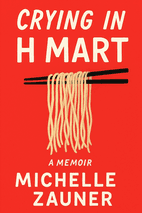
This collection brings together some of the most powerful lines from Michelle Zauner's memoir about grief, identity, and mother love. You will find moments of raw humor, sharp pain, and unexpected tenderness. The book is quotable because it captures universal feelings in intensely personal terms. Readers return to these lines to feel understood, to share a truth that resonates long after the page is turned. Each quote stands alone as a small story, yet together they trace a journey through loss and the strange comfort of a grocery store.
Top Quotes from Crying in H Mart
“Ever since my mom died, I cry in H Mart.”
The opening line of the chapter, introducing the author's grief ritual.
This stark, simple confession immediately establishes the central theme of grief intertwined with cultural identity, making it unforgettable.
“I can hardly speak Korean, but in H Mart it feels like I'm fluent.”
The author describes her relationship with the Korean supermarket chain.
It captures the deep, sensory connection to heritage that transcends language, resonating with anyone who finds belonging through food or place.
“Stop crying! Save your tears for when your mother dies.”
The author's mother often said this proverb to her when she was upset as a child.
This line is hauntingly ironic because the author's mother eventually dies, making the command a chilling premonition that encapsulates the book's central grief.
“No one in this world would ever love me as much as my mother, and she would never let me forget it.”
The author reflects on her mother's brutal, all-consuming love after describing incidents of harsh discipline.
It captures the complicated, possessive intensity of a mother's love that is both suffocating and irreplaceable, resonating with anyone who has experienced a similarly overwhelming parental bond.
“It was a love that saw what was best for you ten steps ahead, and didn’t care if it hurt like hell in the meantime.”
The author describes the harsh, forward-looking nature of her mother's tough love after recounting a tree-climbing accident.
This line perfectly distills the mother's paradoxical parenting style—fiercely protective yet seemingly cruel—and speaks to the pain of recognizing a parent's good intentions only in hindsight.
“Her last words were “Where are we going?””
The narrator describes her aunt Eunmi’s final words before dying of colon cancer.
This haunting question echoes the chapter’s central theme of life as an uncertain journey, and it underscores the sudden, bewildering loss of a beloved family member.
Themes Behind the Quotes
A central theme is the way grief rewires your relationship with everyday places and rituals. The ordinary becomes sacred, and the mundane holds memory. Another thread is the fierce, sometimes uncomfortable love between a mother and daughter, a love that is protective, critical, and deeply knowing. The book also explores cultural identity and the struggle to belong to a heritage you were raised in but never fully mastered. Finally, there is the theme of survival, not just through illness but through the aftermath, learning to carry pain while still reaching for joy.
Quotes by Chapter
1 · Crying in H Mart
“Every time I remember that my mother is dead, it feels like I'm colliding with a wall that won't give.”
The author reflects on the recurring blow of her loss.
The metaphor of an unyielding wall powerfully conveys the repetitive, inescapable nature of grief.
“H Mart is the bridge that guides me away from the memories that haunt me, of chemo head and skeletal bodies and logging milligrams of hydrocodone.”
The author explains why she returns to H Mart despite her pain.
It contrasts painful medical memories with the comforting ritual of shopping, showing how food and place can offer a path to healing.
2 · Save Your Tears
“She remembered if you liked your stews with extra broth, if you were sensitive to spice, if you hated tomatoes, if you didn’t eat seafood, if you had a large appetite.”
The author explains how her mother showed love through meticulous attention to each person's food preferences.
This passage beautifully illustrates the subtle, practical way the mother expressed care, making her loss feel tangible through the absence of those remembered details.
3 · Double Lid
“This is how I know you're a true Korean.”
Michelle's mother says this while they snack on ganjang gejang in the kitchen at night.
It encapsulates how food becomes a measure of cultural belonging and maternal love, turning a simple act of eating into a profound affirmation of identity.
“You used to be such a little chickenshit,” she said. “You never let me wipe your asshole.”
Halmoni's last words to Michelle before she returns to America.
The jarring, crude humor perfectly captures Halmoni's blunt, affectionate personality and makes the goodbye both shocking and deeply poignant.
“In an instant, she could envision a lifetime of loneliness and regimen, crews of men and women picking at my hair and face, choosing my clothes, instructing me on what to say, how to move, and what to eat.”
Michelle reflects on her mother's refusal to let her pursue a K-drama career.
This sentence distills the mother's foresight and the dark side of fame, showing her protective instinct to shield her daughter from a life of commodification.
4 · New York Style
“I thought, Save your tears for when your mother dies.”
The narrator silently tells herself this after hearing her mother's cancer diagnosis on the phone.
It starkly captures the painful suppression of emotion and the grim anticipation of loss, making the reader feel her frozen shock and resolve.
“My mother had either finally given up, conceding in her efforts to try to shape me into something I didn’t want to be, or she had moved on to subtler tactics, realizing it was unlikely that I'd last another year in this mess before I discovered she'd been right all along.”
The narrator reflects on her mother's unexpected acceptance during a visit to her dilapidated Philadelphia home.
This passage beautifully captures the ambiguous shift in a mother-daughter relationship, where love and judgment intermingle, leaving the narrator uncertain whether she has been liberated or proven wrong.
5 · Where’s the Wine?
“Why won't you include me?" I whined into my cell phone as if I were tattling on an older child for neglecting me."”
The author whines into her phone after being told not to come home for her mother's cancer treatment.
This opening line immediately establishes the strained relationship and her feeling of exclusion, drawing readers into the emotional conflict.
“You don't know me at all,” I said. “This weird thing—is the thing that / love.”
The author retorts to her mother's dismissal of her music as a 'weird thing'.
The typographical slash in 'I / love' adds a raw, painful edge, encapsulating the teenage defiance and the fundamental misunderstanding between mother and daughter.
“I could live without them, I thought to myself with foolish teenage confidence.”
After a heated argument at Seoul Cafe, the author reflects on her independence.
This sentence captures the naive self-assurance of youth, foreshadowing the later vulnerability when her mother becomes ill.
“I fantasized about dying. Every object in the world seemed to become a tool for it.”
Narrator describes her depression during truancy and isolation.
The stark simplicity of this sentence powerfully conveys the pervasiveness of suicidal ideation.
6 · Dark Matter
“I would radiate joy and positivity and it would cure her.”
The narrator makes a desperate internal vow after learning of her mother's cancer diagnosis.
This line captures the guilt and magical thinking of a child trying to atone, revealing the painful illusion that love alone can defeat disease.
“My mother had worn them around the house for a week, smoothing the hard edges in two pairs of socks for an hour every day, molding the flat sole with the bottom of her feet, wearing in the stiffness, breaking the tough leather to spare me all discomfort.”
The narrator recalls discovering that her mother broke in a pair of cowboy boots before sending them to her in college.
This meticulous act of unseen care embodies maternal love in its most selfless form, and the tactile details make it unforgettable.
“It was as if I possessed a new internal core that gravitated toward her affection, its charge renewed by the time I'd spent away from its field.”
The narrator describes how her relationship with her mother changed after time apart, now leaning into her touch instead of pulling away.
The physics metaphor transforms emotional reconnection into something cosmic and inevitable, capturing the pull of a mother’s love across distance and conflict.
“Here I was again, this time returned of my own free will, no longer scheming a wild escape into the dark but desperately hoping that a darkness would not come in.”
The narrator reflects on her return home as an adult, contrasting her teenage nights sneaking out with her current fear of losing her mother.
This closing line echoes the chapter’s title 'Dark Matter,' weaving past rebellion into present helplessness and the shift from wanting to flee to wanting to protect.
8 · Unni
“I remembered the boots she’d broken in so that by the time I got them I could go on unbothered, without harm.”
The narrator recalls a childhood memory while lying beside her mother in the hospital.
This line beautifully encapsulates a mother's quiet, selfless love, making the reader feel the weight of unspoken sacrifices.
“Now, more than ever, I wished desperately for a way to transfer pain, wished I could prove to my mother just how much I loved her, that I could just crawl into her hospital cot and press my body close enough to absorb her burden.”
The narrator longs to take on her mother's suffering during her cancer treatment.
It captures the raw, universal desire to shield a loved one from pain, making the reader ache with the narrator's helpless devotion.
“I could not even cry in his presence for fear he would take the moment over, pit his grief against mine in a competition of who loved her more, and who had more to lose.”
The narrator resents her father's emotional neediness and feels her own grief is being hijacked.
This brutally honest observation reveals how illness can turn grief into a painful rivalry, resonating with anyone who has felt their sorrow minimized.
“Before the strength of an unni, my mother could naturally surrender.”
The narrator reflects on how Kye, as an older sister figure, allows her mother to let go of her protective facade.
It beautifully captures the cultural and emotional significance of the 'unni' relationship, offering a moment of vulnerability and trust.
9 · Where Are We Going?
“How can you believe in god when something like this happens?”
The narrator’s mother questions her faith after Eunmi’s death.
It captures raw, unfiltered grief and the crisis of meaning that follows profound tragedy, making it deeply relatable to anyone who has suffered loss.
“Your mom picked the monkey, of course.”
Eunmi reveals to the narrator that her mother chose the monkey—symbolizing a baby—in the animal prioritization game.
This simple line reveals the mother’s deepest priority: her child, making it a poignant testament to maternal love that resonates throughout the book.
“She was the only person in the world who could tell me that things would all work out somehow.”
The narrator reflects on her mother’s unique ability to comfort her, even as the mother faces her own mortality.
It encapsulates the irreplaceable bond between mother and child, and the solace that only a parent’s unwavering reassurance can provide in the face of despair.
10 · Living and Dying
“Maybe we should get married,” I said offhandedly. “So my mom can be there.”
Michelle says to Peter as he drives her to the airport for her trip to Korea.
This line captures the desperate wish to involve her dying mother in a life milestone, revealing how illness reshapes even casual thoughts about the future.