Copywriting for Marketers Quotes
by Kaitlin Terry
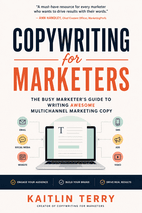
These quotes capture the sharpest insights from Kaitlin Terry's book on copywriting. They are the kind of lines you want to save, share, and stick on your wall.
Each one cuts through the noise to reveal a core truth about writing that connects. What makes this book so quotable is how it blends practical advice with deep understanding of human nature. You will find metaphors that stick, like research being a compass and map. You will find truths that challenge you, like the importance of story over product. And you will find reminders that copywriting is both art and science. This is a book that earns its place on your shelf.
Top Quotes from Copywriting for Marketers
“As a copywriter, you're not just a writer: You're a detective, a psychologist, and a storyteller all rolled into one.”
Explaining the skills that distinguish great copywriters.
This vivid analogy makes the role of a copywriter feel dynamic and multifaceted, encouraging readers to embrace a broader skill set.
“It's not just about what is being sold; it's about the story that's being told.”
The author uses a marketplace analogy to introduce the essence of effective copywriting.
This line encapsulates the core shift from feature-based selling to narrative-driven marketing, making it a memorable mantra for any copywriter.
“Research and insights are the compass and map of copywriting.”
This passage concludes the section on research methodologies and data-driven strategies.
The metaphor of a compass and map is both concise and powerful, illustrating how research guides creative decisions and keeps copy grounded in reality.
“Storytelling and emotional appeals are the soul of effective copywriting.”
From the introduction, discussing the importance of emotional connection.
Short, memorable, and encapsulates the core idea that copywriting must engage hearts, not just minds.
“A subject line in an email is much like a headline in a newspaper: It must catch the eye, convey the essence of the message, and entice the reader to delve deeper.”
From the section 'The Power of a Captivating Subject Line' in the chapter.
It uses a timeless analogy to distill the core purpose of a subject line, making the point immediately clear and memorable.
“A well-crafted email can be the difference between an open, a delete, a click-through, or a pass.”
From the introduction to email copywriting in the chapter.
The crisp, alliterative list of outcomes powerfully illustrates how much hinges on quality, making it a motivating mantra for copywriters.
“The key is to balance technology with the irreplaceable human touch that connects, engages, and moves audiences.”
Appears in the same section, summarizing the essential balance needed between technology and human touch.
This memorable sentence encapsulates the book's core message: technology is a tool, but connection comes from humanity, making it a guiding principle for copywriters.
Themes Behind the Quotes
One clear theme is that copywriting is as much about understanding people as it is about writing. The quotes repeatedly stress the need to tap into psychology, emotion, and human motivation. Another major thread is the importance of research and data as the foundation for effective messaging. Without insights into your audience and market, your words lose their impact. The book also emphasizes the role of storytelling and narrative in creating genuine connection. It is not enough to list features; you have to weave a story that resonates.
A second theme centers on the idea of continuous refinement. Great copy is not written once and left alone. It is tested, optimized, and improved based on feedback and results. The quotes highlight that copywriting is both an art and a science, requiring creative intuition and analytical rigor. Finally, the author reminds us that ethics and cultural awareness are not optional. In a global marketplace, sensitivity and responsibility are key to long term success. These themes together paint a picture of a discipline that is dynamic, human centered, and endlessly fascinating.
Quotes by Chapter
Chapter 1: Foundations
“This transformation wasn't due to a change in the product, It was the result of the power of words that connected with people's emotions.”
After describing a bakery's success story.
It encapsulates the central thesis that words can transform a business without changing the product itself, inspiring marketers to focus on emotional connection.
“It's about understanding human psychology, knowing what makes people tick, and using that knowledge to craft messages that engage and inspire.”
Defining the true nature of copywriting.
It distills the essence of copywriting into a memorable, actionable insight about psychology and engagement.
“Well-crafted copy doesn't just inform; it resonates with readers, prompting them to act, whether that’s by purchasing a product, signing up for a service, or changing their perception of a brand.”
Describing the purpose of effective marketing copy.
It clearly articulates the dual goals of resonance and action, applicable to both B2C and B2B contexts.
Chapter 2: Planning
“Planning strategically isn't just about reaching an audience; it's about connecting with them on a human level and creating a narrative that resonates.”
The author elaborates on the deeper purpose of strategic planning in marketing campaigns.
It elevates planning from a tactical task to an empathetic, human-centric process, reminding readers that genuine connection matters more than mere exposure.
“By understanding the market, learning from competitors, listening to customers, and leveraging data, copywriters can craft strategies that not only engage but also convert.”
The author summarizes the key takeaways from the research and insights section.
This sentence neatly distills the entire research process into actionable steps, reinforcing that effective copywriting balances creativity with evidence-based strategy.
Chapter 3: Persuasion
“Persuasion is deeply embedded in the human experience. From the earliest days of bartering goods to the modern digital marketplace, our ability to persuade others has been central to survival and success.”
Opening of the section on the psychology of persuasion.
This line frames persuasion as a fundamental human trait, making the chapter's topic feel timeless and universal, resonating with readers who want to understand the deep roots of influence.
“The effectiveness of scarcity lies in its ability to tap into the human fear of missing out, driving the audience to take action before the opportunity is gone.”
Explanation of the scarcity principle.
Clearly explains why scarcity works, using the relatable 'fear of missing out' phrase, making it practical and quotable.
“Crafting audience personas is not a one-time task but a continuous process of learning, adaptation, and evolution to meet the dynamic nature of consumer markets.”
Conclusion of the audience personas section.
Reminds marketers that personas require ongoing refinement, which is a crucial insight for effective targeting.
Chapter 4: Channels
“The subject line is your first and possibly only chance to capture your audience's attention.”
From the summary about subject lines in the chapter.
It underscores the urgency and singular importance of first impressions, a truth that resonates with any marketer facing crowded inboxes.
“Crafting compelling copy that resonates with your audience across various marketing channels is an art form.”
Opening line of the chapter, setting the overall theme.
It elegantly frames copywriting as both a creative and strategic discipline, instantly establishing the chapter's high-level value.
Chapter 5: Optimization
“In the dynamic world of marketing, the real magic lies not just in launching campaigns but in the art of meticulously refining them for enhanced performance.”
Opening line of Chapter 5: Optimization, setting the theme of the chapter.
This line captures the essence of optimization as a continuous refinement process, shifting focus from just launching to constantly improving.
“This journey is more than just learning about optimization techniques; it's about adopting a mindset geared toward continuous improvement.”
From the introductory section of the chapter, summarizing the overall goal.
It reminds marketers that optimization is a mindset, not just a set of tactics, which is a powerful and memorable call to action.
“The treasure trove that is feedback and customer data can't be overstated.”
From the section 'Utilizing Feedback and Customer Data'.
This simple, vivid metaphor emphasizes the immense value of customer insights, making it a quotable reminder to prioritize data-driven decisions.
“A/B testing isn't a single, isolated event. Instead, it forms a continuous cycle of refinement and enhancement.”
From the 'Iterate and Repeat' subsection within A/B testing.
It succinctly conveys the iterative nature of A/B testing, countering the misconception that it is a one-time fix.
Chapter 6: Mastery
“At the same time, these advancements offer exciting opportunities for efficiency and personalization; the core of copywriting remains rooted in human creativity and empathy.”
From the discussion on the future of copywriting and the role of AI, this line underscores the enduring importance of human creativity.
It reminds readers that despite technological advances, the human element remains central to effective copywriting, offering a grounding perspective in a rapidly changing field.
“Ethical considerations and cultural sensitivity are not just ethical imperatives but strategic necessities in global marketing.”
From the section on ethics and cultural sensitivity in global marketing, this statement emphasizes their strategic importance.
It powerfully reframes ethics from a moral obligation to a business necessity, resonating with marketers who need to justify ethical practices in a competitive landscape.
“Copywriting, at its core, is an art form that thrives on the unique creative insights and empathetic understanding that human writers bring to the table.”
From the section on AI challenges to creativity, this line defines the essence of copywriting.
It celebrates the irreplaceable value of human creativity and empathy, providing reassurance and inspiration to copywriters navigating the rise of AI.