Born a Crime Quotes
by Trevor Noah
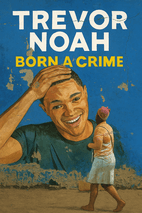
Inside you will find some of the most memorable lines from Trevor Noah's memoir 'Born a Crime'. These quotes capture everything from sharp humor to hard truths about race, identity, and family. What makes this book so quotable is how Noah blends personal stories with big ideas, making you laugh one moment and think deeply the next. The lines here range from funny one liners to powerful observations about apartheid and belonging. Some will make you smile, others will stop you in your tracks. Each one gives a glimpse into a life that was anything but ordinary.
Top Quotes from Born a Crime
“The person had to fall. Because if he didn’t fall that meant the demon was powerful and the pastor needed to come at him even harder.”
Trevor describes the violent exorcisms at black church where the pastor casts out demons from congregants.
This line captures the darkly comic absurdity of religious theater while revealing the high stakes and physical brutality embedded in his childhood faith.
“In any society built on institutionalized racism, race-mixing doesn’t merely challenge the system as unjust, it reveals the system as unsustainable and incoherent.”
Trevor Noah reflects on the logical flaw at the heart of apartheid.
This line articulates a profound truth about how mixed-race people expose the absurdity and fragility of racist systems, making it both intellectually and emotionally resonant.
“Where most children are proof of their parents’ love, I was the proof of their criminality.”
Trevor describes the paradox of his existence under apartheid laws.
A poignant and concise encapsulation of the central irony of his life: that his parents' love was legally defined as a crime, and his very being was evidence of that crime.
“Imagine being thrown out of an airplane. You hit the ground and break all your bones, you go to the hospital and you heal and you move on and finally put the whole thing behind you—and then one day somebody tells you about parachutes.”
Trevor realizes that other mixed families escaped South Africa while he and his mother endured years of danger.
This powerful metaphor captures the shocking revelation of unnecessary suffering, making the reader feel the weight of a choice that was never offered.
“You are never more yourself than when you're taking a shit.”
Trevor reflects on the profound, humbling experience of shitting while alone on the kitchen floor as a child.
It's a raw, universal insight into human vulnerability and equality, delivered with comedic brilliance.
“As a kid I understood that people were different colors, but in my head white and black and brown were like types of chocolate. Dad was the white chocolate, mom was the dark chocolate, and I was the milk chocolate. But we were all just chocolate.”
Trevor describes his innocent childhood view of race before he learned about societal divisions.
This simple, sweet metaphor powerfully conveys how racial hierarchy is a learned construct, not an inherent truth, and resonates with readers of all ages.
“Only Catholics can eat Jesus's body and drink Jesus's blood, right?” “Yes.” “But Jesus wasn't Catholic.” “No.” “Jesus was Jewish.” “Well, yes.” “So you're telling me that if Jesus walked into your church right now, Jesus would not be allowed to have the body and blood of Jesus?”
Young Trevor arguing with nuns and a priest about why he cannot take communion at his Catholic school.
This clever, logical argument showcases Trevor's early knack for finding loopholes in rules, and his refusal to accept authority without reason—a defining trait of his character.
Themes Behind the Quotes
A major theme running through these quotes is the absurdity of racial categories and the way language can either divide or connect people. Noah often points out that color and ethnicity are social constructs that become meaningless when you look at actual human experience. Another strong theme is the complex love between a mother and son, where discipline and protection mix with a fierce desire for freedom. Many quotes highlight how institutional racism forces people to navigate impossible situations, yet resilience and humor become survival tools. Finally, there is a recurring idea about belonging and outsiders, showing that acceptance often depends on whether you are seen as trying to join or trying to leave a community.
Quotes by Chapter
Chapter 1: Run
“If God is with me, who can be against me?”
Trevor's mother's mantra, her unwavering faith in the face of danger and riots.
It distills her indomitable spirit and the source of her courage, making it a powerful statement of faith and resilience.
“She was never scared. Even when she should have been.”
Trevor reflects on his mother's fearlessness during the violent riots and dangerous situations.
This simple, blunt observation underscores her extraordinary bravery and the contrast between her calm exterior and the real threats they faced.
“So I ran, and she ran, and nobody ran like me and my mom.”
After being thrown from the minibus, Trevor and his mother sprint away from their attackers.
It celebrates their unique bond and shared survival instinct, turning a terrifying moment into a testament to their speed and unity.
Chapter 2: Born a Crime
“Honor me with your yes so that I can live peacefully.”
Trevor's mother, Patricia, asks his father to consent to fathering a child with her.
This line reveals her fierce independence and moral clarity, demanding not just a child but a consensual, honorable act that would allow her to live without guilt or secrecy.
Chapter 3: Trevor, Pray
“Everyone knows that Jesus, who's white, speaks English.”
Trevor explains why his grandmother believed his English prayers were more powerful.
It humorously exposes colonial influence on faith and the absurdity of racial hierarchies in religion.
“In Soweto, because there was no leaving the ghetto, the dream was to transform the ghetto.”
Trevor describes the aspirational quality of Soweto under apartheid.
It contrasts the American dream of escaping poverty with the South African dream of transforming it, highlighting resilience.
“Just because I live without a man doesn’t mean I've never had a husband. God is my husband.”
Trevor's mother responds to his question about raising him alone without a husband.
It shows her profound faith and independence, redefining marriage as a spiritual relationship.
Chapter 4: Chameleon
“Because I don't know how to hit a white child,” she said. “A black child, I understand. A black child, you hit them and they stay black. Trevor, when you hit him he turns blue and green and yellow and red. I've never seen those colors before. I'm scared I'm going to break him. I don’t want to kill a white person. I'm so afraid. I'm not going to touch him.”
Trevor's grandmother explains to his mother why she cannot bring herself to punish him after he injured his cousin.
This moment vividly illustrates how absurd racial categories become when applied to a mixed-race child, blending dark humor with the painful reality of apartheid's legacy.
“I had a choice. I could champion racial justice in our home, or I could enjoy granny's cookies. I went with the cookies.”
Trevor reflects on his childhood awareness that his grandmother's racial bias spared him punishment while his cousins suffered.
The line captures the seductive ease of privilege and the uncomfortable truth that even children can recognize—and exploit—unfair systems for personal gain.
“That, and so many other smaller incidents in my life, made me realize that language, even more than color, defines who you are to people.”
After Trevor uses Zulu to defuse a potential mugging, he recognizes the transformative power of speaking someone's native tongue.
This insight encapsulates the chapter's central theme—that identity can be fluid and negotiated through communication—and offers a hopeful counterpoint to racial essentialism.
Chapter 5: The Second Girl
“My mother used to tell me, “I chose to have you because I wanted something to love and something that would love me unconditionally in return.””
Trevor Noah recalls his mother's explanation for why she had him.
This line reveals the deep intentionality behind his mother's love and her own need for belonging, setting the emotional foundation of the chapter.
“She was the second girl. The only place she would have less value would be China.”
Trevor describes the painful rejection his mother experienced within her own family.
The dark humor underscores the absurdity of familial hierarchies and the lasting wound of being unwanted, making the reader feel her mother's pain.
“Learn from your past and be better because of your past,” she would say, “but don't cry about your past. Life is full of pain. Let the pain sharpen you, but don't hold on to it. Don’t be bitter.”
Trevor quotes his mother's advice on how to handle hardship.
This encapsulates a powerful philosophy of resilience—acknowledging pain without being consumed by it—that resonates universally.
“My mother wanted her child beholden to no fate. She wanted me to be free to go anywhere, do anything, be anyone.”
Trevor explains why his mother gave him the name 'Trevor'—a name with no traditional meaning.
It shows his mother's radical determination to break cycles of poverty and limitation, offering her son a blank slate to define his own life.
Chapter 6: Loopholes
“I chose to have you because I wanted something to love and something that would love me unconditionally in return—and then I gave birth to the most selfish piece of shit on earth and all it ever did was cry and eat and shit and say, ‘Me, me, me, me me.”
Trevor's mother, Patricia, joking about the reality of having a baby.
This line is brutally honest and darkly humorous, capturing the universal shock of new parenthood while establishing Patricia's no-nonsense, loving voice.
“My relationship with my mom was like the relationship between a cop and a criminal in the movies—the relentless detective and the devious mastermind she’s determined to catch. They’re bitter rivals, but, damn, they respect the hell out of each other, and somehow they even grow to like each other.”
Trevor describing his dynamic with his mother during his mischievous childhood.
This metaphor perfectly encapsulates the playful yet adversarial bond between Trevor and his mother, highlighting mutual respect and affection beneath the conflict.
“I was either going to make an excellent criminal or be very good at catching criminals, because I could always find loopholes in the law.”
A psychologist's conclusion after evaluating Trevor's behavior and tests.
This line succinctly captures Trevor's unique intelligence and rebellious nature, revealing how his creativity and rule-bending would shape his future path.
Chapter 8: Robert
“You do not own the thing that you love.”
Trevor reflects on the lesson he learned after his dog Fufi's betrayal.
This line encapsulates a profound truth about love and attachment, and it resonates because it challenges the possessive instinct we often have in relationships.
“Being with my dad was like watching a web series. I'd get a few minutes of information a few minutes at a time, then I’d have to wait a week for the next installment.”
Trevor describes his relationship with his father Robert during their Sunday visits.
This metaphor is both witty and heartbreaking, perfectly capturing the fragmented, patient nature of a relationship with a distant parent.
“Being chosen is the greatest gift you can give to another human being.”
Trevor Noah reflects on his father's choice to reconnect with him after years apart.
This line captures the profound emotional impact of feeling wanted and deliberately accepted, a universal human desire.
“Relationships are built in the silences. You spend time with people, you observe them and interact with them, and you come to know them—and that is what apartheid stole from us: time.”
Noah realizes that an interview cannot replace the lost years with his father, explaining how apartheid robbed them of time together.
It offers a poignant insight into how genuine connection forms through shared quiet moments, and ties personal loss to a systemic injustice.
Chapter 9: The Mulberry Tree
“It taught me that it is easier to be an insider as an outsider than to be an outsider as an insider.”
Trevor Noah reflecting on his experience living in Eden Park, a colored area where he looked like everyone else but felt completely different.
This line captures a profound and counterintuitive truth about belonging: the pain of being rejected by your own perceived tribe is far greater than being welcomed as a foreigner.
“People are willing to accept you if they see you as an outsider trying to assimilate into their world. But when they see you as a fellow tribe member attempting to disavow the tribe, that is something they will never forgive.”
Trevor explaining why he faced such animosity from colored people in Eden Park.
It perfectly distills the universal human tendency to punish perceived betrayal more harshly than simple difference, making it a powerful insight into tribalism and identity.