Born a Crime — Interactive Mindmaps

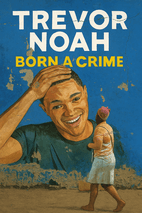
Born a Crime by Trevor Noah Book Cover

by Trevor Noah

Trevor Noah's Born a Crime recounts his childhood under South African apartheid, using humor and poignant stories to explore identity, systemic racism, and his formidable mother's love. It resonates with readers interested in memoirs, history, and universal tales of resilience.

On Insta.page you also get an Apply This Book tool that lets you combine insights from up to 3 books to solve your specific situation.

Chapter mindmaps

Free preview: chapters 1–4 are fully interactive. Click any node to expand or collapse. Subscribe to unlock the rest.

Chapter 1: Chapter 1: Run

Key concepts: Chapter 1: Run

1. Chapter 1: Run

The Rhythm of Religious Sundays

  • Church dominated the family's week, with activities on at least four nights
  • Trevor observed the blend of his mother's fervent Christianity and his grandmother's traditional spirituality
  • The religious identity reflected colonized nuances, with indigenous practices labeled 'primitive'
  • Sundays involved a marathon journey to three distinct church services across Johannesburg

The Three Churches of Johannesburg

  • Mixed church: Modern Rhema Bible Church with Jumbotron and charismatic ex-bodybuilder pastor
  • White church: Affluent, efficient Rosebank Union where Bible stories were Trevor's only action movies
  • Black church: Grueling Methodist services with dramatic demon-exorcising under the sun

Stubborn Faith vs. Logical Reasoning

  • The broken-down orange Volkswagen Beetle presented a potential reprieve from the Sunday marathon
  • Trevor's mother interpreted the breakdown as the Devil's work, not God's suggestion to rest
  • Her command 'Sun'ghela' (be silent) shut down dissent and demonstrated her unwavering will
  • This moment established the pattern of faith overriding practical concerns

A Mother's Fearlessness in Dangerous Times

  • Trevor's mother was a disciplinarian who would chase him through streets yelling 'Thief!'
  • Her personal toughness mirrored her approach to South Africa's political violence
  • While white areas celebrated 'Bloodless Revolution,' Black communities endured proxy wars
  • She navigated charred bodies and burning blockades with resolute faith in divine protection

The Minibus Confrontation and Escape

  • Stranded late at night, they accepted a ride that turned violent with tribal tensions
  • A hostile Zulu driver hurled sexist and tribal insults at Trevor's Xhosa mother
  • As threats escalated, the driver sped off declaring he'd teach them a lesson
  • Trevor's mother executed a dangerous escape plan by throwing them from the moving vehicle

The Survival Sprint and Aftermath

  • Trevor's mother's scream of 'Run!' ignited an instinctual sprint for survival
  • Their escape skills were honed from years of chaotic chases through their township
  • The aftermath revealed conflicting interpretations: Trevor saw it as a preventable mistake, his mother as divine protection
  • Humor and love became their shield against trauma in the wake of the ordeal

Apartheid as the Historical Frame

  • Noah frames the personal story within the context of 'perfect racism'
  • Apartheid was a coldly engineered system built over centuries through colonization and exploitation
  • The system manufactured the everyday dangers Trevor and his family faced
  • It combined the horrors of Native American removal, slavery, and segregation into one meticulously crafted machine

A Mother's Legacy and Philosophy

  • The chapter is dedicated to Trevor's mother, whose courage forged his identity
  • Her philosophy 'If God is with me, who can be against me?' guided her through danger
  • The personal tale is tied to vast historical forces through her example
  • Her approach blended faith, humor, and fierce protection as survival tools

A Mother's Discipline and a Nation's Violence

  • Trevor's mother is a formidable disciplinarian, using extreme tactics like mobilizing the neighborhood to chase him.
  • Her personal strength is juxtaposed with the brutal political violence in Black townships during South Africa's transition.
  • While white South Africa experienced a 'bloodless revolution,' Black communities suffered proxy wars and atrocities like necklacing.
  • Trevor's mother navigates this pervasive danger with fearless religious resolve, believing divine protection is absolute.

The Ride That Turned to Flight

  • Forced to use dangerous, gang-run minibuses, Trevor and his mother accept a ride from a stranger, sparking violent retaliation.
  • A Zulu minibus driver, after they board, unleashes a torrent of sexist and tribal insults at Trevor's Xhosa mother.
  • The driver's threats escalate to a declaration that he will teach them a 'lesson,' speeding off into the night with them as captives.
  • With chilling calm, Trevor's mother devises an escape plan to jump at an intersection, ultimately throwing Trevor from the moving vehicle.

The Run for Survival

  • Jolted awake by being thrown onto the road, Trevor's survival instinct kicks in upon hearing his mother's scream to 'Run!'
  • Their chaotic chases through their neighborhood (their 'Tom and Jerry' dynamic) prepared them for this life-or-death sprint.
  • The pursuers quickly give up, leaving them bruised and bleeding at a petrol station as adrenaline fades.
  • Trevor confronts his mother in shock over being thrown out, while she is frustrated he didn't jump as instructed.

The Aftermath and an Argument of Faith

  • In the aftermath, their tension shifts from survival to a theological debate about divine will and protection.
  • Trevor, with childlike logic, argues the ordeal was a mistake caused by ignoring God's initial warning (the car not starting).
  • His mother counters with her unwavering belief that everything, including their escape, is part of a divine plan.
  • The standoff breaks with Trevor's weary, humorous plea for Jesus to 'meet us at our house' next time, leading to shared laughter that reinforces their bond.

The System Behind the Fear

  • The chapter provides a historical frame, defining apartheid as 'perfect racism'—a meticulously engineered system of oppression.
  • It traces its roots from 1652 Dutch colonization through British rule and Afrikaner nationalism, fueled by mineral wealth.
  • The government actively researched global models of oppression to build 'the most advanced system of racial oppression known to man.'
  • For an American audience, Noah crystallizes it as the simultaneous experience of Native American removal, slavery, and segregation applied to one group.

Core Themes and Dedication

  • The mother-son relationship is defined by deep love, fierce debate, and resilient humor as tools for coping with trauma.
  • The narrative contrasts a personal survival story with a historical explanation, showing apartheid's direct impact on daily life.
  • Apartheid is presented as a deliberate, perfected system designed for the economic and political subjugation of the Black majority.
  • The chapter's dedicatory line credits his mother's courage and philosophy as the foundation of his identity: 'For my mother. My first fan. Thank you for making me a man.'

Chapter 2: Chapter 2: Born a Crime

Key concepts: Chapter 2: Born a Crime

2. Chapter 2: Born a Crime

The Crime of Existence Under Apartheid

  • Trevor Noah's birth violated the Immorality Act prohibiting interracial relations
  • His existence was a political act exposing the illogical foundation of racism
  • Unlike America's 'one-drop rule,' South Africa created a separate 'colored' category
  • Police squads specifically hunted interracial couples with violent consequences

Patricia Noah: Defiance and Pragmatism

  • Secretly trained as a typist to secure a white-collar job against expectations
  • Illegally lived in downtown Johannesburg by disguising herself as a maid
  • Learned survival tactics from Xhosa prostitutes in Hillbrow
  • Acted first without considering consequences: 'If I had, I would never have done it'

Formation of an Unconventional Family

  • Patricia befriended Swiss expat Robert in integrated Hillbrow
  • Directly proposed he father her child with no strings attached
  • Trevor's birth certificate contained lies about paternity and tribe
  • Robert chose involvement after Trevor's birth despite initial agreement

Daily Survival as Contraband

  • Trevor could not be seen in public with either parent
  • With father: confined indoors, park visit caused panicked chase
  • With mother: used colored woman as decoy mother while Patricia pretended to be maid
  • In Soweto, kept prisoner in grandmother's house to avoid detection

The Defiant Choice to Remain

  • Most mixed families chose exile under apartheid
  • Trevor felt betrayed discovering this option as a teenager
  • Patricia's response: 'This is my country. Why should I leave?'
  • Refusal to be forced out was an act of resistance and claim to belonging

Contradictory Spiritual Landscape

  • Devout Christianity coexisted with belief in witchcraft and sangomas
  • Society blended ancient and modern worldviews
  • People could be tried in court for using witchcraft to harm enemies
  • Illustrated the complex cultural backdrop of Noah's upbringing

Chapter 3: Chapter 3: Trevor, Pray

Key concepts: Chapter 3: Trevor, Pray

3. Chapter 3: Trevor, Pray

The Matriarchal World of Soweto

  • Apartheid's social engineering creates a female-dominated household and community.
  • Trevor's white father is physically separated from the family by law.
  • The most consistent male figure is his erratic, bipolar grandfather, 'Tat Shisha'.
  • His grandfather's sporadic presence underscores the general absence of men.

Family Dynamics and Performative Masculinity

  • Women like his grandmother Frances and aunt Sibongile are the unwavering pillars of the family.
  • Men, when present, often strain under the weight of a toxic, performative masculinity they cannot uphold.
  • A common contradiction: women are revered as the 'rock' of the nation but expected to be submissive at home.
  • Men are often absent due to distant work, imprisonment, or exile, leaving women to hold everything together.

Faith as Foundation and Community Glue

  • Religion is the central organizing principle, with his mother stating, 'God is my husband.'
  • Weekly, women-only prayer meetings rotate through homes, providing social and spiritual support.
  • Trevor gains a reputation for having a direct hotline to 'White Jesus' due to praying in English.
  • His grandmother regularly commands, 'Trevor, pray,' convinced his prayers are especially potent.

The Aspirational Ghetto: Life in Soweto

  • Soweto is a place of resilient self-determination, not just an oppressive prison.
  • A thriving black-market economy of spaza shops and shebeens flourishes in the absence of a formal economy.
  • Homes and symbolic driveways are built brick-by-brick, representing defiant hope for a better future.
  • This aspirational hustle exists in stark contrast to the grim, unchanging reality of communal outdoor toilets.

The Incident of the Demon Shit

  • A five-year-old Trevor secretly defecates on the kitchen floor to avoid the outdoor toilet in the rain.
  • His mother discovers the act and interprets it through a cultural lens of witchcraft, declaring a demonic curse.
  • This triggers a full community exorcism ritual, with Trevor's feces burned in the driveway.
  • Trevor is thrust into the center of the prayer circle and ordered to use his 'powerful' prayers to kill the demon.
  • He faces a paralyzing crisis of conscience, fearing his own prayers will kill him, as he is the source of the 'demon.'

Chapter 4: Chapter 4: Chameleon

Key concepts: Chapter 4: Chameleon

4. Chapter 4: Chameleon

Privileged Position Within the Family

  • Different rules applied due to his lighter skin color
  • Grandmother refused to punish him, fearing she would 'break' a white child
  • Internalized special treatment as unique to 'Trevor' rather than his race
  • Chose to enjoy the perks of unfairness rather than challenge the system

An Anomaly in Soweto Society

  • Viewed as a local curiosity and landmark in his neighborhood
  • Received places of honor at community events like funerals
  • Initially understood race simplistically, like types of chocolate
  • Believed children calling him 'white' had simply confused their colors

Language as a Tool for Survival

  • Multilingual fluency allowed him to transcend racial barriers
  • Became a 'chameleon' by speaking to people in their own language and accent
  • Used language to dissolve suspicion and create instant tribal belonging
  • Language skills once saved him from potential mugging in Soweto

Sheltered Experience at Maryvale College

  • Multi-racial private school where race seemed irrelevant
  • Allowed freedom to explore identity without racial limitations
  • Sheltered him from harsh realities of South African racism
  • Enabled avoidance of making a definitive racial identity choice

Confrontation with Institutional Segregation

  • Transfer to government school revealed stark racial divisions
  • Witnessed self-imposed segregation during school recess
  • Initially stranded between white and black social groups
  • Language skills helped bridge gap with black students

Conscious Choice of Racial Identity

  • Requested transfer from 'smart' A class to predominantly black B class
  • Chose friendship and cultural belonging over perceived academic advantage
  • School counselor discouraged transfer, warning it would harm his future
  • Made conscious declaration: 'I chose black' based on cultural connection

Analysis of Educational Oppression Systems

  • Contrasts pre-apartheid missionary education with Bantu education
  • Bantu education designed to cripple black intellectual development
  • British racism offered conditional assimilation; Afrikaner racism was absolute
  • Apartheid understood true control required limiting education and opportunity

Continue exploring Born a Crime