Betrayal Quotes
by Tom Bower
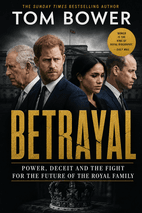
These quotes from Tom Bower's Betrayal pull back the curtain on the royal family and the Sussexes. You will find sharp accusations, raw emotion, and some lines that are hard to believe anyone actually said. Some are cutting, some are sad, and a few are darkly funny.
What makes the book so quotable is how much it sounds like a drama. Palace officials, friends, and family members all get their say, and each line adds to a story full of ambition, fear, and resentment. Whether you agree with the book or not, these words tend to stick with you.
Top Quotes from Betrayal
“She's tone-deaf to others,’ Robertson realised. ‘She just can’t do what we wanted. She's toxic.”
Ella Robertson reacts after hearing Meghan’s actual speech in Manchester.
It delivers the chapter’s verdict in plain, angry language. Readers remember the word ‘toxic’ as the defining judgement on the Sussexes’ appearance.
“This must work. We cannot have another Diana.”
The warning the chapter notes no senior royal voice actually delivered before the wedding.
It evokes the tragedy of Diana and makes the looming marital and public-relations failure feel inevitable.
“I want on the coat of arms a songbird with its tongue cut out.”
Meghan tells the Garter Principal King of Arms what she wants on her coat of arms.
The violent image lays bare her defiance and her sense of being silenced, making it unforgettable.
“He was, in his words, ‘the shadow, the support, the planB... the back-up, distraction, diversion and if necessary a “spare” part. Kidney, perhaps.”
The narrator repeats Harry’s own description of his role as the royal spare.
The darkly comic image of a spare kidney captures Harry’s resentment and self-deprecation. It is the most visceral definition of what being the second son meant to him.
“They're not going to stop until she dies.”
Harry says the tabloids are hounding Meghan as they did Diana.
This line makes Harry's fear for Meghan explicit and turns history into a threat. It resonates because the spectre of Diana's death hangs over everything Meghan endures.
“Meghan's brainwashed Harry,’ Camilla told a friend.”
Camilla reportedly said this about Harry's transformation.
It is a rare, blunt royal family judgment and captures the chapter's title. The word ‘brainwashed’ is the kind of memorable accusation that defines public memory.
“I lost my mother and now I watch my wife falling victim to the same powerful forces.”
Harry, in a statement released to journalists during the South Africa tour, denounces the tabloid press and invokes his mother.
It ties Meghan's suffering to Princess Diana's death and makes his fear that history will repeat itself heartbreakingly explicit.
Themes Behind the Quotes
One theme is the crushing pressure of royal life. Several quotes show how officials and courtiers expect total control, and how anyone who refuses to follow the code becomes a problem. Meghan is portrayed as ambitious and unwilling to soften, while Harry is shown as trapped between love and inherited fear.
Another theme is the shadow of Diana. Harry's fear that history will repeat itself runs through many lines. The language of danger, containment, and betrayal appears again and again. There is also a strong sense of isolation, with the Sussexes seen as outsiders and the palace trying to protect its own story. These quotes paint a world where survival and loyalty collide.
Quotes by Chapter
Prologue
“Rather, many across the globe are intrigued by whether they will continue to thrive or merely survive.”
The opening explains why the Sussexes keep commanding public attention.
It captures the suspense of their story beyond admiration or criticism.
“Divorce, debt and disaster are constant themes about the Sussexes’ future.”
The author describes what commentators predict for Harry and Meghan.
The alliterative triplet crystallizes the media narrative around the couple.
“However, no humiliation or criticism has crippled her breathtaking ambition.”
The narrator reflects on Meghan’s resilience despite backlash.
It is a striking one-line judgment on Meghan’s drive and determination.
“Isolated from Britain, his charitable activities have become threadbare and his desperation noticeable to many.”
The author describes Harry’s difficulties after moving to California.
It vividly conveys Harry’s isolation and decline in his new life.
1. Manchester, 5th September 2022
“She's fucked it,’ groaned Robertson. Instead of speaking as agreed about the charity One Young World, Meghan’s speech was focused on herself. Nearly fifty times in just ten minutes, she intended to say ‘I’.”
Ella Robertson reads Meghan’s draft speech before the One Young World conference in Manchester.
The blunt expletive and the detail of saying ‘I’ nearly fifty times capture how Meghan’s self-focused speech betrayed the agreed purpose of the event.
“Palace press officer Sara Latham voiced an alternative take about ‘Megxit’: ‘Ultimately, we've all been had.”
The author introduces a palace press officer’s verdict on the Sussexes’ departure.
The phrase ‘we've all been had’ is a cynical, memorable summary of the sense of manipulation that runs through the chapter.
“With Harry by my side,’ she had whispered at a London restaurant, ‘we can change the world.”
The narrator recalls Meghan’s private whisper at a London restaurant during her early relationship with Harry.
The romantic ambition in the line becomes chilling in hindsight, showing how personal destiny was wrapped up in the royal marriage from the beginning.
2. Global Celebrity
“You're not just marrying Harry Windsor,’ said the official, ‘you're marrying the British constitution.”
A senior official says this to Meghan during private briefings on royal life.
It distills the leap from personal romance to constitutional duty, a warning Meghan ignores.
“If you can't see it, I don’t have to prove it to you.”
Meghan says this six years later when explaining her stance toward the Royal Family.
It is a defiant mantra of self-validation, and a direct rejection of the Royal Family's judgment.
3. The Tea Party
“If you don’t mind, get your finger out of my face,’ Meghan Markle snapped at William.”
At the reconciliation tea party, Meghan snaps at William after he jabs his finger toward her.
It instantly captures the explosive confrontation and the collapse of royal composure.
“You talk about my hormones?’ glared Kate wide-eyed. ‘We're not close enough for you to talk about my hormones.”
Kate responds after Meghan blames their problems on Kate's hormones.
The exchange lays bare the raw personal hostility between the two women and their refusal to accept each other's terms.
“It's not my job to coddle people,’ Meghan retorted to a Palace official after being urged to be a little less strident.”
Meghan responds to a Palace official who urged her to be less strident.
It sums up Meghan's impatience with royal expectations and her unwillingness to soften her manner.
“Meghan cannot understand that you can't speak to the Royal Family in normal language. Everything is spoken in code.”
A senior Buckingham Palace official describes the communication gap.
It captures the fundamental cultural clash between Meghan's directness and the Palace's coded, restrained style.
4. William and Harry
“Being the ‘spare’ had become intolerable.”
The narrator sums up Harry’s frustration at his secondary royal role.
It condenses the book’s central conflict into one powerful sentence. ‘Spare’ becomes a wound rather than a title.
“This is not right, this is not normal, you need to talk to someone about stuff. It’s OK.”
Harry recalls William’s repeated encouragement for him to talk about his trauma.
It shows the supportive bond between the brothers before Meghan became a source of division. The direct, caring words make the later estrangement more painful.
“The man who never carried cash, never had a door key in his pocket and never travelled by Tube was oblivious to the real world.”
The narrator describes Harry’s insulated royal life before he met Meghan.
It exposes the gulf between Harry’s privilege and ordinary life. The specific details—no cash, no key, no Tube—make the critique unforgettable.
5. Briefings
“My mother was chased to her death when she was in a relationship with someone who wasn’t white,’ Harry recalled, ‘and look what happened.”
Harry recalls his mother's death and blames the paparazzi.
It ties Diana's death to Harry's current fears and his sense of persecution. The mention of race adds a sharp, painful edge to his grievance.
“I'm way more comfortable with The Crown,’ Harry confirmed, ‘than I am seeing the [newspaper] stories written about my family, my wife or myself.”
Harry says he prefers The Crown to newspaper stories about his family.
It is a startling admission that fiction feels more truthful than reality. It captures how completely Harry has turned from the institution and its press.
“It’s hell to live as a hangover of Mary,’ said one of Mary's descendants. ‘It’s hell to be a royal.”
A descendant of Queen Mary sums up the misery of royal life at Sandringham.
It condenses the dark side of royal tradition into a single phrase. Readers remember it because it sounds less like privilege than imprisonment.
6. A Divisive Agent
“Either genuinely disturbed or the master of a Hollywood performance, Meghan gradually convinced Harry that, like Diana, she too was the victim of Palace intrigue.”
The narrator sums up Meghan's influence over Harry.
It lays out the book's core accusation while leaving doubt about Meghan's sincerity. Readers remember the stark either/or framing.
“His mother's murderers, he was convinced, would destroy his next great love.”
Narrator describing Harry's belief that the press would turn on Meghan as it had on Diana.
It fuses Harry's grief, paranoia, and romantic narrative into one haunting image. This line makes his fear feel tragic rather than merely obsessive.
“And she is someone who doesn't read the stories. She would be dead if she was reading the stories.”
Harry explaining that Meghan was in tears because of tabloid reports.
The contradiction is powerful: Meghan was supposedly unaware of the articles that allegedly devastated her. It invites readers to question the couple's narrative.
7. Leaving Britain
“I think being part of this family, in this role, in this job, every single time I see a camera, every single time I hear a click, every single time I see a flash it takes me straight back, so in that respect it's the worst reminder of her life as opposed to the best.”
Harry tells the ITV documentary that every camera flash takes him back to the trauma of walking behind his mother’s coffin.
This exposes the raw, unresolved grief behind his conflict with the media, making his anger feel rooted in personal pain.