Betrayal Key Takeaways
by Tom Bower
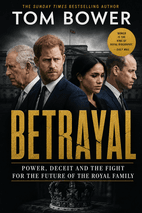
5 Main Takeaways from Betrayal
A manufactured public story collapses when facts and institutions push back.
Meghan and Harry built their public identity through tightly managed interviews, friendly writers, and social media, but Bower shows again and again that the story drifted from objective fact. Once court rulings, staff testimony, and independent accounts contradicted their claims, the narrative became a liability rather than a shield.
Institutional hierarchy beats celebrity ambition inside a hereditary system.
The monarchy runs on birth-determined rank, unpaid duty, and coded speech, while Meghan treated it as a stage that should reward talent and fame. Her refusal to curtsy and her clashes with the Cambridges were not etiquette failures but a fundamental challenge to the one thing the institution could never concede.
Legal warfare driven by grievance, not evidence, becomes self-defeating.
Harry's tabloid lawsuits were launched on assumptions, incentivized by no-win, no-fee deals, and pursued as personal revenge. Cross-examination exposed the gaps in his case, judges punished his spinning, and even his victories cost more in credibility than they returned in vindication.
Charity and business ventures succeed on delivery, not fame or rebranding.
Spotify died for lack of output, Archewell's accounts told a different story from its mission statements, and As Ever was a labeling exercise without a secure trademark or real backer. The exception was Invictus, which worked because it produced a tangible outcome for veterans.
Your audience owns the meaning of your honours and gestures more than you do.
The Tillman family vetoed Harry's award, the Living Legend accolade strained under the facts of his Afghan role, and the Uvalde visit was read as selective because his own father lay recovering from a stroke nearby. Context and timing determine how even sincere gestures land.
Executive Analysis
These five takeaways converge on a single thesis: the Sussexes' collapse came not from palace conspiracy or media persecution, but from the gap between a self-created story and the constraints of institutions, evidence, and audience judgment. Bower shows the couple repeatedly choosing controlled narratives over operational reality, grievance litigation over evidence, and celebrity branding over institutional duty. Each choice widened the contradiction between wanting royal status and refusing royal rules, between victimhood claims and commercial dealings, between advocacy values and tax-haven lifestyles. Every institution tied to their brand—charities, partnerships, family access—contracted until only Invictus still delivered.
This book matters because it turns a celebrity saga into a transferable case study in reputation, governance, and accountability. Readers can learn to verify before publishing, audit before scaling, and remember that audiences define the meaning of gestures. Within the palace-exposé genre, Bower distinguishes himself by testing the Sussexes' documentaries and memoir against court rulings, internal resignations, and documents, making his account a corrective to their controlled media productions. The practical impact is a toolkit for assessing any narrative where celebrity, money, and institutional power collide.
Chapter-by-Chapter Key Takeaways
Prologue (Prologue)
The Sussexes' hold on public attention rests not on sympathy or censure but on a shared question: whether they end in triumph or disaster, with debt, divorce, and downfall still the standard forecasts.
Meghan's public identity is a deliberate construction: tightly managed interviews, relentless social media, and selective access to friendly writers keep her story mysterious while her account of events drifts far from objective fact.
Harry has become the exposed half of the partnership, his charitable work hollowed out, his princely standing fading, and his refusal to reckon with the consequences of Spare leaving him defenseless against his brother's future authority.
William's stripping of Andrew's titles and honours over the Epstein connection signals that the coming monarch will not shrink from punishing royal family members, making the Sussexes' continued privileges precarious.
With the monarchy weakened by scandal and illness, 2026 is the year the couple's fate and the monarchy's direction will be decided, beginning with the upheaval of Queen Elizabeth II's death.
Try this: Audit your public narrative against objective facts before depending on managed access and friendly media, since a constructed persona can collapse when institutions or reality intervene.
1. Manchester, 5th September 2022 (Chapter 1)
Meghan's Manchester appearance was self-promotion disguised as philanthropy: she replaced the agreed theme of ethical leadership with ten minutes of personal narrative, leaving the organisers with polite applause and a guaranteed scandal.
The security operation around the event, which kept out protesters, journalists and the public while letting in only the couple's chosen photographer and a friendly author, showed that the Sussexes' public appearances were treated as controlled media productions rather than opportunities for genuine engagement.
The Robertsons' experiences across three summits revealed a recurring pattern: Meghan used each One Young World platform to climb, from forcing herself into photographs with world leaders to abandoning a scheduled speech, so the Manchester failure was not an aberration but the latest expression of a decade-long strategy.
The couple's own staff and the royal household shared the same conviction that they had been misled or used, which explained why Harry was left uninformed about the events at Balmoral; his exclusion from the Queen's final hours was the family's verdict on the trust he had burned.
Try this: When you speak at an event, honor the organiser's agreed theme rather than substituting personal narrative, because audiences and staff will judge trustworthiness by whether you respect their frame.
2. Global Celebrity (Chapter 2)
Harry sought in Meghan a listener who validated his paranoia, making her his confessor and protector before she became his wife.
The palace’s months of coaching were real, but Meghan’s celebrity lens made them indecipherable: she saw The Firm as a studio run by the Queen, not as a constitutional institution.
The coat of arms episode condensed the coming conflict: she wanted a duchess’s freedom to mark herself while ignoring the history and rituals that defined the role.
The wedding turned her into a global celebrity, and the absence of gushing praise for her few duties made the gap between her expectations and royal life unbearable.
Try this: Clarify the structural constraints of a role before negotiating its perks, and test your assumptions about an institution against its history and purpose rather than your own expectations.
3. The Tea Party (Chapter 3)
The Sussexes' conflict with the Cambridges was a collision of two incompatible definitions of the monarchy: Meghan saw it as a stage that should reward talent and fame, while the palace runs on birth-determined rank, unpaid duty and coded speech.
Meghan's refusal to curtsy and her ridicule of royal forms of address were not breaches of etiquette but assertions that her popularity and career outweighed the hierarchy that ranked Kate above her, the one thing the institution could never concede.
The quarrel over Charlotte's dress was the occasion, not the cause; by the refitting each woman had a settled inventory of the other's offenses, and when William repeated the staff's verdict that Meghan was a difficult person while she blamed Kate's "baby brain," the mutual diagnosis became the feud itself.
For Harry, the tea was not a peace overture but a return to the childhood contest with William; the contrast between the Cambridges' grand apartment and his own cold cottage revived his grievance at being the spare, and his refusal to "suck the lemon" made the brothers' estrangement final.
Try this: Recognise when a dispute is really about incompatible definitions of a relationship, and address the hierarchy itself instead of letting minor triggers become permanent inventories of offense.
4. William and Harry (Chapter 4)
The Queen's careful building of William as heir was the other side of Harry's neglect; the younger son was not left to drift by accident but by the same institutional design that gave the elder everything.
Charles's paternal failures were inherited from Philip and sharpened by Diana, who gave the boys no shared cultural ground with their father, so Harry's sweeping charge that his father was a man without feelings mistook a structural inheritance for a personal defect.
The Palace refused to fabricate a cover story for Harry's cocaine use but was willing to blur the truth to protect William, an asymmetry that taught Harry that institutional honesty was allotted by birth order.
Afghanistan gave Harry the competence and companionship that court life never offered, and the intervention that led to Heads Together came from William, not from the monarchy's adult apparatus.
The brothers' split took shape as soon as William married, when the visible gap in staff, cars and homes persuaded Harry he no longer existed as a person; he then magnified small slights, and Meghan arrived ready-made for the rescue fantasy he had kept for Diana.
Try this: Notice how institutional design, not personal malice, shapes family roles, and avoid interpreting structural neglect as an individual's verdict on your worth.
5. Briefings (Chapter 5)
Harry's conviction that the tabloids were hounding Meghan to death ignored how his mother had secretly collaborated with the very journalists he demonised, so his repeated history lesson misdiagnosed the present.
The palace rupture did not originate in media conspiracies or Cambridges backstabbing but in credible, converging staff complaints of bullying, which forced even Jason Knauf to abandon the Sussexes.
Treating royal work as a platform to monetise her image, Meghan chafed at the Crown's ban on commercial activity and misread the crowds in Sydney as a tribute to her celebrity rather than to the institution.
Meghan's attempts to shape the story through leaked letters and friendly journalists were transparent to the palace, and the People magazine exposé confirmed that the victim narrative was partly self-authored, ensuring the media battle became a public one.
Try this: Separate legitimate criticism from coordinated attack before declaring war on an entire media system, and verify whether your own strategic leaks are making the conflict worse.
6. A Divisive Agent (Chapter 6)
The public case for leaving Britain falls apart over Archie: the image ban was self-imposed, the alleged insults about his skin colour were never said, and the prince's title had already been granted, leaving Meghan's later explanations inconsistent.
Bower identifies the no-win, no-fee deal as the pivot: litigation cost Harry almost nothing while promising Sherborne at least £40 million, which made the family solicitor's warning seem like proof of a cover-up rather than sound legal advice.
Meghan was already negotiating her California return and pitching acting projects while Harry was still setting up a separate London office, and the Oprah interview that would frame their departure had been contracted before Archie was born.
Harry's obsessive reading of the criticism he called toxic turned legal action into personal revenge, but he had never considered hiring his own lawyer until Sherborne asked whether he had actually been hacked, suggesting the eight-year campaign was launched on an unexamined assumption.
The Palace's earlier secret settlement with Murdoch, under which the royals accepted money and dropped hacking claims to ease Camilla's path to Queen, was the unspoken obstacle to Harry's suit, so his declaration of war also broke the monarchy's media truce.
Try this: Before launching legal action on an assumption, examine whether your lawyers' incentives align with your true goals and whether a settlement culture you oppose explains your own case's weakness.
7. Leaving Britain (Chapter 7)
The South Africa tour was a staged farewell campaign: the glowing press coverage masked a pattern of ignored courtier advice, staff resignations, and a couple whose gestures were aimed at their own public narrative rather than diplomatic results.
Harry's statement and the Mail on Sunday claim escalated a private family dispute into a public war on the British press, deliberately invoking Diana's death to frame Meghan's suffering as history repeating itself and leaving the institution no room to respond.
The documentary and interview were calculated performances: Meghan's rehearsed tears and Harry's talk of wounds positioned victimhood as authenticity, creating the emotional warrant for an exit that was already being planned behind the scenes.
The courtier system had been crippled by Geidt's ouster, leaving Young and Alderton to guard their own fiefdoms, so when Harry ignored their demand not to sue News UK and sabotaged the Cambridges' Pakistan visit, no one at the palace could stop him.
By the time Clinton legitimised Meghan's grievances, the escape was not a decision but an operation: a publicist had secured the Vancouver Island mansion, and a team of lawyers, managers and advisers were moving the Sussexes toward Los Angeles and a commercial future.
Try this: Treat farewell performances as permanent decisions rather than media moments: once you frame a family dispute as public war, every subsequent move becomes hostage to the story you created.
8. Sandringham (Chapter 8)
The couple's departure was decided long before the Sandringham summit; the January negotiations only determined the terms, not whether the exit would happen.
The Queen's non-negotiable condition was that the Sussexes could not earn commercially while keeping royal status, making the severance option the only viable outcome.
Harry's conviction that Charles had leaked his email was mistaken, since the document had already reached a newspaper through his own staff.
The private secretaries acted out of loyalty to the Crown rather than personal hostility, which means Harry's "Machiavellian" reading of them mistook institutional duty for conspiracy.
The courtiers' caution and the family's failure to grasp the seriousness of the crisis did more damage to the monarchy than the Sussexes' departure itself.
Try this: When negotiating an exit from an institution, separate individuals' institutional duties from personal hostility and focus on the non-negotiable terms that will determine whether any path remains viable.
9. Freedom (Chapter 9)
The Sussexes' move to Canada and then California was a deal in search of a story: Netflix, Oprah, the three-book offer, and the staged lament to the Daily Mail were already arranged before the rescue-story framing was presented to the public.
The later claim of arriving with nothing collapses under the sums reported: Harry inherited more than £10 million, Meghan had saved about $2 million, and the Montecito house cost them $5 million in cash plus a $9.5 million mortgage.
Independence from the monarchy did not mean leaving royal branding behind, as Meghan converted Archewell into sussex.com under the Queen's arms and hired a former palace communications director to run the couple's operation.
Harry's book was a counterstrike aimed at Charles's own suppressed manuscript, and with a ghostwriter who treated confession as a "vital public service" and collected stories of drugs, sex, and hatred of Camilla, the result was a vendetta sold to the highest bidder.
Bower reports that about one in five pregnancies ends in miscarriage, a context that leaves Harry's accusation against the Mail on Sunday looking more like grief than causality.
Try this: Check whether your 'rescue story' was actually arranged before the adversity you describe, because audiences will eventually compare your claims of starting with nothing against the funds and assets you controlled.
10. Netflix (Chapter 10)
The Sussexes' public campaign was a staged production: from the re-enacted morning after the Oprah interview to the eight-hour filmed interviews behind black screens, authenticity was manufactured under conditions of total control.
Meghan's victimhood by racism rested on a general atmosphere rather than any specific incident she could name, and the one concrete conversation about skin colour was directly contradicted by Harry's account, leaving the charge to survive on refusal to name sources.
The leaked bullying memorandum, intended to discredit Meghan, gave her complaint its first real credibility, so the Palace's attack became the strongest evidence for her case.
Harry's therapy redemption arc was retrofitted over time: the 2014 intervention credited to William in 2017 had been erased by 2021, when Meghan took credit for inspiring him in 2016, and ayahuasca was added as the healing agent.
The meeting after Philip's funeral, later dramatised as escape from a "death cult", was a demand for apology that produced only William's "delusional" verdict and Charles's plea for a quiet old age; the breach hardened because no shared account of the family survived the encounter.
Try this: Do not manufacture authenticity under total control, since staged transparency will be decoded as performance and retrofitting a redemption arc after the fact destroys the credibility of the recovery.
13. Security (Chapter 11)
The rebranding of Meghan as a latch-key kid was a deliberate bid for American sympathy, even though her own family's account of privileged restaurants and chauffeured rides contradicted it.
The Lilibet announcement was a bid to claim royal blessing after the fact, and it unravelled only when the Palace made clear the Queen had been informed rather than consulted.
Ravec's withdrawal of permanent protection followed from Harry's new status as a non-working royal abroad, and the refusal to let him pay for it rested on the principle that state security cannot become a purchasable commodity.
The judicial review and tabloid suits were a legal offensive that enriched the lawyers regardless of outcome, while dragging the monarchy into the embarrassment of a royal suing the Queen's own government.
When Jason Knauf's statement exposed Meghan's false testimony, the immediate response was to blame Prince William and stage a cover-up, and the courts accepted an apology that let her avoid cross-examination entirely.
Try this: Avoid reframing your biography to appeal to a new audience when family records contradict it, and resist using litigation as a proxy for status because winning procedure is not the same as proving truth.
14. Spare (Chapter 12)
The memoir's instability was structural: drafts moved through every editorial tier, rewrites duplicated Moehringer's own second passes, one chapter existed in several versions at once, and the book's subject was never settled.
The book's engine is a catalog of grievances: William's silence at Eton and the best-man speech he refused, the shirt-grabbing confrontation after Prince Philip's funeral, the basement's poor light, the parking-space row, and a Charles presented as emotionally damaged and indecisive, whose "I'm not made of money" sat awkwardly beside Harry's £1 million a year plus expenses.
The book's factual defenses are self-defeating: the hired fact-checker received thanks while the corgi legend ran anyway, and Thompson's Gonzo method made personal conviction outweigh objective truth, leaving the Queen Mother's death, the A-level art correction, the Caroline Flack blame, and the Whole Foods headline scene all contradicted by the record.
The legal, financial, and final editorial record reads as one long act of damage control: Harry's bodyguard lawsuit contradicted his own email about lacking money, the judge who refused summary judgment called Harry's account "a masterclass in the art of spinning" as combined costs passed £300,000, Bower's book sets the £50,000 Saudi donation and the abandoned £1 million condition against Charles's €3 million in plastic bags of Qatari banknotes, and the closing cuts dropped the known-false racism references while keeping Piers Morgan and Rebekah Brooks.
Try this: If you publish a memoir, settle on a subject, verify every anecdote, and resist turning it into a grievance list, because readers will weigh small factual errors against the emotional truth you claim.
15. Jubilee (Chapter 13)
Among Harry's public projects, only the Invictus Games stood as an unqualified achievement, and the gulf between the adulation he drew in The Hague and the distance his family kept in London showed how far his standing had fallen.
The Queen's estrangement from Harry predated his move to California and his Oprah interview by years: she had felt hurt by his demands and conduct while the wedding was still being planned, and her later anger centered on what she saw as his media performances eroding the monarchy's mystique.
The NBC interview, timed to overshadow the Queen's birthday, only confirmed the charge that the Sussexes were narcissistic hypocrites who profited from the media they condemned.
The jubilee visit was choreographed like a treaty between adversaries: the family imposed every restriction from no uniform to no balcony, and the Sussexes accepted them because the private audience at Windsor would confer on their book and Netflix series a credibility they could not manufacture.
No reconciliation was attempted or wanted: the Queen barred photographs at the Sussexes' only private meeting, they left without discussing a way back, and Harry's manuscript deletions revealed not a change of heart but a conviction that his father and brother might never forgive him.
Try this: Protect a genuinely valuable project from being used as a platform for family attacks, and read a tense family gathering as a negotiated treaty rather than a step toward healing if no reconciliation is attempted.
16. Archetypes (Chapter 14)
The Netflix documentary's heroic framing rests on staged or unverifiable material: the "chase" was no chase, the Vancouver Island tears cannot be dated, and no tabloid article ever proved the "angry black woman" trope.
The Diana comparison fails because the two situations are not alike: a nineteen-year-old's genuine despair is not a thirty-six-year-old divorcee's calculated advantage, so the imitation reads as fake rather than tribute.
The Archetypes podcast showed she had nothing real to offer: eighteen months after signing, Meghan had no ideas, panicked at deadlines, and staff treatment grew so poor that one employee required long-term therapy.
By late 2022 the backlash was underway: the sympathetic Cut profile backfired into a scathing portrait, the New York Post and Mariah Carey turned on Meghan, and Kamala Harris's campaign refused her help.
Harry's credibility fell apart the same week: he pitched interviews with Putin and Trump as sociopaths, then denied making the pitch, and his UN speech comparing an abortion ruling to Russia's invasion was publicly mocked by Justice Alito.
Try this: Test your product-market fit before committing to a media deal: a celebrity platform cannot replace a clear concept, and without delivery it will trigger the backlash you most fear.
17. The Funeral (Chapter 15)
The family rupture was complete before the funeral ever took place: Charles barred Meghan from Balmoral, William excluded Harry from Birkhall, and the brothers offered irreconcilable accounts of whether Harry had even asked for flight details.
The Windsor walkabout was manufactured for the cameras rather than a genuine thaw: the invitation went out at the last moment to shield William and Kate from criticism, the couples drove to the gates in silence, and the Sussexes left nursing a catalogue of slights.
Scobie reports that William became £23 million a year richer from the Duchy of Cornwall, while Harry lost his honorary military appointments, had the Queen's cipher removed from his uniform, was dropped from the heads-of-state reception, and was legislated out of his prospective role as the King's stand-in.
Meghan treated the mourning as a media operation: her communications team was replaced, her tribute to the Queen was belated and strategic, and when the Abbey's camera placement left her out of frame she took the exclusion as proof of the family's racism.
Harry's memoir, sold on a promise of total honesty, had been planned while the Queen was still alive; her death took the edge off its impact without prompting second thoughts, and he flew home determined on chaos, approving no further cuts and untroubled by what the book would do to her memory.
Try this: During a public mourning period, subordinate communication strategy to the occasion's dignity, because treating grief as a media operation will be visible and will permanently define how your audience reads your motives.
18. Protection (Chapter 16)
The case against the Mail rested on a single recanting investigator; without a money trail, the accusation had to fail for lack of proof.
Hussey's dismissal was a reputational reflex by a Palace more fearful of seeming racist than of the act itself.
The trailer's images of press intrusion were borrowed from unrelated events, so the series' central charge of persecution was manufactured in the editing.
At the Ripple ceremony the couple accepted anti-racism honors while the host, on the same night, publicly contradicted their central claim.
Whatever the Sussexes expected from the coronation invitation, Charles's Christmas broadcast made the unmentioned son the definitive statement of the rift.
Try this: Check whether the evidence in your central accusation can survive scrutiny, and do not let institutions' reputational reflexes convince you that approval of your claim equals proof of your facts.
19. Publication (Chapter 17)
Treat Spare's publicity campaign as a coordinated moral rebranding, with each interview tailored to a different audience even at the cost of consistency.
Read the mental health advocacy as a commercial enterprise, where therapy language was repackaged to sell a product and critics were dismissed with self-help slogans.
Let the Maté conversation show how readily Harry's account shifted under pressure, as his pride in killing gave way to empathy for soldiers once his interviewer disapproved.
The aftermath leaves Harry isolated: Meghan withdrew from the story, litigation consumed him, and the Frogmore eviction sealed his separation from the family he claimed to be saving.
Try this: Choose one consistent message across interviews rather than tailoring each answer to a different audience, and avoid repackaging personal pain as a product unless you can withstand scrutiny of your motives.
20. High Court (Chapter 18)
Meghan’s commercial ambitions depended on keeping her royal title, and she used her celebrity to boost sales for brands she invested in.
Harry and Meghan pushed for their children to receive royal titles, and the King eventually relented after the christening.
Harry’s legal case against the Mail group relied on questionable witnesses and evidence, and a judge barred the use of leaked financial records.
Harry’s role in the coronation was minimal, and he left immediately after the ceremony.
Harry blamed the tabloids for his mental health struggles and claimed a secret agreement between the Queen and Charles to avoid suing News UK.
Try this: Separate your business interests from your institutional status, and recognise that demanding honours while monetising the title will undermine the credibility of both.
21. Coronation (Chapter 19)
The coronation showed that the monarchy's future security rests on William and Kate, not on Charles's own standing with the public.
Charles's failure to settle the embarrassments posed by Andrew and Harry damaged the Crown's credibility more than the princes' conduct itself did.
Meghan's absence read as contempt for a family she blamed for racial abuse, leaving the monarchy's unresolved racial questions on display.
Harry's twenty-nine-hour visit confirmed a permanent rupture: the family ignored him in the abbey, and William decided that same day to exclude him from his own coronation.
Try this: For an organisation's leader, unresolved embarrassments of family members damage the institution more than the original conduct, so address them decisively rather than letting them define public perception.
22. The Chase (Chapter 20)
The Ms Foundation award was engineered as a reputational reset for the Sussexes, yet the chase story that followed overwhelmed the news cycle and turned the trip into a self-inflicted credibility wound.
Independent accounts from the NYPD, the precinct chief, the cab driver and the photo agency all contradicted the "near catastrophic" version of the Manhattan chase, leaving the couple's safety story without corroboration.
The rapid Uvalde pilgrimage served as reputation repair, but its compassion was conspicuously selective: Meghan flew 1,400 miles for strangers while her own father lay recovering from a stroke 200 miles from home.
The couple's American sanctuary now looks like a trade of imagined dangers for real ones, given pervasive US gun violence, and the same day Meghan laid flowers at Uvalde saw Harry lose his London protection claim and face costs.
Try this: Before staging a reputational reset, confirm every element of the story you plan to tell, because one contradicted incident can overwhelm the entire trip and convert intended repair into a credibility wound.
23. Cross-Examination (Chapter 21)
Cross-examination demolished the premise that the Mirror's stories about Harry had to have come from hacked voicemails, since many were traceable to rival reports, official statements, and Harry's own interviews, and one concerned his twelfth birthday, before he owned a mobile.
Harry's case came to rest on a feeling rather than a fact: he had not read the articles at the time, could not recall key conversations, and conceded there was no direct evidence his own phone was hacked.
The "Hooray Harry Is Dumped" moment exposed the deeper rift: Harry had never heard of "Hooray Henry," mistook a comment on a toff's class for a cheer at his breakup, and showed himself unable to separate hostile tone from unlawful intrusion.
The verdict was effectively settled before Harry gave a single answer: the High Court had already ruled hacking rampant in Mirror papers, and Meghan's victory against the Mail on Sunday pointed the same way, so his courtroom performance changed little.
Try this: Distinguish hostile tone from unlawful intrusion, and before going to court test whether the evidence supports the legal claim rather than the emotional story, since feeling wronged is not proof.
24. Blow-Up (Chapter 22)
The Spotify contract died for lack of output, not lack of fame, and that difference is important: celebrity wins the deal, but only continuous production renews it.
Meghan's roster of role models, from Oprah to the Kardashians, disguised a missing message; calling the project an "incubation" or an "ideation" could not hide that no brand had been conceived.
The contradiction between the Netflix co-founder's praise and the ridicule of figures like Bill Simmons could not be spun away; praise seems fake when everyone can see the opposite.
Falling out with Spotify wounded the Sussexes' standing without touching their income; the failed deal hurt their reputation, not their money, because Netflix's long-term commitment remained intact.
The silence from the Royal Family and from the Clooneys and Obamas on Meghan's birthday laid bare that the couple's status came from the royal family; when that support faded, their circle contracted to loyal women.
Try this: Renewals depend on regular output, not on the fame that won the contract, so build a production discipline and a clear brand message before expecting partners to continue past the first deal.
25. Out of Africa (Chapter 23)
Sentebale's crisis was structural, not merely reputational: its flagship polo matches consumed nearly as much as they raised, the London office drew a disproportionate share of the budget from staff who never set foot in Lesotho, and the deficit repeated every year.
The relationship with Sentebale's largest benefactor was always personal rather than institutional, so it snapped in a single evening: Harry resented being exploited in Tokyo, Chandauka's dinner overtures were taken as insults, and Handa's foundation left, taking a major share of the charity's income with it.
The brand audit's verdict was that Harry's name had become the liability: sponsors fled the Netflix association and Meghan's brand, polo backers and Audi withdrew, and the only pitch with any future was a corporate-backed comeback story attached to the mission rather than to the prince.
Harry accepted Project Pivot in word while resisting it in deed: he agreed to shut the London office, shift operations to Lesotho, drop the HIV-only mission, and fly there for the first time in half a decade, yet he also blamed Chandauka for the audit's findings and demanded doubled polo profits before recommitting.
The same pattern governed his life beyond Sentebale: African Parks saw him accept a move to the board while proposing a documentary instead of engaging the allegations; his visa status stayed in litigation; and with the palace silent and William demanding a decisive unwelcome, the only applause he could find in Britain came from charity audiences.
Try this: When a charity audit finds your name is the liability, accept the structural diagnosis and implement the operational pivot instead of blaming consultants and demanding unrealistic returns before recommitting.
26. Düsseldorf (Chapter 24)
The Düsseldorf Games split into two competing events: Harry's stadium-scale triumph flattened as soon as the opening show ended, while Meghan's arrival turned the week into a brand campaign that visibly sidelined him.
The children dispute is a structural clash, not a marital aside: Harry insists on total shielding because of his own ruined childhood, while Meghan sees her children as brand assets entitled to the same exposure as the Wales children.
Meghan used the Invictus Games as a commercial and diplomatic platform, crashing a retailer's website with her outfit briefings and converting her Nigerian ancestry into a military connection and a private agreement for a future state visit.
Harry's countermove was to engineer his own coverage through a compliant journalist and a leaked birthday dinner, but his closing speech's appeal to wounded veterans was undercut by his false claim that British papers had ignored them, since The Sun had long sponsored Help for Heroes.
The reported Portuguese property purchase was a marketing invention to move houses, and the couple's confidence on returning to Montecito rested on the Games' favorable headlines rather than on any real improvement in public opinion.
Try this: Decide whether your public events are about the mission or your image, and avoid measuring success by favourable headlines manufactured through controlled access because the underlying reputation will not improve.
27. Where Billionaires Escape from Millionaires (Chapter 25)
Meghan’s outfit briefings to the press were part of the event itself, a tool for shaping the story before any policy discussion could take shape.
The Parents’ Summit exposed the absence of a concrete agenda for online safety, which Harry and Meghan filled by claiming ownership of the issue and repeating familiar personal testimony.
The couple’s Canouan holiday sat in direct tension with their advocacy brand: they were untroubled by the island’s tax-haven economy and its discriminatory treatment of black employees while using its billionaire amenities.
The post-holiday strategy of flying on private jets and appearing beside celebrities was self-defeating, since it reinforced the grifter perception it was meant to undo.
By Charles’s seventy-fifth birthday no invitation had been sent at all, and the Palace’s view that the Sussexes were indiscreet and untrustworthy made a family reconciliation structurally impossible.
Try this: Align your advocacy lifestyle with your stated values, because audiences will measure your online-safety and inequality campaigns against your tax-haven holidays and private jets no matter how carefully you brief the press.
28. Endgame (Chapter 26)
Scobie's editors traced the book's most damaging material to Meghan's briefings, which made the Sussexes' disavowals of Endgame a public posture rather than the truth.
Endgame escalated the couple's earlier accounts instead of merely relaying them, turning Harry's light-hearted memory of the 2016 conversation into a racial accusation that even named Kate, though she was never present.
The Dutch edition unravelled Scobie's defence because the translators had no reason to invent names that sat in his own uncorrected manuscript, and his eventual admission ended whatever credibility he had left.
The book's verdict on the monarchy was terminal: a foolish and fragile king, an heir prophesied to be the last, and a court system defined by conspiracies it never actually demonstrated.
The simultaneous launch of Endgame with Meghan's red-carpet "strategic relaunch" exposed the couple's predicament: a publicity machine with no discernible purpose, acknowledged even by their most loyal ally.
Try this: Assume that off-the-record briefings will eventually be traced to you, and resist escalating allies' accounts for maximum impact because the correction will destroy both your disavowal and the ally's credibility.
29. The Biggest Losers (Chapter 27)
The brand collapse was structural rather than accidental: the Sussexes asked the public to admire them simultaneously as a commercial enterprise, a moral crusade and a royal grievance, and once the market turned, the snubs from the Westminster wedding and Sandhurst's alumni list were the predictable price of becoming a reputational liability.
Archewell's public image and its annual accounts described two different organisations, and the accounts were the honest ones: most of the money that came in went to keep the enterprise running, not to the causes in its mission statement.
The year's most revealing philanthropy was a gift to the president's daughter's project, arranged through his sister at the moment his administration was keeping Harry's visa file out of public view; whatever the intent, it read as an exchange rather than an act of compassion.
The hacking case was a victory on paper only: the judge found the intrusion limited and the damages demand inflated, the award was soon swallowed by a settlement, and the Mail on Sunday case ended with Harry paying the costs he had hoped to avoid.
Try this: Read financial accounts rather than mission statements to judge an enterprise, and avoid gifts or alliances that coincide with regulatory decisions affecting you, however innocent the intent.
30. A Living Legend (Chapter 28)
The Living Legend award was a publicity swap: Harry gained a flattering platform, the organisers gained coverage, and the accolade's credibility strained once his actual Afghan role was set against the programme's claim that he was a pilot.
Meghan's absence, followed by the Sussexes' exclusion from Bezos's birthday list, showed that royal titles no longer guaranteed access to the uppermost tier of American wealth.
Harry's Jamaica appearance while Charles and Kate lay in hospital demonstrated a consistent preference for seizing headlines over managing how the royal family's distress would look to the world.
The reopened Sussex website, using the royal coat of arms and titles to market a commercial venture, effectively scrapped the Sandringham agreement and reduced Archewell's charitable language to branding.
Behind the staged comeback, the enterprise was contracting: a fifth executive resigned, the Netflix neighbour stayed silent under mockery, and the promised slate never materialised.
Try this: Consider how timing and venue will affect your audience before accepting an honour or making a public appearance, especially when the institution you criticise is in visible distress and the accolade's standards are strained.
31. Bad Optics (Chapter 29)
The Palace's institutional memory has thinned to the point where no senior figure can persuade William to engage with the history and symbolism of the Crown, and a king too ill to govern has no spare capacity to absorb that loss.
Harry's efforts to reconnect, from volunteering to step up to his television olive branch, were each met with a wall the King did not dismantle, and the downgrade of the Sussexes shows that retaliation has replaced reconciliation.
The Kate photograph episode and the Bouzy-driven rumours demonstrate that royal communications now compete on the same terrain as the most hostile online fabrication, so even a cancer disclosure is received as a PR move.
The Sussexes' public position collapses into contradiction: Meghan denounces cruelty toward women while their circle feeds that cruelty toward Kate, and Harry's private outreach turns out to be self-reported messaging.
A second Trump presidency would strip the Sussexes of the protective cover Biden offered, leave Harry's visa status exposed, and remove the diplomatic buffer that has kept the Heritage Foundation's demands at bay.
Try this: If you want reconciliation, make your outreach verifiable and stop your supporters from attacking the other side, because self-reported gestures and enabling hostile online rumours will be read as bad optics.
32. The Brand (Chapter 30)
Fame alone cannot build a business; a lifestyle empire needs real products, partners, and credibility.
Meghan's rushed launch of American Riviera Orchard and her Netflix series exposed a gap between her public image and her actual skills or preparation.
Her need for control and attention created friction with charity partners, sponsors, and even her own production team.
The Sentebale polo match showed how personal ambition and media interests can damage longstanding charitable relationships.
The chapter highlights how celebrity branding often relies on carefully staged appearances rather than genuine expertise or follow-through.
Try this: Build a lifestyle brand on real expertise, tested products, and true delegative capacity, and never let a need for control alienate the partners and producers who must deliver the work.
33. Nigeria (Chapter 31)
The Nigeria tour belongs to a single campaign of royal self-reassertion: Invictus now works as the Sussexes' substitute royal stage, bookended by a St Paul's service that counter-programmed the King's garden party and a promise that Meghan would surface at the Birmingham Games.
Nigeria's hosts were willing collaborators: military chiefs wanted a prince's celebrity to reassure soldiers on the Boko Haram front that their wounds would be honoured, and political figures used Meghan's claimed ancestry to welcome her as a returning daughter and to affirm the racism grievance she told them over dinner.
The tour was produced for a controlled audience: only compliant outlets witnessed it, and with no outsider access the mismatch between Meghan's designer wardrobe and a country where salaries go unpaid never reached print, leaving the visit almost unnoticed inside Nigeria.
Invictus is being refitted for a world at war: since none of its founding nations can still supply the wounded competitors the Games were built for, conflict countries such as Ukraine, Israel and Nigeria have become the new recruiting ground, and the Nigerian trip doubled as a demonstration of that pipeline.
The trip's real economy served the couple's image rather than its stated cause: the only press admitted helped monetise Meghan's clothing, and the airline owner under US indictment who flew the party banked a photograph with the Sussexes and had his publicists present the flight as proof of royal favour.
Try this: When entering a partnership with a head of state or military, verify why they want you and what they will use your visit to legitimise, and be honest that controlled media access may mean the tour never reaches the public you claim to serve.
34. Battling (Chapter 32)
Harry's accountability project in the courts reduced itself to a solo act: insurers forced Hugh Grant out, forty claimants became two, and the judge's frustration with Harry's own disclosure record had put the moral high ground in dispute before his central allegations were ever tested.
The Tillman Award backlash demonstrated that an honour's meaning belongs to its audience, not its recipient: once the Tillman family objected, the ceremony became a platform for exactly the criticisms it was meant to answer.
By summer 2024 the breach with Britain was no longer a family quarrel but a settled fact: the protection appeal foundered on official procedure, the King was kept unavailable, the Father's Day contrast passed without comment, and British opinion had turned decisively against the couple, leaving their remaining support concentrated outside the country.
The couple's ventures kept depending on the world they claimed to reject: Harry sold Netflix a polo series promising access to the sport's privileged elite, then declined to perform on camera, and Meghan's reinvention leaned on the royal title even as she described royal life as an ordeal, so the Sussex brand requires an audience willing to hold ambition and grievance together.
Try this: Accept that honour meaning is set by its audience, not the recipient, and avoid building commercial projects that require the royal world you have rejected to make the offering coherent.
35. Colombia (Chapter 33)
The Colombia visit was primarily a media exercise. Access was tightly controlled, coverage was driven by Meghan's rotating designer outfits, and the official agenda was stage-managed around her image.
The partnership between Marquez and the Sussexes was one of mutual convenience. The vice president hoped to deflect allegations of corruption, and the couple sought a sympathetic, anti-imperialist stage.
The couple's responses to Colombia's suffering were performative rather than substantive. Meghan's homilies about love and kindness supplanted any concrete commitment, and Harry's apology for slavery barely registered in a community that asked for repentance.
The discrepancy between the trip's lavish cost and Archewell's tiny contribution, together with the hidden funding through Soros's charity, undermines the claim that the visit was charity rather than self-promotion.
The human toll of the operation was concentrated in the couple's own staff, from Harry's chief of staff departing after three months to publicist Ashley Hansen's collapse on the flight home.
Try this: Measure a 'charity tour' by the human cost to your own staff, the concrete commitments made, and the actual funding contributed, not by the designer-outfit coverage and anti-imperialist platform.
36. Sidelined (Chapter 34)
By late 2024 the Sussexes' commercial worth had come apart from their output: Netflix absorbed the polo series as an acceptable loss and held on to the couple mainly because the bond could be cited to recruit other celebrities.
The September 2024 exposés retired the excuse that British malice alone had built Meghan's image; the resignations and the defensive testimonials placed the pattern of behavior squarely with the couple's own operation.
Harry's New York swing was a staged reply to the separation talk, pairing his aid work with Meghan's ventures as a single stable household; the message was undercut by the record of his own memoir and interviews when he moralized about social media's harms.
The Lesotho flight capped a year in which neither family nor charity offered safety: the brothers stayed silent, the palace marked his birthday with an unsigned photograph, and African Parks and Sentebale had become reputational hazards, turning the visit into a last-ditch proof of purpose.
Try this: When your output no longer matches your valuation, stop using staged appearances to answer criticism and instead let measurable work, genuine engagement, and accountability rebuild the relationships you need.
37. Sentebale (Chapter 35)
A charity patron's influence stops at the edge of the board's formal authority; once Harry decided that compliance with governance rules was a personal slight, every dispute with Sentebale became a proxy war for control of the institution.
Sentebale's money troubles were largely self-inflicted: established donors across Africa and Europe withdrew after Harry's public attacks on his family, and he made the flagship fundraising event impossible by demanding a personal profit the charity could never guarantee.
The October trip to Lesotho measured the value of royal celebrity to a charity, and the verdict was mixed: one American donor converted, others saw a vulnerable stranger, and the defining moment was Harry's departure by private jet for Rwanda, one night early, without a word of thanks to the hosts who had assembled Johannesburg's corporate elite.
The drive to depose Chandauka short-circuited every safeguard the charity possessed: appointments were waved through without discussion, long-serving trustees became enforcers, and the solicitors meant to protect Sentebale took instructions from Harry's personal lawyers.
Each side read the same conflict as the mirror image of the other: Chandauka saw a white male establishment using its status and connections to crush her, while Harry and his allies saw a vengeful troublemaker with a racial agenda; those incompatible readings made a negotiated outcome impossible.
Try this: Respect the boundary between a patron's wishes and a board's governance authority, and if a conflict becomes a proxy war, recognise that each side's mirror-image grievance may make negotiated resolution impossible.
38. American Hustle (Chapter 36)
Meghan's portrait of herself as the world's most bullied and friendless figure collapses against her school friendships, her extracurricular record, and the testimony of her father and teachers.
American Riviera Orchard was doomed by a trademark conflict and an absent chief executive, which suggests the Sussexes' business failures were due to poor management, not hostile journalists.
Harry's settlement with News Corp reversed his vow to force Rebekah Brooks to answer in court, and the admission he obtained applied only to the defunct News of the World, leaving his broader accusations unresolved.
The Sentebale crisis, the negative trailer reception, the Vanity Fair bullying allegations, and the wildfire relief tour all show the couple turning sympathetic moments into publicity exercises, which only deepened the public hostility they lament.
Try this: Do not let the pursuit of a sympathetic narrative override the operational details of a business or a legal settlement, and check whether your response to crises creates another round of publicity that deepens the hostility.
39. Vancouver (Chapter 37)
The Vancouver Invictus Games were built as a stage for the Sussexes rather than a tribute to veterans, with crowds drawn by Katy Perry and empty venues dressed up to look full.
Meghan's "Ma'am" demand, her choreographed Instagram content, and her public displays of affection converted a sporting event into a personal brand campaign in which competitors served as background.
Harry mistook the orchestrated roar of the opening ceremony for genuine public acclaim; the silent basketball arena and Canada's indifferent media coverage exposed that assumption.
The Nigerian delegation's ordeal, from visa denials to a 24-0 defeat and the cold dismissal of its 2029 hosting bid, showed that the couple's American ambitions trumped the international veteran community.
The "Birmingham 2027" closing plea left unresolved whether the British government would honour veterans as Canada had, a question the ceremony's emotion could not settle.
Try this: If you are building a major event, protect the competitors' experience and the host country's commitments over your own camera presence, because a manufactured roar will not survive the evidence of empty venues or mistreated delegations.
40. Meghan, As Ever (Chapter 38)
The change from American Riviera Orchard to As Ever was a forced retreat, not a strategic rebrand: the original name's patent application had failed, and the replacement had already been rejected once because a Chinese clothing company owned the trademark.
As Ever functioned as a labeling exercise rather than a company: products came from outside manufacturers such as The Republic of Tea, the jam was made in Illinois, and the 45-minute sell-out exposed the absence of any real financial backer.
The launch was incoherent at its core because Meghan never settled on who was selling the product: Duchess of Sussex, Meghan Markle, Meghan Sussex, and Her Royal Highness all made appearances.
The critical response, including plagiarism accusations from black chef Carla Hall and recipes traced to food blogs, complicated any reading of the backlash as pure misogynoir.
However the rollout was marketed, the series failed on Netflix's own terms: it barely registered in American ratings, its worldwide ranking was negligible, and insiders described the already-filmed second season as borrowed time.
Try this: Before launching a consumer brand, settle one coherent founder identity, secure the trademark in every class, and confirm a financial/operational backer, since a 45-minute sell-out without a real company will not sustain a streaming series.
41. Contrasting Lives (Chapter 39)
The Sentebale dispute ended not with a boardroom resolution but with a resignation campaign: the founder who refused to stand aside kept her post, and the Charity Commission investigation meant the episode settled nothing.
The security case was lost on its own terms, because bespoke protection existed and Harry had recast his claim from press intrusion to state abandonment, which the courts had already examined and rejected.
The BBC interview was timed before the verdict and handed to a correspondent with no royal background, which is why its broadcast read as a one-sided ambush that the corporation later apologised for.
Meghan's titled photos of Archie and Lilibet are the rival court's currency, but with Netflix's deal gone, visibility now carries more ridicule risk than institutional power.
The chapter's heaviest charge falls on the King: a monarchy that preaches family unity exposed its own inability to reconcile a household, and no court ruling will repair that.
Try this: Let institutional processes resolve disputes rather than launching resignation campaigns or one-sided media interviews, and know that unanswered controversies will be judged as the responsible leader's failure.
42. The Last Calamity (Chapter 40)
Harry's African legacy has crumbled on both fronts: the Charity Commission sided with Chandauka, made his reinstatement impossible, and left the bullying complaint unresolved, just as Chad expelled African Parks from his other charity's territory.
The September visit achieved the reverse of reconciliation: the King granted only a formal 54-minute audience, a courtier warned that hospitality had been misread as a peace treaty, and the Sussexes left with the breach wider than before.
Meghan's 2025 bid to define herself in America failed on its own evidence: the Balenciaga entrance was disowned by the designer, the Netflix series barely registered, and the Harper's Bazaar cover's biographical claims collapsed against her father's testimony, leaving her fame resting on the marriage she wanted to escape.
Andrew's final fall came when a single exposed email proved he had lied about breaking with Epstein, and the palace then shed him with a speed that made loyalty plainly conditional on the ability to deny the facts.
William has emerged as the monarchy's enforcer: he vetoed Harry's path back, demanded Andrew's eviction, and now holds the decision on the Sussex children's princely status, while the threatened memoirs are the only card Meghan has left to play.
Try this: For family or institutional reconciliation, accept that a formal audience is not a peace treaty and that loyalty is conditional on the ability to deny facts, so build relationships on evidenced trust rather than titled symbolism.
43. Make or Break (Chapter 41)
The damage traced in this chapter came less from Palace opposition than from the Sussexes' own contradictions: complaining of publicity while licensing their marriage as streaming content, and mocking the curtsey before teaching it to pupils in Colombia.
By the close, the couple's two public careers had split cleanly: Harry's credibility survived only where it tied to service commitments like Invictus and Sentebale, while Meghan's ran through celebrity appearances, and only the Games still worked.
The legal defeats mattered less in themselves than for what they removed, as the recanted statement and the security appeal dismissal stripped the couple of the courtroom vindication their narrative depended on.
The Nigeria and Colombia tours did not rebuild royal standing but cemented a "faux-royal" frame, proving the couple could not leave the monarchy's terms behind even as they attacked them.
Every institution tied to the Sussex brand had closed or fallen apart, leaving unrepaired family bridges with William and Thomas Markle as the personal cost and the Invictus Games as the only thing still delivering.
Try this: Close the gap between your complaints and your licensing, between mocking a ritual and teaching it, and focus on the one service venture that still delivers while reconstructing credibility—rather than forcing a new brand.