Angela's Ashes Quotes
by Frank McCourt
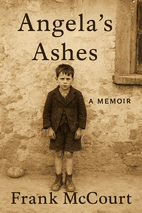
This collection brings together some of the most striking lines from Frank McCourt's memoir. You will find raw honesty, dark humor, and a voice that never flinches from poverty or pain. McCourt's wit cuts through the misery, making his observations both heartbreaking and oddly uplifting. The quotes here capture the resilience of a boy growing up in Limerick, where faith, family, and hunger shape every moment.
What makes this book so quotable is its blend of tragic innocence and sharp comedy. McCourt writes with a child's perspective but an adult's understanding, creating lines that stick with you long after you close the book. They are shareable because they feel true, even when they make you laugh at the darkest things.
Top Quotes from Angela's Ashes
“When I look back on my childhood I wonder how I survived at all. It was, of course, a miserable childhood: the happy childhood is hardly worth your while.”
The narrator, Frank McCourt, reflects on his early life in the opening of the chapter.
This sets the tone of the memoir with dark humor and resignation, immediately engaging readers with its blunt honesty.
“Worse than the ordinary miserable childhood is the miserable Irish childhood, and worse yet is the miserable Irish Catholic childhood.”
Frank continues describing his upbringing, ranking different types of misery.
This line is frequently quoted for its cynical wit and captures the unique suffering of Irish Catholic poverty, resonating with anyone who feels their background added extra hardship.
“The master says it's a glorious thing to die for the Faith and Dad says it's a glorious thing to die for Ireland and I wonder if there's anyone in the world who would like us to live.”
Young Frankie reflects on the adults' talk of dying for causes.
This line poignantly captures the child's desire to simply live amid the glorification of martyrdom.
“What kind of a God would do a thing like that?”
Mikey Molloy questions his mother's fear that God would send him to hell for having a fit.
This simple question reveals a child's logical challenge to harsh religious teachings.
“No one can ask him to die for Ireland at the age of three, not even Padraig Pearse, who was shot by the English in Dublin in 1916 and expected the whole world to die with him.”
Frankie reflects on his father giving three-year-old Michael a penny for promising to die for Ireland.
It exposes the absurdity of nationalist fervor through a child's eyes, contrasting heroic rhetoric with the innocence of a toddler.
“I say, Billy, what's the use of playing croquet when you're doomed? He says, Frankie, what's the use of not playing croquet when you're doomed?”
Frankie and Billy watch Protestant girls play croquet, knowing the Church teaches they are doomed.
This darkly humorous exchange captures the existential dilemma of living under religious certainty, and the defiant choice to enjoy life anyway.
“If ever you're getting a dog, Francis, make sure it's a Buddhist. Good-natured dogs, the Buddhists. Never, never get a Mahommedan. They'll eat you sleeping. Never a Catholic dog. They’ll eat you every day including Fridays.”
Mr. Timoney advises Frankie on dog breeds after his dog Macushla attacks him.
This witty satire of religious stereotypes through dogs is both hilarious and incisive, showing Mr. Timoney's irreverent wisdom.
Themes Behind the Quotes
The quotes repeatedly explore the weight of poverty and hunger, showing how they shape every aspect of life. McCourt's characters face constant deprivation, yet their spirit refuses to be crushed entirely. Another central theme is the tension between religious faith and national identity. The characters grapple with a God who seems indifferent and an Ireland that demands sacrifice. These conflicting loyalties create a darkly comic view of life where death is ever present but humor provides a lifeline.
The quotes also highlight the absurdity of authority, whether from priests, teachers, or parents. McCourt's sharp eye for the ridiculous balances the tragedy, making the suffering bearable and the insights unforgettable. Family loyalty and the struggle for dignity in the face of crushing circumstances run through nearly every line. Ultimately, these themes combine to form a portrait of survival that is both deeply personal and universally resonant.
Quotes by Chapter
Introduction
“I learned the significance of my own insignificant life.”
Frank McCourt said this to high school students on Long Island in 1997.
This line captures the central theme of the memoir—that a seemingly small, hard life can hold profound meaning and be worthy of storytelling.
Chapter I
“The rain drove us into the church—our refuge, our strength, our only dry place.”
Frank describes the relentless rain in Limerick that forced people to seek shelter in church.
It illustrates the irony of religious piety stemming from practical necessity rather than faith, a recurring theme in the book.
“Ah, Lord above, says Nurse O'Halloran, this child is a time straddler, born with her head in the New Year and her arse in the Old or was it her head in the Old Year and her arse in the New.”
The midwife comments on Angela's birth at the stroke of midnight on New Year's Eve.
This humorous observation highlights the absurdity and chaos surrounding Frank's mother's birth, blending tragedy with comedy.
Chapter II
“Is there any end to your questions? Sheep are sheep, cows are cows, and that over there is a goat. A goat is a goat. The goat gives milk, the sheep gives wool, the cow gives everything. What else in God's name do you want to know?”
Dad snaps at Malachy after a long walk, exhausted from carrying the twins and answering endless questions about farm animals.
This outburst captures the raw exhaustion and frustration of a father overwhelmed by his circumstances, while the litany of animal facts becomes darkly comic. It also hints at the family's dislocation, as the children are encountering basic rural life for the first time.
“Dad says, No, no, not that way. Not the front gate. They use the front door only for visits from the priest or funerals.”
Dad stops Angela from entering through the front gate of his parents' house in Toome.
This line immediately establishes the rigid social and religious codes of Irish life, where the front door is reserved for authority and death. It underscores the family's outsider status and the cultural gulf they must navigate.
“Remember this, Francis. This is the new Ireland. Little men in little chairs with little bits of paper. This is the Ireland men died for.”
Dad says this to young Frank after the IRA official refuses to help them because Dad's service record is missing.
This is a searing indictment of bureaucratic betrayal and dashed revolutionary ideals, spoken with bitter irony. It resonates as a universal lament for any cause that promises freedom but delivers petty obstruction.
“I feel tears coming because I'm looking at him at last, Cuchulain, there on his pedestal in the G.P.O. He's golden and he has long hair, his head is hanging and there's a big bird perched on his shoulder.”
Frank, having heard stories of the mythical hero Cuchulain all his life, finally sees the statue in Dublin's General Post Office.
This moment blends childhood wonder with the weight of Irish mythology and history, as Frank's long-held imagination meets a poignant, imperfect reality. The image of the fallen hero with a bird on his shoulder evokes both tragedy and the enduring power of story.
Chapter III
“These houses were built in the time of Queen Victoria herself and if this lavatory was ever cleaned it must have been done by someone in the middle of the night when no one was lookin’.”
An old man emptying his bucket into the lane's lavatory explains to Mam why it's never cleaned.
This line captures the grim humor and neglect of poverty in Limerick, showing how even basic sanitation is a forgotten relic.
“A man without collar and tie is a man with no respect for himself.”
Dad's insistence on wearing a collar and tie even when seeking laboring work.
It reveals Dad's fierce pride and his delusion that appearances can preserve dignity in the face of destitution.
“I feel sorry for him because he’s dead and the world is laughing at him.”
Frankie's internal thought as he carries the pig's head through the streets.
This poignant moment shows a child's empathy and his personal connection to death, contrasting with the cruel laughter of others.
“He eats half a potato with its skin on and puts the other half back in the pot. He eats a small slice of the pig's cheek and a leaf of cabbage and leaves the rest on his plate for Malachy and me.”
During Christmas dinner, Dad eats sparingly and leaves most of his food for his sons.
This subtle act of self-sacrifice reveals Dad's hidden care for his family, despite his flawed character and pride.
Chapter IV
“My brothers are dead and my sister is dead and I wonder if they died for Ireland or the Faith.”
Frankie thinks about his deceased siblings.
It starkly personalizes the abstract ideals, showing the tragedy of infant mortality in poverty.
“He tells us we're a disgrace to Ireland and her long sad history, that we'd be better off in Africa praying to bush or tree.”
The master berates his class.
It exemplifies the harsh, demeaning education and the ironic contrast between religious zeal and the children's reality.
Chapter V
“That's the way I'd like to be in the world, a gas man, not giving a fiddler's fart, and that’s what I tell the Angel on the Seventh Step till I remember you're not supposed to say fart in the presence of an angel.”
Frankie recounts his admiration for Uncle Pa Keating's carefree attitude.
This line captures Frankie's childhood desire for freedom from worry, blending humor with the guilt of saying a forbidden word to an angel, which resonates with anyone torn between innocence and realism.
“If no one talks to you you're better off hanging at the end of a rope.”
Frankie describes the severe social ostracism in Limerick, especially for informers.
The stark, dark humor of this statement underscores the crushing isolation of being shunned in a tight-knit community, a theme that echoes throughout the memoir.
“Tell her don’t kill you till she sends me some class of a dinner and if you don’t go to her now and get me a dinner I'll kill you and throw your body into the lime there and there won't be much left for your mother to moan over.”
Bill Galvin threatens Frankie after Frankie ate his entire dinner.
The absurd threat and vivid imagery of being dissolved in lime highlight the harsh, desperate humor of poverty and the precariousness of a child's life.
“He looks like a monster in a film and it makes me laugh but he pulls at them and grunts, Uck, uck, and tears come to his eyes.”
Frankie watches his brother Malachy struggle after forcing Dad's false teeth into his own mouth.
This moment of sibling mischief is both hilarious and tender, capturing the innocence and recklessness of childhood in a family that finds joy amid hardship.
Chapter VI
“Without Euclid the bicycle would have no wheel.”
Dotty O'Neill, the master, explains the importance of Euclid to his fourth-class students.
The absurdly simple connection between geometry and everyday objects makes the value of abstract knowledge tangible and memorable.
“What use is Euclid and all the lines when the Germans are bombing everything that stands?”
Brendan Quigley asks the question after being pressured by classmates.
It captures the raw tension between the lofty pursuit of mathematics and the brutal reality of war, reflecting the confusion of children living through conflict.
“I’m hungry. I can’t fight nobody because I'm starving with the hunger an’ fallin’ down an’ I'm ashamed of meself.”
Paddy Clohessy says this after being beaten by a bigger boy and crying.
The raw, desperate honesty about hunger as a source of shame and weakness lays bare the dehumanizing effects of poverty.
“There's nothing in the world like a good feed of apples, a drink of water and a good shit, better than any sangwidge of cheese and mustard and Dotty O'Neill can shove his apple up his arse.”
Paddy Clohessy says this after he and Frankie eat stolen apples and drink from a stream.
The vulgar, triumphant rebellion against authority and hunger is both comic and deeply poignant, celebrating simple pleasures in the face of deprivation.
Chapter VII
“No, says Mam, it has to be Irish. Isn’t that what we fought for all these years? What's the use of fighting the English for centuries if we're going to call our children Ronald?”
Mam and Bridey argue over naming the new baby, with Mam insisting on an Irish name.
The irony of applying grand nationalist struggle to a trivial naming decision underscores the absurdity of rigid ideology in everyday life.
Chapter VIII
“I might die for my mother but that’s all.”
Mikey Molloy says this after declaring that no one dies for anything anymore.
It reveals a child's pure, unpretentious love for his mother, cutting through the adult rhetoric of dying for abstract causes.