Angela's Ashes — Interactive Mindmaps

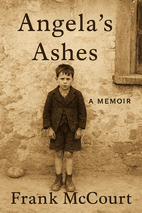
Angela's Ashes by Frank McCourt Book Cover

by Frank McCourt

Frank McCourt's Angela's Ashes recounts his impoverished childhood in 1930s Limerick, blending stark hardship with resilient humor. This Pulitzer-winning memoir offers readers a profound, unflinching portrait of survival and the complex social fabric of pre-war Ireland.

On Insta.page you also get an Apply This Book tool that lets you combine insights from up to 3 books to solve your specific situation.

Chapter mindmaps

Free preview: chapters 1–4 are fully interactive. Click any node to expand or collapse. Subscribe to unlock the rest.

Chapter 1: Introduction

Key concepts: Introduction

1. Introduction

The Nature of Tragicomedy in Angela's Ashes

  • Transforms childhood deprivation into a story both heartbreaking and funny
  • Explores the Irish sensibility of finding humor in suffering
  • Balances profound misery with uproarious humor as a form of defiance

From Personal History to Universal Phenomenon

  • McCourt's revelation: finding significance in his 'insignificant life'
  • The memoir's unlikely success, catapulting a retired teacher to fame
  • Its power to create personal connections across different readers' backgrounds

The Genius of Narrative Voice and Tone

  • Uses childhood perspective to avoid 'poverty porn' and sentimental nostalgia
  • Renders adult failings and grim circumstances as naturally absurd
  • Humor was an authentic coping mechanism, not a later literary addition

Roots in Oral Storytelling Tradition

  • McCourt honed stories as a legendary raconteur before becoming an author
  • Prose has lyrical, repetitive, musical quality like 'an epic poem'
  • Written voice was forged through live performances and barroom storytelling

Humanity and Generosity of Spirit

  • Treats flawed parents and harsh conditions with deep humanity
  • Finds narrative rhythm in predictable flaws and tender moments
  • Highlights how deprivation sharpens appreciation for life's smallest comforts

The Universal Immigrant Story

  • Frames Limerick years as a painful origin story that must be escaped
  • Connects McCourt's experience to his immigrant students at Stuyvesant High
  • Transcends specific setting to speak to universal experience of leaving home

Chapter 2: Chapter I

Key concepts: Chapter I

2. Chapter I

The McCourt Family Origins

  • Author's thesis: A miserable Irish Catholic childhood is defined by poverty, drunken father, and oppressive religion
  • Malachy McCourt: A wild former IRA man with a head injury, forced to flee to America
  • Angela Sheehan: Born into Limerick slum poverty, sent to America as a girl
  • Forced marriage in Brooklyn after a quick encounter led to pregnancy
  • Unhappy marriage marked by baptismal chaos and early struggles

Life in Brooklyn: Poverty and Family Dynamics

  • Early childhood memories of injury, death, and Irish legends
  • Birth of twin brothers shifts attention from Frank and Malachy
  • Frank internalizes being labeled with his father's 'odd manner'
  • Mother exhausted, father often absent seeking work or drinking
  • Fragmented family structure with minimal parental support

The Cycle of Wages and Want

  • Family rhythm dictated by father's payday arrival or failure
  • Payday brings debt repayment, cleaning, singing, and family comfort
  • Father's stories and weekend meals create brief oases of stability
  • Mother finds community and shared sadness with neighbor Minnie MacAdorey
  • Contrast between temporary abundance and chronic insecurity

Margaret's Birth and Temporary Hope

  • Baby Margaret's arrival charms father into temporary sobriety
  • Family experiences fleeting period of hope and domestic peace
  • Older boys navigate their own world of poverty and confusion
  • Frank's guilty theft of bananas met with unexpected grocer charity
  • Fragile family stability built around the infant's presence

Tragedy and Family Collapse

  • Margaret's death destroys the fragile family world
  • Mother collapses into catatonic grief, father abandons to whiskey
  • Young boys left to fend for themselves, relying on neighbor kindness
  • Judgmental cousins intervene with cruel suspicion about baby's body
  • Cousins arrange family's expulsion from America back to Ireland

Exile from America

  • Family cast out from America on a ship to uncertain future
  • Vomit blowing back on them as Statue of Liberty disappears
  • Complete reversal from American dreams to Irish uncertainty
  • Symbolic rejection and failure of the American immigrant experience
  • Transition from Brooklyn poverty to anticipated Limerick misery

The Shattering of Normalcy

  • The father's payday drinking binges destroy the family's fragile stability, leaving them hungry and humiliated.
  • Mam is forced to beg credit from the Italian grocer, who provides food out of pity.
  • The father returns drunk, singing Irish ballads and prioritizing sorrow for Ireland over his family's immediate needs.

Margaret: A Fleeting Beacon of Hope

  • The birth of baby Margaret creates a miraculous hiatus from the father's drinking.
  • He is sober, devoted, and dreams of a prosperous future for her, filling the home with rare hope.
  • Mam observes bittersweetly that she should have had a girl long ago to curb his behavior.

Childhood Struggles and a Desperate Theft

  • Older boys Frank and Malachy manage the hungry twins in poverty, lacking basic necessities like gloves.
  • Frank steals bananas out of desperation for his brothers, immediately burdened by guilt.
  • The grocer's charitable gift of a bag of fruit complicates the theft, mixing relief with shame for Frank.

Cultural Lessons and Ominous Foreshadowing

  • The father introduces Frank to Jewish stories (Moses, Samson) to mend a fight, sparking Frank's curiosity.
  • At the Leibowitz home, Frank experiences kindness, cultural difference, and a well-fed, quiet domesticity.
  • Mrs. Leibowitz feeds the boys but speaks with ominous certainty about baby Margaret being sick.

The Descent After Margaret's Death

  • Angela retreats into a catatonic state, leaving the children to fend for themselves with sour milk and bread.
  • The father's grief manifests in chaotic, drunken patriotism, waking the boys to sing rebel songs for false promises.
  • The children's survival depends entirely on the charity of neighbors like Mrs. Leibowitz and Minnie MacAdorey.

External Intervention and Forced Exile

  • Angela's Brooklyn cousins, Philomena and Delia, intervene, appalled by the squalor and neglect.
  • They voice a cruel suspicion that the father sold Margaret's body for drink money.
  • They orchestrate the family's expulsion to Ireland, sending them off with 'Good-bye and good riddance.'

Departure from America

  • The chapter ends on the ship, with Angela vomiting over the rail as they pass the Statue of Liberty.
  • The wind blows her sickness back on the children, symbolizing the bitter end of their American dream.
  • The family sails toward an uncertain and harsh future in their 'native land.'

Chapter 3: Chapter II

Key concepts: Chapter II

3. Chapter II

Rejection in the North

  • Easter Sunday arrival at Grandpa McCourt's house in Antrim after a difficult journey
  • Reserved welcome with basic hospitality but no long-term solution offered
  • Grandma's blunt declaration that there is no room or work for them in the north
  • Decision to seek help from the IRA in Dublin, funded by a loan for bus fare

Failed Appeal in Dublin

  • Dad's attempt to maintain spirits by narrating Irish legends during the bus journey
  • Mam's withdrawal into silent despair as their situation worsens
  • Cold rejection by the IRA in Terenure due to lack of paperwork
  • Dad's bitter denunciation of 'the new Ireland' after being turned away with only bus fare

Unexpected Sanctuary

  • Family's despair at the bus station triggers pity from a kind guard
  • Shelter and food provided in a police barracks alongside Thursday-night drunks
  • Children's American accents providing momentary amusement in the grim setting
  • Guards' collection funding train tickets to Limerick, offering a path forward

Arrival in Limerick

  • Detour to see the Cuchulain statue as a fleeting moment of inspiration
  • Greeted by a sour, unwelcoming grandmother on the platform
  • Walk through the city to a small terraced house in a lane
  • Grandma's immediate declaration that she doesn't know what to do with them, as there is no room

Descent into Destitution

  • Confinement to a damp, flea-ridden room on Windmill Street
  • Mam's medical emergency and humiliating quest for aid from St. Vincent de Paul
  • Angela's pragmatic, dignity-shedding scramble for coal and food to keep children alive
  • Relentless poverty underscored by the tragic decline and death of young Oliver

School and Further Loss

  • Move to Hartstonge Street places boys near Leamy's National School
  • Immediate branding as outsiders and subjection to a culture of fear with harsh masters
  • Eugene's death from pneumonia, exposing the neglect bred by destitution
  • Wake and funeral mixing sorrow, dark humor, and the raw transaction of grief

Fragile Resilience

  • Mam's small act of care—fish and chips for Frank and Malachy after the funeral
  • Return to a room haunted by the hollow in Eugene's pillow
  • Family stumbling forward in a cycle of loss and fragile resilience

A Medical Crisis and Seeking Aid

  • Angela's severe illness and miscarriage shatter the family's fragile stability, forcing them to confront their extreme poverty.
  • Malachy Sr.'s Northern accent prevents him from finding work, reducing the family to surviving on nineteen shillings a week in dole money.
  • The family is forced to seek charity from the St. Vincent de Paul Society, navigating a humiliating and bureaucratic system.
  • Nora Molloy emerges as a vital, defiant ally, challenging the sanctimonious officials and ensuring the family receives their due aid.
  • The charity committee is moved by Angela's grief over baby Margaret, granting a docket for groceries and coal.

Deepening Desperation and Role Reversal

  • Young Oliver falls ill, but the family lacks coal to boil the curative onion and milk remedy.
  • Malachy Sr.'s pride prevents him from gathering coal from the road, declaring, 'We're not beggars.'
  • In a stark role reversal, a pragmatic and desperate Angela takes charge, leading her sons to scavenge for fuel along the Dock Road.
  • Angela draws a line at scavenging horse droppings, a symbolic limit to their degradation.
  • A kind shopkeeper gifts them an onion and other items, charmed by Malachy's innocence, providing a rare moment of human kindness.

Oliver's Decline and Death

  • Oliver refuses the curative onion and milk, and his condition worsens, leading to a hospital visit.
  • Malachy Sr. returns alone, his face conveying the devastating news of Oliver's death.
  • The parents' grief is raw and visceral: Angela emits bird-like cries, while Malachy beats his thighs in anguish.
  • In his despair, Malachy Sr. abandons his duty, taking Frank on a futile begging trip that ends in a pub, drinking and weeping.
  • The death of a second child deepens the family's trauma and highlights the lethal consequences of their poverty.

Grief, Dysfunction, and a Haunted Home

  • Oliver's funeral is a somber affair, with Frank's anger manifesting as hatred for the jackdaws his father calls souls.
  • Malachy Sr. breaks his promise to use the dole money for a memorial meal, instead drinking it away and returning drunk.
  • A physical confrontation between the parents mixes adult anguish with Frank's childhood hunger and confusion.
  • The room on Windmill Street becomes psychologically unbearable, haunted by Oliver's memory.
  • Angela's resolve hardens; she insists they must leave to protect the surviving children, especially the grieving twin, Eugene.

Pragmatic Survival: Moving to Hartstonge Street

  • Angela takes decisive action by publicly claiming the dole money at the Labour Exchange, shaming Malachy but securing funds.
  • The move to a new room on Hartstonge Street is a pragmatic escape from a place saturated with grief.
  • The new room represents a slight improvement, with two beds and access to a lavatory, and is strategically located near Leamy's School.
  • The move is primarily motivated by Angela's drive to protect Eugene and provide a semblance of normalcy.
  • This act underscores Angela's evolving role as the family's primary agent of survival, in contrast to Malachy's paralyzing grief and irresponsibility.

School Initiation and Outsider Status

  • Frank and Malachy are immediately identified as 'Yanks' at Leamy's National School, marking them as outsiders.
  • A fight provoked by a boy named Heffernan leads to Frank being caned and forced to apologize as a 'bad Yank.'
  • Malachy's defense of Frank demonstrates the brothers' loyalty in a hostile new environment.

Harsh Discipline and Political Indoctrination

  • Masters use straps, canes, and blackthorn sticks to punish minor infractions like lateness or laughter.
  • Boys must navigate the masters' political biases, some favoring De Valera and others Michael Collins.
  • Education is enforced through fear, with memorization of prayers and lessons under threat of pain.
  • A culture of intimidation demands boys parrot hatred for America or England to avoid beatings.

Eugene's Death and Family Devastation

  • Eugene dies of pneumonia shortly after his twin Oliver, shattering the family.
  • Dr. Troy's question highlights the neglect stemming from poverty that prevented earlier hospital care.
  • Mam's act of pulling a blanket over Eugene's legs shows her enduring maternal instinct in grief.
  • Eugene's habit of looking out the window for Oliver symbolizes the twins' inseparable bond.

Wake Rituals and Community Dynamics

  • The wake mixes sorrow with dark humor, as in Pa Keating's absurd war story.
  • Uncle Pat Sheehan, with his limitations, guards his stout and sings a garbled song, adding chaotic warmth.
  • Community rituals offer comfort but reveal underlying tensions, such as prejudice against Northerners.
  • Grandma manages the chaos, trying to prevent Dad from drinking by sending Frank with him.

Father's Failure and Frank's Moral Outrage

  • Dad slips into a pub after collecting condolences at the Labour Exchange, abandoning Frank outside.
  • Frank is horrified to find his father and a companion resting their pints on Eugene's white coffin.
  • Frank's defiant statement, 'That's Eugene's coffin,' marks a child's stand against adult disrespect.
  • The driver's casual remark about coffin thefts underscores the desperation of the times.

Funeral Indignities and Burial

  • Uncle Pat's tender act of lifting Eugene into the coffin is a moment of pure kindness that moves Mam.
  • The drunk driver stumbles with the coffin, leading Mam to insist Dad carry it instead.
  • At the graveside, jackdaws croak as earth covers the small white box, and Mam's cry pierces the dusk.
  • The gravediggers' request for payment reduces the sacred moment to a transactional one.

Aftermath of Loss and Bleak Resilience

  • Mam insists on fish and chips after the funeral, a small act of care amidst the darkness.
  • The hollow in Eugene's pillow serves as a haunting, silent reminder of the loss.
  • Dad's urge to visit the pub is checked by Mam, forcing a tense return to normalcy.
  • Frank and Malachy return to the bed where Eugene died, capturing the cycle of grief and resilience.

Chapter 4: Chapter III

Key concepts: Chapter III

4. Chapter III

The Move to Roden Lane

  • Family relocates to escape grief over Eugene's death
  • House is a basic 'two up, two down' with secondhand furniture
  • Shared, foul lavatory for eleven families mars initial happiness

Malachy Sr.'s Pride and Destructive Habits

  • Maintains dignified appearance to collect dole despite poverty
  • Pride and Northern accent cost him employment opportunities
  • Drinks earnings instead of providing for family

Creating Refuge in Adversity

  • Flood forces family to live entirely upstairs
  • Father renames upstairs 'Italy' as imaginative escape
  • Christmas meal in 'Italy' provides temporary warmth and unity

Public Humiliation and Ingenuity

  • St. Vincent de Paul inspection highlights shame of poverty
  • Father crafts disastrous shoes from bicycle tires
  • Boys become targets of mockery at school

Moments of Compassion and Solace

  • Teacher defends boys, lecturing class on poverty and dignity
  • Frank confides fears to imagined 'Angel on the Seventh Step'
  • Neighbor Pa Keating helps secure coal on Christmas

Shattered Hope and Deepened Despair

  • Father gets cement factory job, promising Friday Penny
  • Returns drunk having spent entire wages on alcohol
  • Empty pockets symbolize broken trust and economic betrayal

Seasonal Migration and False Hope

  • The family moves back downstairs to 'Ireland' with improved weather, symbolizing a return to normalcy
  • Dad's job at the cement factory sparks optimism and financial planning in Mam
  • The boys anticipate the legendary 'Friday Penny' tradition for sweets
  • The evening's anxious waiting contrasts with neighboring families' Friday night enjoyment
  • Mam's emotional journey from hopeful singing to tearful resignation foreshadows disappointment

The Shattered Payday

  • Dad returns late, drunk, having spent his entire week's wages
  • His patriotic Republican ballads disturb the lane, adding public humiliation to private failure
  • The empty offer of the Friday Penny conditional on dying for Ireland shows misplaced priorities
  • The boys' refusal represents their growing awareness and anger at his betrayal
  • The symbolic turning out of empty pockets confirms the total loss of economic hope

Family Dynamics Under Strain

  • Mam's authority asserts itself as she bans Dad from the bed in punishment
  • The father's alcoholism directly converts family hope into deeper despair
  • Children's innocence is eroded as they witness repeated cycles of promise and failure
  • The episode deepens the emotional rift between father and sons
  • The family's fragile stability is systematically destroyed by irresponsible behavior

Social Context and Contrast

  • The sounds of other families enjoying Friday night highlight the McCourts' isolation
  • Public disturbance adds community shame to private economic devastation
  • The father's drunken patriotism contrasts with his failure to provide basic family needs
  • The lane serves as a witness to both poverty and occasional community enjoyment
  • The episode reinforces the family's position at the bottom of the social hierarchy

Continue exploring Angela's Ashes