An Ugly Truth Quotes
by Sheera Frenkel
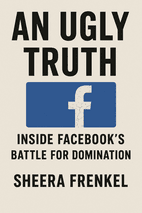
This collection of quotes from An Ugly Truth pulls back the curtain on Facebook's inner workings. You'll find raw, unfiltered moments from employees, executives, and whistleblowers that reveal a culture of secrecy, ambition, and moral compromise. What makes this book so quotable is how its lines cut through the polished corporate narrative to expose real tensions between growth and responsibility. These are not rehearsed statements but candid admissions, shocked reactions, and blunt assessments. They stick with you because they're honest, uncomfortable, and often startlingly direct.
Whether it's a founder's fears, an engineer's confession, or a simple question about accountability, each quote captures a piece of a larger, ugly truth. Readers will encounter lines that feel like confessions, accusations, or just stark realities spoken by people who were inside the machine. These are the words that made the book impossible to ignore.
Top Quotes from An Ugly Truth
“Mark Zuckerberg's three greatest fears, according to a former senior Facebook executive, were that the site would be hacked, that his employees would be physically hurt, and that regulators would one day break up his social network.”
The opening sentence of the prologue, describing Zuckerberg's fears.
It immediately establishes the stakes and foreshadows the FTC lawsuit that is the chapter's focus, drawing readers into the high-stakes conflict.
“Instead of competing on the merits, Facebook used its power to suppress competition so it could take advantage of users and make billions by converting personal data into a cash cow.”
New York State Attorney General Letitia James at a press conference announcing the lawsuit.
It succinctly captures the core accusation against Facebook's anti-competitive behavior and its exploitation of user data, making the harm tangible and memorable.
“If the public knew about these transgressions, they would be outraged: for over a decade, thousands of Facebook's engineers had been freely accessing users’ private data.”
Alex Stamos warns Facebook's executives about the scale of privacy abuses.
This line captures the hidden enormity of the scandal and the breach of trust, making clear why such secrecy was essential to the company's survival.
“The ugly truth is that we believe in connecting people so deeply that anything that allows us to connect more people more often is de facto good.”
From a memo written by Facebook executive Andrew "Boz" Bosworth, titled "The Ugly", explaining Facebook's philosophy of prioritizing growth.
This line starkly reveals Facebook's internal justification for prioritizing growth over ethical considerations, capturing the company's controversial 'move fast and break things' ethos.
“I do think there is a certain profound lack of empathy in asserting that the only reason why someone could have voted the way they did is because they saw some fake news.”
Zuckerberg responding to the same election question at the Techonomy conference.
It reflects a controversial argument that downplayed the impact of fake news while shifting blame onto voters, which resonated as tone-deaf and fueled public backlash.
“In Facebook's earliest days, when their office was still a glorified loft space, “Company over country” was a mantra the CEO repeated to his employees.”
The author describes Zuckerberg's early philosophy that prioritized Facebook's interests over national interests.
It starkly reveals the corporate mindset that later justified hiding election interference, showing how an internal slogan had profound real-world consequences.
“Genocide was taking place on Facebook in real time.”
The author describes the situation in Myanmar where disinformation spread via Facebook contributed to mass violence.
This concise, stark sentence captures the horrifying reality of Facebook's complicity in a genocide, making it a powerful indictment of the platform's negligence.
Themes Behind the Quotes
A central theme is the relentless pursuit of growth at any cost, where connecting people becomes a justification for invasive data practices and suppressing competition. The quotes reveal a culture that prioritized expansion over ethical safeguards, with employees often left to police themselves. Another theme is the gap between Facebook's public image of doing good and its private reality of covering up problems, from security lapses to political manipulation.
Power and accountability also run through these lines. Executives are shown making decisions with little regard for long term consequences, while employees wrestle with their complicity. The quotes highlight how the platform's design amplified harmful content and enabled real world violence. Ultimately, the book shows a company that knew more than it admitted, and a leadership that struggled to face the ugly consequences of its own creation.
Quotes by Chapter
Prologue: At Any Cost
“From the moment Zuckerberg and Sandberg met at a Christmas party in December 2007, we believe, they sensed the potential to transform the company into the global power it is today.”
The authors state their thesis about Zuckerberg and Sandberg's partnership.
It challenges the common narrative of Facebook as a lost cause, instead arguing that its problematic business model was deliberate from the start, adding a provocative twist.
Chapter 1: Don’t Poke the Bear
“There was nothing but the goodwill of the employees themselves to stop them from abusing their access to users’ private information.”
Describes Facebook's lack of safeguards against internal data abuse.
It starkly highlights the perilous reliance on trust alone to protect user privacy, a systemic flaw that enabled widespread violations.
“It was bullshit,” one employee recalled. “They were making it up on the fly.”
An employee describes how executives created the newsworthiness policy to justify allowing Trump's post.
This blunt quote exposes the ad hoc and cynical decision-making behind Facebook's speech policies, undermining any pretense of principled governance.
“There is no right to algorithmic amplification. In fact, that’s the very problem that needs fixing.”
Renée DiResta, a disinformation researcher, critiques Facebook's defense of free speech.
It cuts through the company's rhetoric, pinpointing how algorithmic amplification, not free speech itself, is the core threat to a healthy information ecosystem.
Chapter 2: The Next Big Thing
“This is not how I meant for things to go, and I apologize for any harm done as a result of my neglect to consider how quickly the site would spread and its consequences thereafter.”
Zuckerberg wrote this in an email to student groups who complained about his FaceMash site.
It reveals Zuckerberg's early pattern of apologizing while deflecting responsibility, foreshadowing future privacy controversies.
“He was very competitive, and very, very, very smart. He wanted to see if he could push what I was doing a little further.”
Kris Tillery described Zuckerberg after he hacked the Exeter online directory.
It captures Zuckerberg's relentless competitiveness and boundary-pushing nature from an early age, a trait that drove Facebook's growth.
“News Feed would not only change the course of the platform's history but go on to inspire scores of other tech companies around the world to reimagine what people wanted to see on the internet.”
Narrator describing the impact of Facebook's News Feed after its launch.
This line captures the profound, industry-wide influence of a single feature that redefined how people consume content online.
“It was Facebook's first experience with the power of News Feed to insert something into the mainstream and create a viral experience for its users.”
Narrator explaining the feedback loop of the anti-News Feed protest group.
It highlights the algorithm's self-reinforcing nature and foreshadows how platform dynamics would later amplify both content and controversy.
Chapter 3: What Business Are We In?
“If you're offered a seat on a rocket ship, get on, don't ask what seat.”
Eric Schmidt said this to Sheryl Sandberg when offering her a job at Google.
This metaphor perfectly captures the rare opportunity of joining a high-growth company and encourages seizing chances without hesitation.
“We're going to have one thousand people someday, and we're going to have ten thousand people someday, and then forty thousand people someday,” she said. “And we're going to get better, not worse. That's why I'm here. To make us bigger and better, not worse.”
Sheryl Sandberg’s first all-employee speech at Facebook, addressing the company’s future growth.
This vision statement shows her ambition to scale Facebook while preserving its culture, inspiring confidence in a skeptical engineering team.
“I'm never going to have time to read this.”
Mark Zuckerberg said to Donald Graham when handed a political book at the Washington Post.
This line captures Zuckerberg’s early disinterest in politics and self-education, later contradicted by his transformation into a voracious reader.
“Facebook has been duplicitous and irresponsible with our data for years.”
Siva Vaidhyanathan, a professor of media studies, criticizing Facebook's data practices.
A direct and damning accusation that resonates with ongoing privacy concerns and public distrust.
Chapter 4: The Rat Catcher
“Facebook employees could not even talk about the things they were not allowed to talk about.”
Describing Facebook's extreme nondisclosure requirements.
This line starkly captures the absurdity and totalitarian nature of Facebook's secrecy culture, where even the boundaries of silence are forbidden to be discussed.
“I had no idea they would be able to see that. I was going to deny the accusation, but in that moment, I knew I was screwed.”
Fearnow, a Facebook contractor, realizing the company accessed his personal Gchat messages.
It conveys the shock of discovering the company's pervasive surveillance, highlighting the power imbalance and the futility of trying to hide anything from a platform that tracks everything.
“What responsibility does Facebook have to help prevent a President Trump in 2017?”
A Facebook employee's question submitted for an all-hands meeting with Mark Zuckerberg.
This blunt question exposes the internal moral crisis at Facebook during the 2016 election, forcing the company to confront its role in shaping political outcomes.
Chapter 5: The Warrant Canary
“Ian hackers had essentially become the world's most powerful news editors, enticing journalists to write stories with the promise of ever-more salacious emails from Democratic Party members.”
Describes how Russian hackers strategically leaked emails to manipulate news coverage during the 2016 election.
It vividly captures how foreign actors exploited media dynamics, turning stolen documents into a tool for narrative control, which resonates as a chilling reminder of information warfare.
“It was an unprecedented moment of espionage, breaking every norm of cyberwarfare previously established.”
Ned Moran's realization of the scale and brazenness of Russian hacking during the 2016 election.
This line underscores the historic and rule-breaking nature of the attack, making readers grasp the gravity of a new kind of threat to democratic processes.
“Ironically, the hackers were using Facebook exactly as it was intended.”
Observation that Russian hackers exploited Facebook's core features—groups, sharing, and connections—to spread misinformation.
It exposes the uncomfortable truth that the platform's design made it a perfect vehicle for manipulation, forcing readers to question the very purpose of social media.
“They honestly treated security like it was something they wanted taken care of quietly, in a corner, where they didn't have to regularly think about it.”
A Facebook security team engineer describing how Zuckerberg and Sandberg sidelined security concerns.
This quote reveals a systemic corporate neglect of security, highlighting a disconnect between leadership priorities and real threats, which resonates with anyone concerned about accountability.
Chapter 6: A Pretty Crazy Idea
“He read the full transcript and was stunned. Zuckerberg seemed to have no idea that his security team had uncovered a range of alarming Russian activity on the platform.”
Alex Stamos, Facebook's security chief, after reading Zuckerberg's interview while in Germany.
This moment highlights the alarming disconnect between Facebook's top executives and its security team, exposing a failure in leadership and communication at a critical time.
Chapter 8: Delete Facebook
“We started to feel like we were part of a cover-up at Facebook.”
A security team member expressed this feeling after Facebook's leadership removed references to Russia from a white paper.
This line captures the moral disillusionment of employees who believed the company was suppressing critical evidence, making the reader question Facebook's commitment to transparency.
“How the fuck are we only hearing about this now?”
Erskine Bowles, a Facebook board member, reacted with anger after Stamos presented the security team's findings on Russian interference.
The stark profanity and raw frustration capture the board's shock and fury at being kept in the dark about a major national security threat.
“We were like, ‘Are you kidding me?”
A Democratic congressional aide described the reaction when Facebook presented a minimal, seemingly skewed sample of Russian ads.
The incredulous tone underscores the deep distrust between Congress and Facebook, as the company's attempt to control the narrative backfired.